
Last updated on August 25th, 2026 at 11:46 am
The powertrain control module in the 1992 Infiniti Q45 4.5L manages fuel injection timing, ignition advance, and transmission shift behavior. When this module fails, your vehicle may experience hard starting, erratic idle, stalling, or refusal to start altogether. The ECM relies on input from multiple sensors to calculate optimal engine performance.
When your 1992 Infiniti Q45 begins to exhibit drivability problems that defy simple explanations, the powertrain control module often becomes a suspect. This luxury sedan relied on a sophisticated engine management system for its era, and the brain behind that system plays a critical role in how your vehicle starts, idles, accelerates, and manages fuel economy. Understanding what this module does, how it fails, and what replacement involves can save you time and money when symptoms arise. The 1992 Infiniti Q45 4.5L predates the standardized OBD-II diagnostic system that became mandatory in 1996, which means troubleshooting requires a different approach than newer vehicles. Your vehicle uses Nissan’s proprietary diagnostic protocol, and the engine control module stores fault information that can be retrieved through specific procedures outlined in the factory service manual. This article explains the function of the ECM in your Q45, describes common failure symptoms, outlines what module replacement involves, and clarifies how a pre-programmed unit from Flagship One simplifies the repair process. Whether you are diagnosing a persistent no-start condition or addressing erratic idle behavior, having accurate information about your vehicle’s engine management system helps you make confident repair decisions.
1992 Infiniti Q45 4.5L
OEM programmed ECM for your 1992 Infiniti Q45 4.5L — plug & play, no dealer visit.
Free shipping · Lifetime warranty
The engine control module in your 1992 Infiniti Q45 4.5L serves as the central processing unit for the vehicle’s powertrain management system. It continuously receives input from a network of sensors that monitor crankshaft position, mass airflow, engine coolant temperature, throttle position, oxygen content in the exhaust, and other critical parameters. Using this data, the module calculates precise fuel injector pulse widths, ignition timing advance, idle air control positioning, and evaporative emissions canister purge timing. The VH45DE V8 engine in your Q45 depends on this level of precision to deliver the smooth, responsive performance that defined this flagship sedan. The module also interfaces with the transmission control system to coordinate shift timing and torque converter lockup behavior. In the 1992 model year, Infiniti employed a combined approach where the ECM communicated with the transmission control unit to ensure seamless gear changes that matched engine load and vehicle speed. When the ECM functions correctly, your Q45 delivers the refined driving experience intended by the factory. When it begins to fail, the effects often ripple through multiple vehicle systems simultaneously, making diagnosis more complex than a single sensor or actuator fault. Because the module contains calibration data specific to the 4.5L V8 engine and its emissions equipment, selecting Q45 replacement engine computers that match your vehicle’s original specifications is essential for proper operation. A mismatched or improperly configured module may cause poor fuel delivery, incorrect timing, failed emissions testing, and drivability complaints that mimic other mechanical problems. The internal circuitry includes memory chips that store adaptive fuel trim values and learned idle parameters, which means a replacement module typically requires a brief period of driving before the vehicle fully adapts to the new unit.
The ECM in the 1992 Infiniti Q45 is housed within the passenger compartment, typically behind a trim panel on the passenger side of the lower dashboard area. Accessing the module generally involves removing the lower kick panel and possibly a section of trim to expose the unit and its wiring connectors. Before attempting any work, disconnect the negative battery terminal to prevent electrical damage to the module and surrounding circuitry. Replacement involves carefully disconnecting the multiple wiring harness connectors from the old module, removing the mounting hardware that secures the unit to its bracket, and transferring the new module into position. The wiring connectors are designed with locking tabs that must be fully released before pulling them free. When installing the replacement, ensure each connector seats completely and locks into place, as an incompletely connected harness can cause intermittent electrical contact that mimics module failure. Reconnect the battery only after all connectors are secured and the module is properly mounted.
After installing a replacement ECM in your 1992 Infiniti Q45, the factory service procedure typically requires an idle relearn process and a throttle position sensor calibration so the new module can establish baseline values for proper engine operation. This initialization allows the module to learn the closed throttle position and target idle speed for your specific vehicle. Without completing these steps, your Q45 may exhibit elevated idle speed, hesitation during acceleration, or stalling when coming to a stop. The factory procedure involves specific sequences of ignition cycling, sustained idle periods, and driving at defined speed ranges to allow the module to collect the data it needs. Selecting a VIN-programmed replacement unit from Flagship One means the calibration and initialization data have already been loaded onto the module before it ships. This pre-programming step reduces the amount of post-install configuration work and helps ensure the replacement module communicates properly with your vehicle’s sensor network from the moment you start the engine. A brief driving cycle may still be beneficial as the module adapts to your specific vehicle’s sensor outputs and operating conditions.
A failing ECM in the 1992 Infiniti Q45 can produce a wide range of symptoms that often overlap with other vehicle problems, making accurate diagnosis essential before replacing parts. One of the most common indicators is a no-start condition where the engine cranks but fails to fire, or starts briefly and immediately stalls. This behavior often points to the module losing its ability to command fuel injector operation or ignition spark output. Intermittent stalling while driving is another frequent complaint associated with ECM deterioration. Your Q45 may run normally for a period and then suddenly shut off, only to restart after sitting for a few minutes or after cycling the ignition. This pattern often indicates an internal circuit board fault within the module that is sensitive to heat buildup during operation. Erratic idle behavior, including surging between low and high rpm or a rough idle that was not previously present, may also signal module trouble. The idle air control system depends on precise ECM commands, and when those commands become inconsistent, idle quality suffers. You may also notice poor fuel economy, black exhaust smoke from an overly rich fuel mixture, hesitation or stumbling during acceleration, and failed emissions testing due to improper fuel trim management. In some cases, the check engine or malfunction indicator lamp may illuminate and store diagnostic codes that point to sensor circuits even when the sensors themselves test within specification. This situation often arises when the ECM’s internal signal processing circuitry degrades. Additionally, if your diagnostic tool cannot establish communication with the module, that absence of data exchange may indicate a module that has failed internally or lost power due to a circuit board fault.
Driving with a compromised ECM is not recommended. A failing module may cause sudden stalling in traffic, erratic idle behavior, or a complete no-start condition that could leave you stranded. If your Q45 is exhibiting intermittent drivability problems, have the system diagnosed before attempting extended driving.
Distinguishing between a sensor fault and an ECM failure often requires systematic testing. If multiple sensor codes appear simultaneously or if sensor replacement does not resolve the symptom, the ECM becomes a stronger suspect. A diagnostic tool that can communicate with the module may also reveal whether the module is processing inputs correctly.
The correct replacement module must match your vehicle’s engine configuration, emissions equipment, and transmission type. Using a module calibrated for a different variant may result in poor drivability and failed emissions testing. Flagship One provides units matched to your specific vehicle specifications.
Factory procedures typically call for an idle relearn and throttle calibration after module replacement. Flagship One units arrive with the necessary calibration data pre-loaded, which simplifies the installation process. A brief driving cycle may still help the new module adapt to your vehicle’s specific sensor outputs.
Common causes include voltage spikes from jump-starting or alternator failure, moisture intrusion through damaged connector seals, thermal stress from years of temperature cycling, and internal component aging. The electrolytic capacitors inside modules of this era are particularly prone to degradation over time.
If your 1992 Infiniti Q45 is showing signs of ECM failure, you have options. A professional diagnosis can confirm whether the module is the root cause before you invest in a replacement. Flagship One offers pre-programmed ECM units matched to your Q45’s specifications, eliminating the need for factory initialization procedures after installation. Choosing a quality replacement over continued troubleshooting of a degraded module often saves time and restores the drivability your vehicle was designed to deliver.
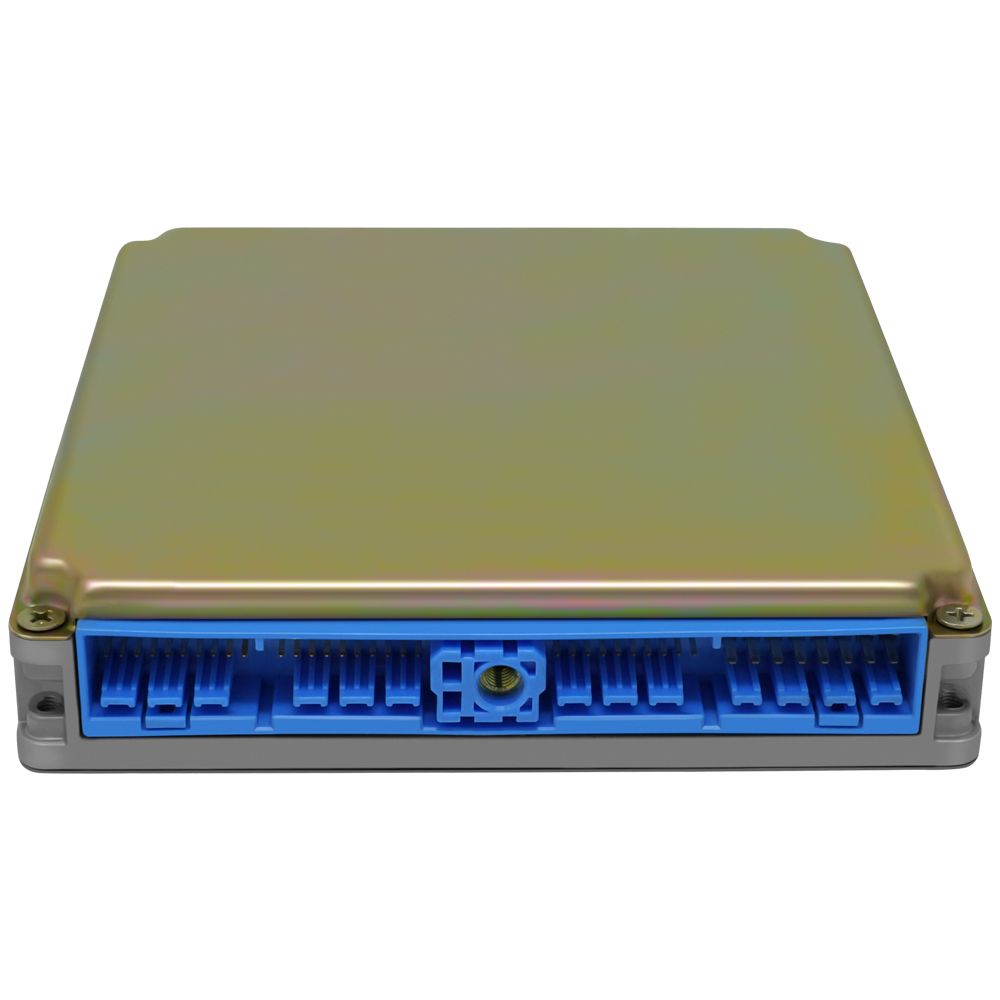
Flagship One stocks a refurbished, VIN-programmed ECM for the 1992 Infiniti Q45 with a lifetime warranty, free shipping and no core charge. The full Infiniti Q45 module lineup covers other engine configurations as well.
The 1992 Infiniti Q45 4.5L remains a remarkable vehicle, and keeping its engine management system in proper working order is essential to enjoying everything this sedan offers. A failing ECM can affect starting, idle quality, fuel economy, and overall drivability. Flagship One provides pre-programmed replacement modules designed to match your Q45’s factory specifications, helping you return your vehicle to reliable operation with confidence.