
Last updated on August 25th, 2026 at 01:31 pm
The Powertrain Control Module (PCM) in your 2016 Ford Mustang 2.3L acts as the vehicle’s central brain, managing engine performance, fuel delivery, and transmission behavior. When it fails, you may experience erratic idling, poor acceleration, or complete engine shutdown.
If your 2016 Ford Mustang 2.3L has been acting unpredictably—stalling at stops, refusing to start, or throwing warning lights—it may be time to consider the Powertrain Control Module (PCM). This small but critical component oversees nearly every aspect of your engine’s performance, from fuel delivery to transmission shifts. When it malfunctions, the symptoms can range from subtle drivability issues to a complete inability to start the vehicle. Understanding what the PCM does, how to recognize its failures, and what replacement entails can help you make an informed decision. Whether you’re a DIY enthusiast or planning to visit a shop, knowing the labor times, programming requirements, and common trouble codes will prepare you for the process. This guide covers everything you need to know about the PCM in your Mustang, from its role in the vehicle to the steps required for a successful replacement.
The Powertrain Control Module (PCM) in your 2016 Ford Mustang 2.3L is the command center for your engine and transmission. It continuously monitors sensor data—like throttle position, air intake, and engine temperature—to adjust fuel injection, ignition timing, and shift points in real time. This ensures optimal performance, fuel efficiency, and emissions compliance. Without a functioning PCM, your Mustang may struggle to start, run roughly, or even enter a fail-safe mode that limits power. The module also integrates with the vehicle’s anti-theft system (PATS), which means any replacement must be properly programmed to avoid immobilization. If you’re considering a replacement, replacement engine computers for the Mustang are designed to restore factory-level functionality, but they must be matched to your vehicle’s specifications to work correctly. The PCM’s role extends beyond basic engine management; it also communicates with other modules, such as the transmission control unit, to ensure smooth gear shifts and responsive acceleration. A failure here can disrupt this communication, leading to erratic behavior or even a no-start condition.
2016 Ford Mustang 2.3L: When the
OEM programmed replacements — plug & play, no dealer visit.
Find yours by year, make & model →
Free shipping · Lifetime warranty
The PCM in your 2016 Ford Mustang 2.3L is located in the engine bay, typically mounted near the firewall or on the passenger side inner fender. Accessing it requires removing a few bolts and disconnecting the wiring harness, which is a straightforward process for most technicians. The factory labor time for removing and reinstalling the PCM is 0.8 hours, which includes disconnecting the battery, unbolting the module, and securing the new unit in place. After installation, the module must be relearned to the vehicle, a procedure that adds another 0.5 hours of labor. This step ensures the PCM syncs with the engine’s sensors and the anti-theft system. While the physical replacement is relatively quick, the programming and relearn steps are critical to avoid drivability issues or a no-start condition.
Work with the ignition off, and treat the module as static-sensitive: avoid touching the connector pins at any point.
| Operation | Configuration | Book Time |
|---|---|---|
| Engine Control Module Relearn | All configurations | 0.5 hr |
| Engine Control Module R&R | All configurations | 0.8 hr |
| Engine Control Module Reset | All configurations | 0.3 hr |
| Powertrain Control Module R&R | All configurations | 0.8 hr |
| Powertrain Control Module Relearn | All configurations | 0.5 hr |
After replacing the PCM in your 2016 Ford Mustang 2.3L, the factory procedure requires reprogramming the module to match your vehicle’s specifications. This includes updating the PATS (Passive Anti-Theft System) to ensure the engine starts and runs without immobilization issues. The process typically involves using specialized diagnostic equipment to load the latest software and configure the module to your Mustang’s VIN. If you opt for a VIN-programmed replacement unit, these steps are already completed, saving you time and potential headaches at the dealership. Without proper programming, the vehicle may not start, or you could experience drivability issues like rough idling or poor acceleration. The factory also recommends a relearn procedure, which takes 0.5 hours, to synchronize the PCM with the engine’s sensors and transmission.
A failing PCM in your 2016 Ford Mustang 2.3L can manifest in several ways, often starting with subtle drivability issues before escalating to more severe problems. Common symptoms include intermittent stalling, especially at idle or during deceleration, as the module struggles to maintain proper fuel and air ratios. You may also notice the engine hesitating or surging under acceleration, or the transmission shifting erratically, as the PCM fails to communicate effectively with the transmission control unit. In some cases, the vehicle may refuse to start altogether, leaving you stranded. Warning lights on the dashboard, such as the check engine or traction control lights, are another red flag, often accompanied by stored trouble codes. For example, a memory integrity fault may appear, indicating an internal failure within the PCM. Other codes, like P0606 or U0121, suggest communication issues between the PCM and other modules, which can lead to a loss of critical functions like power steering or stability control. If your Mustang exhibits any of these symptoms, it’s worth scanning for codes and inspecting the PCM for potential failure.
The 2016 Ford Mustang 2.3L may store specific trouble codes when the PCM begins to fail. These codes can help pinpoint the issue and guide repairs. Below are the documented module-internal trouble codes for this vehicle.
| Code | Meaning | Full Guide |
|---|---|---|
| P0601 | Internal memory checksum error | Full P0601 guide → |
| P0606 | Module processor failure | Full P0606 guide → |
| P1674 | Module-internal fault | — |
| U0121 | Module-internal fault | Full U0121 guide → |
| U0146 | Module-internal fault | Full U0146 guide → |
| U0151 | Module-internal fault | Full U0151 guide → |
Stalling at stoplights is a common symptom of a failing PCM, as the module may struggle to maintain the correct air-fuel mixture or idle speed. Other potential causes include a faulty idle air control valve or vacuum leaks, but if the issue persists after basic checks, the PCM should be inspected for trouble codes like P0601 or P0606.
If your vehicle is experiencing drivability issues like stalling, rough idling, or transmission shifting problems, a scan for trouble codes can help determine if the PCM is faulty. Codes like P0601 or P1674 often indicate internal failures that require replacement, while communication codes like U0121 may suggest a reprogramming or relearn procedure could resolve the issue.
Without reprogramming, the new PCM may not communicate properly with the engine’s sensors or the anti-theft system (PATS). This can result in a no-start condition, rough idling, or transmission shifting issues. The factory requires a relearn procedure (0.5 hours) and PATS reprogramming to ensure the module functions correctly.
While the vehicle may still run with a P0601 code, it indicates an internal memory integrity fault in the PCM, which can lead to unpredictable behavior. Driving with this code may result in stalling, poor acceleration, or even a no-start condition. It’s best to address the issue promptly to avoid further complications.
Testing the PCM typically involves scanning for trouble codes and checking for proper communication with the vehicle’s sensors. If codes like P0601, P0606, or U0121 are present, they often indicate an internal failure. A professional technician can also perform voltage and ground tests on the PCM’s connectors to rule out wiring or connection issues.
If your 2016 Ford Mustang 2.3L is exhibiting symptoms of a failing PCM, you have a few options to consider. A repair may be possible if the issue is limited to wiring or connectors, but internal failures often require replacement. Opting for a pre-programmed replacement unit can save you time and ensure the module is ready to install without additional dealer programming. Whether you choose a new or refurbished unit, matching the PCM to your vehicle’s specifications is critical for restoring factory-level performance.
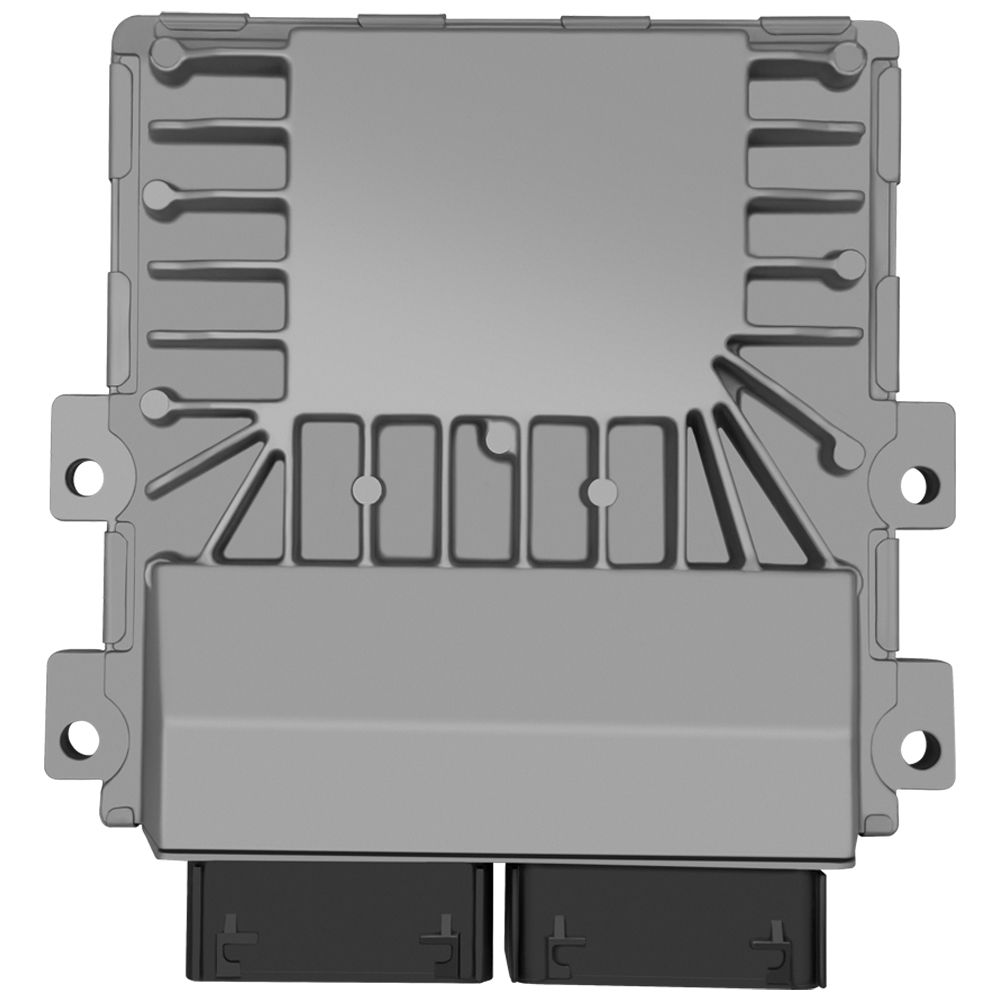
Flagship One stocks a refurbished, VIN-programmed PCM for the 2016 Ford Mustang with a lifetime warranty, free shipping and no core charge. The full Ford Mustang module lineup covers other engine configurations as well.
The Powertrain Control Module in your 2016 Ford Mustang 2.3L plays a vital role in engine performance, transmission behavior, and overall drivability. Recognizing the symptoms of a failing PCM—such as stalling, no-start conditions, or stored trouble codes—can help you address the issue before it leaves you stranded. With labor times of 0.8 hours for replacement and 0.5 hours for relearning, the process is relatively straightforward, but proper programming is essential. If you’re considering a replacement, ensure the module is matched to your vehicle’s specifications to avoid compatibility issues.