
Last updated on August 25th, 2026 at 01:32 pm
The Powertrain Control Module (PCM) in the 2012 Ford Flex 3.5L manages engine and transmission functions. When it fails, it can cause no-start, stalling, or trouble codes like P0606. Replacement requires reprogramming the PATS and VID block.
If your 2012 Ford Flex 3.5L suddenly refuses to start, stalls unpredictably, or triggers a check-engine light with code P0606, the Powertrain Control Module (PCM) may be failing. The PCM is the central computer that controls engine timing, fuel delivery, transmission shifts, and integrates with the vehicle’s anti-theft system. When it malfunctions, the entire drivetrain can become unreliable. This article explains what the PCM does in your Flex, the common symptoms of failure, and what the replacement process involves. You will learn about the required factory programming steps—including PATS reprogramming and VID block flashing—and how a pre-programmed replacement PCM can eliminate those steps, saving you time and money. Whether you are a DIY owner or a professional technician, this guide provides the essential facts to make an informed repair decision.
The Powertrain Control Module (PCM) in the 2012 Ford Flex 3.5L is the primary engine and transmission controller. It receives input from sensors such as the crankshaft position, throttle position, oxygen sensors, and mass airflow sensor, then adjusts fuel injector pulse width, ignition timing, and transmission shift points in real time. The PCM also communicates with the Passive Anti-Theft System (PATS) to verify the key’s transponder code before allowing the engine to start. In addition, it stores diagnostic trouble codes and monitors emissions components. Because the PCM manages so many critical functions, a failure can leave the vehicle inoperable. When you need a replacement, you are looking for replacement PCMs for the 2012 Ford Flex that are compatible with your specific VIN and engine calibration. The PCM is a sealed, non-serviceable unit; internal faults like P0606 typically require module replacement rather than repair.
2012 Ford Flex 3.5L
OEM programmed ECM for your 2012 Ford Flex 3.5L — plug & play, no dealer visit.
Free shipping · Lifetime warranty
The PCM on the 2012 Ford Flex 3.5L is typically mounted in the engine compartment, often near the air intake box or on the firewall. Replacement begins by disconnecting the negative battery cable and waiting a few minutes for system capacitors to discharge. You then remove the electrical connectors from the PCM, unbolt the module from its bracket, and lift it out. The book time for PCM removal and replacement is 0.9 hours. After installing the new module, a relearn procedure is required, which adds 0.5 hours of labor. This relearn allows the PCM to adapt to the vehicle’s specific sensors and actuators. Ensure all connectors are clean and fully seated, and that the mounting bolts are torqued to factory specifications (not provided here).
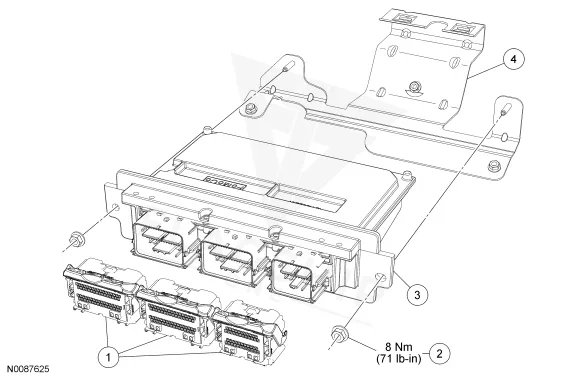
Work with the ignition off, and treat the module as static-sensitive: avoid touching the connector pins at any point.
| Operation | Configuration | Book Time |
|---|---|---|
| Powertrain Control Module R&R | All configurations | 0.9 hr |
| Powertrain Control Module Relearn | All configurations | 0.5 hr |
| Engine Control Module Relearn | All configurations | 0.5 hr |
| Engine Control Module R&R | All configurations | 0.9 hr |
After installing a new PCM in the 2012 Ford Flex 3.5L, the factory service procedure requires several programming steps. First, the Passive Anti-Theft System (PATS) must be reprogrammed to recognize the new module. Second, you must refer to Section 2 of the service manual to flash the Electrically Erasable Programmable Read Only Memory (EEPROM) and program the Vehicle Identification Block (VID Block) for the replacement PCM. These steps typically require a professional scan tool with Ford-specific software. However, when you purchase a VIN-programmed replacement PCM from Flagship One, the unit arrives with your vehicle’s VIN, PATS data, and VID block already programmed. This means you can install the module and perform only the basic relearn procedure, bypassing the complex factory programming steps entirely.
A failing PCM in the 2012 Ford Flex 3.5L can produce a range of symptoms. The most common is a no-start condition where the engine cranks but does not fire, often because the PCM is not sending fuel injector or ignition commands. Intermittent stalling while driving is another frequent complaint, sometimes accompanied by a sudden loss of power. The check-engine light may illuminate with generic misfire codes or specific module-internal faults such as the P0606 internal fault. You might also experience erratic transmission shifting, such as harsh engagement or failure to shift gears. In some cases, the scan tool cannot communicate with the PCM at all, indicating a dead module. Other symptoms include poor fuel economy, hesitation during acceleration, and the vehicle entering a reduced-power limp mode. Because the PCM integrates with PATS, a failed module can also cause the security light to flash or remain on.
The following module-internal trouble code is documented for the 2012 Ford Flex 3.5L PCM. This code indicates a fault within the module itself and often requires PCM replacement.
| Code | Meaning | Full Guide |
|---|---|---|
| P0606 | Module processor failure | Full P0606 guide → |
The PCM controls engine and transmission functions, including fuel injection, ignition timing, and shift points. It also manages the Passive Anti-Theft System (PATS) and stores diagnostic trouble codes.
The book time for PCM removal and replacement is 0.9 hours. An additional 0.5 hours is required for the relearn procedure after installation.
Yes, the factory procedure requires reprogramming the Passive Anti-Theft System (PATS) so the new PCM recognizes the vehicle’s keys. This step is eliminated if you use a pre-programmed PCM from Flagship One.
The Vehicle Identification Block (VID Block) stores vehicle-specific calibration data. After PCM replacement, it must be programmed per Section 2 of the service manual. A pre-programmed unit already has this data set for your VIN.
Yes, a failed PCM can prevent the engine from starting because it stops sending signals to the fuel injectors and ignition coils. It may also disable the starter if the PATS communication fails.
When your 2012 Ford Flex 3.5L needs a new PCM, you have two main options: have a dealer or shop perform the full replacement with factory programming, or install a pre-programmed unit yourself. The dealer route involves higher labor costs and the risk of additional fees for programming. A refurbished, VIN-programmed PCM from Flagship One arrives ready to install, with PATS and VID block already set. This approach reduces downtime and eliminates the need for specialized scan tools.
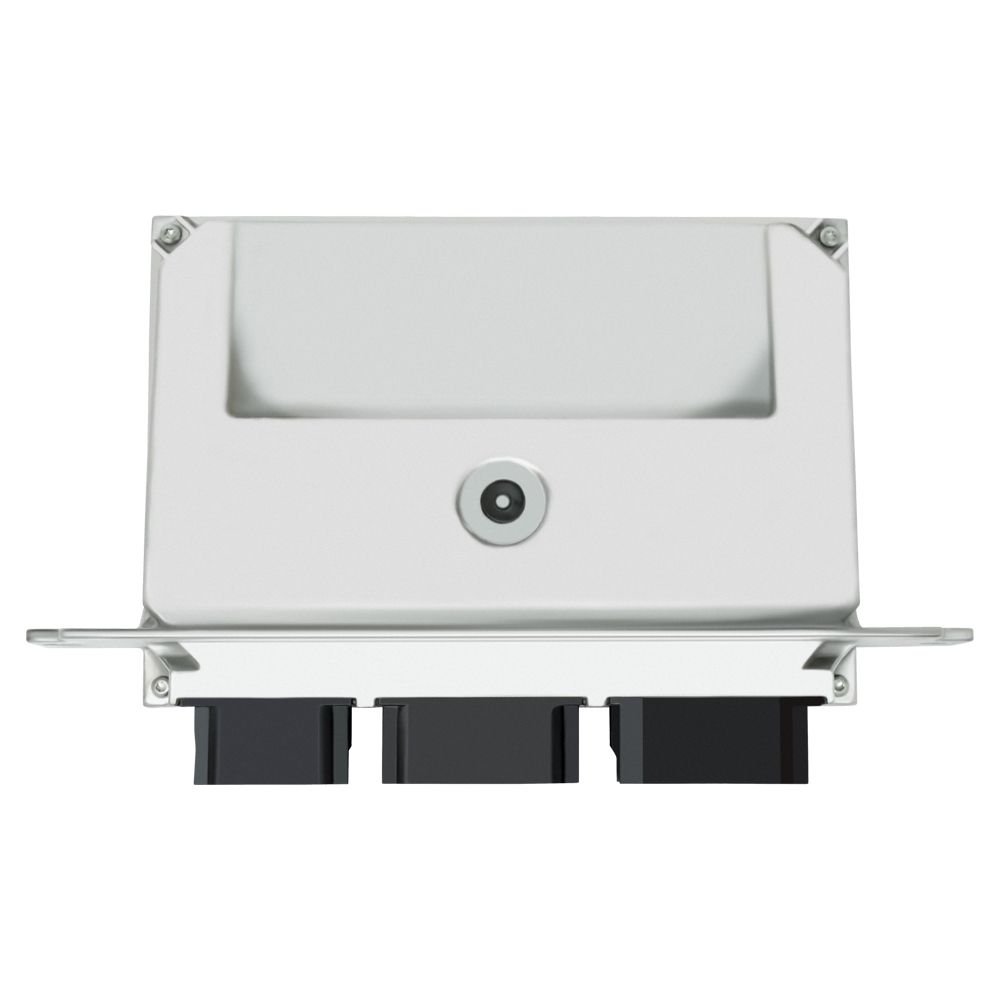
Flagship One stocks a refurbished, VIN-programmed PCM for the 2012 Ford Flex with a lifetime warranty, free shipping and no core charge. The full Ford Flex module lineup covers other engine configurations as well.
The 2012 Ford Flex 3.5L relies on its PCM for engine and transmission control, anti-theft integration, and diagnostics. When symptoms like no-start, stalling, or code P0606 appear, replacement may be necessary. Understanding the required programming steps—PATS reprogramming and VID block flashing—helps you choose the most efficient repair. A pre-programmed PCM simplifies the process and gets your Flex back on the road quickly.