
Last updated on August 25th, 2026 at 01:35 pm
The Powertrain Control Module (PCM) in the 2007 Ford Escape Hybrid manages engine timing, fuel delivery, and hybrid system coordination. When it fails, the vehicle may not start, run poorly, or illuminate the check engine light with communication trouble codes.
If your 2007 Ford Escape Hybrid is experiencing intermittent stalling, a no-start condition, or a check engine light that refuses to go away, the Powertrain Control Module (PCM) may be the culprit. The PCM is the central computer that manages engine operation, transmission shifting, and the hybrid system’s coordination between the gasoline engine and electric motor. In the Escape Hybrid, this module is especially critical because it balances power sources for efficiency and performance. This guide explains what the PCM does, where it is located, what replacement involves according to factory labor times, and what programming steps are required afterward. You will also learn about a relevant service bulletin and how a pre-programmed replacement unit can simplify the repair. Understanding these details helps you make an informed decision about repairing or replacing the module in your 2007 Ford Escape Hybrid.
The Powertrain Control Module (PCM) in the 2007 Ford Escape Hybrid acts as the vehicle’s primary engine computer. It receives input from sensors throughout the drivetrain—such as the throttle position sensor, oxygen sensors, and crankshaft position sensor—and adjusts fuel injection, ignition timing, and idle speed accordingly. In the hybrid variant, the PCM also communicates with the Hybrid Control Module to manage the transition between electric and gasoline power, regenerative braking, and battery charging. When the PCM fails, it can lose communication with other modules, causing the vehicle to enter a limp-home mode or refuse to start entirely. The PCM is a sealed unit that is not serviceable; replacement is the standard repair. For the 2007 Ford Escape Hybrid, you can find replacement PCMs for the 2007 Ford Escape Hybrid that are pre-programmed to match your vehicle’s VIN, which eliminates the need for dealer-level programming. Understanding the PCM’s role helps you diagnose issues accurately and avoid replacing parts unnecessarily.
2007 Ford Escape Hybrid
OEM programmed replacements — plug & play, no dealer visit.
Find yours by year, make & model →
Free shipping · Lifetime warranty
The Powertrain Control Module on the 2007 Ford Escape Hybrid is typically located under the hood, mounted on the driver-side inner fender or near the air cleaner housing. Access requires removing the air intake duct and possibly the battery cover. According to factory labor times, removing and replacing the PCM takes 0.3 hours, while the Engine Control Module (ECM) R&R is listed at 0.6 hours. Note that the ECM and PCM may be considered separate modules in some documentation, but for this vehicle the PCM is the primary engine computer. After installation, a PCM relearn procedure is required, which the factory lists at 0.5 hours. This relearn involves re-synchronizing the module with the vehicle’s security system and transmission. Ensure the battery is disconnected before unplugging the PCM connectors to avoid electrical damage. The module is secured with bolts; torque specifications are not provided in the available facts, so follow standard practice of tightening to a snug fit.
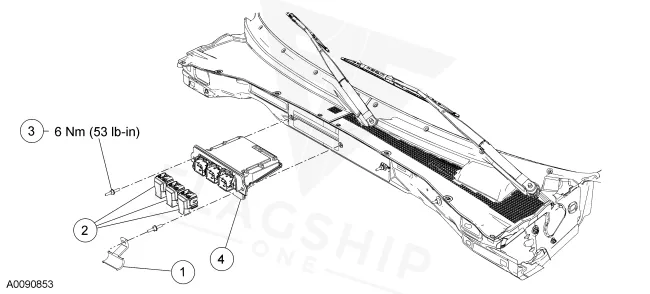
Work with the ignition off, and treat the module as static-sensitive: avoid touching the connector pins at any point.
| Operation | Configuration | Book Time |
|---|---|---|
| Powertrain Control Module R&R | All configurations | 0.3 hr |
| Powertrain Control Module Relearn | All configurations | 0.5 hr |
| Engine Control Module Relearn | All configurations | 0.5 hr |
| Engine Control Module R&R | All configurations | 0.6 hr |
After installing a new or used PCM in the 2007 Ford Escape Hybrid, the factory procedure requires reprogramming the passive anti-theft system (PATS) and reprogramming the customer’s keys. This step is necessary to allow the engine to start and to prevent theft. The PATS system stores unique key codes that must match the PCM. Without this programming, the vehicle will crank but not start. Flagship One offers a VIN-programmed replacement PCM that arrives with the correct PATS data and key codes already loaded. This means you can install the module and start the vehicle without performing the PATS relearn or key programming steps. The factory labor time for the PCM relearn is 0.5 hours, which is saved when using a pre-programmed unit. Simply install the module, connect the battery, and the vehicle should recognize the keys and start normally.
A failing PCM in the 2007 Ford Escape Hybrid can produce a range of symptoms. The most common is a no-start condition where the engine cranks but does not fire, often due to loss of fuel or spark control. You may also experience intermittent stalling, rough idle, or hesitation during acceleration. The check engine light may illuminate with diagnostic trouble codes related to communication failures, such as U2062 communication fault which indicates a loss of communication between modules. Other symptoms include the vehicle entering a reduced-power mode, erratic transmission shifting, or the hybrid system failing to engage properly. In some cases, a scan tool may be unable to communicate with the PCM at all, pointing to an internal module failure. If you notice these issues, especially after jump-starting or a battery drain, the PCM should be inspected. Addressing these symptoms promptly can prevent secondary damage to other components.
Ford issued Technical Service Bulletin 08-03-01 for the 2007 Ford Escape Hybrid. This bulletin addresses a condition where the malfunction indicator lamp (MIL) is on with diagnostic trouble code (DTC) U2062 stored. U2062 indicates a loss of communication with the PCM or another module on the network. The bulletin likely provides diagnostic steps and repair procedures to resolve the communication fault. If your vehicle exhibits this code, consult the bulletin for guidance. Note that the bulletin number is 08-03-01, and it applies to vehicles with the 2.3L engine.
| Bulletin | Subject | What It Addresses |
|---|---|---|
| 08-03-01 | MALFUNCTION INDICATOR LAMP (MIL) ON WITH DIAGNOSTIC TROUBLE CODE (DTC) U2062 | — |
Yes, the PCM is accessible under the hood and removal takes about 0.3 hours according to factory labor times. However, you will need to reprogram the passive anti-theft system and keys afterward unless you use a pre-programmed unit from Flagship One.
U2062 is a communication fault code indicating that the PCM has lost communication with another module on the network. This can be caused by a faulty PCM, wiring issues, or a low battery. TSB 08-03-01 addresses this specific code.
The factory labor time for a PCM relearn, which includes PATS reprogramming, is 0.5 hours. This procedure requires a scan tool capable of communicating with the vehicle’s security system.
A used PCM may work, but it must be programmed with your vehicle’s VIN and PATS key codes. Without proper programming, the engine will not start. A pre-programmed unit from Flagship One eliminates this hassle.
In this vehicle, the PCM (Powertrain Control Module) manages engine and transmission functions, while the ECM (Engine Control Module) may refer to a separate module for engine-only control. The factory labor times list both, but the PCM is the primary computer for drivability.
When your 2007 Ford Escape Hybrid needs a new PCM, you have two main options: have a dealer install and program a new module, or choose a pre-programmed replacement from Flagship One. The pre-programmed unit arrives ready to install, saving the 0.5-hour PATS relearn step and the cost of dealer programming. This is a practical solution for the hybrid model.
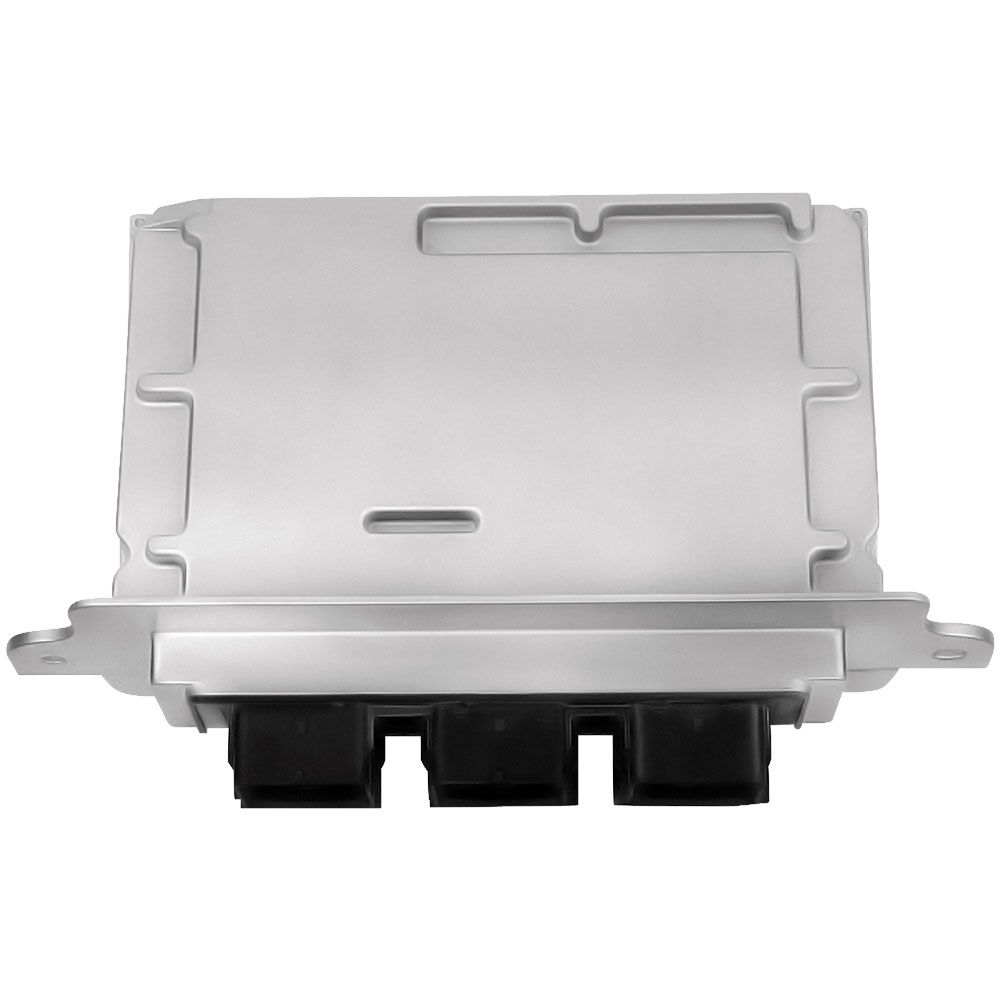
Flagship One stocks a refurbished, VIN-programmed PCM for the 2007 Ford Escape Hybrid with a lifetime warranty, free shipping and no core charge. The full Ford Escape Hybrid module lineup covers other engine configurations as well.
The PCM in your 2007 Ford Escape Hybrid is a vital component that controls engine and hybrid system operation. Recognizing symptoms like no-start or communication codes such as U2062 can lead to a timely repair. With a pre-programmed replacement PCM, you can restore your vehicle’s performance without the extra programming steps. Consider this option for a straightforward fix.