
Last updated on August 25th, 2026 at 01:36 pm
In the 2005 Ford Escape Hybrid, the Powertrain Control Module (PCM) manages fuel injection, ignition timing, and hybrid battery interaction. Failure can lead to poor performance, loss of power, or warning lights.
You’ve noticed that your 2005 Ford Escape Hybrid behaves oddly—perhaps it won’t start, or the check engine light stays on after a recent repair. The culprit could be the Powertrain Control Module, the brain that coordinates engine and hybrid power delivery. Understanding what the PCM does, how to replace it, and what post‑install steps are needed can help you decide whether a repair or a refurbished replacement is the best route. This guide covers the module’s role, the location and labor involved, the necessary programming, common symptoms, related trouble codes, and helpful service bulletins. By the end, you’ll know what to look for and how to keep your Escape running smoothly.
The PCM in a 2005 Ford Escape Hybrid is the central unit that regulates engine timing, fuel injection, and hybrid battery operation. It receives input from sensors such as the throttle position, coolant temperature, and battery state of charge, and sends output signals to the ignition coils, fuel pumps, and electric motor controller. 2005 Ford Escape Hybrid Powertrain Control Module The module’s integration ensures efficient power delivery while maintaining emissions compliance. When it malfunctions, the vehicle may experience reduced acceleration, stalling, or persistent warning lights. Replacing the PCM restores the vehicle’s ability to manage hybrid and combustion processes, which is essential for reliable operation.
2005 Ford Escape Hybrid
OEM programmed replacements — plug & play, no dealer visit.
Find yours by year, make & model →
Free shipping · Lifetime warranty
The PCM is mounted under the dashboard on the passenger side, close to the fuse box. Replacing it requires disconnecting the battery, removing the dash panel, and loosening the mounting screws. Labor times are: Powertrain Control Module R&R 0.3 hours, Powertrain Control Module Relearn 0.5 hours, Engine Control Module Relearn 0.5 hours, and Engine Control Module R&R 0.6 hours. The installer must carefully route the harness, ensuring no pinched cables, and then tighten all fasteners to the specified torque. Once the new module is seated, the relearn procedures are performed to recalibrate sensor data.
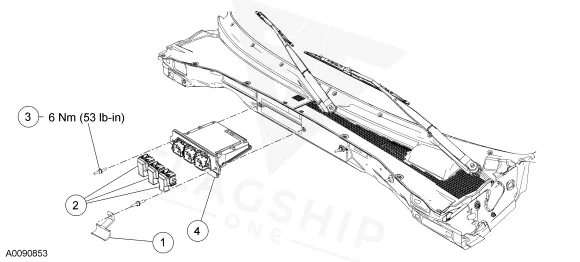
Work with the ignition off, and treat the module as static-sensitive: avoid touching the connector pins at any point.
| Operation | Configuration | Book Time |
|---|---|---|
| Powertrain Control Module R&R | All configurations | 0.3 hr |
| Powertrain Control Module Relearn | All configurations | 0.5 hr |
| Engine Control Module Relearn | All configurations | 0.5 hr |
| Engine Control Module R&R | All configurations | 0.6 hr |
After installing a new PCM, the factory procedure mandates relearn sequences for both the Powertrain Control Module and the Engine Control Module, each taking roughly 0.5 hours. The replacement unit from Flagship One comes VIN‑programmed, which eliminates the need for these relearn steps. VIN‑programmed replacement unit The dealer’s diagnostic tool will automatically recognize the module’s calibration, allowing you to bypass the typical post‑install programming.
When the PCM in your 2005 Ford Escape Hybrid fails, you may notice a persistent “Service Engine Soon” light, a loss of power after deceleration, or the engine refusing to start. The vehicle may also exhibit misfires or irregular idle. A common fault code is P0A90, which indicates an issue with the TCM during a no‑start event. P0A90:Powertrain Control Module No Start These symptoms often appear alongside a wrench lamp or a MIL that remains on after a reset.
Three service bulletins address PCM‑related issues for this model: TSB 05‑05‑03 warns of no‑start conditions with DTCs P0A90 or P0A92 and a “Service Engine Soon” light; TSB 05‑05‑13 covers a wrench lamp activation with DTC P0A1F in TBCM or PCM modules for vehicles built between 8/2/2004 and 1/26/2005; TSB 05‑06‑14 notes lack of power after deceleration, MIL and wrench lamp on, with DTCs P1A13, U2023, and P2104 for vehicles built between 8/2/2004 and 2/7/2005.
| Bulletin | Subject | What It Addresses |
|---|---|---|
| 05-05-03 | DTC P0A90 OR P0A92 IN TCM – NO START WITH “SERVICE ENGINE SOON” LIGHT ON | — |
| 05-05-13 | VEHICLES BUILT 8/2/2004 THROUGH 1/26/2005 – WRENCH LAMP ON WITH DTC P0A1F PRESENT IN TBCM AND/O | — |
| 05-06-14 | DTCS P1A13, U2023, AND P2104 – LACK OF POWER AFTER DECELERATION – MIL AND WRENCH LAMP ON – VEHI | — |
Verify that the relearn procedures were completed or that the replacement unit is VIN‑programmed. Use a diagnostic scan to clear codes and confirm the module is communicating correctly.
Yes, the ECU must relearn sensor baselines. If a Flagship One unit is VIN‑programmed, the relearn is bypassed, but the ECU will still need to synchronize with the new PCM data.
No. The passive anti‑theft system must be reprogrammed each time the PCM is replaced to maintain security and vehicle immobilizer functions.
Book times indicate 0.3 hours for removal and 0.5 hours for relearn, plus 0.5 hours for ECU relearn and 0.6 hours for ECU removal, totaling roughly 2 hours of labor.
Yes, TSB 05‑05‑03, 05‑05‑13, and 05‑06‑14 cover common PCM issues for this model and must be considered during troubleshooting.
Deciding between a full repair or a refurbished PCM replacement depends on the vehicle’s condition and your budget. The 2005 Ford Escape Hybrid can benefit from a factory‑programmed unit that eliminates relearn steps, reducing labor time and potential errors. Evaluate the warranty, diagnostic results, and overall vehicle health before proceeding.
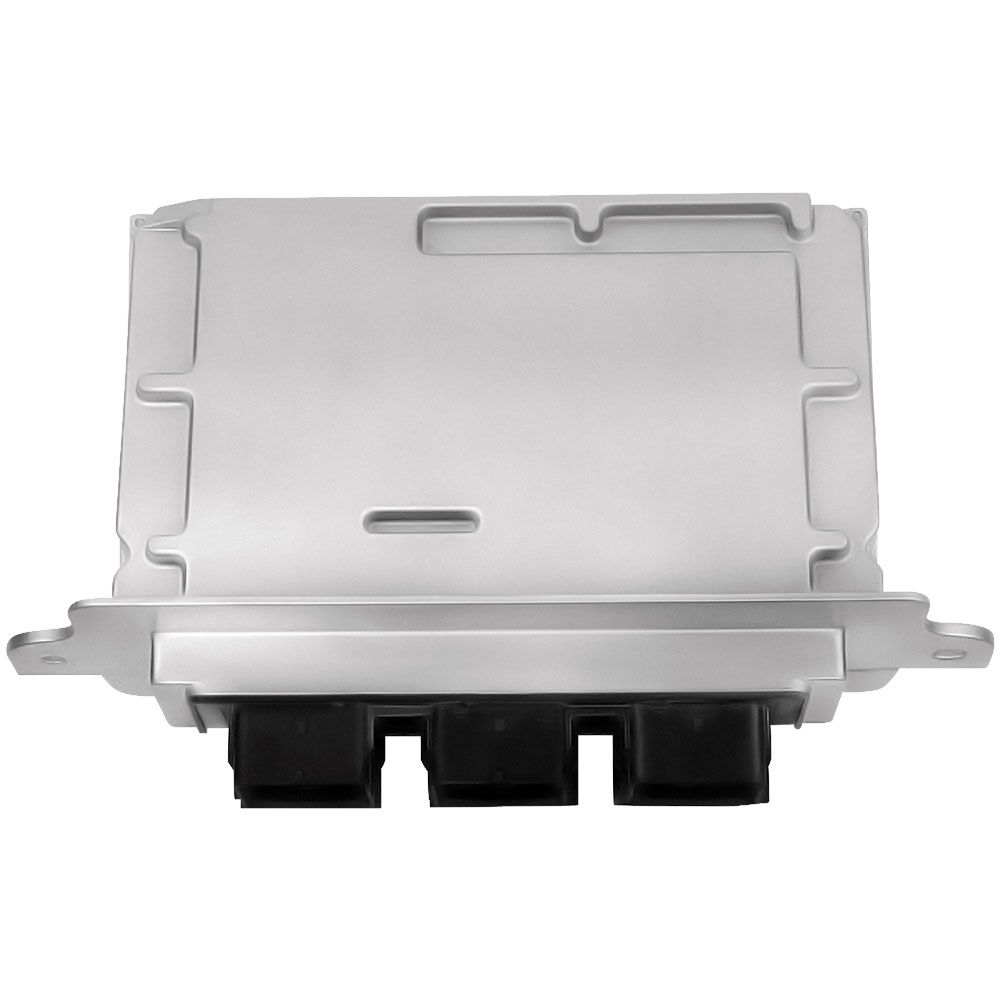
Flagship One stocks a refurbished, VIN-programmed PCM for the 2005 Ford Escape Hybrid with a lifetime warranty, free shipping and no core charge. The full Ford Escape Hybrid module lineup covers other engine configurations as well.
The 2005 Ford Escape Hybrid’s PCM is essential for engine and hybrid coordination. A properly installed, VIN‑programmed unit restores performance and eliminates the need for relearn procedures. Contact a trusted technician to ensure a smooth replacement and keep your Escape running reliably.