
Last updated on August 25th, 2026 at 01:14 pm
The powertrain control module (PCM) in your 2003 Ford Explorer Sport manages engine timing, fuel delivery, and transmission shifts. When it fails, you may experience stalling, poor acceleration, or a complete no-start condition.
If your 2003 Ford Explorer Sport is stalling, refusing to start, or throwing cryptic check-engine lights, the powertrain control module (PCM) may be the culprit. This small but critical computer manages everything from fuel delivery to transmission shifts, and when it fails, your vehicle’s performance suffers. Replacing the PCM isn’t just about swapping a part—it involves precise labor steps and a factory-mandated relearn procedure to ensure everything communicates correctly. Understanding the process helps you avoid unnecessary delays, especially if you opt for a pre-programmed unit that skips the dealership’s setup steps. Whether you’re diagnosing symptoms or planning a replacement, knowing what to expect can save you time and frustration.
The powertrain control module in your 2003 Ford Explorer Sport acts as the brain of the engine and transmission. It continuously monitors sensors for data like air intake, throttle position, and engine temperature, then adjusts fuel injection, ignition timing, and shift points in real time. Without a functioning PCM, your vehicle may run poorly or not at all. This module also stores trouble codes when something goes wrong, helping mechanics pinpoint issues like misfires or sensor failures. Over time, heat, vibration, or voltage spikes can degrade the PCM’s internal circuits, leading to intermittent or permanent failures. When replacement becomes necessary, choosing replacement engine computers for the Explorer Sport ensures compatibility and proper calibration for your vehicle’s 4.0L engine.
2003 Ford Explorer Sport
OEM programmed replacements — plug & play, no dealer visit.
Find yours by year, make & model →
Free shipping · Lifetime warranty
The PCM in your 2003 Ford Explorer Sport is located behind the dashboard on the passenger side, near the firewall. Accessing it requires removing the lower dashboard panel and possibly the glove box, depending on the technician’s approach. The labor time for removal and replacement is typically 0.4 hours, as the module is secured with a few bolts and an electrical connector. Once the old unit is disconnected, the new PCM can be installed in the same position, ensuring the connector is fully seated to avoid communication errors. The process is straightforward but requires care to avoid damaging the wiring harness or surrounding components.
Work with the ignition off, and treat the module as static-sensitive: avoid touching the connector pins at any point.
| Operation | Configuration | Book Time |
|---|---|---|
| Powertrain Control Module R&R | Explorer | 0.6 hr |
| Powertrain Control Module R&R | Explorer Sport | 0.4 hr |
| Powertrain Control Module Relearn | Explorer | 0.5 hr |
| Powertrain Control Module Relearn | Explorer Sport | 0.5 hr |
| Engine Control Module Relearn | Explorer | 0.5 hr |
| Engine Control Module Relearn | Explorer Sport | 0.5 hr |
| Engine Control Module R&R | Explorer | 0.6 hr |
| Engine Control Module R&R | Explorer Sport | 0.4 hr |
After installing a new PCM in your 2003 Ford Explorer Sport, the factory procedure requires a relearn process to synchronize the module with the vehicle’s sensors and transmission. This step typically takes 0.5 hours and involves using a scan tool to reset adaptive values and calibrate the system. However, if you choose a VIN-programmed replacement unit, these steps are already completed, saving you the trip to the dealership and the associated labor costs. The pre-programmed module arrives ready to plug in and drive, eliminating the need for additional setup or calibration.
A failing PCM in your 2003 Ford Explorer Sport may cause a range of symptoms, from subtle performance issues to complete breakdowns. Common signs include intermittent stalling, especially at idle or during deceleration, as the module struggles to maintain proper fuel and ignition timing. You might also notice rough acceleration, misfires, or the check-engine light illuminating with codes related to sensor or fuel system faults. In some cases, the vehicle may refuse to start entirely, as the PCM fails to send the correct signals to the fuel pump or ignition system. Transmission shifting problems, such as delayed or harsh gear changes, can also indicate PCM issues, as the module controls shift points and torque converter lockup. If your scan tool fails to communicate with the PCM, that’s a strong sign the module itself has failed. One specific trouble code often associated with PCM failure is an internal control module memory check sum error, which suggests the module’s memory has been corrupted and may need replacement.
Common signs include stalling, rough acceleration, no-start conditions, or transmission shifting issues. If your scan tool shows communication errors or codes like P0601, the PCM may need replacement. A professional diagnosis can confirm the issue.
Yes, if you’re comfortable with basic mechanical work. The PCM is located behind the dashboard, and removal involves disconnecting the battery, removing panels, and unbolting the module. However, a relearn procedure is required afterward unless you use a pre-programmed unit.
The relearn procedure resets adaptive values and calibrates the new PCM to your vehicle’s sensors and transmission. Without it, the engine may run poorly or the transmission may shift incorrectly. This step typically takes 0.5 hours with a scan tool.
In this vehicle, the terms are often used interchangeably. The PCM (powertrain control module) combines the functions of an ECM (engine control module) and a transmission control module, managing both engine and transmission operations.
It may, but used modules often require reprogramming to match your vehicle’s VIN and calibration. A pre-programmed replacement unit eliminates this step and ensures compatibility without additional setup.
If your 2003 Ford Explorer Sport is showing signs of PCM failure, you have options. A dealership replacement includes the module and relearn procedure but may come with higher labor costs. Alternatively, a pre-programmed replacement unit allows for a straightforward install without the need for additional programming, saving you time and hassle. Consider your budget and timeline when deciding the best approach for your vehicle.
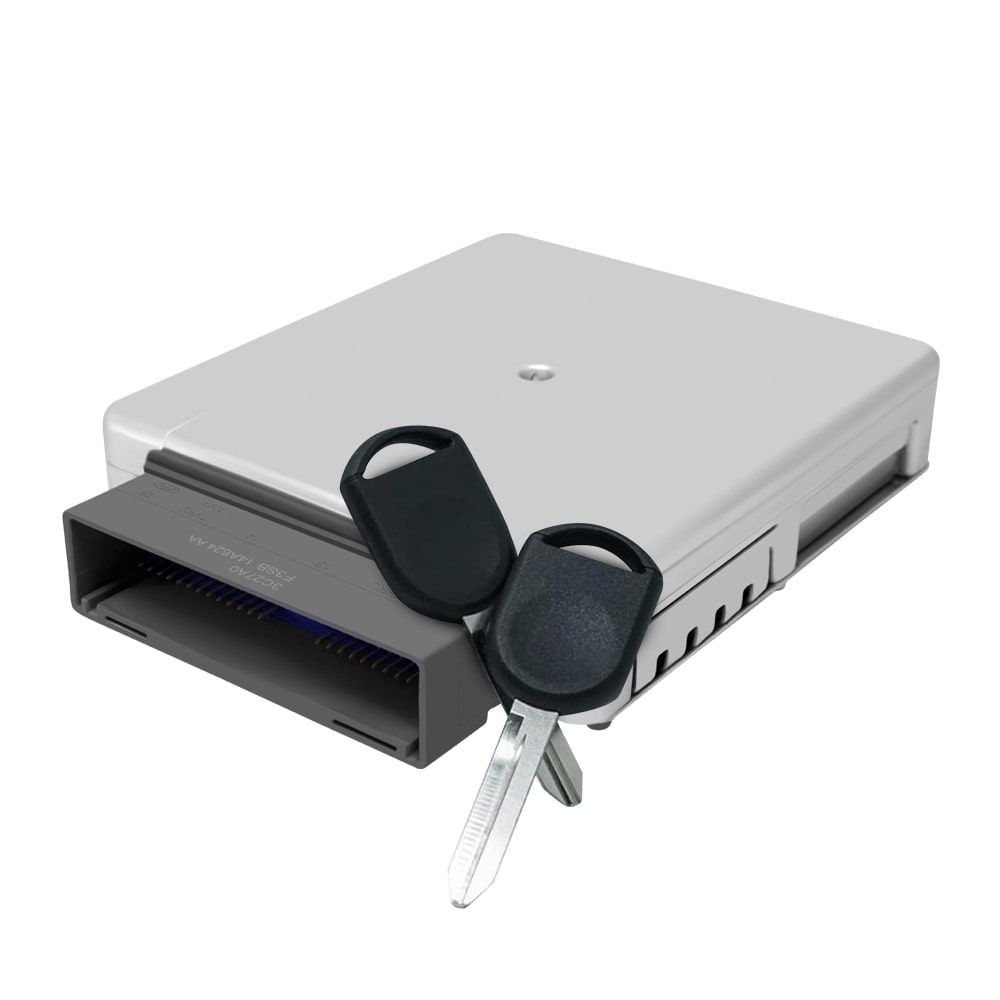
Flagship One stocks a refurbished, VIN-programmed PCM for the 2003 Ford Explorer Sport with a lifetime warranty, free shipping and no core charge. The full Ford Explorer Sport module lineup covers other engine configurations as well.
The PCM in your 2003 Ford Explorer Sport plays a critical role in keeping your engine and transmission running smoothly. If you’re experiencing symptoms like stalling, no-start conditions, or shifting issues, a failing PCM could be the cause. Replacing it involves careful installation and a relearn procedure, but opting for a pre-programmed unit simplifies the process. Addressing PCM issues promptly can restore your vehicle’s performance and reliability.