
Last updated on August 25th, 2026 at 01:37 pm
The Powertrain Control Module in your 2000 Ford Explorer Sport serves as the central computer managing engine and transmission functions. When internal circuitry fails, your vehicle may exhibit no-start conditions, intermittent stalling, poor idle quality, transmission shifting irregularities, or complete electrical shutdown where the scan tool cannot communicate with the module.
If your 2000 Ford Explorer Sport with the 4.0-liter engine has developed a no-start condition, is stalling unexpectedly, or has illuminated a check engine light that refuses to clear, you may be dealing with a failed Powertrain Control Module or Engine Control Module. These onboard computers manage critical engine and transmission functions, and when they malfunction, your vehicle can become undriveable or exhibit a wide range of drivability problems that traditional troubleshooting often fails to resolve. Understanding what these modules do, where they are located, and what the replacement process involves can save you significant diagnostic time and expense. This guide walks you through the function of the PCM and ECM on your specific vehicle, common failure symptoms that point toward module replacement rather than other repairs, the labor operations required for proper installation, and the programming steps necessary to restore full functionality. By the end, you will have a clear picture of what a module replacement involves and what options exist for getting your Explorer Sport running again.
The Powertrain Control Module in your 2000 Ford Explorer Sport functions as the central nervous system for your vehicle’s engine and transmission. This computer receives data from numerous sensors throughout the drivetrain, including the mass airflow sensor, throttle position sensor, oxygen sensors, and crankshaft position sensor, then uses that information to calculate optimal fuel injector pulse width, spark advance timing, and transmission shift points in real time. On this particular vehicle, the module also monitors emissions control systems and manages feedback loops that keep your Explorer compliant with federal emissions standards. The Engine Control Module often operates as a subsidiary processor handling specific functions or may refer to the same physical unit depending on Ford’s terminology for this model year. Without a properly functioning module, your engine cannot maintain the precise air-fuel mixture and ignition timing required for smooth operation. replacement engine computers for the Explorer Sport typically arrive pre-programmed to your vehicle’s specific calibration, allowing you to avoid the complexity of factory programming equipment. The module also stores diagnostic trouble codes that technicians retrieve during troubleshooting, making it an invaluable resource for identifying drivability concerns beyond simple sensor failures.
2000 Ford Explorer Sport:
OEM programmed ECM for your 2000 Ford Explorer Sport: — plug & play, no dealer visit.
Free shipping · Lifetime warranty
The PCM and ECM on your 2000 Ford Explorer Sport typically reside in the engine compartment, often mounted on the firewall or near the bulkhead on the driver’s side. Accessing the module for removal requires careful disconnection of the battery negative terminal first to prevent electrical damage during service. The replacement process involves removing mounting bolts or brackets securing the module, disconnecting the electrical harness, transferring any mounting hardware or protective covers to the new unit, and reconnecting all harness connectors. Factory book time for PCM removal and installation on this vehicle is 0.4 hours, while the ECM removal and installation requires 0.4 hours according to standard labor guides. These time allowances cover the physical act of swapping the unit but do not include subsequent programming or relearn procedures. You should verify that all electrical connections are clean and free of corrosion before reinstallation, as contaminated connectors can cause intermittent communication problems even with a known-good replacement module. After installing the new module, you will need to allow time for relearn procedures to complete before driving the vehicle normally.
Work with the ignition off, and treat the module as static-sensitive: avoid touching the connector pins at any point.
| Operation | Configuration | Book Time |
|---|---|---|
| Powertrain Control Module R&R | All configurations | 0.4 hr |
| Powertrain Control Module Relearn | All configurations | 0.5 hr |
| Engine Control Module Relearn | All configurations | 0.5 hr |
| Engine Control Module R&R | All configurations | 0.4 hr |
After installing a replacement module in your 2000 Ford Explorer Sport, the factory service procedure typically requires performing a relearn or adaptation sequence to allow the new computer to calibrate itself to your specific engine and drivetrain. Ford specifies distinct relearn procedures for the PCM and ECM functions, each requiring approximately 0.5 hours of additional labor time beyond the physical replacement. These procedures often involve key-on engine-off cycles, specific drive cycles, or using factory diagnostic equipment to reset learned values. When you purchase a VIN-programmed replacement unit from Flagship One, the module arrives already configured with your vehicle’s specific calibration data, which means you bypass the complexity of obtaining factory programming equipment or subscription services. However, you may still need to perform the relearn procedure to allow the new module to optimize its readings against your engine’s specific characteristics and sensor outputs. Consult your service manual for the exact relearn procedure your vehicle requires, as driving without completing this step can result in poor fuel economy, hesitation, or transmission shifting concerns.
Module failures on the 2000 Ford Explorer Sport commonly manifest as a complete no-start condition where the engine cranks normally but fails to fire, or as intermittent starting problems that come and go without apparent pattern. Many owners report sudden stalling at idle or during deceleration, often without warning lights illuminating on the instrument cluster beforehand. When the module is failing internally, you may notice check engine lights that persist even after addressing the underlying sensor or wiring concern that triggered them. Transmission-related codes may appear alongside drivability symptoms, since the module controls shift timing and line pressure. In some cases, the scan tool may fail to communicate with the module entirely, or communication may drop out intermittently during testing. Poor idle quality, rough running, decreased fuel economy, and hesitation under acceleration frequently accompany module degradation as the computer loses its ability to maintain proper engine calibration. If your Explorer Sport has undergone extensive sensor and wiring repairs without resolving the underlying concern, the module itself warrants consideration as the root cause.
Diagnosing whether the module itself is at fault versus a sensor or wiring issue requires systematic testing. If your scan tool cannot communicate with the module, if you have replaced multiple sensors without resolving the problem, or if your vehicle exhibits multiple unrelated symptoms simultaneously, the module becomes a prime suspect. A qualified technician can perform module-level diagnostics to confirm internal failure before recommending replacement.
The physical removal and installation of the module is within reach of a competent do-it-yourself mechanic with basic tools, as the book time for removal and installation is 0.4 hours for each module. However, programming and relearn procedures may require factory diagnostic equipment or access to Ford’s online repair database. Purchasing a pre-programmed replacement eliminates most of this complexity, but you may still need to perform relearn cycles to achieve optimal operation.
Your vehicle may still run and drive after module replacement without completing the relearn, but you will likely experience suboptimal performance characteristics. The engine may run slightly rich or lean, fuel economy may suffer, and transmission shifts may feel harsh or delayed until the module recalibrates to your specific engine. In some cases, the check engine light may remain illuminated until the relearn confirms all systems are operating within expected parameters.
Remanufactured modules undergo internal inspection and component replacement to address common failure modes, which can provide reasonable service life. However, the quality and thoroughness of remanufacturing processes vary among suppliers. Purchasing a new or properly tested replacement module from a reputable source ensures you receive a unit with no prior service history and known-good internal components.
A used module from another vehicle requires programming to match your specific VIN and configuration, which typically requires factory equipment or subscriptions that salvage yards usually cannot provide. Even if you can find a used module from an identical vehicle, you have no way of knowing its internal condition or remaining service life. A programmed replacement from a supplier like Flagship One eliminates these uncertainties by arriving ready to install.
When your 2000 Ford Explorer Sport requires module replacement, you face a choice between repairing your existing unit or installing a pre-programmed replacement. Repair options may exist for certain failure types, but success rates vary and the process typically requires sending your module to a specialized facility. Pre-programmed replacements arrive ready to install, allowing you to complete the physical swap without sourcing programming equipment. Flagship One provides module replacements configured specifically for your vehicle, eliminating the programming step that complicates many PCM and ECM repairs. Evaluate the extent of your symptoms and your diagnostic confidence before deciding which approach best fits your situation.
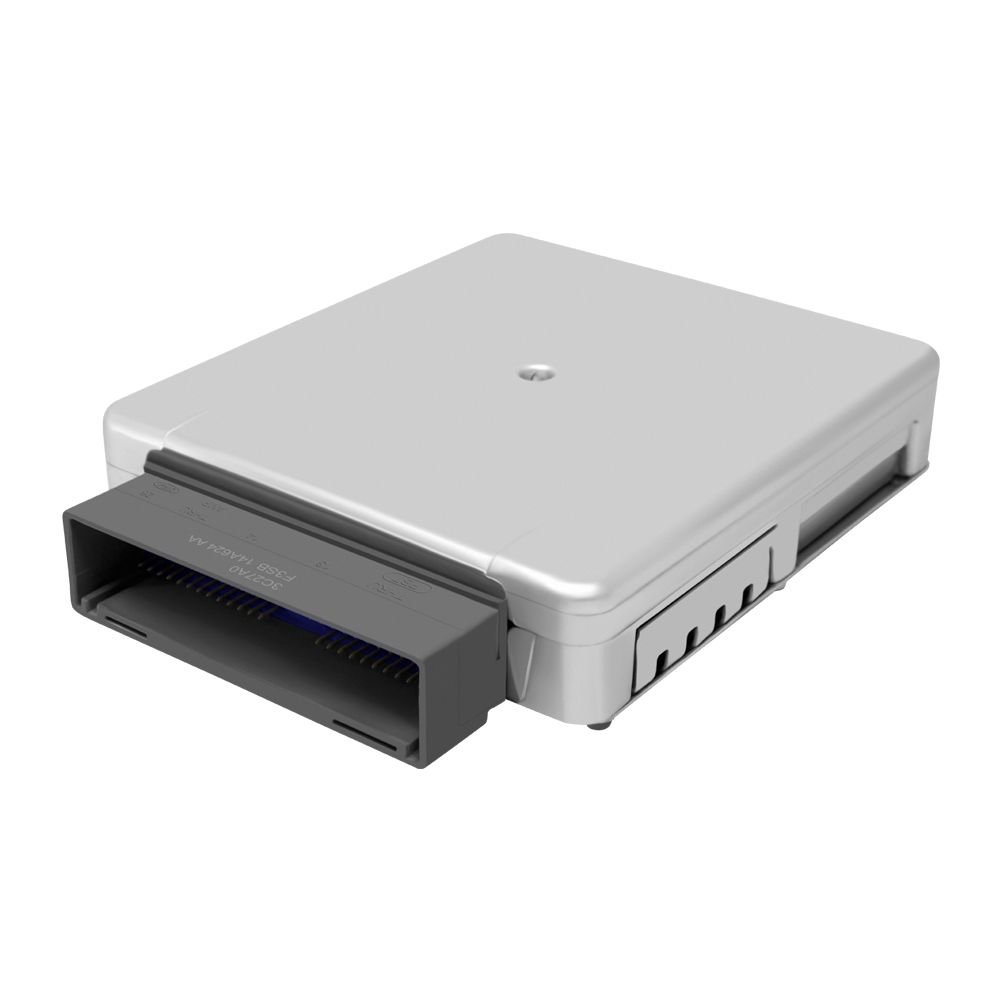
Flagship One stocks a refurbished, VIN-programmed PCM for the 2000 Ford Explorer Sport with a lifetime warranty, free shipping and no core charge. The full Ford Explorer Sport module lineup covers other engine configurations as well.
The Powertrain Control Module and Engine Control Module on your 2000 Ford Explorer Sport perform essential functions that affect every aspect of engine operation and drivability. When these modules fail, the symptoms can be confusing and the diagnostic process frustrating. Understanding the role these computers play, the labor involved in replacement, and the relearn procedures required afterward empowers you to make informed repair decisions. Whether you pursue professional installation or handle the work yourself, sourcing a properly programmed replacement unit removes one of the biggest obstacles to completing the repair efficiently.