
Last updated on August 25th, 2026 at 01:14 pm
The powertrain control module in your 2003 Ford Escape serves as the primary computer managing engine and transmission operation. Internal processor failure causes loss of spark, fuel delivery, and shifting commands, resulting in no-start conditions or limp-home mode. The engine control module handles complementary emission and performance functions.
When the powertrain control module fails in a 2003 Ford Escape, your vehicle may exhibit a range of driveability symptoms that can be difficult to diagnose without proper understanding of the system architecture. This module serves as the central nervous system for the 2.0L four-cylinder engine, coordinating fuel delivery, ignition timing, emissions controls, and transmission operation. Module failure does not always present as a complete no-start condition; symptoms often begin subtly with intermittent electrical glitches before progressing to more serious driveability concerns. Understanding the role of this component, recognizing the signs of failure, and knowing what replacement involves will help you make informed decisions about repair options. The information that follows covers module function, common failure patterns, factory service procedures, and practical considerations for replacement.
The powertrain control module in your 2003 Ford Escape functions as the central command center for virtually every aspect of engine and drivetrain operation. This onboard computer receives data from dozens of sensors throughout the vehicle, including mass airflow measurements, throttle position, oxygen levels in the exhaust, coolant temperature, and crankshaft positioning. It processes this information thousands of times per second to calculate precise fuel injection pulse widths, optimal spark advance angles, and transmission shift points appropriate to current driving conditions. For the 2.0L engine specifically, accurate air-fuel ratio control directly influences both performance and fuel economy, while transmission command authority affects shift quality and torque converter behavior. The module also manages cooling fan activation, evaporative emissions system operation, andcruise control functionality. Replacement engine computers for the Escape must replicate these complex interdependencies to restore proper vehicle operation. When this module experiences internal electronic failure, the consequences extend across multiple vehicle systems simultaneously, creating symptom patterns that can confuse even experienced technicians. The module processes inputs from oxygen sensors and other emission-related devices to determine proper fuel delivery, spark timing, and transmission shifting strategy for your vehicle. This level of integration means that a failing module may produce symptoms that appear unrelated to a computer problem, such as random electrical accessories cutting in and out or transmission harshness that mimics mechanical failure.
Flagship One keeps Ford Escape replacement engine computers in stock for exactly this failure pattern.
2003 Ford Escape
OEM programmed ECM for your 2003 Ford Escape — plug & play, no dealer visit.
Free shipping · Lifetime warranty
On the 2003 Ford Escape, the powertrain control module mounts on the passenger-side inner fender panel, positioned above the engine compartment and accessible through the wheel well area. The engine control module may share this location or mount in an adjacent position depending on your specific configuration. Replacement requires removing the front passenger wheel and the inner fender splash shield to reach the electrical connector and mounting hardware. Disconnecting the negative battery terminal before beginning work protects sensitive electronic components from accidental shorts. The factory labor time for powertrain control module removal and installation is 0.3 hours, while engine control module removal and installation requires 0.6 hours. After the new module is secured and all electrical connections are properly seated, the splash shield and wheel reinstall in reverse order of removal. Torque specifications for mounting hardware and wheel lugs should be verified to factory standards.
Work with the ignition off, and treat the module as static-sensitive: avoid touching the connector pins at any point.
| Operation | Configuration | Book Time |
|---|---|---|
| Powertrain Control Module R&R | All configurations | 0.3 hr |
| Powertrain Control Module Relearn | All configurations | 0.5 hr |
| Engine Control Module Relearn | All configurations | 0.5 hr |
| Engine Control Module R&R | All configurations | 0.6 hr |
After installing a replacement module in your 2003 Ford Escape, the factory procedure requires executing specific relearn and adaptation processes to ensure proper operation. The powertrain control module relearn procedure takes 0.5 hours according to factory information, while the engine control module relearn procedure requires an additional 0.5 hours. These procedures teach the new module your engine’s specific characteristics by resetting adaptive fuel trims, reestablishing idle air control learned values, and allowing the transmission control system to recalibrate shift firmness and points. A VIN-programmed replacement unit from Flagship One arrives ready to install, meaning the module is configured for your specific vehicle identification number before it reaches your shop or installer. This pre-programming eliminates the need for separate dealership programming appointments and reduces post-installation labor time significantly.
Every VIN-programmed replacement unit from Flagship One arrives with these steps already completed.
Powertrain control module failure in the 2003 Ford Escape typically announces itself through several recognizable symptom patterns. A no-start condition where the engine cranks normally but receives no fuel or spark commands indicates complete module communication failure with ignition and injection systems. The engine may also start but stall immediately after starting, particularly as operating temperatures rise, suggesting the module loses reliability during thermal cycling. Persistent misfire trouble codes spanning combinations like P0300, P0301, P0302, P0303, and P0304 frequently appear when the module fails to properly sequence fuel injector operation. Scan tool communication may be completely absent, show garbled data, or display multiple module communication errors simultaneously. Transmission symptoms include harsh or inappropriate shifting, failure to engage gears, and torque converter clutch malfunctions since the module directly controls these functions. Additional indicators include a steady check engine light regardless of conditions, noticeable fuel economy deterioration, and reduced power output when the module enters fail-safe mode.
Factory service bulletin number 06-09-03 addresses intermittent electrical accessory operation combined with powertrain control module failure in this vehicle application. Documented symptoms included accessories cutting in and out unpredictably before ultimately becoming completely inoperative. The bulletin characterized the condition as stemming from internal module faults rather than simple wiring or connector problems. Reprogramming attempts were documented as an initial remedy in the bulletin procedure. However, the underlying electronic failures in these older modules often progressed beyond what software updates could address, eventually requiring complete module replacement to restore reliable vehicle operation.
| Bulletin | Subject | What It Addresses |
|---|---|---|
| 06-09-03 | ELECTRICAL ACCESSORIES INTERMITTENT – INOPERATIVE – PCM FAILURE | — |
Used modules typically require VIN-specific programming to function properly. While some used units may appear to initialize without programming, adaptive values and security features may not operate correctly, resulting in drivability or starting issues.
Module-internal trouble codes and complete loss of communication with the scan tool often indicate module failure. Wiring problems typically produce codes pointing to specific circuits. A qualified technician can perform voltage and resistance testing to isolate the cause.
Driving with module failure is not recommended. The module may enter fail-safe mode unexpectedly, causing sudden power loss, transmission shifting problems, or stalling that creates safety hazards, particularly in traffic or highway driving conditions.
Common causes include age-related electronic degradation, heat cycling from engine compartment temperatures, voltage spikes from charging system problems or jump-starting, and moisture intrusion through connector seals. Internal processor and memory circuit wear are inherent failure modes in older module designs.
Module repair services exist, but results vary based on the nature of the internal failure. Replacement with a professionally refurbished unit typically provides more predictable long-term reliability with full factory programming included.
Deciding between repair and replacement for your 2003 Ford Escape powertrain control module depends on the extent of damage and your budget considerations. Professional module repair services may address certain internal failures, though results cannot be guaranteed. A properly programmed replacement module from a reputable supplier eliminates uncertainty about internal component condition while restoring full factory functionality. Flagship One provides VIN-programmed replacement units configured specifically for your vehicle, reducing installation complexity and eliminating separate programming appointments. Consider requesting a diagnostic confirmation before proceeding with replacement to ensure the module itself is the source of your vehicle’s symptoms.
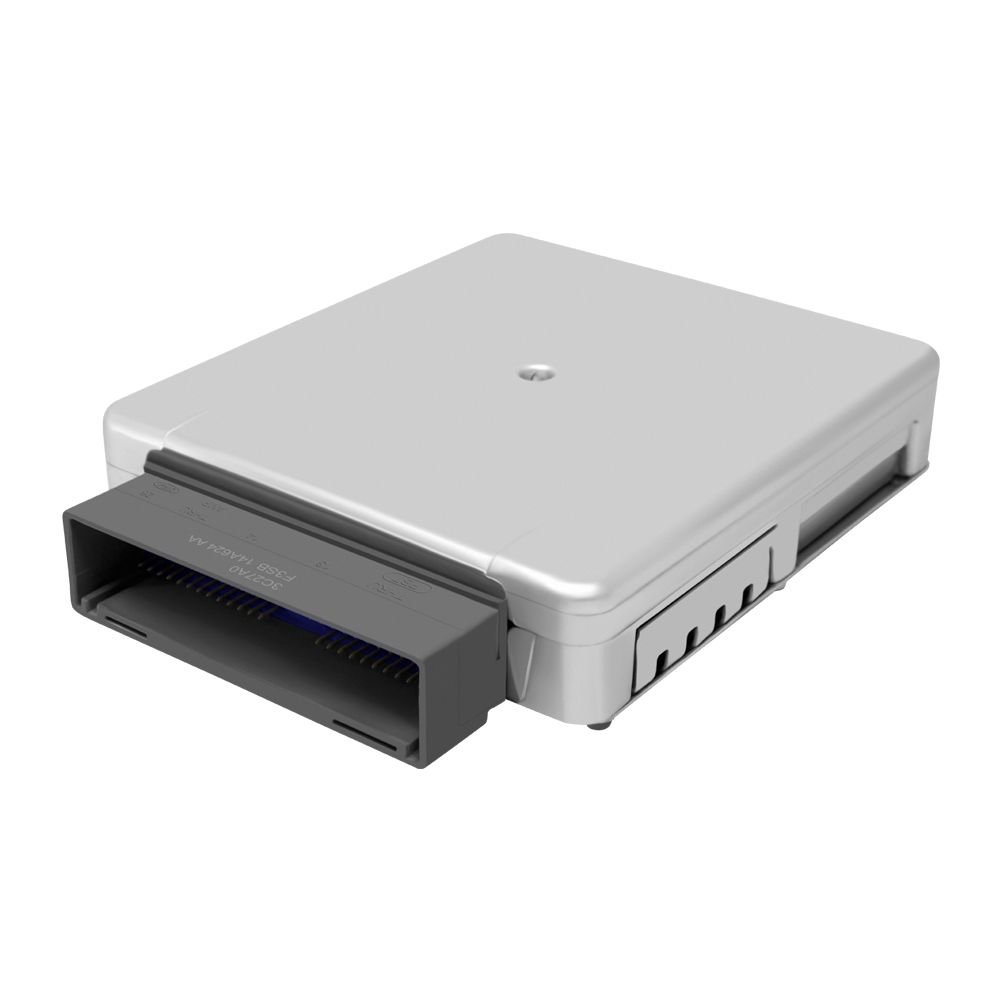
Flagship One stocks a refurbished, VIN-programmed PCM for the 2003 Ford Escape with a lifetime warranty, free shipping and no core charge. The full Ford Escape module lineup covers other engine configurations as well.
The powertrain control module represents the most complex and consequential replacement component in your 2003 Ford Escape. Understanding its functions, recognizing failure symptoms, and following proper replacement and programming procedures will help ensure successful repair. Whether you choose professional repair services or replacement with a pre-programmed unit, addressing module failure promptly protects other vehicle systems from secondary damage and restores the drivability you depend on.