
Last updated on August 25th, 2026 at 01:37 pm
The Powertrain Control Module (PCM) in your 2001 Ford Escape manages engine timing, fuel delivery, and transmission shifting. When this computer fails, your vehicle may not start or run poorly due to corrupted internal memory or damaged circuitry.
If your 2001 Ford Escape with the 3.0L V6 engine won’t start, runs rough, or displays multiple electrical anomalies, the Powertrain Control Module may be the culprit. This comprehensive guide explains what this critical engine computer does, how failure manifests, and what replacement involves for do-it-yourselfers and informed vehicle owners. The PCM serves as the brain of your Escape’s powertrain, and when it malfunctions, the entire vehicle operation is compromised. You’ll learn the exact labor involved, the factory-recommended procedures, and why a pre-programmed replacement can save you significant time and expense compared to a virgin unit requiring dealer-style relearn procedures. Whether you’re diagnosing a no-start condition or planning a proactive replacement, this guide provides the factual foundation you need to make informed decisions about your 2001 Ford Escape’s powertrain control system.
The Powertrain Control Module in your 2001 Ford Escape is the primary computer responsible for managing the 3.0L V6 engine’s fuel injection, ignition timing, emissions systems, and automatic transmission shifting. Unlike simple aftermarket engine management upgrades, the factory PCM integrates multiple vehicle systems into a unified control strategy that optimizes performance, fuel economy, and emissions simultaneously. This module receives input from dozens of sensors throughout the engine compartment and uses this data to make real-time adjustments to keep your Escape running smoothly under varying conditions. When the internal processor or memory within the PCM becomes corrupted from voltage spikes, heat cycling, or component aging, the module may lose its programming or send incorrect commands to the actuators it controls. Because the PCM handles both engine and transmission functions, a failure can manifest as anything from a no-start condition to erratic shifting, illuminated check engine lights, or complete electrical system shutdown. The related Engine Control Module handles additional functions and may be serviced separately or as part of a combined PCM assembly depending on your specific repair scenario. Understanding which computer has failed requires diagnostic scanning and sometimes bench-testing of the unit itself. Replacement engine computers for the Escape must be matched to your specific vehicle identification number to ensure compatibility with your powertrain configuration.
Flagship One keeps Ford Escape replacement engine computers in stock for exactly this failure pattern.
2001 Ford Escape
OEM programmed ECM for your 2001 Ford Escape — plug & play, no dealer visit.
Free shipping · Lifetime warranty
The PCM on a 2001 Ford Escape is located in the engine compartment, typically mounted on the driver’s side near the firewall or fender well. Access requires removing the engine cover and potentially some surrounding air intake components to reach the unit. The module is secured with mounting bolts and connected to the vehicle wiring harness through a multi-pin electrical connector that must be carefully disconnected before removal. Once the old unit is removed, the replacement PCM drops into the same mounting location and secures with the original bolts. The electrical connector reattaches, and all removed components are reinstalled in reverse order. Labor guides allocate 0.3 hours for the actual remove-and-replace procedure for the Powertrain Control Module, with an additional 0.5 hours for the PCM relearn procedure that follows. The Engine Control Module R&R requires 0.6 hours, with its own 0.5-hour relearn procedure. If both modules require replacement, plan accordingly for combined labor time. Torque specifications for mounting hardware follow standard factory procedures, and all electrical connections should be treated with dielectric grease to prevent future corrosion at the connector pins.
Work with the ignition off, and treat the module as static-sensitive: avoid touching the connector pins at any point.
| Operation | Configuration | Book Time |
|---|---|---|
| Powertrain Control Module R&R | All configurations | 0.3 hr |
| Powertrain Control Module Relearn | All configurations | 0.5 hr |
| Engine Control Module Relearn | All configurations | 0.5 hr |
| Engine Control Module R&R | All configurations | 0.6 hr |
After installing a replacement PCM in your 2001 Ford Escape, the factory procedure requires a relearn procedure to allow the new module to adapt to your vehicle’s specific engine and transmission characteristics. This process establishes communication between the PCM and the various sensors and actuators throughout the powertrain, calibrating the fuel delivery and timing curves to your engine’s unique running qualities. The PCM relearn procedure takes 0.5 hours according to factory labor guides, while the ECM relearn requires an additional 0.5 hours if that module was also replaced. These procedures are typically performed by a scan tool that initiates the adaptation cycle and verifies successful communication with all vehicle modules. However, when you purchase a VIN-programmed replacement unit from Flagship One, the module arrives pre-configured with your specific vehicle’s programming already installed. This means the initial relearn steps that would normally require dealer equipment and time are largely handled before the unit even enters your vehicle, significantly reducing the post-installation procedure time required to get your Escape back on the road.
Every VIN-programmed replacement unit from Flagship One arrives with these steps already completed.
When the Powertrain Control Module fails on a 2001 Ford Escape 3.0L, the symptoms often begin subtly and progressively worsen over time. Many owners first notice intermittent no-start conditions where the engine cranks normally but fails to fire, or the vehicle starts but immediately stalls when the PCM loses communication with critical sensors. The check engine light may illuminate with various codes stored in the module’s memory, including internal fault codes that cannot be cleared through normal means. In some cases, the engine may run but exhibit poor idle quality, hesitation under acceleration, or reduced power output that makes highway merging hazardous. Transmission shifting may become erratic or unpredictable because the PCM controls shift points, and some drivers report that their Escape suddenly shifts into limp-home mode. Electrical accessories throughout the vehicle may function intermittently or fail completely, which aligns with the factory bulletin mentioning electrical inoperability. A dead or failing PCM often prevents scan tools from communicating with the vehicle’s OBD-II system, leaving technicians with no diagnostic data until the computer is restored to operation. These symptoms frequently lead owners to suspect fuel pump or ignition system problems when the true culprit lies within the engine computer itself.
Factory TSB 06-09-03 documents an electrical accessories intermittent inoperable condition on certain 2001 Ford Escape models that traces back to PCM failure. This bulletin acknowledges that owners may experience random electrical system malfunctions where various accessories become inoperative without warning, then return to normal operation temporarily before failing again. The bulletin specifically identifies the Powertrain Control Module as the root cause of these electrical anomalies, recommending replacement of the PCM to resolve the intermittent operation. This factory documentation supports the importance of considering PCM failure when diagnosing electrical issues on this vehicle that do not follow typical wiring fault patterns. Owners experiencing the symptoms described in this bulletin should have their vehicle scanned for diagnostic trouble codes and consider PCM replacement as a primary repair path rather than chasing individual circuit faults throughout the vehicle.
| Bulletin | Subject | What It Addresses |
|---|---|---|
| 06-09-03 | ELECTRICAL ACCESSORIES INTERMITTENT – INOPERATIVE – PCM FAILURE | — |
No. The replacement PCM must be matched to your specific vehicle identification number to ensure compatibility with your 3.0L engine and transmission combination. A mismatched module may not communicate properly with your vehicle’s sensors and could cause additional drivability issues.
Yes, experienced DIY mechanics can perform the physical replacement using basic hand tools. The remove-and-replace procedure takes approximately 0.3 hours for the PCM, though you’ll need a scan tool for the relearn procedure afterward unless you purchase a pre-programmed replacement unit.
If the replacement module wasn’t properly programmed for your specific vehicle or the relearn procedure wasn’t completed, the engine may run rough, stall, or exhibit drivability issues. A virgin module requires the factory relearn procedure to adapt to your engine’s unique characteristics.
This vehicle uses an integrated Powertrain Control Module that handles both engine and transmission functions. Some configurations may have separate control modules, but diagnosis with a scan tool will clarify which components your specific vehicle employs.
Repairing a failed PCM is generally not cost-effective for this vehicle. The internal circuitry and processor are not serviceable components, and most specialty repair shops recommend replacement with a properly programmed unit for reliable long-term operation.
When your 2001 Ford Escape requires PCM replacement, you have two primary paths: purchasing a virgin unit from the dealer and paying for their programming and relearn procedures, or selecting a quality refurbished replacement that arrives VIN-programmed and ready to install. The pre-programmed approach eliminates the dealer visit and associated labor costs, getting your vehicle back on the road faster. Evaluate your budget, timeline, and mechanical comfort level when deciding which route best suits your situation.
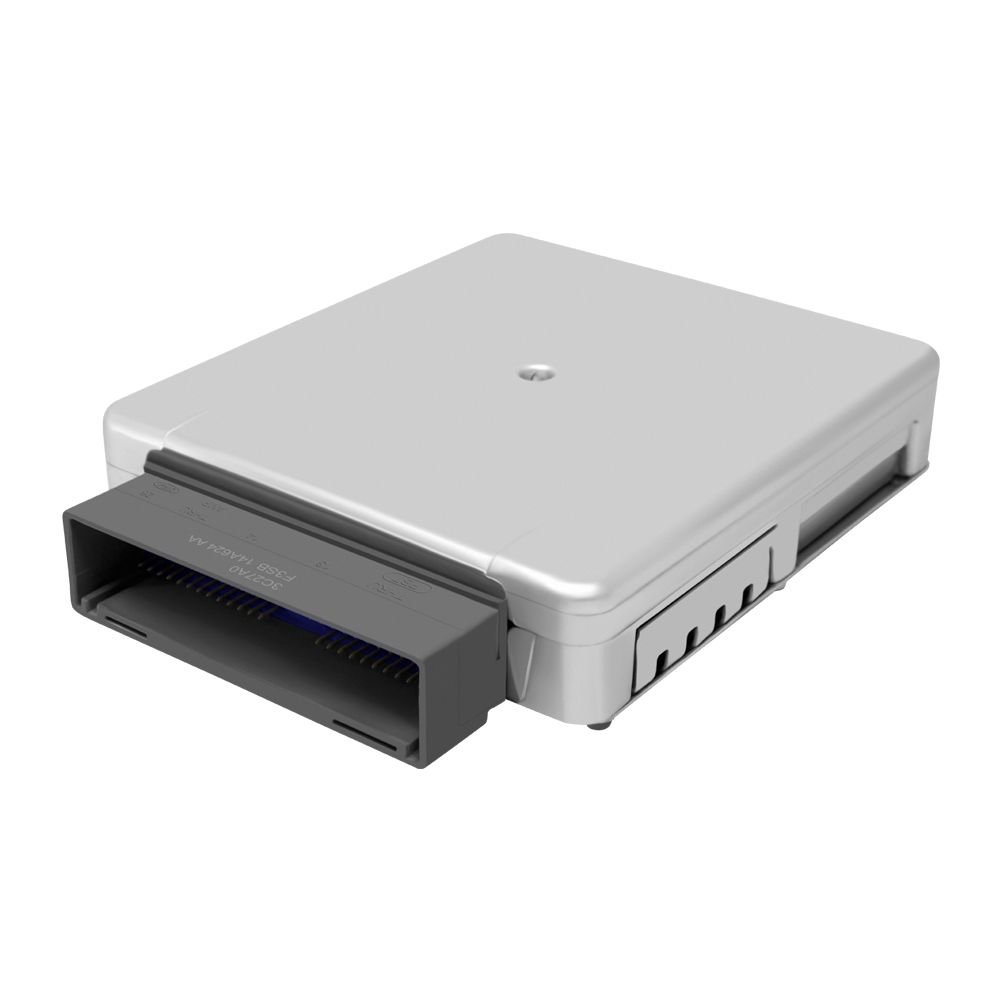
Flagship One stocks a refurbished, VIN-programmed PCM for the 2001 Ford Escape with a lifetime warranty, free shipping and no core charge. The full Ford Escape module lineup covers other engine configurations as well.
The Powertrain Control Module is the heart of your 2001 Ford Escape’s powertrain management, and failure of this critical component can leave you stranded or dealing with frustrating drivability issues. Understanding the symptoms, labor involved, and programming requirements empowers you to make informed decisions about repair options. Whether you pursue dealer replacement or a pre-programmed unit from a specialist supplier, addressing PCM failure promptly restores your Escape to reliable operation.