
Last updated on August 25th, 2026 at 01:14 pm
The powertrain control module (PCM) in your 2001 Ford Taurus acts as the vehicle’s central computer, managing engine performance, fuel delivery, and transmission behavior. Failures may cause erratic idling, poor acceleration, or a no-start condition.
If your 2001 Ford Taurus has been acting unpredictably—stalling at stops, hesitating under acceleration, or refusing to start—your powertrain control module (PCM) may be the culprit. This small but critical computer oversees nearly every aspect of engine and transmission operation, from fuel injection timing to shift points. When it malfunctions, the effects can range from subtle drivability issues to complete immobilization. Replacing the PCM isn’t just about swapping a part; it involves precise labor steps and, in most cases, a factory-mandated relearn procedure to ensure the new module communicates correctly with the rest of the vehicle’s systems. Understanding the process helps you avoid unnecessary delays, whether you’re tackling the job yourself or working with a shop. You’ll also learn why opting for a pre-programmed unit can save time and reduce the risk of post-installation headaches. This guide covers what the PCM does, where it’s located, common failure symptoms, and the steps required to restore your Taurus to reliable operation.
The powertrain control module in your 2001 Ford Taurus serves as the brain of the engine and transmission, continuously monitoring sensors and adjusting critical functions like fuel mixture, ignition timing, and shift scheduling. Without it, the engine may run too rich or too lean, the transmission might shift erratically, or the vehicle could fail to start altogether. The PCM also stores diagnostic trouble codes when it detects anomalies, which technicians use to pinpoint issues. Over time, exposure to heat, vibration, or voltage spikes may degrade its internal circuitry, leading to intermittent or permanent failures. When replacement becomes necessary, you’ll need replacement engine computers for the Taurus that match the original specifications. The module’s role is so central that even minor glitches can trigger a cascade of drivability problems, making timely diagnosis and repair essential for maintaining your vehicle’s performance and fuel efficiency.
2001 Ford Taurus
OEM programmed ECM for your 2001 Ford Taurus — plug & play, no dealer visit.
Free shipping · Lifetime warranty
In the 2001 Ford Taurus, the powertrain control module is mounted on the passenger side of the engine compartment, near the firewall. Accessing it requires removing the air intake duct and possibly the battery or its tray, depending on the engine variant. The job typically involves disconnecting the wiring harness, unbolting the module, and installing the new unit in its place. Labor times vary: 0.5 hours for the 3.0L gas engine, 0.8 hours for certain configurations, and 0.4 hours for flex-fuel models. After installation, the module must be secured with the original fasteners, and all electrical connections should be inspected for corrosion or damage. The process is straightforward but requires care to avoid bending pins or damaging the connector.
Work with the ignition off, and treat the module as static-sensitive: avoid touching the connector pins at any point.
| Operation | Configuration | Book Time |
|---|---|---|
| Powertrain Control Module R&R | All configurations | 1.0 hr |
| Powertrain Control Module Relearn | All configurations | 0.5 hr |
| Engine Control Module R&R | GAS | 0.5 hr |
| Engine Control Module R&R | GAS | 0.8 hr |
| Engine Control Module R&R | FLEX | 0.4 hr |
After replacing the powertrain control module in your 2001 Ford Taurus, the factory procedure requires a 0.5-hour relearn process to synchronize the new unit with the vehicle’s sensors and transmission. This step ensures the PCM adapts to the engine’s unique characteristics, such as fuel trims and idle settings. However, a VIN-programmed replacement unit from Flagship One arrives pre-configured to your vehicle’s specifications, eliminating the need for this additional step. This not only saves time but also reduces the risk of incomplete initialization, which can lead to persistent drivability issues. If you’re installing the module yourself, confirm that the unit is compatible with your Taurus’s engine type—gas or flex-fuel—to avoid compatibility errors. Always follow the manufacturer’s torque specifications when securing the module to prevent connector damage or poor grounding.
A failing powertrain control module in your 2001 Ford Taurus may produce a range of symptoms, some subtle and others impossible to ignore. Common signs include rough idling, stalling at stops, or hesitation during acceleration, which can mimic fuel system or ignition problems. You might also notice the transmission shifting erratically or the engine running too rich or too lean, often accompanied by a check engine light. In some cases, the vehicle may fail to start entirely, or the scan tool may be unable to communicate with the PCM. Diagnostic trouble codes like fuel system too rich or P0175 (system too rich, bank 2) are frequently logged, pointing to the module’s role in managing air-fuel ratios. Other codes, such as those related to misfires or sensor malfunctions, may also appear if the PCM is misinterpreting input signals. Because these symptoms overlap with other issues, a thorough diagnosis is essential to rule out alternator problems, faulty sensors, or wiring issues before concluding the PCM is at fault.
Ford issued a service bulletin (#04-17-12) addressing persistent malfunction indicator lamp illumination and diagnostic trouble codes P0172 and P0175 in the 2001 Taurus. These codes indicate the engine is running too rich, which may stem from fuel system issues or, in some cases, a faulty powertrain control module. The bulletin outlines diagnostic steps to isolate the root cause, including checking for vacuum leaks, fuel pressure irregularities, or sensor malfunctions. If other components are ruled out, the PCM may require replacement or reprogramming to resolve the condition.
| Bulletin | Subject | What It Addresses |
|---|---|---|
| 04-17-12 | MALFUNCTION INDICATOR LAMP (MIL) AND DIAGNOSTIC TROUBLE CODES (DTCS) P0172/P0175 | — |
Stalling after a PCM replacement often indicates the module wasn’t properly initialized or relearned. The factory procedure requires a 0.5-hour relearn process to synchronize the new unit with the engine and transmission. If this step is skipped, the PCM may not adjust fuel delivery or idle settings correctly, leading to stalling. Using a pre-programmed unit can eliminate this issue.
Driving with a failing PCM is risky. The module controls critical functions like fuel injection and transmission shifts, so a malfunction may cause stalling, poor acceleration, or even a no-start condition. If the PCM is intermittently failing, the vehicle might run unpredictably, increasing the risk of an accident or further damage to the engine or transmission.
A bad PCM and a faulty sensor can produce similar symptoms, such as rough idling or misfires. To differentiate, use a scan tool to check for diagnostic trouble codes. If multiple unrelated codes appear (e.g., oxygen sensor and transmission codes), the PCM may be the culprit. If only one sensor-related code is present, the sensor itself is more likely the issue.
Yes, the PCM must be programmed to your vehicle’s VIN to ensure compatibility with the engine, transmission, and other systems. The factory procedure includes a relearn process to adapt the module to your specific Taurus. A pre-programmed replacement unit from Flagship One arrives ready to install, skipping this step.
In the 2001 Ford Taurus, the terms PCM (powertrain control module) and ECM (engine control module) are often used interchangeably, but the PCM is the correct designation. It combines the functions of an ECM (engine management) and a transmission control module, overseeing both systems. This integration allows the PCM to optimize performance and fuel efficiency across the entire powertrain.
If your 2001 Ford Taurus is exhibiting symptoms of a failing PCM, you have two main options: repair or replacement. While some shops may attempt to reflash or repair the existing module, this approach doesn’t always resolve underlying hardware issues. A new or refurbished replacement unit ensures reliability, especially if it’s pre-programmed to your VIN. Given the labor times involved—ranging from 0.4 to 1.0 hours—opting for a unit that eliminates the relearn process can save time and reduce the risk of post-installation problems.
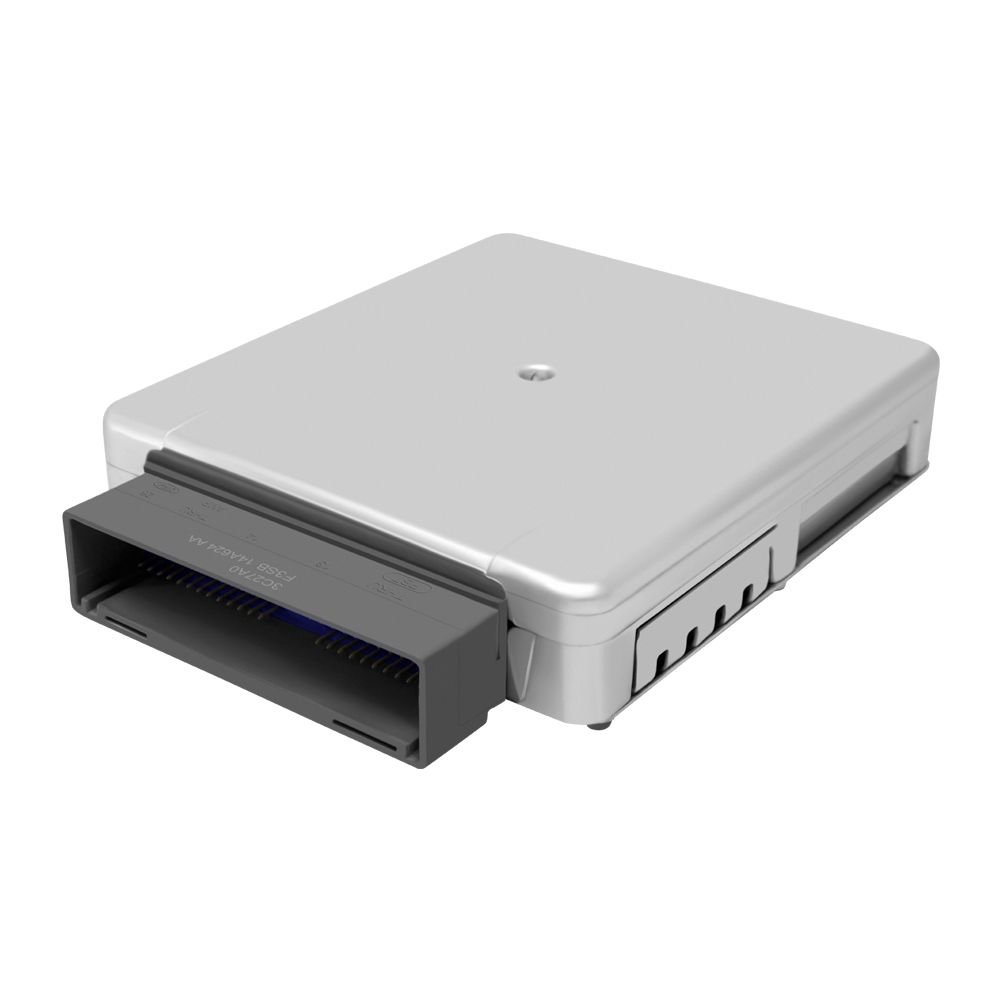
Flagship One stocks a refurbished, VIN-programmed PCM for the 2001 Ford Taurus with a lifetime warranty, free shipping and no core charge. The full Ford Taurus module lineup covers other engine configurations as well.
The powertrain control module in your 2001 Ford Taurus plays a critical role in keeping the engine running smoothly and the transmission shifting correctly. When it fails, the symptoms can range from subtle drivability issues to complete immobilization. Replacing the PCM involves careful installation and, in most cases, a factory-mandated relearn procedure. However, choosing a pre-programmed unit simplifies the process, allowing you to get your Taurus back on the road with minimal downtime. If you’re experiencing persistent check engine lights or erratic behavior, addressing the PCM promptly can restore your vehicle’s reliability and performance.