
Last updated on August 25th, 2026 at 01:15 pm
The Powertrain Control Module in a 1999 Ford Mustang GT manages engine timing, fuel delivery, and transmission shifting. Failure typically results from internal component loss, water intrusion, or electrical faults, leading to loss of engine control and related warning lights.
When a 1999 Ford Mustang GT exhibits warning lights or erratic speedometer behavior, the Powertrain Control Module may need replacement. This guide walks you through what the PCM does, where it sits, how long the shop work typically takes, and what post‑install steps are required. Understanding these points helps you decide whether to pursue a new factory‑programmed unit or a refurbished option, and it ensures the vehicle returns to reliable operation after service.
## What Is the PCM in a 1999 Ford Mustang GT?
The Powertrain Control Module serves as the vehicle’s central computer, interpreting sensor data to control fuel injection, ignition timing, and transmission shift points. In this model, the PCM also communicates with the instrument cluster to drive speedometer output and lamp status. Because it governs both engine and drivetrain functions, a malfunction can affect drivability, emissions, and diagnostic reporting. Proper operation is essential for meeting performance expectations and regulatory standards. For those needing a spare, consider 1999 Ford Mustang GT replacement modules that match the original specifications.
1999 Ford Mustang GT
OEM programmed replacements — plug & play, no dealer visit.
Find yours by year, make & model →
Free shipping · Lifetime warranty
The PCM resides behind the cowl side trim, reachable once the trim is removed according to the factory removal procedure. Replacement typically requires 0.5 hours of labor for removal and another 0.5 hours for the relearn process. Technicians will disconnect the electrical connector, extract the module, install the new unit, and reconnect the harness, following the prescribed access steps.
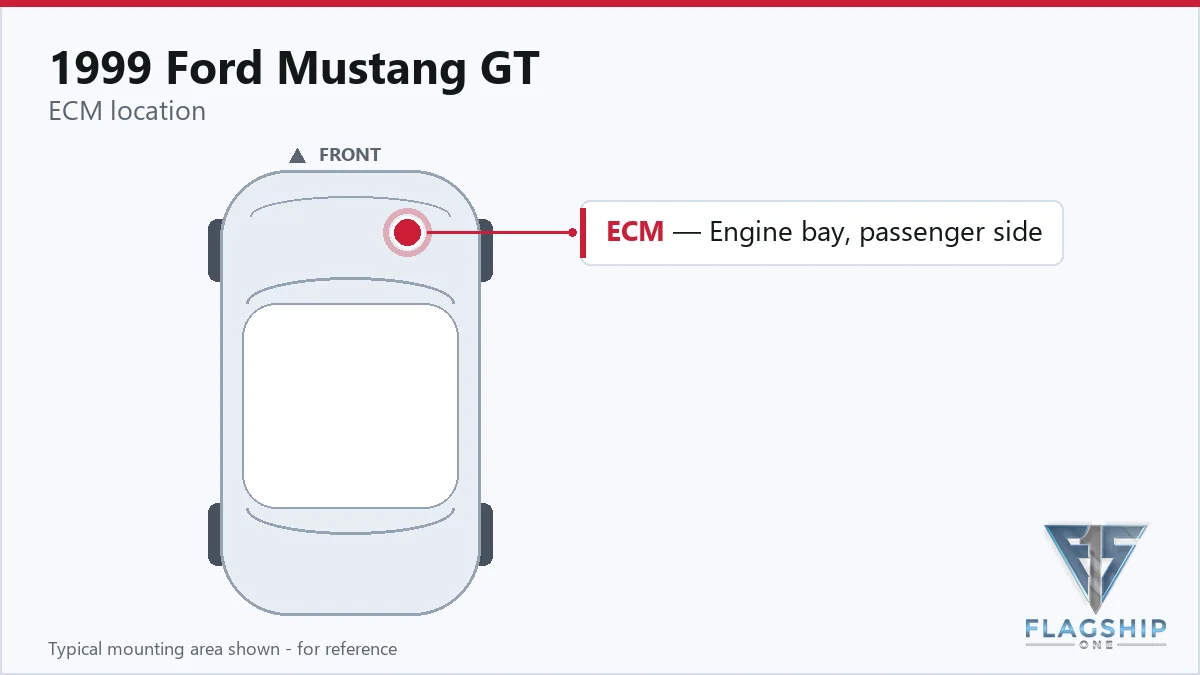
Work with the ignition off, and treat the module as static-sensitive: avoid touching the connector pins at any point.
| Operation | Configuration | Book Time |
|---|---|---|
| Engine Control Module R&R | All configurations | 1.0 hr |
| Powertrain Control Module R&R | All configurations | 0.5 hr |
| Powertrain Control Module Relearn | All configurations | 0.5 hr |
After installing a new PCM, the factory process calls for a Powertrain Control Module relearn that takes about 0.5 hours. Flagship One units arrive already VIN‑programmed, so the required relearn step is already completed when you receive a VIN-programmed replacement unit, eliminating the need for additional on‑site coding.
Common signs of a failing PCM in a 1999 Mustang GT include a no‑start condition, intermittent stalling, misfire codes, loss of communication with scan tools, and shifting irregularities. After a PCM swap, owners may also notice the speedometer lamp illuminated, which aligns with speedometer code P1635 and related cluster warnings noted in service bulletins.
TSB 02‑23‑04 documents that after PCM or instrument cluster replacement, the 4X4 lamp, speedometer, and related warnings may become inaccurate or inoperative, specifically mentioning codes P1635 and P1639. TSB 99‑04‑03 addresses out‑of‑vehicle reprogramming procedures for EEC‑V vehicles, providing guidance for PCM updates.
| Bulletin | Subject | What It Addresses |
|---|---|---|
| 02-23-04 | 4X4 LAMP ILLUMINATED AFTER POWERTRAIN CONTROL MODULE (PCM) OR INSTRUMENT CLUSTER REPLACEMENT – | — |
| 99-04-03 | EEC V VEHICLES ONLY – OUT-OF-VEHICLE – REPROGRAMMING POWERTRAIN CONTROL MODULES (PCMS) | — |
Factory labor guides list 0.5 hours for removing the Powertrain Control Module and an additional 0.5 hours for the required relearn procedure.
The PCM replacement generally requires a relearn step to reset internal parameters; skipping this may leave warning lights active.
Owners may see the 4X4 lamp illuminated and speedometer errors, often linked to codes P1635 or P1639 as noted in TSB 02‑23‑04.
A VIN‑programmed unit ensures the module is pre‑configured for the vehicle, removing the need for on‑site programming and reducing installation time.
It outlines the out‑of‑vehicle reprogramming process for EEC‑V models, which can be relevant when updating the PCM firmware after installation.
When the PCM in your 1999 Ford Mustang GT needs attention, you can choose a brand‑new factory‑programmed module or a professionally refurbished unit. Both options restore the vehicle’s engine management capabilities, but a refurbished part may offer cost savings while still meeting the required specifications.
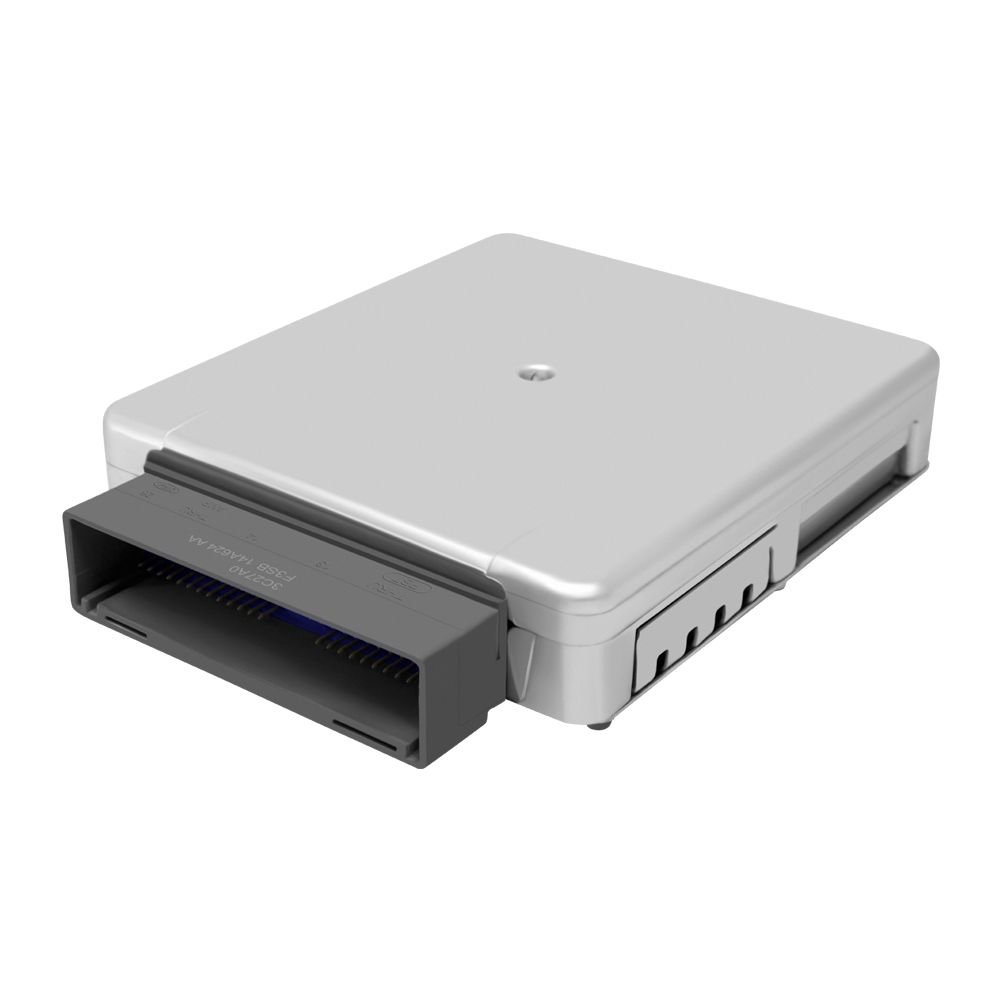
Flagship One stocks a refurbished, VIN-programmed PCM for the 1999 Ford Mustang GT with a lifetime warranty, free shipping and no core charge. The full Ford Mustang GT module lineup covers other engine configurations as well.
Replacing the Powertrain Control Module on a 1999 Ford Mustang GT can resolve numerous drivability issues and restore proper instrument cluster function. Consider your service preferences and ensure the replacement unit matches factory programming for the best results.