
Last updated on August 25th, 2026 at 01:37 pm
The powertrain control module (PCM) in your 2000 Ford Mustang GT manages engine and transmission functions. Failure may cause stalling, misfires, or a no-start condition, often triggered by voltage spikes or corrosion.
If your 2000 Ford Mustang GT is stalling, misfiring, or refusing to start, the powertrain control module (PCM) may be the culprit. This critical component oversees engine and transmission operations, and when it fails, symptoms can range from subtle drivability issues to a complete no-start condition. Replacing the PCM isn’t just about swapping hardware—it involves careful access, proper installation, and often, a relearn procedure to ensure everything communicates correctly. Understanding the process helps you avoid unnecessary delays and ensures your Mustang runs as intended after the repair.
In your 2000 Ford Mustang GT, the powertrain control module (PCM) acts as the brain for both the engine and transmission. It processes sensor data to optimize fuel delivery, ignition timing, and shift points, ensuring smooth performance. A failing PCM may disrupt these functions, leading to poor drivability or even a vehicle that won’t start. When replacement becomes necessary, you’ll need replacement engine computers for the Mustang GT that match the original specifications. The module’s role is critical—without it, your Mustang’s systems can’t operate in sync, making timely replacement essential for reliable operation.
2000 Ford Mustang GT
OEM programmed replacements — plug & play, no dealer visit.
Find yours by year, make & model →
Free shipping · Lifetime warranty
The PCM in your 2000 Ford Mustang GT is located behind the cowl side trim, requiring removal of interior panels for access. Factory labor estimates allocate 0.5 hours for powertrain control module removal and replacement. Once the old unit is disconnected, the new module is installed in the same location. While the physical swap is straightforward, proper reconnection of wiring and grounds is critical to avoid post-install issues. The process doesn’t require specialized tools, but careful handling of the trim and connectors helps prevent damage during the job.
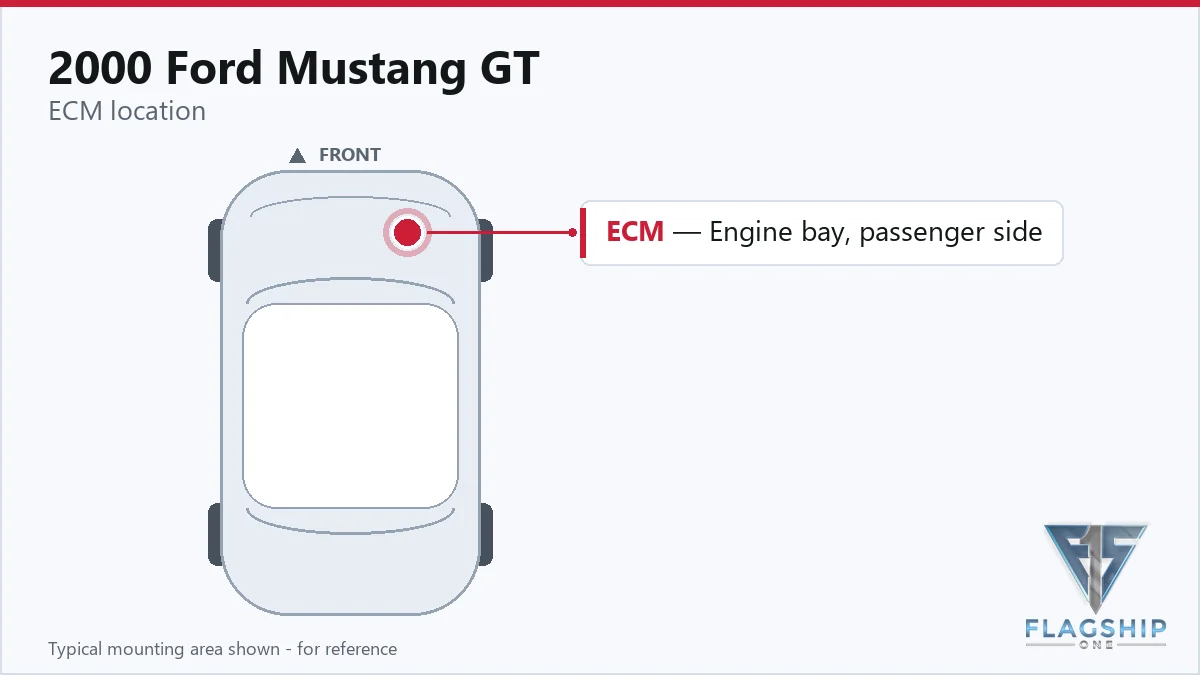
Work with the ignition off, and treat the module as static-sensitive: avoid touching the connector pins at any point.
| Operation | Configuration | Book Time |
|---|---|---|
| Powertrain Control Module R&R | All configurations | 0.5 hr |
| Powertrain Control Module Relearn | All configurations | 0.5 hr |
| Engine Control Module R&R | All configurations | 1.0 hr |
After replacing the PCM in your 2000 Ford Mustang GT, the factory procedure requires a 0.5-hour relearn process to synchronize the module with the vehicle’s systems. This step ensures proper communication between the PCM, sensors, and transmission. However, if you install a VIN-programmed replacement unit, this relearn step is already completed, saving you time and potential headaches. The pre-programmed module arrives ready to plug in and drive, eliminating the need for additional dealer visits or specialized equipment to complete the installation.
A failing PCM in your 2000 Ford Mustang GT may cause a range of symptoms, from intermittent stalling to a complete no-start condition. Common signs include misfire codes, erratic shifting, or a dead scan tool connection, indicating the module isn’t communicating properly. You might also notice the check engine light illuminating with codes like loss of vehicle theft deterrent signal, which can point to internal PCM faults. If your Mustang exhibits these issues, prompt diagnosis is key—ignoring them may lead to further drivability problems or even a stranded vehicle.
Ford service bulletin #02-23-04 addresses issues that may arise after replacing the powertrain control module (PCM) or instrument cluster in your 2000 Mustang GT. The bulletin notes that the 4X4 lamp may illuminate incorrectly, and diagnostic trouble codes P1635 or P1639 may appear. Additionally, the speedometer may function inaccurately or fail entirely. These symptoms typically occur post-replacement and require proper calibration to resolve. Following the bulletin’s guidelines can help avoid these complications during PCM service.
| Bulletin | Subject | What It Addresses |
|---|---|---|
| 02-23-04 | 4X4 LAMP ILLUMINATED AFTER POWERTRAIN CONTROL MODULE (PCM) OR INSTRUMENT CLUSTER REPLACEMENT – | — |
Stalling after PCM replacement often occurs if the module isn’t properly synchronized with the vehicle’s systems. A relearn procedure is typically required to restore communication between the PCM, sensors, and transmission. If the relearn isn’t completed, the engine may run poorly or stall unexpectedly.
Driving with a failing PCM is risky, as it may cause stalling, misfires, or transmission issues. In some cases, the vehicle may not start at all. If you suspect PCM failure, it’s best to address it promptly to avoid further damage or a breakdown.
Common signs include a no-start condition, stalling, misfire codes, or a check engine light with PCM-related trouble codes. A dead scan tool connection may also indicate a faulty module. If these symptoms appear, diagnostic testing can confirm whether the PCM is the issue.
If your 2000 Ford Mustang GT is experiencing PCM-related issues, you have options for replacement. A new or refurbished module can restore proper function, but choosing a VIN-programmed unit eliminates the need for post-install programming. This saves time and ensures your Mustang is back on the road without additional dealer visits. Consider your budget and urgency when deciding between repair and replacement.
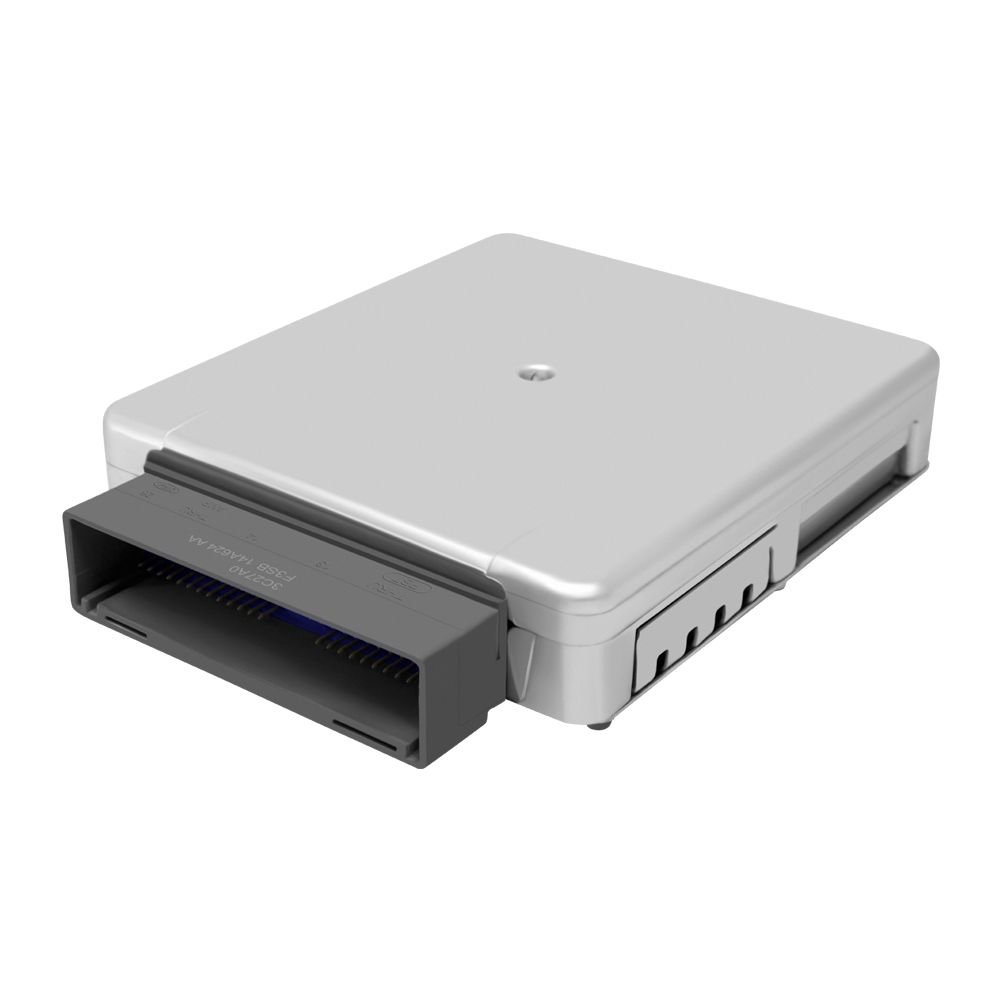
Flagship One stocks a refurbished, VIN-programmed PCM for the 2000 Ford Mustang GT with a lifetime warranty, free shipping and no core charge. The full Ford Mustang GT module lineup covers other engine configurations as well.
The PCM in your 2000 Ford Mustang GT plays a vital role in engine and transmission performance. If you’re facing stalling, misfires, or a no-start condition, a faulty module may be to blame. Replacing it with a VIN-programmed unit simplifies the process and gets your Mustang running reliably again. Addressing the issue promptly helps avoid further complications down the road.