
Last updated on August 25th, 2026 at 01:38 pm
The Powertrain Control Module (PCM) in your 1998 Ford Mustang GT manages engine and transmission functions. Failures may cause erratic performance, stalling, or failure to start, often triggered by voltage spikes or corrosion.
If your 1998 Ford Mustang GT is experiencing unexplained stalling, misfires, or a no-start condition, the Powertrain Control Module (PCM) may be the culprit. This critical component oversees engine and transmission operations, ensuring smooth performance. Replacing it involves accessing the module behind the cowl, a process that typically takes under an hour. Understanding the role of the PCM, its location, and the steps involved in replacement can help you make informed decisions about repairs. Whether you opt for a factory replacement or a pre-programmed unit, knowing what to expect ensures a smoother process and reduces downtime for your vehicle.
In your 1998 Ford Mustang GT, the Powertrain Control Module (PCM) acts as the brain for both the engine and transmission. It processes data from sensors to optimize fuel delivery, ignition timing, and shift points, ensuring efficient performance. A failing PCM may disrupt these functions, leading to poor drivability or even preventing the vehicle from starting. When replacement becomes necessary, you’ll need to consider replacement PCMs for the Mustang GT, which are designed to integrate seamlessly with your vehicle’s systems. The module’s role is critical, as it directly impacts how your Mustang responds to driving conditions.
Engine computer (ECM/PCM)
OEM programmed replacements — plug & play, no dealer visit.
Find yours by year, make & model →
Free shipping · Lifetime warranty
The PCM in your 1998 Ford Mustang GT is located behind the cowl side trim, near the firewall on the passenger side. Accessing it requires removing the trim panel, which is a straightforward but careful process. According to factory labor estimates, replacing the PCM typically takes 0.5 hours. This includes disconnecting the battery, unplugging the module’s electrical connectors, and removing the mounting bolts. Once the old unit is out, the new PCM is installed in reverse order. No special tools are required, but ensuring all connections are secure is key to avoiding future issues.
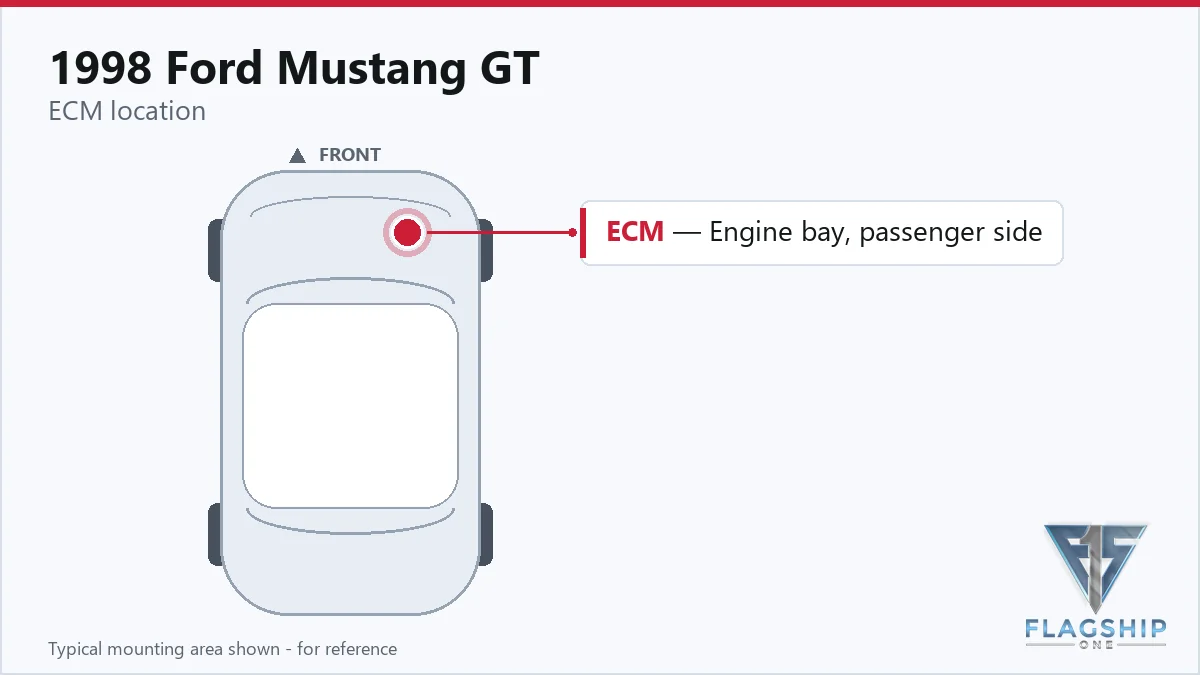
Work with the ignition off, and treat the module as static-sensitive: avoid touching the connector pins at any point.
| Operation | Configuration | Book Time |
|---|---|---|
| Engine Control Module R&R | All configurations | 1.0 hr |
| Powertrain Control Module R&R | All configurations | 0.5 hr |
| Powertrain Control Module Relearn | All configurations | 0.5 hr |
After installing a new PCM in your 1998 Ford Mustang GT, the factory procedure requires a 0.5-hour relearn process to synchronize the module with the vehicle’s systems. This step ensures proper communication between the PCM and sensors, allowing for optimal performance. However, if you choose a VIN-programmed replacement unit, this relearn step is unnecessary, as the module arrives ready to function with your vehicle’s specific configuration. This saves time and eliminates the need for additional programming tools or dealer visits.
A failing PCM in your 1998 Ford Mustang GT may cause a range of symptoms, including intermittent stalling, rough idling, or a complete no-start condition. You might also notice poor acceleration, erratic shifting, or the check engine light illuminating with codes related to fuel or ignition systems. One common fault code associated with PCM issues is internal control module memory checksum error, which indicates a problem with the module’s internal memory. If your scan tool fails to communicate with the PCM, that’s another strong sign of a potential failure. Addressing these symptoms promptly can prevent further drivability issues.
Ford issued service bulletin #99-04-03 addressing reprogramming procedures for Powertrain Control Modules (PCMs) in EEC V vehicles, including your 1998 Mustang GT. The bulletin outlines steps for updating the PCM’s software outside the vehicle, which may be necessary if drivability issues persist after replacement. This procedure is typically performed using factory diagnostic tools and ensures the module operates with the latest calibration for your vehicle.
| Bulletin | Subject | What It Addresses |
|---|---|---|
| 99-04-03 | EEC V VEHICLES ONLY – OUT-OF-VEHICLE – REPROGRAMMING POWERTRAIN CONTROL MODULES (PCMS) | — |
Common signs include stalling, no-start conditions, or erratic engine behavior. A scan tool may reveal communication errors or specific trouble codes like P0601. If basic checks rule out sensors or wiring, the PCM may be the issue.
Yes, if you’re comfortable with basic automotive repairs. The module is accessible behind the cowl side trim, and replacement typically takes 0.5 hours. However, a relearn procedure or reprogramming may be needed unless using a pre-programmed unit.
The relearn process synchronizes the new PCM with the vehicle’s sensors and systems. This ensures proper fuel delivery, ignition timing, and transmission shifting. Skipping this step may result in poor performance or drivability issues.
If your 1998 Ford Mustang GT is experiencing PCM-related issues, you have options. A factory replacement requires programming and a relearn procedure, which adds time and complexity. Alternatively, a pre-programmed unit eliminates these steps, allowing for a quicker installation. Consider your needs—whether prioritizing cost, convenience, or long-term reliability—to determine the best approach for your vehicle.
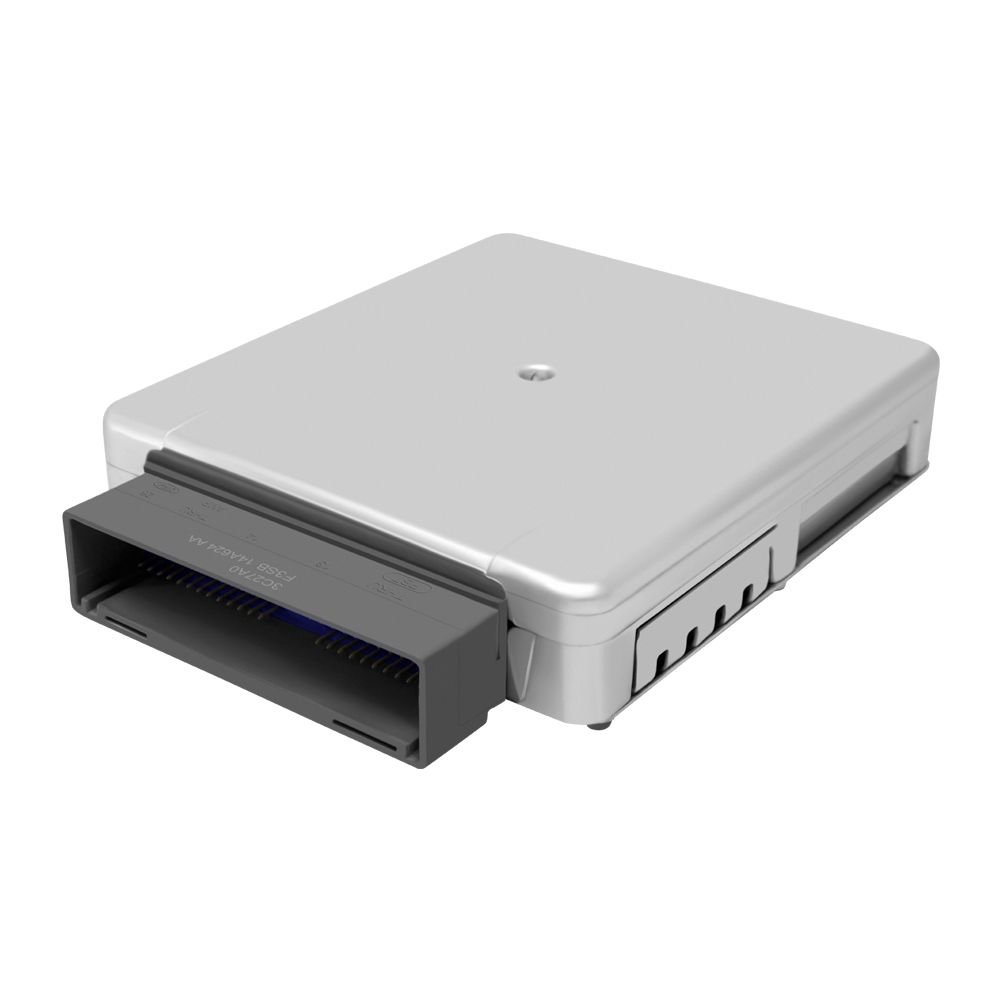
Flagship One stocks a refurbished, VIN-programmed PCM for the 1998 Ford Mustang GT with a lifetime warranty, free shipping and no core charge. The full Ford Mustang GT module lineup covers other engine configurations as well.
The Powertrain Control Module plays a vital role in your 1998 Ford Mustang GT’s performance. If symptoms like stalling or no-start conditions arise, addressing the PCM promptly can restore drivability. Whether you choose a factory replacement or a pre-programmed unit, understanding the process ensures a smoother repair experience for your Mustang.