
Last updated on August 25th, 2026 at 01:38 pm
The Powertrain Control Module (PCM) in your 1999 Ford Explorer is the central computer managing engine combustion, transmission shifting, emissions systems, and critical sensor inputs. When this unit fails, your vehicle may experience no-start conditions, stalling, or erratic shifting.
If your 1999 Ford Explorer with the 5.0L engine has developed starting problems, running issues, or transmission shifting abnormalities, the Powertrain Control Module may be the culprit. The PCM serves as the brain of your vehicle’s powertrain, and when internal circuitry degrades or corruption occurs from voltage spikes, the results can leave you stranded. This guide explains what the PCM does in your specific Explorer, how to recognize failure symptoms, what replacement involves, and why choosing a properly programmed unit matters for getting back on the road quickly. Whether you are diagnosing a no-start condition or verifying a repair estimate, the information here helps you understand the process without relying on dealer jargon or sales presentations. You will learn exactly where the module installs, what labor times apply, and how Flagship One units arrive pre-programmed to your vehicle identification number, saving you the hassle of dealer scheduling or additional programming fees.
The Powertrain Control Module in your 1999 Ford Explorer represents the heart of the engine management system. Unlike some vehicles that separate engine and transmission controls into distinct units, Ford integrated these functions into a single PCM for the 1999 model year on the 5.0L engine. This computer monitors inputs from dozens of sensors including the mass airflow sensor, coolant temperature sensor, throttle position sensor, and vehicle speed sensor, then uses this data to calculate fuel injector pulse width, ignition timing, transmission shift points, and emissions control device activation. The module also manages the oxygen sensor feedback loops that keep air-fuel mixture optimal for both performance and emissions compliance. When the internal processor or memory corrupts, voltage regulation fails, or connector pins corrode, the entire system can fall into a limp-home mode or complete failure. Your Explorer may run poorly, refuse to start, or display warning lights even when no actual mechanical problems exist. The Engine Control Module functions are subsumed within this integrated unit, meaning a PCM replacement addresses both engine and transmission control needs in one service action. Understanding this helps explain why replacement engine computers for the Explorer must be programmed specifically for your vehicle identification number to restore proper functionality.
1999 Ford Explorer
OEM programmed ECM for your 1999 Ford Explorer — plug & play, no dealer visit.
Free shipping · Lifetime warranty
The Powertrain Control Module on your 1999 Ford Explorer mounts in the engine compartment, typically on the driver’s side near the firewall or abscissa wall. Access requires removing the protective cover or intake manifold components depending on exact location, then disconnecting the electrical harness before withdrawing the old unit. The labor book time for removal and reinstallation is 0.4 hours, though actual time varies based on technician familiarity and any corrosion or damage to connectors encountered during the job. Once the new module is seated and harnesses reconnected, the technician must perform the relearn procedure which accounts for the additional 0.5 hours booked for that step. This procedure allows the new PCM to initialize sensor baselines and adapt to your specific engine’s characteristics. Replacement involves Torque specifications for mounting bolts if provided, though this vehicle’s service information does not specify custom torque values beyond standard practices. Always ensure the mounting surface is clean and the new unit seats fully before tightening fasteners to prevent vibration-related failures down the road.
Work with the ignition off, and treat the module as static-sensitive: avoid touching the connector pins at any point.
| Operation | Configuration | Book Time |
|---|---|---|
| Powertrain Control Module R&R | All configurations | 0.4 hr |
| Powertrain Control Module Relearn | All configurations | 0.5 hr |
| Engine Control Module Relearn | All configurations | 0.5 hr |
| Engine Control Module R&R | All configurations | 0.4 hr |
After replacing the PCM on your 1999 Ford Explorer, the factory service procedure requires a relearn process to establish communication between the new module and the vehicle’s sensor network. The book time for this step is 0.5 hours, during which the technician connects diagnostic equipment to initiate the parameter reset and verify proper operation. Additionally, if separate Engine Control Module relearn is required, that step adds another 0.5 hours to the job. Ford designed these procedures to ensure the new module learns your specific engine’s idle characteristics, fuel trims, and transmission adaptive shift points. Without completing this process, the vehicle may run roughly or exhibit poor throttle response. Flagship One addresses this requirement by shipping a VIN-programmed replacement unit that arrives ready to install, meaning the relearn procedure is significantly shortened or in many cases eliminated entirely since the module already contains your exact vehicle identification number and the latest calibration available for your application.
Recognizing PCM failure on your 1999 Ford Explorer helps you diagnose the problem correctly before spending money on unnecessary repairs. The most dramatic symptom is a no-start condition where the engine cranks normally but receives no fuel or spark because the PCM failed to activate the injectors or ignition system. Another common presentation involves intermittent stalling, particularly at idle or under light acceleration, where the module momentarily loses proper sensor input processing. Misfire codes such as P0300 through P0308 may appear even when spark plugs and wires are in good condition, indicating the PCM is incorrectly calculating fuel delivery or timing. In some cases, the scan tool cannot communicate with the PCM at all, suggesting either complete module failure or a corrupted memory area. Transmission problems also fall under PCM responsibility, so you may notice harsh shifting, failure to shift into overdrive, or the transmission staying in limp mode. The check engine light frequently accompanies these issues, but a lit check engine light does not always mean the PCM is faulty—diagnostic trouble codes pointing to sensor malfunctions should be investigated first before condemning the module. If your Explorer has been jump-started recently or experienced charging system problems, voltage spikes can damage the PCM internally, making that history relevant to the diagnosis.
Factory service bulletin 97-09-08 addresses PCM reprogramming procedures for 1999 Ford vehicles including the Explorer, providing technicians with updated calibration files and service tips for proper module initialization. Bulletin 99-04-03 covers out-of-vehicle reprogramming specifically for EEC V vehicles, which applies to your 1999 5.0L Explorer equipped with the fifth-generation electronic engine control system. These TSBs acknowledge that PCM software updates may resolve drivability concerns without requiring physical replacement, though hardware failure obviously necessitates a new unit. Your service facility should reference these bulletins when diagnosing persistent issues to determine whether a software update might apply before recommending replacement.
| Bulletin | Subject | What It Addresses |
|---|---|---|
| 97-09-08 | POWERTRAIN CONTROL MODULE – REPROGRAM POWERTRAIN CONTROL MODULE (PCM) – SERVICE PROCEDURES – SE | — |
| 99-04-03 | EEC V VEHICLES ONLY – OUT-OF-VEHICLE – REPROGRAMMING POWERTRAIN CONTROL MODULES (PCMS) | — |
No. The PCM must be matched to your specific vehicle identification number and configured for the 5.0L engine calibration. A unit from a different model year or engine displacement will not communicate properly with your sensors and may cause immediate starting or running problems.
Technically skilled DIYers with automotive electrical experience can perform the replacement, but the relearn procedure typically requires dealer-level diagnostic equipment. Additionally, without proper programming software, a generic replacement will not start the engine. Most owners benefit from purchasing a pre-programmed unit from Flagship One that arrives ready to install.
If your vehicle exhibits multiple unrelated electrical symptoms simultaneously (no-start plus transmission issues plus check engine light), hardware failure is likely. However, if symptoms are isolated and a dealer reflash is available per TSB 97-09-08, that may resolve the problem without replacement. A qualified technician can advise based on specific diagnostic findings.
The engine will likely crank but not start, or run in a limited capacity mode. Modern security features built into the PCM require recognition of the specific vehicle identification number before enabling fuel injector operation. This anti-theft integration prevents stolen modules from being reused in other vehicles.
Some initial roughness is normal during the relearn period as the new module adapts to your engine’s unique sensor characteristics. This typically resolves within a few drive cycles or after the relearn procedure is completed. Persistent roughness may indicate a separate underlying issue that needs diagnosis.
When your 1999 Ford Explorer requires a PCM replacement, you have two primary options: a used unit from a salvage yard that will require dealer programming at additional cost and time, or a refurbished unit from Flagship One that arrives VIN-programmed and ready to run. The pre-programmed approach eliminates the dealer visit entirely, getting your vehicle back in service faster. Consider your situation—if you need immediate transportation and cannot afford downtime for dealer appointments, the Flagship One unit makes practical sense. If you have time to wait and want to source your own parts, understand that programming fees will apply on top of the module cost.
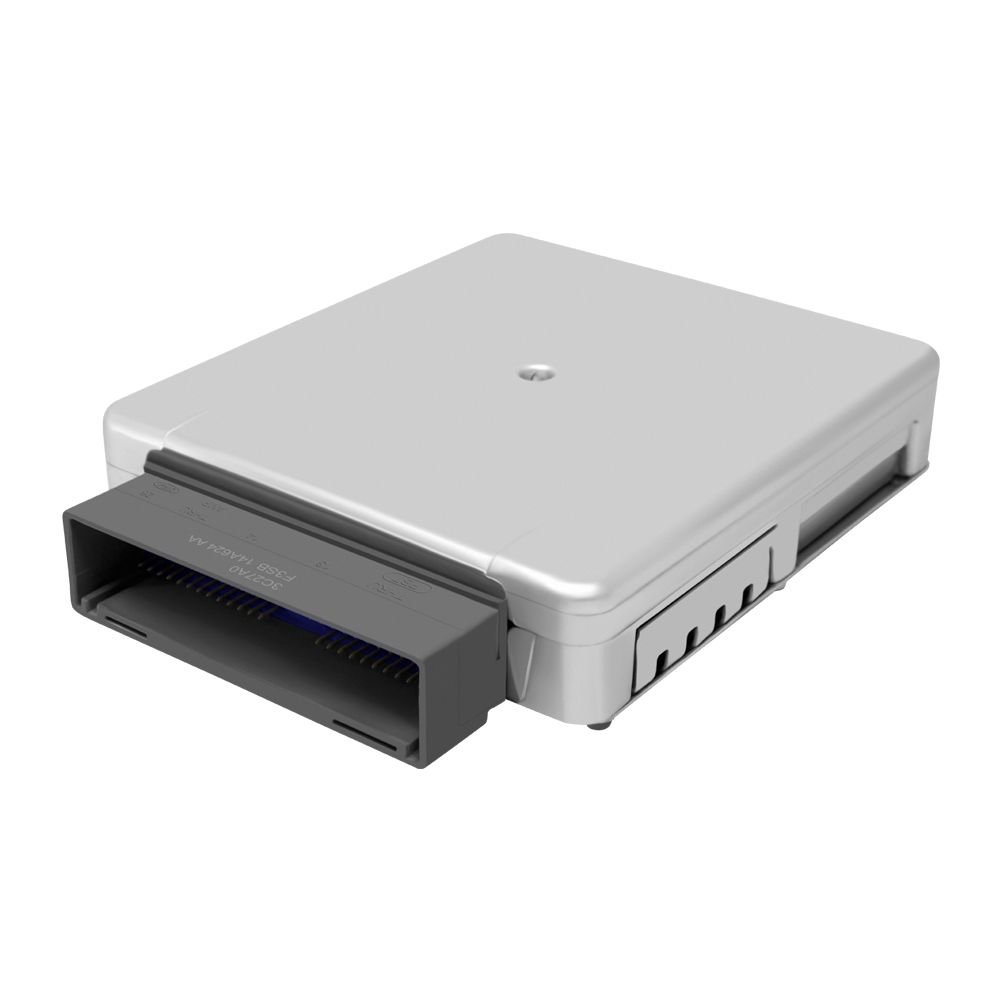
Flagship One stocks a refurbished, VIN-programmed PCM for the 1999 Ford Explorer with a lifetime warranty, free shipping and no core charge. The full Ford Explorer module lineup covers other engine configurations as well.
Your 1999 Ford Explorer relies on a properly functioning Powertrain Control Module to manage engine performance, transmission shifting, and emissions systems. When this unit fails, the symptoms can mimic dozens of other problems, making professional diagnosis important. Whether you ultimately choose a new, refurbished, or used replacement, ensure the unit is programmed for your specific VIN to avoid starting problems. Flagship One offers PCM units configured for 1999 Explorer applications, shipped ready to install with your vehicle identification number already loaded. Visit the product page to verify compatibility and get your Explorer back on the road without dealer scheduling delays.