
Last updated on August 25th, 2026 at 01:15 pm
The Powertrain Control Module (PCM) in your 1997 Ford Thunderbird manages engine performance and transmission behavior. When it fails, you may experience erratic idling, stalling, or a complete no-start condition due to disrupted fuel, spark, or shift timing.
If your 1997 Ford Thunderbird has been acting up—stalling at stops, refusing to start, or throwing cryptic check-engine lights—you might be dealing with a failing Powertrain Control Module (PCM). This small but critical computer governs everything from fuel delivery to transmission shifts, and when it malfunctions, your vehicle’s drivability suffers. Replacing it isn’t just about swapping a part; it involves accessing a tucked-away location, ensuring proper programming, and often performing a relearn procedure to sync the new module with your Thunderbird’s systems. Understanding the process upfront helps you avoid surprises at the shop or during a DIY attempt. You’ll learn where the PCM is located, what symptoms signal its failure, and why opting for a pre-programmed replacement can streamline the job. Whether you’re troubleshooting a no-start condition or preparing for a repair, this guide covers the essentials for your 3.8L Thunderbird.
The Powertrain Control Module (PCM) in your 1997 Ford Thunderbird is the brain behind your engine and transmission’s day-to-day operations. It continuously monitors sensors for data like air intake, throttle position, and engine temperature, then adjusts fuel injection, ignition timing, and shift points in real time. Without a functioning PCM, your Thunderbird may run poorly or not at all, as the module ensures optimal performance and emissions compliance. Over time, heat, vibration, or voltage spikes can degrade its internal circuitry, leading to intermittent or permanent failures. When replacement becomes necessary, replacement engine computers for the Thunderbird are designed to restore factory-level functionality, but proper installation and programming are critical to avoid further issues. The PCM’s role is especially vital in vehicles like yours, where precise fuel management and transmission control directly impact drivability and fuel economy.
1997 Ford Thunderbird
OEM programmed ECM for your 1997 Ford Thunderbird — plug & play, no dealer visit.
Free shipping · Lifetime warranty
In your 1997 Ford Thunderbird, the PCM is mounted behind the cowl side trim panel on the passenger side. Accessing it requires removing the interior trim to expose the module’s mounting location. According to factory labor estimates, replacing the PCM on the 3.8L engine typically takes 1.0 hours, while the 4.6L variant lists 1.1 hours. The procedure involves disconnecting the battery, unplugging the wiring harness, and removing the module’s mounting bolts before installing the new unit. Torque specifications for the bolts aren’t provided, but snugging them evenly prevents connector misalignment. Once installed, the module must be reconnected, and the battery restored to power. The location isn’t overly complex, but the trim removal adds time, especially if clips or fasteners are brittle with age.
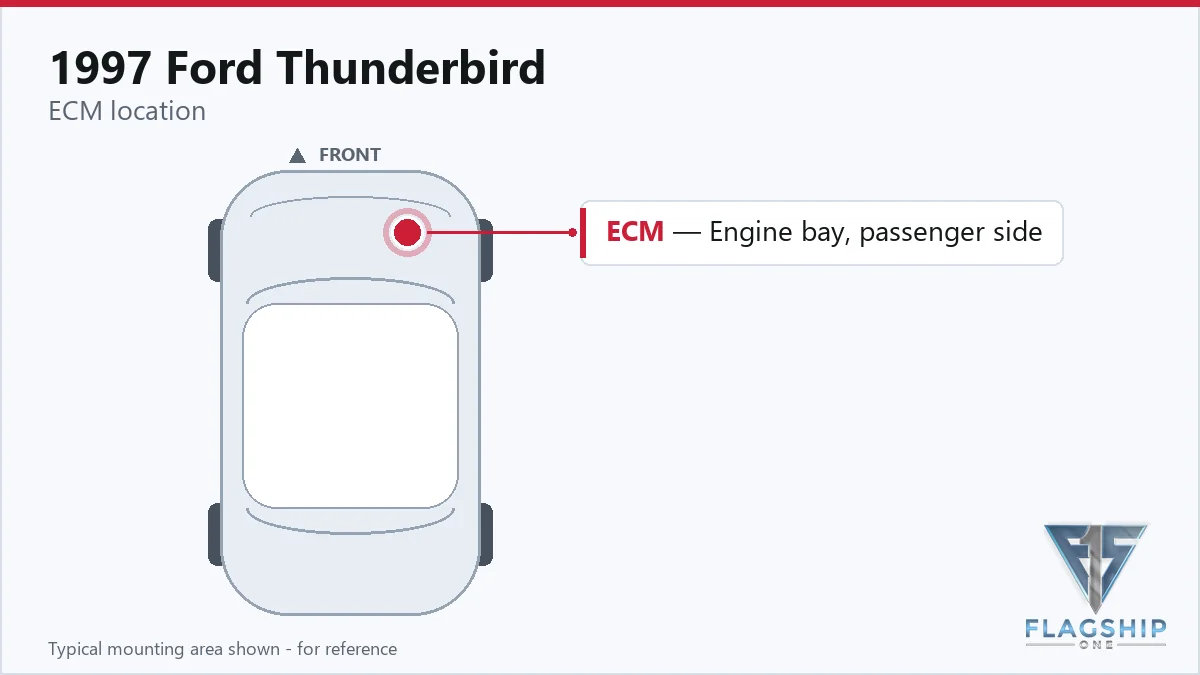
Work with the ignition off, and treat the module as static-sensitive: avoid touching the connector pins at any point.
| Operation | Configuration | Book Time |
|---|---|---|
| Engine Control Module R&R | 4.6L | 1.1 hr |
| Engine Control Module R&R | 3.8L | 1.1 hr |
| Powertrain Control Module R&R | 4.6L | 1.1 hr |
| Powertrain Control Module R&R | 3.8L | 1.0 hr |
| Powertrain Control Module Relearn | All configurations | 0.5 hr |
After installing a new PCM in your 1997 Ford Thunderbird, the factory procedure requires a 0.5-hour relearn process to synchronize the module with your vehicle’s sensors and transmission. This step ensures the PCM adapts to your Thunderbird’s unique operating parameters, such as idle speed and shift patterns. However, if you opt for a VIN-programmed replacement unit, this relearn step is already completed, saving you time and potential dealer trips. The pre-programmed module arrives configured to your vehicle’s specifications, eliminating the need for additional software updates or calibration. This is particularly useful for older vehicles like yours, where dealer programming tools may be less accessible. Always confirm the replacement unit matches your Thunderbird’s engine size and transmission type to avoid compatibility issues.
A failing PCM in your 1997 Ford Thunderbird often announces itself through a range of drivability issues. One of the most common signs is a no-start condition, where the engine cranks but refuses to fire, often due to disrupted fuel or spark signals. Stalling at idle or during deceleration is another red flag, as the PCM may lose its ability to maintain stable engine speeds. You might also notice erratic shifting, where the transmission hesitates or jerks between gears, or the check-engine light illuminating with codes related to sensor or actuator performance. In some cases, the module may fail to communicate with a scan tool, leaving you unable to retrieve trouble codes. A frequent fault code in these vehicles is an internal control module memory checksum error, which indicates the PCM’s memory has been corrupted. Other symptoms include poor fuel economy, rough idling, or even intermittent electrical gremlins, like flickering dashboard lights. If your Thunderbird exhibits any of these behaviors, the PCM should be high on your list of suspects, especially if other components like sensors or wiring have been ruled out.
Ford issued two service bulletins relevant to the 1997 Thunderbird’s PCM. TSB 97-09-08 outlines procedures for reprogramming the Powertrain Control Module to address drivability or emissions-related issues. TSB 99-04-03 specifically covers out-of-vehicle reprogramming for EEC V-equipped vehicles, which includes your Thunderbird. These bulletins highlight the importance of ensuring the PCM’s software is up to date, particularly if you’re experiencing intermittent performance problems. While reprogramming isn’t always necessary for a replacement module, it’s a step dealers may recommend if your vehicle’s symptoms align with the bulletins’ descriptions.
| Bulletin | Subject | What It Addresses |
|---|---|---|
| 97-09-08 | POWERTRAIN CONTROL MODULE – REPROGRAM POWERTRAIN CONTROL MODULE (PCM) – SERVICE PROCEDURES – SE | — |
| 99-04-03 | EEC V VEHICLES ONLY – OUT-OF-VEHICLE – REPROGRAMMING POWERTRAIN CONTROL MODULES (PCMS) | — |
Stalling at stoplights is a common symptom of a failing PCM in your Thunderbird. The module controls idle speed and fuel delivery, and if it malfunctions, the engine may not receive the correct signals to maintain idle. Before replacing the PCM, check for vacuum leaks or faulty sensors, but if those are ruled out, the PCM is a likely culprit.
A scan tool is the best way to differentiate between a bad PCM and a sensor issue. If the PCM isn’t communicating with the scan tool at all, the module itself may be faulty. If it is communicating but setting sensor-related codes, test the sensors individually before condemning the PCM. Intermittent no-start conditions or stalling often point to the PCM, while consistent sensor codes suggest a different issue.
Yes, the PCM must be programmed to your Thunderbird’s VIN to ensure proper operation. The factory procedure includes a relearn process to sync the module with your vehicle’s systems. However, if you purchase a pre-programmed replacement, this step is already completed, saving you time and potential dealer programming fees.
Replacing the PCM in your Thunderbird is a manageable DIY job if you’re comfortable with basic electrical work and trim removal. The module is located behind the cowl side trim, which requires careful disassembly. However, if you’re unsure about the programming or relearn process, a shop may be a better option to avoid complications.
Installing a used PCM without reprogramming it to your Thunderbird’s VIN can lead to drivability issues, such as poor idle, stalling, or transmission shifting problems. The module must be calibrated to your vehicle’s specific parameters, so reprogramming or using a VIN-programmed replacement is essential for proper operation.
If your 1997 Ford Thunderbird is showing signs of PCM failure, you have two main options: repair or replacement. While some shops may attempt to reflash or repair the existing module, this approach doesn’t always address underlying hardware issues. A new or refurbished replacement unit, especially one pre-programmed to your VIN, offers a more reliable solution. Given the labor involved in accessing and installing the PCM, opting for a unit that eliminates the need for additional programming can save you time and hassle. Consider your Thunderbird’s age and your long-term plans for the vehicle when deciding which route to take.
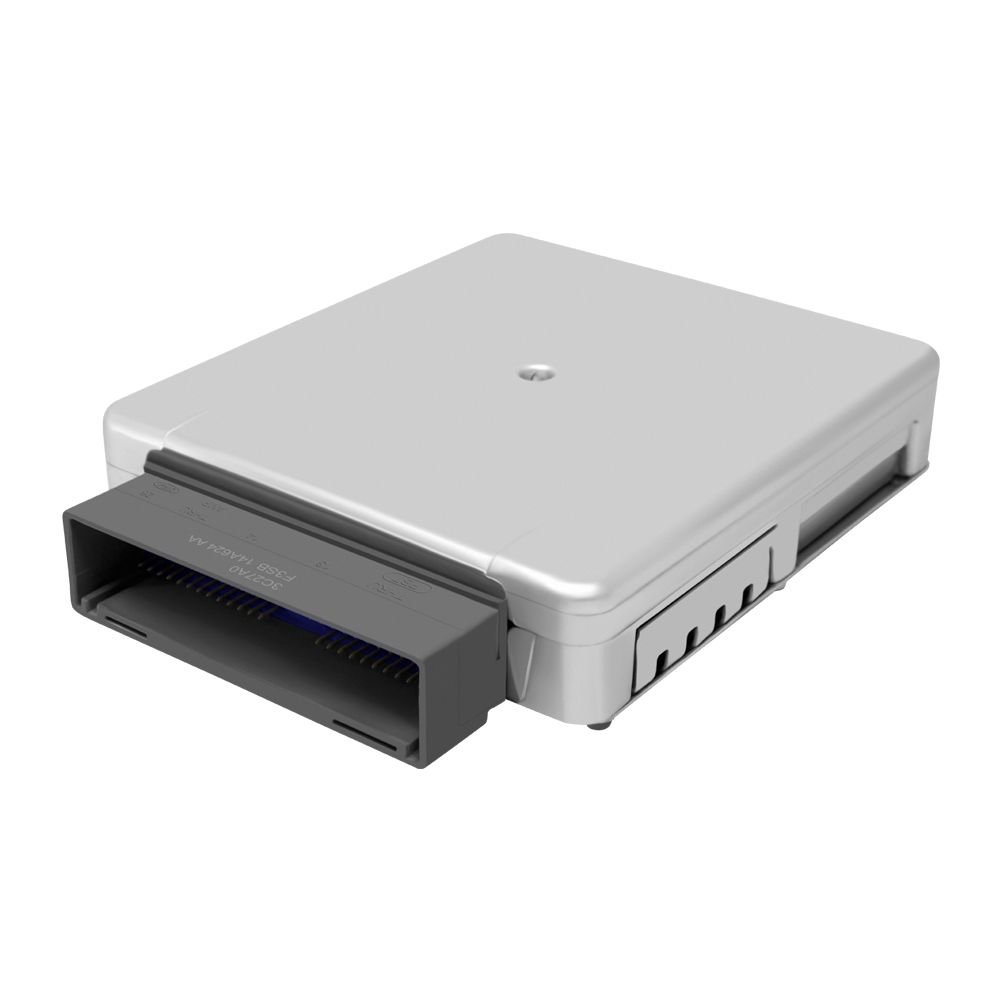
Flagship One stocks a refurbished, VIN-programmed PCM for the 1997 Ford Thunderbird with a lifetime warranty, free shipping and no core charge. The full Ford Thunderbird module lineup covers other engine configurations as well.
Your 1997 Ford Thunderbird relies on its PCM to keep the engine and transmission running smoothly. When this module fails, the symptoms can range from subtle drivability quirks to a complete no-start condition. Understanding the replacement process, from accessing the module’s location to ensuring proper programming, helps you make informed decisions about repairs. Whether you tackle the job yourself or leave it to a professional, addressing PCM issues promptly can restore your Thunderbird’s performance and reliability for years to come.