
Last updated on August 25th, 2026 at 01:39 pm
The powertrain control module (PCM) in your 1996 Ford Explorer manages fuel injection, ignition timing, and transmission shifts. When it fails, you may experience rough idling, stalling, or the engine refusing to start. This computer interprets sensor data to optimize performance and emissions.
If your 1996 Ford Explorer has been acting up—stalling at stops, misfiring under load, or refusing to start—it may be time to consider the powertrain control module (PCM). This small but critical computer manages everything from fuel delivery to transmission shifts, and when it fails, your vehicle’s performance suffers. Replacing it isn’t just about swapping a part; the factory procedure includes a relearn process that can take additional time and requires a test drive to restore smooth operation. Understanding what the PCM does, where it’s located, and what to expect during replacement can save you frustration and unnecessary labor costs. Whether you’re diagnosing an existing issue or preparing for a repair, knowing these details helps you make informed decisions about your Explorer’s needs.
The powertrain control module (PCM) in your 1996 Ford Explorer is the brain behind the engine and transmission. It processes data from sensors monitoring throttle position, engine speed, air intake, and exhaust gases to adjust fuel injection, ignition timing, and shift points in real time. Without a functioning PCM, your Explorer may run poorly or not at all. This module is particularly critical in vehicles with automatic transmissions, as it ensures smooth gear changes and prevents harsh shifts. Over time, heat, vibration, or voltage spikes can degrade the PCM’s performance, leading to symptoms like rough idling or replacement engine computers for the Explorer failing to communicate with a scan tool. Because the PCM is tied to emissions controls, a malfunction can also trigger the check engine light, even if the issue isn’t immediately noticeable while driving.
Engine computer (ECM/PCM)
OEM programmed replacements — plug & play, no dealer visit.
Find yours by year, make & model →
Free shipping · Lifetime warranty
In the 1996 Ford Explorer, the powertrain control module (PCM) is mounted inside the engine compartment, typically near the firewall or fender well. Accessing it involves removing a protective cover or panel, which may require unbolting a few fasteners. The labor time for removing and reinstalling the PCM is listed at 0.4 hours, meaning a technician can usually complete the physical swap in under 30 minutes. Once the old module is disconnected, the new unit is installed in its place, and the electrical connector is reattached. No special tools or torque specifications are required beyond standard hand tools, but care should be taken to avoid damaging the connector pins during installation. After replacement, the vehicle will need a relearn procedure to recalibrate the PCM’s adaptive settings.
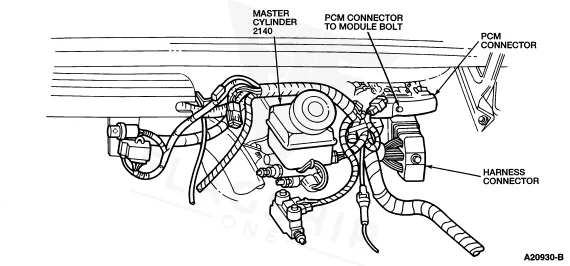
Work with the ignition off, and treat the module as static-sensitive: avoid touching the connector pins at any point.
| Operation | Configuration | Book Time |
|---|---|---|
| Powertrain Control Module R&R | All configurations | 0.4 hr |
| Powertrain Control Module Relearn | All configurations | 0.5 hr |
| Engine Control Module Relearn | All configurations | 0.5 hr |
| Engine Control Module R&R | All configurations | 0.4 hr |
After installing a new powertrain control module (PCM) in your 1996 Ford Explorer, the factory procedure requires a relearn process to restore optimal driveability. This involves a 0.5-hour labor step where the vehicle must be driven under specific conditions—typically a mix of city and highway speeds—to allow the PCM to adapt to your engine’s characteristics. The process ensures smooth idle, proper shift points, and accurate fuel delivery. However, if you install a VIN-programmed replacement unit, these adaptive values are already pre-loaded, eliminating the need for the drive cycle. This saves time and ensures your Explorer performs as expected right after installation. Without pre-programming, the relearn may take longer if the vehicle isn’t driven under ideal conditions, such as stop-and-go traffic or extreme temperatures.
A failing powertrain control module (PCM) in your 1996 Ford Explorer can cause a range of symptoms, some subtle and others more severe. Common signs include the engine stalling at idle, especially when coming to a stop, or misfiring under load, which may feel like a hesitation or jerking motion. You might also notice the transmission shifting erratically or harshly, as the PCM controls both engine and transmission functions. Another red flag is the check engine light illuminating, often accompanied by diagnostic trouble codes (DTCs) stored in the system. For example, a random misfire detected code could indicate the PCM is struggling to manage ignition timing or fuel delivery. In some cases, the vehicle may fail to start at all, or the engine may crank but not fire. Scan tool communication issues—where the tool can’t connect to the PCM—are another strong indicator of module failure. If your Explorer exhibits any of these symptoms, it’s worth checking the PCM as part of your diagnostic process.
Ford issued several service bulletins addressing powertrain control module (PCM) issues in the 1996 Explorer. TSB 97-09-08 outlines procedures for reprogramming the PCM to resolve driveability concerns, while TSB 99-04-03 focuses specifically on EEC V vehicles, detailing out-of-vehicle reprogramming steps for PCMs. Another bulletin, TSB 97-08-06, addresses misfire-related diagnostic trouble codes (DTCs) P0300 through P0308, which may illuminate the malfunction indicator lamp (MIL). These bulletins highlight common PCM-related issues and provide guidance for technicians to ensure proper repairs. If your Explorer is experiencing symptoms like misfires or stalling, reviewing these bulletins may help identify whether a PCM reprogram or replacement is recommended.
| Bulletin | Subject | What It Addresses |
|---|---|---|
| 97-09-08 | POWERTRAIN CONTROL MODULE – REPROGRAM POWERTRAIN CONTROL MODULE (PCM) – SERVICE PROCEDURES – SE | — |
| 99-04-03 | EEC V VEHICLES ONLY – OUT-OF-VEHICLE – REPROGRAMMING POWERTRAIN CONTROL MODULES (PCMS) | — |
| 97-08-06 | DIAGNOSTIC TROUBLE CODES (DTCS) P0300, P0301, P0302, P0303, P0304, P0305, P0306, P0307, AND/OR | — |
After replacing the PCM, the vehicle may stall if the relearn procedure isn’t completed. The PCM needs to adapt to your engine’s specific characteristics, which requires a drive cycle. Without this step, idle control and fuel delivery may not be optimized, leading to stalling. A VIN-programmed unit can bypass this issue by arriving with pre-loaded adaptive values.
Driving with a failing PCM isn’t recommended, as it can lead to poor fuel economy, engine misfires, or transmission shifting issues. In severe cases, it may cause the engine to run too rich or lean, potentially damaging the catalytic converter or other components. If you suspect PCM failure, address it promptly to avoid additional repairs.
If your vehicle exhibits symptoms like stalling, misfires, or no-start conditions, a scan tool can help determine whether the PCM is faulty or simply needs reprogramming. If the PCM fails to communicate with the scan tool, replacement is likely necessary. Reprogramming is often recommended for driveability issues covered under service bulletins.
In your Explorer, the powertrain control module (PCM) combines the functions of an engine control module (ECM) and a transmission control module. The PCM manages both engine and transmission operations, while an ECM typically refers only to engine control. Labor times for replacement or relearn are the same for both terms in this vehicle.
A used PCM may work, but it will require reprogramming to match your vehicle’s VIN and adaptive values. Even then, there’s no guarantee it will function correctly, as used modules may have internal wear or damage. A new or remanufactured VIN-programmed unit is a more reliable option.
If your 1996 Ford Explorer is showing signs of PCM failure, you have options for repair or replacement. While reprogramming the existing module may resolve some issues, a faulty PCM will eventually need to be replaced. Opting for a new or remanufactured unit ensures reliability, and choosing a VIN-programmed module eliminates the need for time-consuming relearn procedures. Whether you’re tackling the job yourself or having a shop handle it, understanding the process helps you make the best choice for your vehicle’s needs.
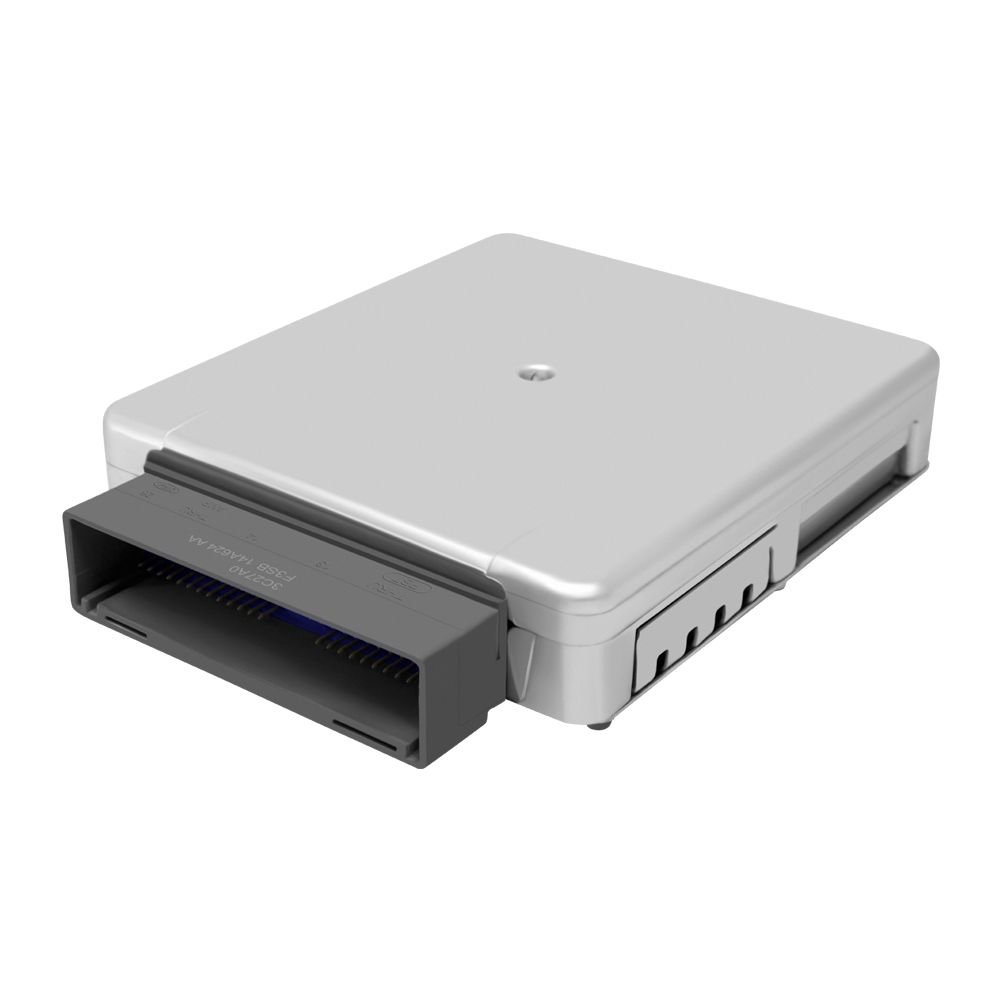
Flagship One stocks a refurbished, VIN-programmed PCM for the 1996 Ford Explorer with a lifetime warranty, free shipping and no core charge. The full Ford Explorer module lineup covers other engine configurations as well.
The powertrain control module in your 1996 Ford Explorer plays a critical role in keeping your engine running smoothly and your transmission shifting correctly. If you’re experiencing stalling, misfires, or no-start conditions, the PCM may be the culprit. Replacing it is a straightforward process, but the factory relearn procedure adds time and complexity. By opting for a VIN-programmed replacement unit, you can skip the drive cycle and get your Explorer back on the road faster. Whether you choose to DIY or leave it to a professional, addressing PCM issues promptly ensures your vehicle remains reliable for years to come.