
Last updated on August 25th, 2026 at 01:39 pm
The powertrain control module (PCM) in your 1996 Ford Aspire manages engine and transmission functions. Failures may cause erratic performance, no-start conditions, or stored trouble codes related to ignition or fuel systems.
If your 1996 Ford Aspire is experiencing rough idling, stalling, or an illuminated malfunction indicator lamp (MIL), the powertrain control module (PCM) may be at fault. This critical component oversees engine and transmission performance, ensuring smooth operation. Replacing or servicing it requires careful handling due to its sensitivity to static electricity. Understanding the module’s role, location, and the steps involved in replacement can help you make informed decisions about repairs. Whether you’re diagnosing an issue or preparing for a replacement, knowing what to expect can save time and prevent further complications.
The PCM in your 1996 Ford Aspire acts as the brain for both the engine and transmission, coordinating fuel delivery, ignition timing, and shift points. It continuously monitors sensor inputs to optimize performance and emissions. A faulty PCM may disrupt these functions, leading to poor drivability or even a no-start condition. If replacement becomes necessary, you’ll need replacement engine computers for the Aspire that are compatible with your vehicle’s specifications. Proper function of this module is essential for maintaining the Aspire’s reliability and efficiency.
1996 Ford Aspire
OEM programmed ECM for your 1996 Ford Aspire — plug & play, no dealer visit.
Free shipping · Lifetime warranty
The PCM in the 1996 Ford Aspire is located beneath the left side of the instrument panel. Accessing it involves removing interior trim panels to reach the module’s mounting position. Replacement typically requires 0.4 hours of labor for removal and reinstallation. If the engine control module (ECM) is also being serviced, that process may take up to 0.9 hours. Always disconnect the battery before handling the module to prevent static discharge or electrical shorts. No special tools are specified, but care should be taken to avoid damaging connectors or wiring during removal.
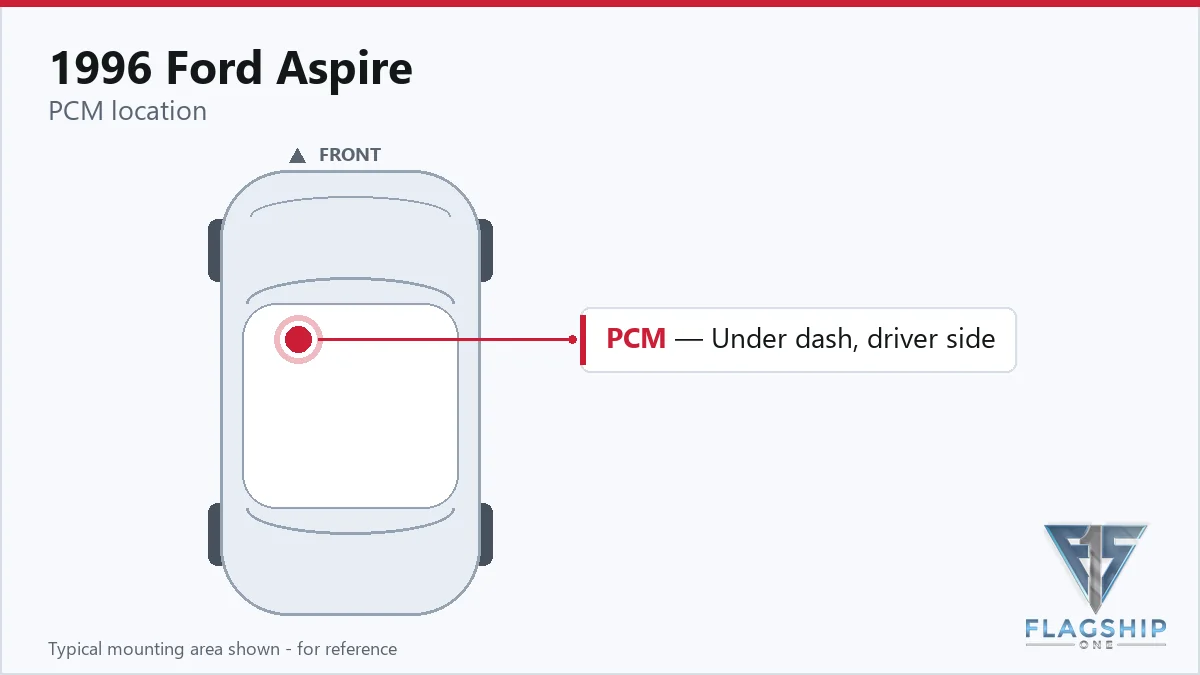
Work with the ignition off, and treat the module as static-sensitive: avoid touching the connector pins at any point.
| Operation | Configuration | Book Time |
|---|---|---|
| Powertrain Control Module R&R | All configurations | 0.4 hr |
| Powertrain Control Module Relearn | All configurations | 0.5 hr |
| Engine Control Module Relearn | All configurations | 0.5 hr |
| Engine Control Module R&R | All configurations | 0.9 hr |
After installing a new PCM in your 1996 Ford Aspire, a relearn procedure is required to synchronize the module with the vehicle’s systems. This process typically takes 0.5 hours and ensures proper communication between the PCM and sensors. However, if you opt for a VIN-programmed replacement unit, these steps are already completed, saving time and reducing the risk of programming errors. Always verify that the replacement module matches your vehicle’s specifications to avoid compatibility issues.
A failing PCM in the 1996 Ford Aspire may cause a range of symptoms, including intermittent stalling, rough idling, or difficulty starting. You might also notice poor acceleration or transmission shifting issues. The check engine light may illuminate, often accompanied by misfire-related codes. For example, a random misfire detected could indicate a PCM struggling to manage ignition timing. In some cases, the vehicle may fail to communicate with a scan tool, further pointing to module failure. Addressing these symptoms promptly can prevent further drivability problems.
Factory service bulletins for the 1996 Ford Aspire highlight common PCM-related issues. Bulletin #96-18-02 addresses diagnostic trouble codes P0300 through P0304, which are linked to misfire conditions and an illuminated MIL. Another bulletin, #96-24-05, covers code P1794, which may appear in continuous memory and affect vehicles like the Aspire. These bulletins provide guidance for diagnosing and resolving PCM-related faults to restore proper vehicle operation.
| Bulletin | Subject | What It Addresses |
|---|---|---|
| 96-18-02 | DIAGNOSTIC TROUBLE CODES (DTCS) P0300, P0301, P0302, P0303, P0304, OR P0110 – LAMP – MALFUNCTIO | — |
| 96-24-05 | DIAGNOSTIC TROUBLE CODE (DTC) P1794 STORED IN CONTINUOUS MEMORY – LAMP – MALFUNCTION INDICATOR | — |
Replacing the PCM is possible if you’re comfortable with basic automotive repairs. The module is accessible beneath the instrument panel, but care must be taken to avoid static damage. A relearn procedure is required afterward unless using a pre-programmed unit.
Stalling after replacement may indicate an incomplete relearn procedure or a mismatch between the module and vehicle. Ensure the PCM is properly programmed to your Aspire’s VIN and that all sensors are functioning correctly.
In the 1996 Ford Aspire, the PCM combines engine and transmission control functions, while the ECM typically refers to the engine-specific portion. Replacement times differ, with the PCM requiring less labor than the ECM.
If your 1996 Ford Aspire is showing signs of PCM failure, you have options for repair or replacement. A refurbished module can restore functionality without the cost of a new unit. Given the labor involved, choosing a pre-programmed replacement can simplify the process and reduce downtime. Consider your vehicle’s needs and budget when deciding on the best course of action.
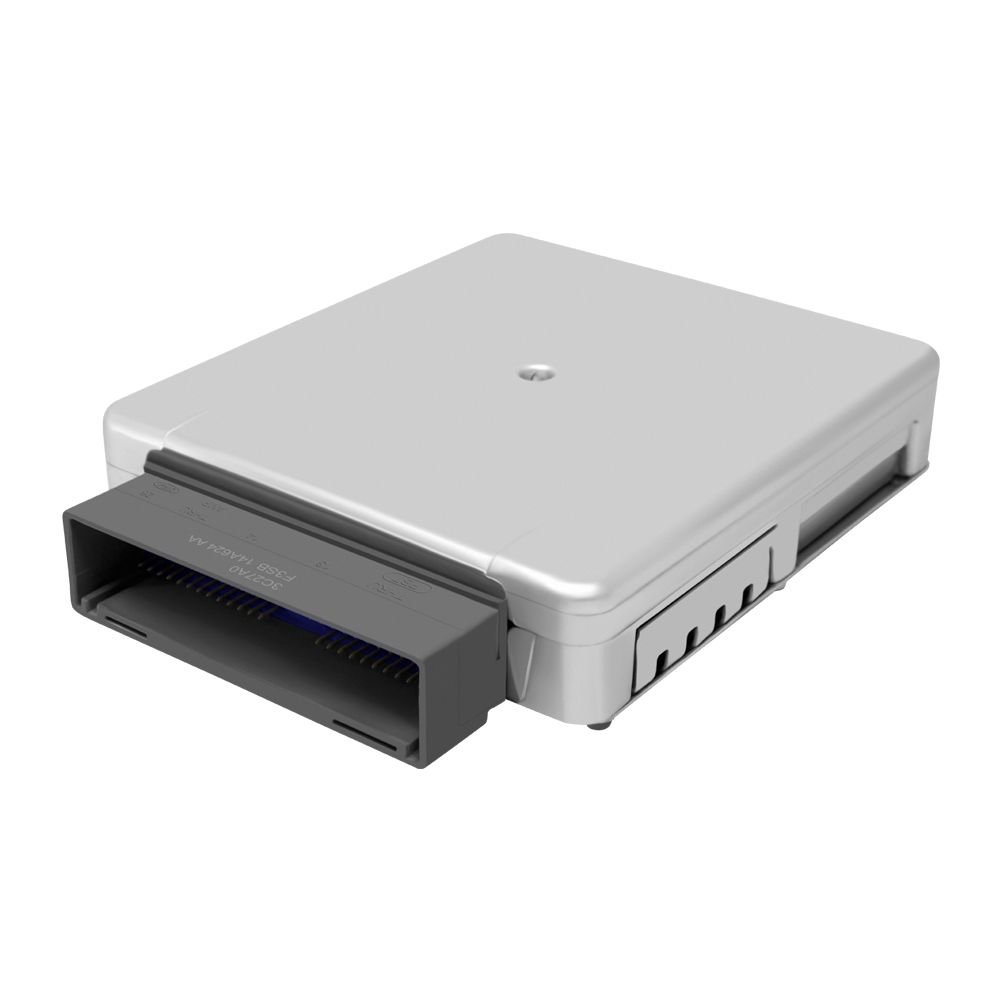
Flagship One stocks a refurbished, VIN-programmed PCM for the 1996 Ford Aspire with a lifetime warranty, free shipping and no core charge. The full Ford Aspire module lineup covers other engine configurations as well.
The PCM in your 1996 Ford Aspire plays a vital role in maintaining smooth engine and transmission performance. If you’re experiencing drivability issues, addressing the PCM early can prevent further complications. Whether you opt for a DIY approach or professional service, understanding the process ensures a successful repair. Keep your Aspire running reliably with the right replacement and proper installation.