
Last updated on August 25th, 2026 at 01:59 pm
The Powertrain Control Module (PCM) in your 2003 Mazda MPV is the central computer managing engine operation, transmission shifting, and fuel delivery. When this unit fails, your vehicle may not start, run poorly, or display multiple diagnostic trouble codes.
If your 2003 Mazda MPV with the 3.0L engine has developed starting problems, running issues, or is displaying warning lights on the dashboard, the Powertrain Control Module may be the culprit. The PCM serves as the brain of your vehicle’s powertrain, coordinating multiple systems to ensure proper operation. Understanding what this component does, where it located, and what the replacement process involves will help you make informed decisions about repairs. This guide covers the function of the control module in your specific vehicle, common failure symptoms, labor considerations, and your replacement options. Whether you are diagnosing a current problem or planning ahead, you will find practical information here to help you understand the repair process and what to expect from replacement parts.
The Powertrain Control Module in your 2003 Mazda MPV is the primary computer responsible for managing the engine and transmission systems. This unit receives input from numerous sensors throughout the powertrain, including the mass air flow sensor, coolant temperature sensor, throttle position sensor, and vehicle speed sensors. Based on this data, the PCM calculates optimal fuel injection timing, adjusts ignition advance, and controls transmission shift points to deliver smooth power delivery. The module also monitors emissions control systems and works with the immobilizer antitheft system if your vehicle is equipped with that feature. When the PCM detects a malfunction, it stores diagnostic trouble codes and may enter a limp-home mode to prevent further damage. Replacement engine computers for the MPV must be programmed to match your specific vehicle identification number to ensure proper communication with the various control modules and to activate the immobilizer system correctly. Without proper programming, the engine may not start or run poorly despite being mechanically sound.
Flagship One keeps Mazda MPV replacement engine computers in stock for exactly this failure pattern.
2003 Mazda MPV
OEM programmed ECM for your 2003 Mazda MPV — plug & play, no dealer visit.
Free shipping · Lifetime warranty
The Powertrain Control Module on your 2003 Mazda MPV is located in the engine compartment, typically mounted on the firewall or near the front fuse box. Access generally requires removing the battery and sometimes related wiring harnesses to reach the unit. The replacement procedure involves disconnecting the battery, removing the old module, transferring any mounting hardware, and connecting the new harness connectors. If your vehicle has an immobilizer system, the replacement module must be compatible with that security feature. Labor time for the removal and replacement portion is approximately 0.4 hours on models without the immobilizer system and 0.5 hours on models equipped with it. Plan for additional time if the mounting location requires more extensive disassembly to access the unit properly. After installation, the module must be secured firmly and all connections should be verified as seated correctly before reassembly.
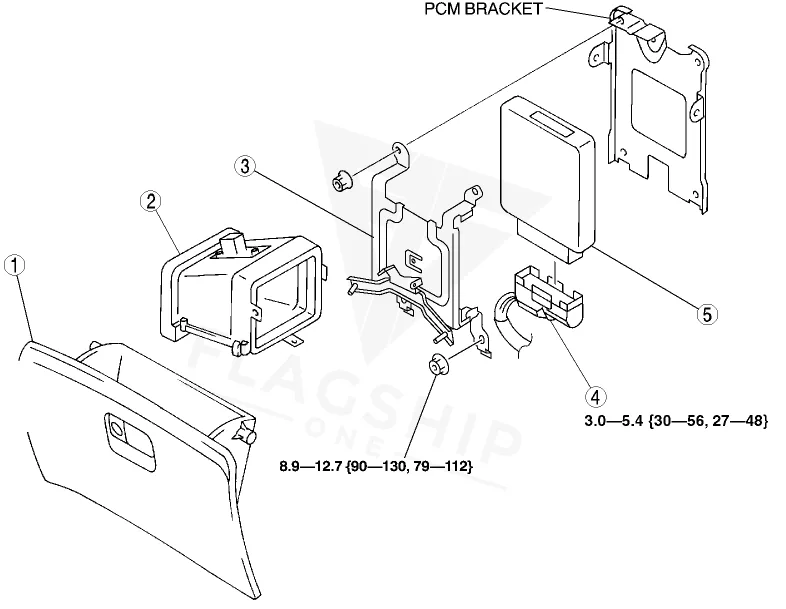
Work with the ignition off, and treat the module as static-sensitive: avoid touching the connector pins at any point.
| Operation | Configuration | Book Time |
|---|---|---|
| Powertrain Control Module R&R | Without Immobilize System | 0.4 hr |
| Powertrain Control Module R&R | With Immobilize System | 0.5 hr |
| Powertrain Control Module Relearn | All configurations | 0.5 hr |
| Engine Control Module R&R | Without Immobilize System | 0.4 hr |
| Engine Control Module R&R | With Immobilize System | 0.5 hr |
| Engine Control Module Relearn | All configurations | 0.5 hr |
After replacing the PCM on your 2003 Mazda MPV, a relearn procedure is required to establish communication between the new module and the various vehicle systems. This procedure allows the PCM to adapt to the unique characteristics of your engine and transmission, and it must be performed using dealer-level diagnostic equipment. The relearn process typically takes about 0.5 hours to complete. When you purchase a VIN-programmed replacement unit from Flagship One, the module arrives pre-programmed with your specific vehicle identification number, which means many of the initial programming steps are already completed. However, the factory relearn procedure may still be necessary to ensure all systems synchronize properly. This post-install requirement is standard for this model year and helps ensure optimal drivability and performance after the repair.
Every VIN-programmed replacement unit from Flagship One arrives with these steps already completed.
When the Powertrain Control Module on your 2003 Mazda MPV begins to fail, you may notice several distinct symptoms. The most common presentation is a no-start condition where the engine cranking normally but will not fire, or the vehicle starts then immediately stalls. You may also experience intermittent stalling while driving, hesitation during acceleration, or rough idle operation. The check engine light frequently illuminates, and scanning the vehicle may reveal multiple trouble codes that seem unrelated, which is typical when the central processor malfunctions. Some owners report that the transmission shifts roughly or the vehicle becomes unresponsive to throttle inputs. In cases where the module has failed completely, diagnostic scanners may be unable to communicate with the PCM at all, indicating an electrical issue within the module itself. These symptoms often develop gradually as internal circuitry degrades, though sudden failures can occur from voltage spikes or thermal stress.
A used PCM may physically fit, but it will likely need programming to match your vehicle identification number and may not be compatible with your immobilizer system. Additionally, used units carry the same risk of failure as the original. New or refurbished replacements from a reputable supplier typically offer better long-term reliability.
Driving with a compromised PCM is not recommended. The module may cause unpredictable running conditions, loss of power, or stalling that could leave you stranded. In some cases, the vehicle may not restart after being turned off, leaving you in an unsafe situation.
The PCM must be matched to your specific vehicle for the immobilizer system to recognize the new module and for all the sensors to communicate properly. Programming establishes this connection and allows the module to adapt to your engine’s unique characteristics.
Common causes include heat exposure over time, voltage spikes from charging system problems, moisture intrusion into connectors, and general component aging. Jump-starting and electrical stress accelerate wear on the module’s internal circuitry.
The immobilizer system in this model uses a transponder chip in your key. If your vehicle starts only with a properly coded key and displays a security indicator on the dashboard, your MPV is equipped with this feature.
When your 2003 Mazda MPV requires a new PCM, you have two primary options: a new factory unit or a quality refurbished replacement. New OEM modules are expensive and may require dealer programming. Refurbished units from Flagship One arrive VIN-programmed and ready to install, potentially saving you significant cost and time. Consider your budget, timeline, and whether your vehicle has the immobilizer system when making your decision. A properly programmed replacement will restore reliable operation to your MPV.
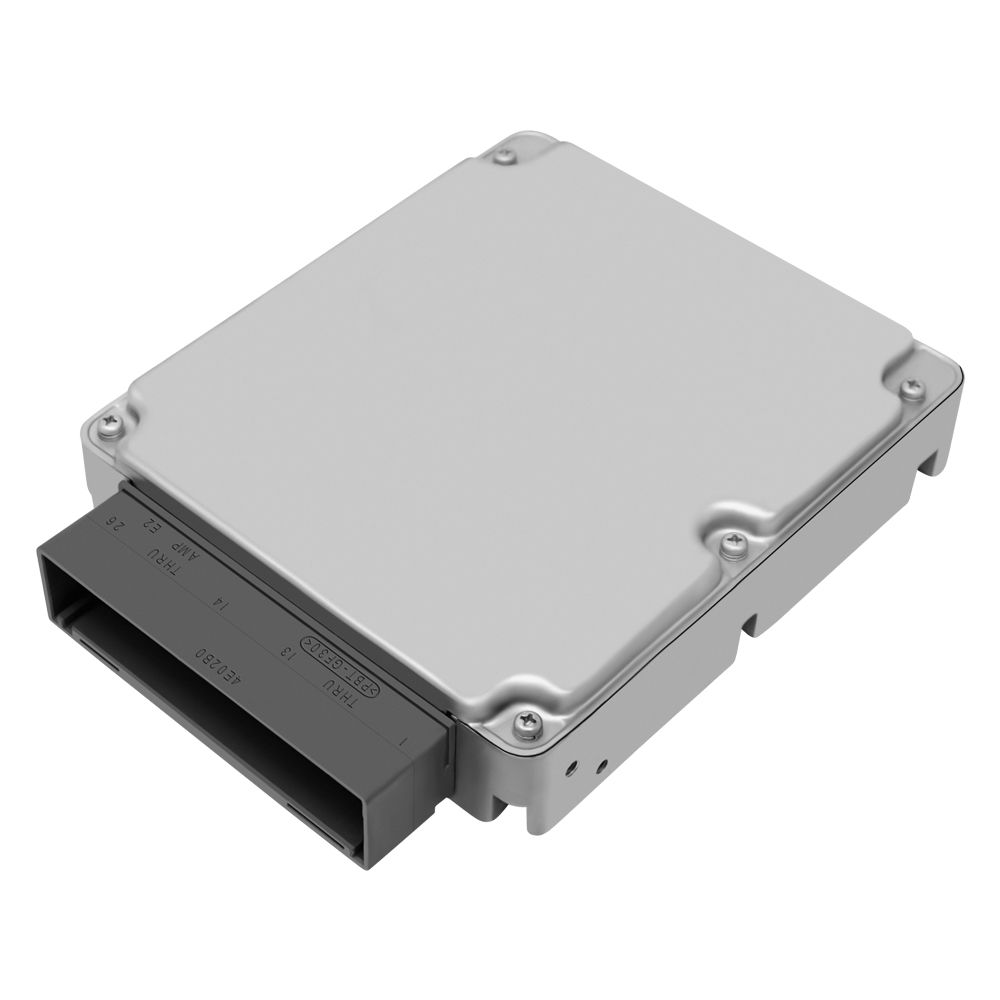
Flagship One stocks a refurbished, VIN-programmed PCM for the 2003 Mazda MPV with a lifetime warranty, free shipping and no core charge. The full Mazda MPV module lineup covers other engine configurations as well.
The Powertrain Control Module is essential to your 2003 Mazda MPV running properly, and failure can leave you stranded. Understanding the symptoms, labor involved, and programming requirements helps you approach this repair with confidence. Whether you choose new or refurbished, a properly programmed replacement unit will get your vehicle back on the road reliably.