
Last updated on August 25th, 2026 at 02:00 pm
The powertrain control module (PCM) in your 1998 Mazda B4000 manages engine performance and transmission behavior. Failures may cause erratic shifting, poor fuel economy, or complete stalling, often triggered by voltage spikes or corrosion.
If your 1998 Mazda B4000 has developed a rough idle, refuses to start, or shifts unpredictably, the powertrain control module (PCM) may be the culprit. This small but critical computer oversees everything from fuel delivery to transmission behavior, and when it fails, symptoms can range from subtle drivability quirks to complete immobilization. Unlike newer vehicles with separate engine and transmission controllers, your B4000 combines these functions into a single unit, which means a single failure can disrupt multiple systems. Replacing it isn’t just about swapping a box—it involves precise labor steps and, in most cases, a relearn procedure to sync the new module with your vehicle’s sensors. Understanding these details helps you avoid unnecessary delays and ensures the repair addresses the root cause, not just the symptoms. Whether you’re diagnosing an intermittent issue or preparing for a replacement, knowing how the PCM functions in your specific vehicle—and what to expect during the process—can save time and frustration.
In your 1998 Mazda B4000, the powertrain control module (PCM) acts as the brain for both the engine and automatic transmission. It continuously monitors inputs from sensors—like the throttle position, oxygen levels, and vehicle speed—to adjust fuel injection, ignition timing, and shift points in real time. This integration is why a failing PCM can cause symptoms that seem unrelated, such as a rough idle paired with delayed gear engagement. The module also stores diagnostic trouble codes when it detects anomalies, which technicians use to pinpoint issues. Because the B4000’s PCM is mounted in a high-vibration area near the engine bay, it’s exposed to heat, moisture, and electrical fluctuations, all of which can degrade its performance over time. When replacement becomes necessary, replacement engine computers for the B4000 are designed to restore factory-level functionality, but the process requires careful handling to avoid introducing new problems. Without proper programming, even a new module won’t communicate correctly with your vehicle’s systems, leading to persistent drivability issues or false fault codes.
1998 Mazda B4000
OEM programmed ECM for your 1998 Mazda B4000 — plug & play, no dealer visit.
Free shipping · Lifetime warranty
The PCM in your 1998 Mazda B4000 is located in the engine compartment, typically secured to the firewall or inner fender. Accessing it involves removing a protective cover or ductwork, which may require disconnecting a few electrical connectors or vacuum lines. The factory labor time for removal and replacement is 0.5 hours, reflecting the straightforward nature of the job once the module is exposed. After disconnecting the battery to prevent electrical shorts, the technician unbolts the module and carefully disconnects its wiring harness. The new unit is installed in reverse order, with attention to ensuring all connectors are fully seated and free of corrosion. While the physical replacement is relatively quick, the location’s exposure to heat and moisture means the module’s mounting points and connectors should be inspected for signs of wear or oxidation before installation. Torque specifications for the mounting bolts are typically in line with general automotive fasteners, but over-tightening should be avoided to prevent damage to the module’s housing.
Work with the ignition off, and treat the module as static-sensitive: avoid touching the connector pins at any point.
| Operation | Configuration | Book Time |
|---|---|---|
| Powertrain Control Module R&R | B2500 | 0.5 hr |
| Powertrain Control Module R&R | B3000 | 0.5 hr |
| Powertrain Control Module R&R | B4000 | 0.5 hr |
| Powertrain Control Module Relearn | B2500 | 0.5 hr |
| Powertrain Control Module Relearn | B3000 | 0.5 hr |
| Powertrain Control Module Relearn | B4000 | 0.5 hr |
| Engine Control Module R&R | B2500 | 0.5 hr |
| Engine Control Module R&R | B3000 | 0.5 hr |
After installing a new PCM in your 1998 Mazda B4000, the factory procedure requires a relearn process to synchronize the module with the vehicle’s sensors and transmission. This step, which takes 0.5 hours of labor, involves using a scan tool to reset adaptive values and ensure the engine and transmission communicate correctly. Without this procedure, you may experience rough shifting, poor fuel economy, or even a no-start condition. However, a VIN-programmed replacement unit arrives pre-configured to match your vehicle’s specifications, eliminating the need for this additional step. This not only saves time but also reduces the risk of programming errors that can occur during manual procedures. The pre-programmed unit is ready to install out of the box, allowing your technician to focus on verifying the repair rather than troubleshooting post-installation issues. If you’re handling the replacement yourself, using a pre-programmed module simplifies the process significantly, as it removes the need for specialized diagnostic equipment or dealer visits.
A failing PCM in your 1998 Mazda B4000 can manifest in several ways, often mimicking other mechanical or electrical problems. One of the most common signs is a rough or unstable idle, which may feel like the engine is misfiring or struggling to maintain consistent RPMs. You might also notice the transmission hesitating or shifting erratically, particularly when accelerating or decelerating. In some cases, the vehicle may fail to start altogether, leaving you with a cranking engine that refuses to fire. Other symptoms include poor fuel economy, as the PCM may default to a rich fuel mixture to compensate for perceived sensor failures. Diagnostic trouble codes are another key indicator—if your check engine light is illuminated, a scan tool may reveal faults like transmission range sensor circuit malfunction, which directly points to the PCM’s role in managing transmission signals. Additionally, you may experience intermittent stalling, especially when coming to a stop or idling for extended periods. Because the PCM controls both engine and transmission functions, symptoms can overlap, making it difficult to isolate the issue without proper diagnostics. If your vehicle exhibits any of these behaviors, it’s worth checking the PCM’s connectors and grounds before assuming the module itself is faulty, as loose or corroded connections can produce similar issues.
Mazda has issued several service bulletins addressing common PCM-related issues in the 1998 B4000. One bulletin notes that certain 3.0L engines cannot be reflashed due to hardware limitations in the PCM, meaning replacement is the only option if the module fails. Another bulletin highlights driveability problems caused by loose or corroded ECU grounds, which can mimic PCM failures by disrupting sensor signals. Additionally, bulletin K016/98 addresses multiple transmission-related fault codes—including P0705, P0708, P1704, and P1705—that may illuminate the check engine light. These codes often stem from issues with the transmission range sensor or its wiring, but they can also indicate a failing PCM if no other faults are found. If your vehicle exhibits any of these symptoms, reviewing the relevant bulletins can help determine whether the PCM is the root cause or if another component is to blame.
| Bulletin | Subject | What It Addresses |
|---|---|---|
| — | Mazda Tips: 3.0 L No Reflash Due To PCM Hardware (1998 2000) | — |
| — | Mazda Tips: Driveability Problems: Ecu Ground Loose | s If a customer complains of rough idle, or poor |
| — | K016/98 1997 99 B Series MIL Illumination With Dt Cs P0705, P0708, P1704 And P1705 | — |
Stalling at idle is often linked to a failing PCM or a loose ground connection. The PCM relies on accurate sensor data to maintain idle speed, and if it receives erratic signals—or if its own circuits are compromised—it may cut fuel or spark at the wrong time. Checking the ECU grounds and scanning for trouble codes can help isolate the issue.
Replacing the PCM is physically straightforward, but the process requires a relearn procedure unless you use a VIN-programmed unit. If you’re comfortable disconnecting the battery, removing the module, and handling electrical connectors, you can perform the replacement yourself. However, if the new PCM isn’t pre-programmed, you’ll need a scan tool to complete the relearn step, which may require a visit to a shop.
A bad PCM often produces multiple unrelated symptoms, such as rough idle, transmission slippage, and a no-start condition. If a scan tool reveals multiple fault codes across different systems—especially if they don’t align with a single sensor failure—the PCM is a likely culprit. However, loose grounds or corroded connectors can mimic PCM failures, so inspecting these first can save time and money.
A used PCM may physically fit, but it won’t function correctly unless it’s programmed to your vehicle’s VIN. Even then, used modules carry the risk of hidden faults or wear, which could lead to the same issues you’re trying to fix. A new or remanufactured unit with VIN-specific programming is the most reliable option.
Intermittent check engine lights often point to a PCM that’s struggling to maintain consistent communication with sensors. This can happen if the module’s internal circuits are degrading or if a connector is loose. While the vehicle may run fine for short periods, the issue will likely worsen over time. Scanning for codes and inspecting the PCM’s connectors can help identify the root cause before it leads to a breakdown.
If your 1998 Mazda B4000 is showing signs of PCM failure, you have two main options: repair or replace. Repairing the module is rarely cost-effective, as internal failures often require specialized equipment and expertise. A replacement unit, particularly one that’s pre-programmed to your vehicle’s VIN, offers a more reliable solution. This approach eliminates the need for post-installation programming and ensures the new module communicates seamlessly with your engine and transmission. Whether you’re handling the replacement yourself or leaving it to a professional, choosing the right unit can make the difference between a quick fix and a prolonged diagnostic headache.
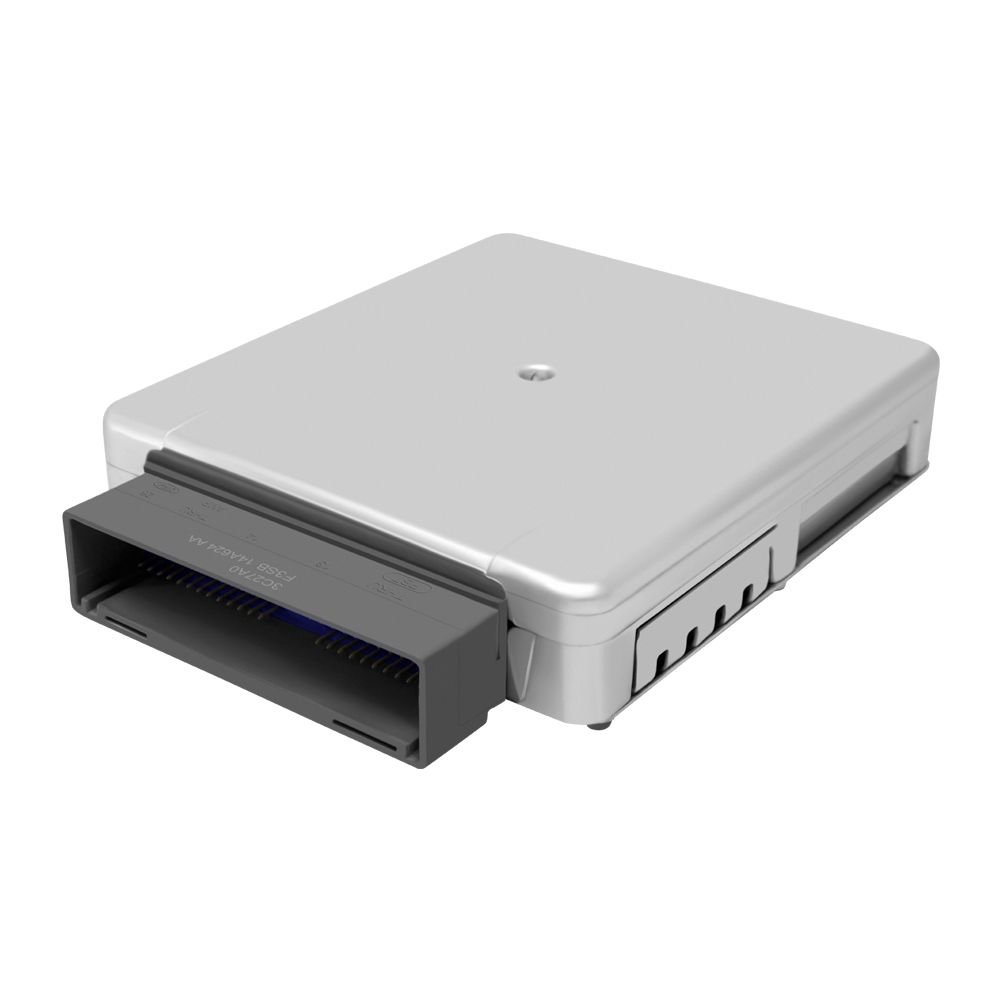
Flagship One stocks a refurbished, VIN-programmed PCM for the 1998 Mazda B4000 with a lifetime warranty, free shipping and no core charge. The full Mazda B4000 module lineup covers other engine configurations as well.
The PCM in your 1998 Mazda B4000 plays a critical role in keeping your engine running smoothly and your transmission shifting correctly. When it fails, symptoms can range from subtle drivability quirks to complete immobilization, making timely diagnosis and replacement essential. By understanding the module’s function, location, and the steps involved in replacement, you can approach the repair with confidence. Whether you opt for a DIY fix or professional installation, using a VIN-programmed unit simplifies the process and ensures your vehicle returns to reliable performance. If your B4000 is exhibiting any of the symptoms discussed, addressing the PCM now can prevent more costly repairs down the road.