
Last updated on August 25th, 2026 at 02:02 pm
The powertrain control module (PCM) and engine control module (ECM) in your 2016 Mazda CX-3 2.0L are the primary computers that manage fuel delivery, ignition timing, and transmission operation. Failure of these modules can cause drivability issues, warning lights, and stored trouble codes.
If your 2016 Mazda CX-3 2.0L is showing a check engine light or an A/T warning light, the powertrain control module (PCM) or engine control module (ECM) may be at fault. These modules are the brain of your vehicle’s engine and transmission management system. This guide explains what the PCM and ECM do, where they are located, what symptoms to watch for, and what the replacement process involves. You will also learn about factory service bulletins and the importance of proper programming after module replacement. Understanding these details helps you make an informed decision about repairing or replacing the control module in your CX-3.
The powertrain control module (PCM) in your 2016 Mazda CX-3 2.0L is a single unit that oversees both engine and transmission operations. It receives data from sensors throughout the vehicle and adjusts fuel injection, ignition timing, shift points, and torque converter lockup. The engine control module (ECM) is essentially the same physical module, though some service literature uses the terms interchangeably. When the PCM fails, it can disrupt the communication between the engine and transmission, leading to poor performance, warning lights, and stored fault codes. For a 2016 Mazda CX-3, replacement PCMs for the CX-3 are available that match the original specifications. Choosing the correct module is essential because an incorrect PCM can cause interference with engine control, as noted in the factory documentation.
2016 Mazda CX-3 2.0L
OEM programmed ECM for your 2016 Mazda CX-3 2.0L — plug & play, no dealer visit.
Free shipping · Lifetime warranty
The PCM/ECM in the 2016 Mazda CX-3 2.0L is typically mounted in the engine bay, often near the battery or on the driver-side fender well. Access requires removing any covers or components that block the module. The factory book time for removing and replacing the PCM or ECM is 0.9 hours. After installation, a relearn procedure is necessary, which adds 0.5 hours. There is also a separate engine control module reset procedure listed at 0.3 hours. If you are performing the work yourself, be careful to disconnect the battery before unplugging the module to avoid electrical damage. The location fact provided indicates that if the incorrect PCM is installed, it could cause interference with engine control, so verifying the part number is critical before installation.
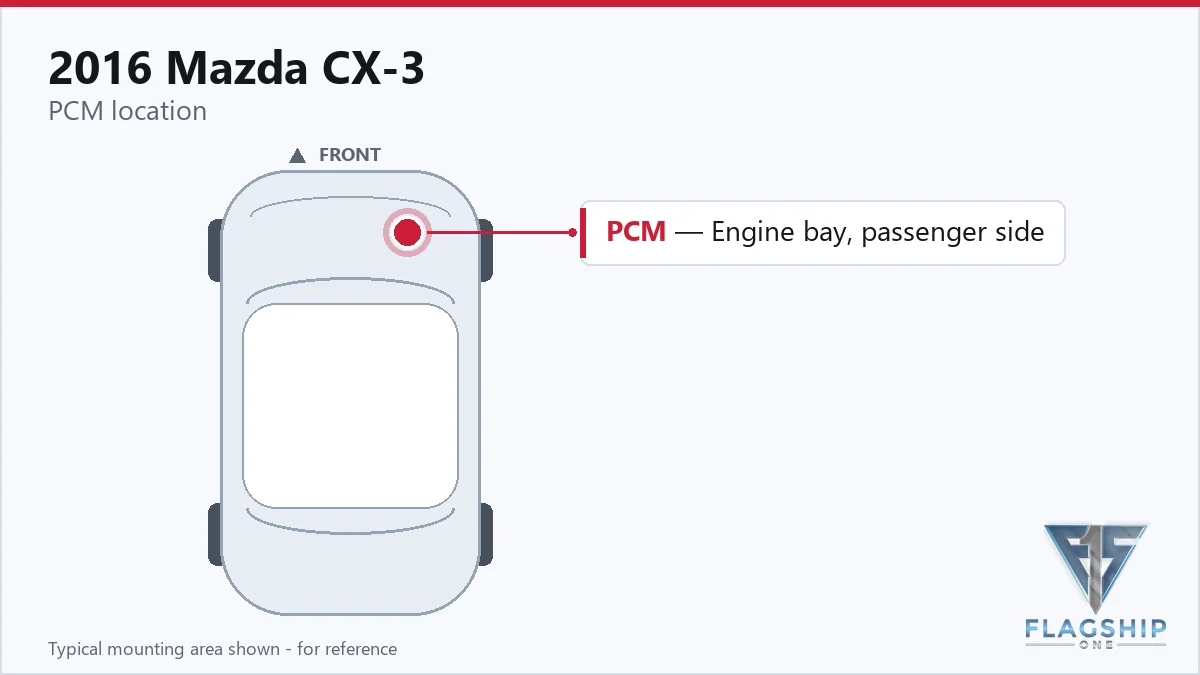
Work with the ignition off, and treat the module as static-sensitive: avoid touching the connector pins at any point.
| Operation | Configuration | Book Time |
|---|---|---|
| Powertrain Control Module R&R | All configurations | 0.9 hr |
| Powertrain Control Module Relearn | All configurations | 0.5 hr |
| Engine Control Module Reset | All configurations | 0.3 hr |
| Engine Control Module R&R | All configurations | 0.9 hr |
| Engine Control Module Relearn | All configurations | 0.5 hr |
After replacing the PCM or ECM in a 2016 Mazda CX-3 2.0L, the factory procedure requires a relearn process to synchronize the module with the vehicle’s systems. The book time for this relearn is 0.5 hours. Additionally, if a later calibration is available, the PCM should be reprogrammed if the vehicle is not repaired or additional diagnostic information is not available. Flagship One supplies a VIN-programmed replacement unit that arrives with the correct calibration already loaded, so the relearn and reprogramming steps are completed before the module ships. This eliminates the need for a dealer visit to perform those procedures, saving time and ensuring the module is ready to install.
Common symptoms of a failing PCM or ECM in a 2016 Mazda CX-3 2.0L include a check engine light that stays on, an A/T warning light, and drivability issues such as rough idle, stalling, hesitation, or poor acceleration. The transmission may shift erratically or fail to shift at all. In some cases, the vehicle may not start, or the scan tool may lose communication with the module. One documented internal fault is internal control module memory checksum error, which indicates a problem within the PCM itself. Other trouble codes like P0606 may also appear. If you experience any of these symptoms, diagnosing the module early can prevent further damage to the engine or transmission.
The 2016 Mazda CX-3 2.0L has documented module-internal trouble codes that point to PCM or ECM failures. These codes are stored when the module detects an internal fault. The following codes are specific to this vehicle:
| Code | Meaning | Full Guide |
|---|---|---|
| P0601 | Internal memory checksum error | Full P0601 guide → |
| P0606 | Module processor failure | Full P0606 guide → |
Factory service bulletin 05-004/19 applies to the 2016 Mazda CX-3. It addresses a condition where the check engine light and A/T warning light illuminate along with one or more of the following diagnostic trouble codes stored in the transmission control module (TCM) memory: P0842:00, P0847:00, P0872:00, P0877:00, P0780:00, and P1738:00. This bulletin provides guidance for diagnosing and repairing transmission-related issues that may be linked to the PCM or ECM. If your CX-3 displays these symptoms and codes, consulting this bulletin can help identify the root cause before replacing any modules.
| Bulletin | Subject | What It Addresses |
|---|---|---|
| — | Technical Service Bulletin > Transmission/Transaxle > On-Board Diagnostics > 05-004/19 – Check | — |
Symptoms include a check engine light, A/T warning light, rough idle, stalling, hesitation, erratic shifting, and trouble codes like P0601 or P0606. The vehicle may also fail to start or lose communication with a scan tool.
The factory book time for PCM removal and replacement is 0.9 hours. An additional 0.5 hours is required for the relearn procedure. A separate ECM reset is listed at 0.3 hours.
Installing an incorrect PCM can cause interference with engine control. The replacement module must match the original part number and be programmed with the correct calibration. A VIN-programmed unit from Flagship One eliminates the need for additional programming.
When your 2016 Mazda CX-3 2.0L needs a new PCM or ECM, you have options: repair the original module or replace it with a refurbished unit. Repair may be possible for some internal faults, but replacement is often more reliable. Flagship One offers refurbished PCMs that are VIN-programmed and ready to install, saving you the time and cost of dealer programming. Consider the specific symptoms and diagnostic codes your vehicle is showing to choose the best path forward.
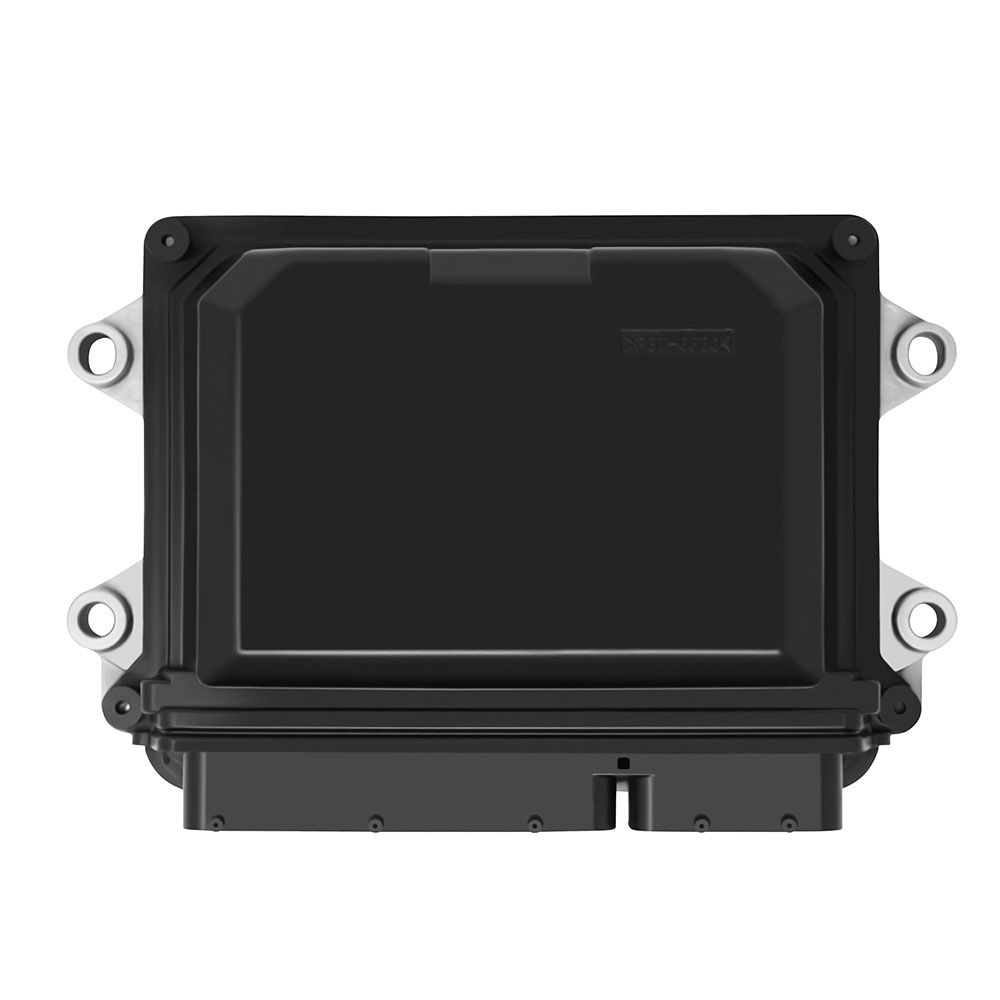
Flagship One stocks a refurbished, VIN-programmed PCM for the 2016 Mazda CX-3 with a lifetime warranty, free shipping and no core charge. The full Mazda CX-3 module lineup covers other engine configurations as well.
The PCM and ECM in your 2016 Mazda CX-3 2.0L are critical for engine and transmission control. Recognizing symptoms like warning lights and drivability issues, understanding the replacement process, and using a properly programmed module can restore your vehicle’s performance. Flagship One’s VIN-programmed units simplify the repair by eliminating the factory relearn and reprogramming steps.