
Last updated on August 25th, 2026 at 02:09 pm
In the 1992 Lexus LS400, the powertrain control module (PCM) and engine control module (ECM) manage fuel delivery, ignition timing, and transmission shifting. Failure of either unit can cause no‑start conditions, erratic idle, loss of power, or transmission slip, requiring diagnostic attention and possible replacement.
When a 1992 Lexus LS400 exhibits intermittent stalling, rough idle, or unexpected transmission behavior, the vehicle’s electronic control modules are often the first suspects. The PCM and ECM are the brain of the powertrain, interpreting sensor data and commanding actuators to keep the engine and transmission operating smoothly. Understanding how these modules function, where they are located, and what labor is involved in their service can help you decide whether a repair or a replacement is the right path. This guide outlines the key facts you need to assess the situation, what to expect during removal and installation, and how Flagship One’s VIN‑programmed units simplify the process.
1992 Lexus LS400
OEM programmed ECM for your 1992 Lexus LS400 — plug & play, no dealer visit.
Free shipping · Lifetime warranty
The PCM in the 1992 Lexus LS400 interprets inputs from the throttle position sensor, crankshaft speed sensor, and other engine monitors to calculate fuel injection timing and control the automatic transmission. It also stores adaptive data that the vehicle uses to fine‑tune performance over time. The ECM performs a similar role for engine management, handling ignition timing, idle control, and emissions‑related functions. Together they ensure the engine runs efficiently and the transmission shifts at the proper moments. A failure in either module may cause loss of power, stalling, or shifting irregularities, which can leave the vehicle undrivable. Understanding the function of these units helps you recognize why a proper replacement is critical. replacement ECMs for LS400 keep the powertrain operating as designed.
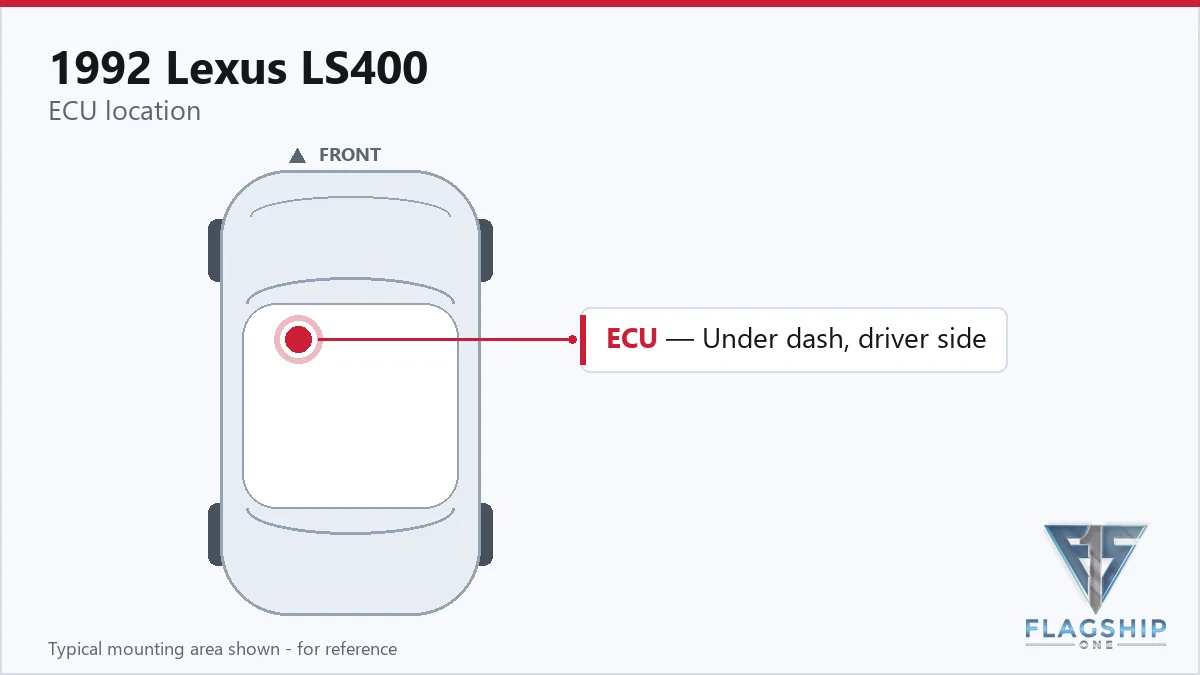
Factory documentation places the engine ECU inside the instrument panel, accessible by removing the lower dashboard trim. After gaining access, the PCM and ECM are typically secured with a handful of bolts and connector plugs. The labor guide lists a 0.9‑hour estimate for PCM removal and replacement, while ECM removal and reinstall is rated at 0.8 hours. Relearn procedures for both modules require an additional 0.5 hours each. No specific torque values are provided, so standard fastener tightening practices should be followed to avoid damage to the instrument panel or wiring harnesses.
| Operation | Configuration | Book Time |
|---|---|---|
| Powertrain Control Module Relearn | All configurations | 0.5 hr |
| Powertrain Control Module R&R | All configurations | 0.9 hr |
| Engine Control Module R&R | All configurations | 0.8 hr |
| Engine Control Module Relearn | All configurations | 0.5 hr |
Once the PCM or ECM is swapped, the factory service procedure calls for a relearn cycle to synchronize the new unit with the vehicle’s existing parameters. The PCM relearn and ECM relearn each take about half an hour of calibrated time. Flagship One supplies units that are already VIN‑programmed, meaning those relearn steps are completed at the factory. a VIN-programmed replacement unit arrives ready to operate, so the installer can focus on mechanical fit and connector verification rather than software initialization.
A failing PCM or ECM in a 1992 Lexus LS400 often reveals itself through a combination of drivability issues. You may notice the engine cranking but not starting, or the vehicle may stall suddenly at low speeds. Rough idle, unexpected loss of power during acceleration, and erratic transmission shifting are also common. In some cases the diagnostic scanner will report a loss of communication with the control module, preventing any codes from being read. These signs point to a loss of control logic that the PCM or ECM normally provides, indicating that a thorough inspection or replacement may be required.
Yes, the PCM controls shift timing for the automatic transmission. If it fails, the transmission may shift harshly, slip, or remain in a single gear.
The factory procedure includes an ECM relearn step that typically takes about 0.5 hours. A VIN‑programmed unit from Flagship One eliminates this step.
The labor guide estimates roughly 0.9 hours for removal and replacement of the PCM, plus an additional 0.5 hours for the required relearn.
Common signs include no‑start conditions, rough idle, loss of power, and the inability of a scan tool to communicate with the module.
Access typically requires removal of the lower dashboard trim and standard hand tools to disconnect the fasteners and electrical connectors.
When the PCM or ECM in your 1992 Lexus LS400 shows signs of failure, you can choose between a factory‑approved repair or a refurbished replacement. Flagship One’s VIN‑programmed units arrive ready for installation, reducing the need for additional coding steps and helping you get back on the road faster.
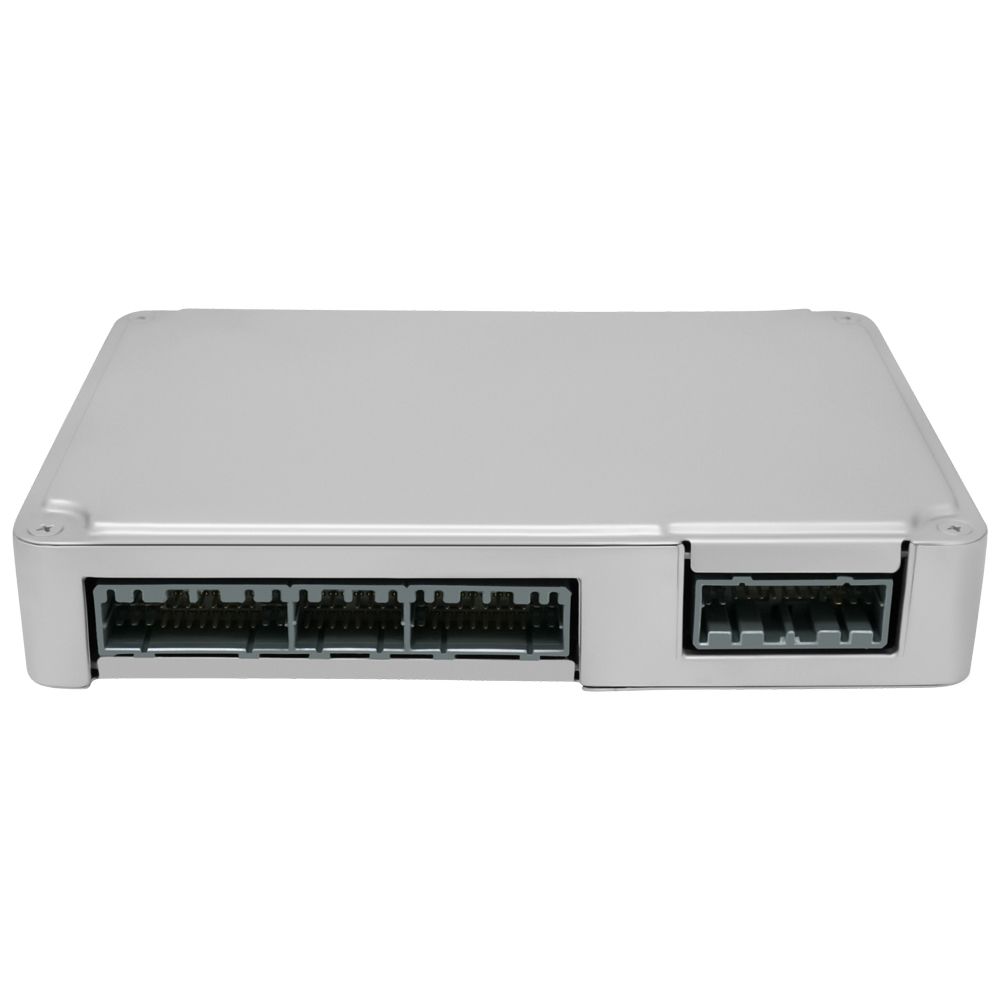
Flagship One stocks a refurbished, VIN-programmed PCM for the 1992 Lexus LS400 with a lifetime warranty, free shipping and no core charge. The full Lexus LS400 module lineup covers other engine configurations as well.
A malfunctioning PCM or ECM can leave a 1992 Lexus LS400 undrivable, but understanding the module’s role, location, and required labor makes the repair process clear. Consider a VIN‑programmed replacement to simplify post‑install work and restore reliable performance.