
Last updated on August 25th, 2026 at 02:21 pm
The Engine Control Module (ECM) in your 2017 Chevrolet Express 4.8L manages fuel delivery, ignition timing, and emissions systems. Failure may cause stalling, no-start conditions, or erratic engine behavior, often linked to internal faults or circuit board damage.
If your 2017 Chevrolet Express 4.8L has developed a no-start condition, stalls unexpectedly, or throws persistent engine codes, the Engine Control Module (ECM) may be at fault. This component acts as the brain of your vehicle’s powertrain, coordinating fuel injection, ignition, and emissions systems. When it fails, symptoms can range from subtle performance issues to complete engine shutdown. Understanding the role of the ECM, how to replace it, and what steps follow installation can help you make an informed repair decision. This guide covers the essentials of ECM replacement, programming requirements, and common failure signs specific to your vehicle.
In the 2017 Chevrolet Express 4.8L, the Engine Control Module (ECM) is responsible for monitoring and adjusting engine parameters in real time. It processes data from sensors to optimize fuel delivery, ignition timing, and emissions control, ensuring smooth operation and compliance with regulations. A faulty ECM can disrupt these functions, leading to poor performance or even a non-running engine. If replacement becomes necessary, you’ll need a replacement engine computer for the Chevrolet Express that matches your vehicle’s specifications. The module’s precise calibration is critical, as incorrect settings can trigger further issues or prevent the engine from starting.
The ECM in your 2017 Chevrolet Express 4.8L is typically located near the engine bay, mounted to the firewall or inner fender. Replacing it involves disconnecting the battery, removing electrical connectors, and unbolting the module from its mount. Factory labor estimates for this procedure are 1.8 hours. Always turn the ignition off before installing or removing ECM connectors to avoid damaging sensitive components. While the physical swap is straightforward, accessing the module may require removing other components, depending on the vehicle’s configuration. No specialized torque specifications are provided, but connectors should be secured firmly to prevent corrosion or intermittent faults.
Work with the ignition off, and treat the module as static-sensitive: avoid touching the connector pins at any point.
| Operation | Configuration | Book Time |
|---|---|---|
| Powertrain Control Module R&R | 2.8L | 1.9 hr |
| Powertrain Control Module R&R | 4.8L | 1.8 hr |
| Powertrain Control Module R&R | 6.0L | 1.8 hr |
| Powertrain Control Module Relearn | Light Duty | 0.5 hr |
| Powertrain Control Module Relearn | Medium/Heavy Truck | 0.5 hr |
| Engine Control Module R&R | 2.8L | 1.9 hr |
| Engine Control Module R&R | 6.0L | 1.8 hr |
| Engine Control Module R&R | 4.8L | 1.8 hr |
2017 Chevrolet Express 4.8L: When the
OEM programmed replacements — plug & play, no dealer visit.
Find yours by year, make & model →
Free shipping · Lifetime warranty
After replacing the ECM in your 2017 Chevrolet Express 4.8L, the factory requires reprogramming to ensure compatibility with your vehicle’s systems. This process involves installing a support tool, such as the EL-49642, to load the correct calibration. However, if you opt for a VIN-programmed replacement unit, this step is already completed, saving you time and reducing the risk of programming errors. Without proper programming, the new module may not communicate with the engine or other control systems, leading to further issues or a non-functional vehicle.
Common signs of ECM failure in the 2017 Chevrolet Express 4.8L include stalling, a no-start condition, or erratic engine behavior. You may also notice poor fuel economy, rough idling, or the check engine light illuminating with internal module codes. One such code, internal control module memory checksum error, often indicates a fault within the ECM itself. If your scan tool shows no communication with the module, it may suggest a complete failure. Shifting issues or transmission-related codes can also arise if the ECM fails to relay data to other systems properly.
The 2017 Chevrolet Express 4.8L may log specific trouble codes when the ECM experiences internal faults. These codes typically point to memory errors, processor issues, or communication failures within the module itself.
Factory service bulletins highlight potential ECM issues in the 2017 Chevrolet Express. Bulletin #17139 addresses printed circuit board delamination in certain vehicles, which may cause no-start conditions or stalling. This delamination can create open circuits, disrupting module function. Another bulletin, #16-NA-325, focuses on identifying non-GM ECM calibrations and power-up hardware detection in diesel engines, though it primarily applies to the 2.8L Duramax variant. If your vehicle exhibits symptoms covered by these bulletins, following the recommended procedures may help diagnose or resolve the issue.
| Bulletin | Subject | What It Addresses |
|---|---|---|
| — | Identifying Non-GM ECM Calibration Use and Power-up Hardware Detection in 2.8 Duramax Diesel En | — |
| — | Service Update – ECM Printed Circuit Board Delamination – (Apr 13, 2017) | Certain 2017 model year Chevrolet Express, Silverado HD, Sonic, Trax, and 2017 model year GMC Savana and Sierra HD vehicles may have delamination on the… |
While the physical replacement is straightforward, programming the new module requires specialized tools and software. If you’re not equipped for this step, it’s best to have the work done by a professional to avoid potential issues. A pre-programmed unit can simplify the process.
Stalling after replacement often indicates a programming issue or incomplete relearn procedure. The ECM must be calibrated to your vehicle’s specific configuration. If the module wasn’t programmed correctly, it may not communicate properly with the engine or transmission.
Common signs include a no-start condition, stalling, or persistent internal module codes like P0601. If your scan tool shows no communication with the ECM, it may be completely non-functional. A professional diagnostic can confirm the issue.
If your 2017 Chevrolet Express 4.8L is experiencing ECM-related issues, you have options for repair. A refurbished or new replacement module can restore functionality, but programming is critical. Opting for a unit pre-programmed to your VIN can streamline the process, eliminating the need for post-install calibration. Consider the labor and tool requirements before deciding whether to tackle the job yourself or seek professional assistance.
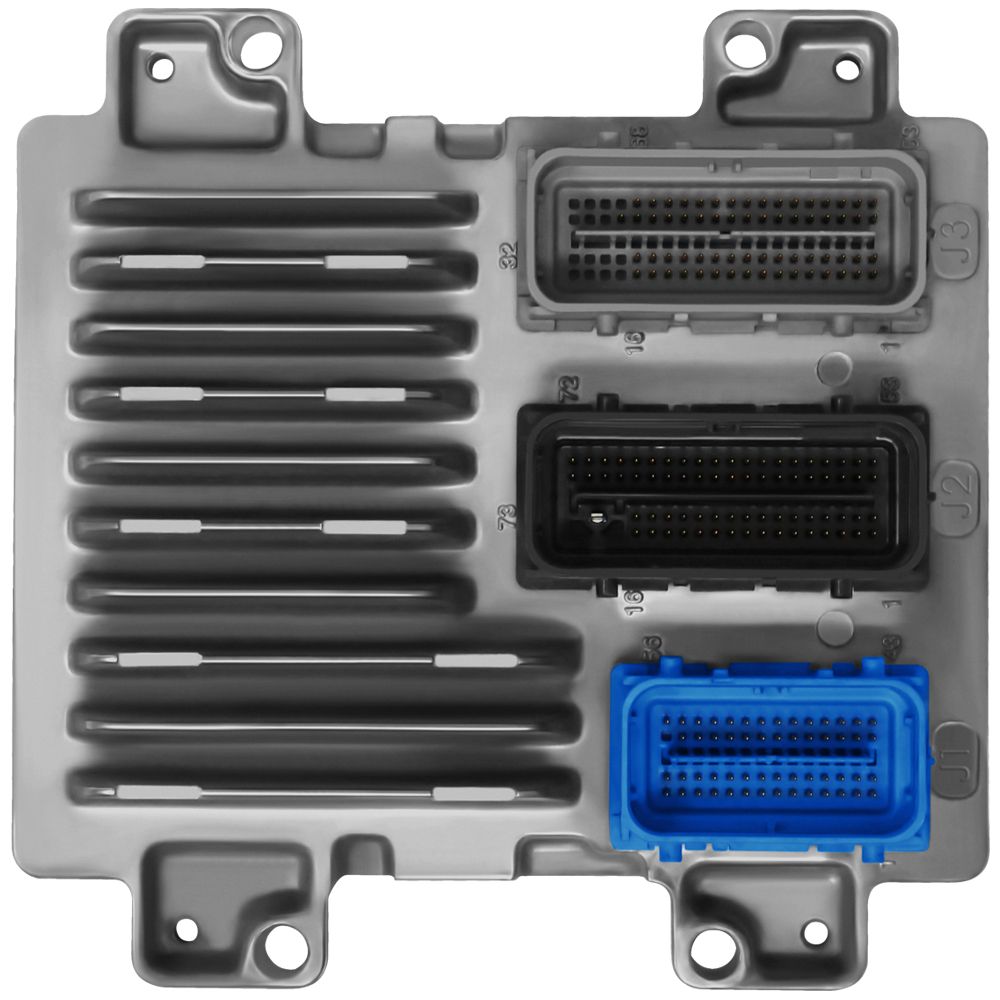
Flagship One stocks a refurbished, VIN-programmed PCM for the 2017 Chevrolet Express with a lifetime warranty, free shipping and no core charge. The full Chevrolet Express module lineup covers other engine configurations as well.
The ECM in your 2017 Chevrolet Express 4.8L plays a vital role in engine performance and reliability. If you’re facing symptoms like stalling or a no-start condition, replacing the module may be necessary. Understanding the steps involved, from installation to programming, ensures a smoother repair process. Whether you choose to handle it yourself or rely on a professional, addressing ECM issues promptly can prevent further complications.