
Last updated on August 25th, 2026 at 02:16 pm
When the powertrain control module in your 2018 Chevrolet Express develops an internal fault, the effects reach nearly every system the engine depends on to run properly. This module acts as the central brain that coordinates fuel delivery, spark timing, and emissions controls based on dozens of sensor inputs. You may encounter a no-start condition, intermittent stalling, rough running, or a persistent check engine light despite sensor testing appearing normal.
This guide explains how the module functions within your specific vehicle, what symptoms point toward a failed unit versus a wiring or sensor problem, and what the factory repair procedure actually involves. You will learn why reprogramming is required after any replacement, how long the job typically takes, and what you can do to help prevent premature module failure. The goal is to give you enough understanding to discuss repair options intelligently with a technician or make an informed decision about purchasing a replacement unit.
The powertrain control module in the 2018 Chevrolet Express 4.3L functions as the primary electronic control unit responsible for managing the engine’s operational parameters. This computer receives information from the mass airflow sensor, crankshaft position sensor, camshaft position sensors, throttle position sensor, oxygen sensors, and numerous other monitoring devices throughout the drivetrain. Using this continuous stream of data, the module calculates and commands the precise amount of fuel to inject, the optimal spark advance for current conditions, and the operation of accessories such as the cooling fan and evaporative emissions system.
Unlike sensors that monitor specific components, the module processes all inputs together to maintain proper air-fuel ratios, emissions compliance, and driveability across varying conditions. When you accelerate, the module responds by increasing fuel delivery and advancing timing. When you decelerate, it reduces fuel and may activate deceleration fuel cutoff. This real-time adjustment occurs constantly while the engine runs, making the module fundamental to how your Express performs on the road.
Internal failures within this module typically develop from voltage stress, excessive heat exposure, age-related component degradation, or transient electrical events that exceed circuit protection limits. The symptoms you experience depend on which internal circuit fails. Processor faults may cause complete communication loss with scan tools, while memory failures often produce multiple unrelated fault codes that do not correspond to actual sensor or actuator problems. Power supply circuit failures can prevent the module from powering up at all, resulting in a no-start condition. Replacement engine computers for the Chevrolet Express are available from suppliers that pre-program the units with your specific vehicle identification number, which simplifies the installation process compared to purchasing an unprogrammed unit that requires dealer-level programming setup.
Flagship One keeps Chevrolet Express replacement engine computers in stock for exactly this failure pattern.
The powertrain control module removal and installation procedure for your 2018 Chevrolet Express 4.3L carries a book time of approximately 1.1 hours. This labor estimate covers the physical replacement process assuming standard access without unexpected complications. An additional 0.5 hours is typically required for the module relearn procedure that follows installation, which allows the new module to calibrate itself to your specific vehicle.
Before beginning the replacement, technicians are instructed to turn the ignition off and disconnect the battery to prevent electrical damage to sensitive components. The factory cautions that installing or removing ECM connectors while the ignition remains on may cause immediate damage to the module or related systems. This protective step takes only moments but prevents costly additional repairs.
Your vehicle’s electrical system must be treated with care throughout the procedure. Any aftermarket or add-on equipment should be disconnected from the vehicle electrical system before beginning work, as these items can introduce voltage spikes or ground reference problems that affect module diagnosis and replacement. The actual location of the module on your Express should be confirmed using vehicle-specific service information, and proper fastener torque specifications should be followed during reinstallation to ensure reliable long-term operation.
Work with the ignition off, and treat the module as static-sensitive: avoid touching the connector pins at any point.
| Operation | Configuration | Book Time |
|---|---|---|
| Powertrain Control Module R&R | 2.8L | 1.9 hr |
| Powertrain Control Module R&R | 4.3L | 1.1 hr |
| Powertrain Control Module R&R | 6.0L | 1.8 hr |
| Powertrain Control Module Relearn | Light Duty | 0.5 hr |
| Powertrain Control Module Relearn | Medium/Heavy Truck | 0.5 hr |
| Engine Control Module R&R | 2.8L | 1.9 hr |
| Engine Control Module R&R | 4.3L | 1.1 hr |
| Engine Control Module R&R | 6.0L | 1.8 hr |
2018 Chevrolet Express
OEM programmed ECM for your 2018 Chevrolet Express — plug & play, no dealer visit.
Free shipping · Lifetime warranty
After installing a replacement powertrain control module in your 2018 Chevrolet Express, the factory procedure requires reprogramming the unit before it will function properly. This process involves using the EL-49642 SPS programming support tool along with the correct software version and calibration files specific to your vehicle configuration. The reprogramming step is not optional; a new or unprogrammed module will not communicate with your vehicle systems until this procedure is completed.
The programming requirement exists because each module must contain the exact software calibration matched to your engine displacement, transmission type, and other vehicle specifications. Without the proper programming, the module cannot make accurate fuel delivery calculations or control emission systems correctly.
Units from Flagship One arrive as a VIN-programmed replacement unit, which means the module is pre-loaded with software calibrated for your specific Express before it ships. This eliminates the need for you to arrange dealer programming or obtain specialized equipment following installation. Your technician can install the pre-programmed module and proceed directly to the relearn procedure without waiting for programming to complete, reducing overall service time.
Every VIN-programmed replacement unit from Flagship One arrives with these steps already completed.
Powertrain control module failures in your 2018 Chevrolet Express typically manifest in ways that may seem disconnected from the computer itself. The most concerning symptom involves complete communication loss, where your scan tool cannot establish a data link with the module. This indicates that the internal processor or power supply circuits have failed to a degree that prevents basic operation, and the vehicle may not start at all.
Intermittent failures often present as stalling or cutting out during normal driving, followed by normal operation afterward. These symptoms frequently lead technicians to suspect fuel pump or ignition system problems first, delaying proper diagnosis of the actual module fault. You may notice multiple fault codes stored that appear unrelated to each other, such as oxygen sensor codes appearing alongside throttle position sensor codes despite those systems functioning normally when tested individually.
Misfire codes that appear without corresponding mechanical issues often indicate module-induced spark or fuel delivery problems. When the module fails to fire the correct cylinder or delivers fuel at the wrong time, combustion suffers and the engine runs roughly. In some cases, transmission shifting may feel harsh or delayed because the module controls shift firmness and timing through the same control strategies.
Internal memory problems frequently generate fault code P0601, which indicates a checksum error in the module’s read-only memory that can cause intermittent performance issues. When this specific code appears alongside others pointing toward different systems, experienced technicians understand that the common factor is likely the module itself rather than multiple simultaneous component failures. Addressing these codes promptly helps distinguish between a failing module and unrelated sensor problems, preventing unnecessary parts replacement and diagnostic expense.
Your 2018 Chevrolet Express may store module-internal fault codes that point specifically to problems within the powertrain control module rather than external sensors or wiring. These codes often appear in groups because a failing module generates errors across multiple memory sections. The following codes are documented for this vehicle and may be present depending on the nature of the internal fault.
| Code | Meaning | Full Guide |
|---|---|---|
| P0601 | Internal memory checksum error | Full P0601 guide → |
| P0602 | Control module programming error | Full P0602 guide → |
| P0603 | Keep-alive memory (KAM) error | Full P0603 guide → |
| P0604 | Internal RAM error | Full P0604 guide → |
| P0605 | Internal ROM error | Full P0605 guide → |
| P0606 | Module processor failure | Full P0606 guide → |
| P0607 | Module performance fault | Full P0607 guide → |
| P060A | Module-internal fault | — |
| P060D | Module-internal fault | — |
| P062F | Internal EEPROM error | Full P062F guide → |
| P0630 | Module-internal fault | Full P0630 guide → |
Factory service information documents specific bulletin numbers related to powertrain control module service for this vehicle application. Bulletin number sixteen-NA-three-two-five addresses identifying non-General Motors ECM calibration usage and power-up hardware detection in diesel engines, which highlights the importance of using correct programming for replacement modules. Bulletin number PIP five-three-seven-three B covers program ECM error codes E four four nine one and E four four two three, indicating specific error conditions that may occur during the reprogramming process. These bulletins remind technicians and vehicle owners that proper module identification and programming procedures matter for successful repair outcomes. Following factory-recommended procedures helps avoid the error conditions documented in service communications.
| Bulletin | Subject | What It Addresses |
|---|---|---|
| — | Identifying Non-GM ECM Calibration Use and Power-up Hardware Detection in 2.8 Duramax Diesel En | — |
| — | Program ECM Error E4491/E4423 – (Jun 11, 2018) | — |
Module-internal codes like P0601 through P0630 that appear alongside multiple unrelated fault codes often indicate a module problem rather than sensor failures. A scan tool may show no communication with the module during complete failures. Technicians typically test sensors and wiring first, and only suspect the module when problems persist despite normal sensor readings.
Physical removal and installation of the module may be attempted by experienced DIYers, but reprogramming requires GM SPS equipment that consumers typically cannot access. Some suppliers offer pre-programmed modules that arrive with your specific VIN already loaded, which eliminates the reprogramming requirement for a qualified technician to complete the repair.
A used module would require reprogramming to match your vehicle, and its remaining service life would be uncertain. Pre-owned modules may have underlying damage or degradation that contributed to their removal. New or refurbished units from reputable suppliers typically include warranties and arrive ready for installation.
Continued operation with a failing module may result in complete vehicle stalling, inability to start, poor fuel economy, transmission shifting problems, or triggering emissions system faults. In some cases, the module may fail completely without warning, leaving you stranded. Addressing symptoms early helps avoid inconvenient breakdowns.
The module must contain software calibration specific to your vehicle configuration, including engine displacement, transmission type, and axle ratio. Without proper programming, the module cannot calculate correct fuel delivery or control emission systems. Units programmed with your VIN before shipping allow installation without dealer-level programming equipment.
Repair options for your 2018 Chevrolet Express include purchasing a remanufactured unit from a dealer or locating a pre-programmed replacement from an independent supplier. Remanufactured units typically require you to provide the vehicle identification number for programming before shipping, which may add time to the repair process. Pre-programmed units arrive ready for installation, reducing the number of steps your technician must complete. Consider your budget, timeline, and whether you prefer dealer-sourced parts versus independent supplier options when deciding how to proceed with your specific vehicle situation.
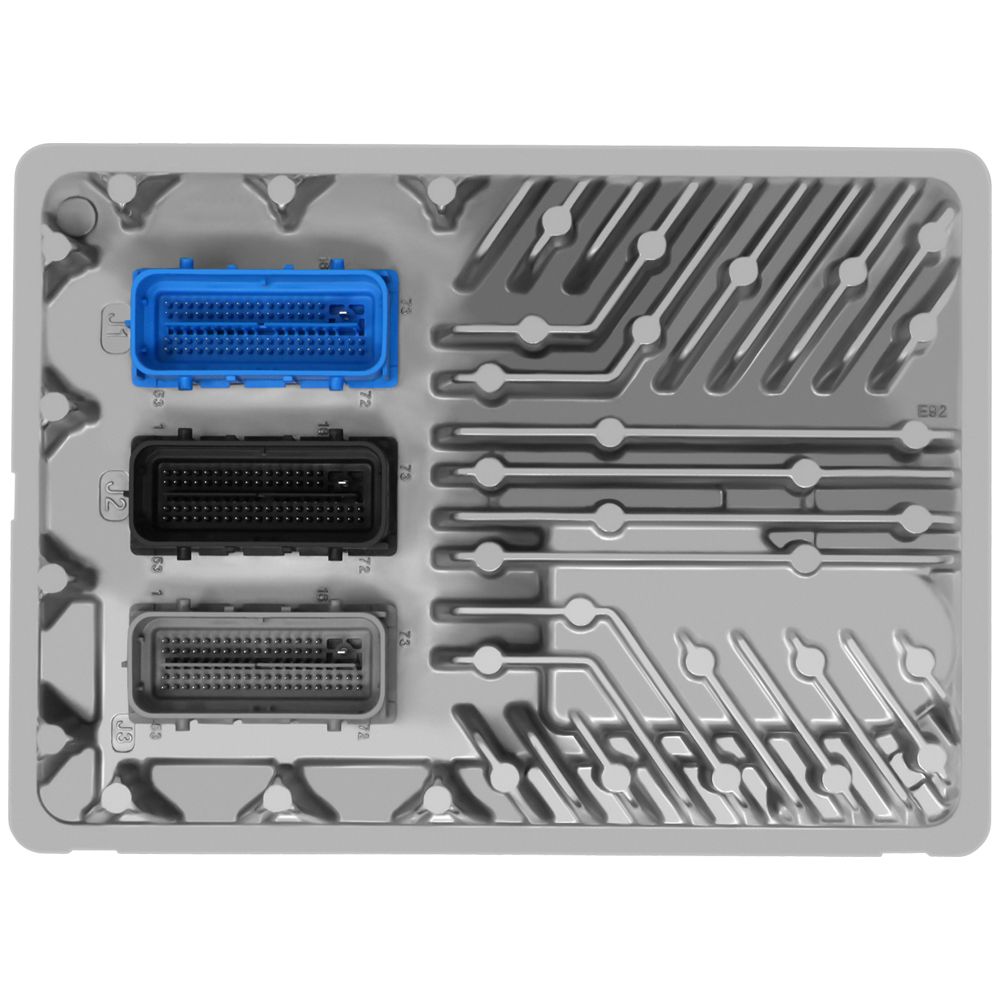
Flagship One stocks a refurbished, VIN-programmed PCM for the 2018 Chevrolet Express with a lifetime warranty, free shipping and no core charge. The full Chevrolet Express module lineup covers other engine configurations as well.
The powertrain control module in your 2018 Chevrolet Express represents a critical component that affects virtually every aspect of engine operation. Understanding its function, recognizing failure symptoms, and knowing what the replacement process involves help you make informed decisions about repair options. Whether you pursue dealer service or a pre-programmed replacement unit, addressing module failures promptly restores your Express to reliable operation. Contact a qualified technician or supplier to discuss specific options for your vehicle and obtain cost estimates tailored to your situation.