
Last updated on August 25th, 2026 at 02:18 pm
The Powertrain Control Module (PCM) in your 1999 Chevrolet Camaro manages engine and transmission functions. Failures may cause poor performance, stalling, or diagnostic trouble codes related to internal memory or processor errors.
If your 1999 Chevrolet Camaro has been acting unpredictably—stalling at stops, refusing to start, or throwing cryptic check-engine lights—it may be signaling a problem with its Powertrain Control Module (PCM). This critical component acts as the brain of your vehicle, coordinating engine performance and transmission behavior. When it fails, the effects can range from subtle drivability issues to complete immobilization. Understanding the role of the PCM, where it’s located, and what replacement involves can help you make informed decisions about repairs. This guide covers the essentials: labor times, factory procedures, common symptoms, and practical steps to protect your Camaro’s computer from premature failure. Whether you’re diagnosing an existing issue or planning ahead, knowing these details ensures you’re prepared for what comes next.
The Powertrain Control Module (PCM) in your 1999 Chevrolet Camaro is responsible for managing the engine’s fuel delivery, ignition timing, and emission controls, while also overseeing transmission shift patterns. It continuously monitors sensor inputs—like throttle position, oxygen levels, and engine temperature—to adjust performance in real time. Without a functioning PCM, your Camaro may struggle to start, run inefficiently, or even enter a fail-safe mode that limits power. This module is particularly important in vehicles of this era, as it integrates both engine and transmission control into a single unit, reducing complexity but increasing the stakes if it fails. When issues arise, they often stem from internal memory corruption, voltage spikes, or physical damage to the circuit board. Replacing the PCM with replacement engine computers for the Camaro ensures your vehicle regains its ability to adapt to driving conditions, but proper installation and programming are critical to restoring full functionality.
1999 Chevrolet Camaro
OEM programmed ECM for your 1999 Chevrolet Camaro — plug & play, no dealer visit.
Free shipping · Lifetime warranty
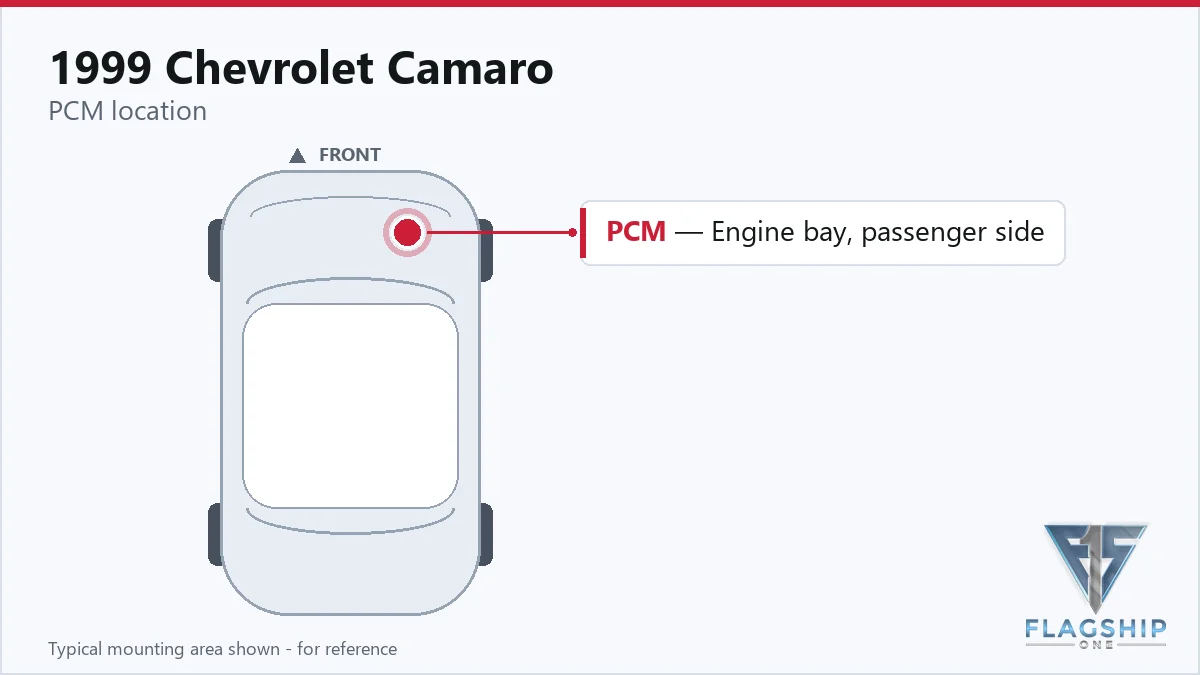
The Powertrain Control Module (PCM) in your 1999 Chevrolet Camaro is located in the engine compartment, making it relatively accessible for replacement. To remove and install the module, you’ll typically need 0.9 hours of labor, according to factory estimates. The process involves disconnecting the battery to prevent electrical shorts, carefully unplugging the wiring harness from the PCM, and removing any mounting bolts or brackets securing it in place. Since the PCM is sensitive to electrostatic discharge, it’s important to handle it by the edges and avoid touching the connector pins or circuit board components. Once the old unit is removed, the new PCM is installed in the reverse order, ensuring all connections are secure and free of corrosion. After installation, a relearn procedure is required to synchronize the module with your vehicle’s systems, which adds another 0.5 hours of labor.
| Operation | Configuration | Book Time |
|---|---|---|
| Engine Control Module R&R | All configurations | 0.9 hr |
| Engine Control Module Relearn | All configurations | 0.5 hr |
| Powertrain Control Module R&R | All configurations | 0.9 hr |
| Powertrain Control Module Relearn | All configurations | 0.5 hr |
After replacing the Powertrain Control Module (PCM) in your 1999 Chevrolet Camaro, a relearn procedure is necessary to ensure the new unit communicates correctly with the engine and transmission. This process, which typically takes 0.5 hours, involves resetting the module and allowing it to adapt to your vehicle’s specific sensors and operating conditions. Without this step, your Camaro may experience poor performance, erratic shifting, or even fail to start. However, if you opt for a VIN-programmed replacement unit, the relearn steps are already completed, saving you time and potential frustration. This pre-programming ensures the new PCM is calibrated to your vehicle’s exact specifications, reducing the risk of compatibility issues and allowing for a smoother installation process. Always follow factory guidelines to avoid introducing new problems during the transition.
When the Powertrain Control Module (PCM) in your 1999 Chevrolet Camaro begins to fail, the symptoms can vary but often include noticeable drivability issues. You may experience intermittent stalling, especially at idle or during deceleration, or the engine might refuse to start altogether. Some drivers report rough idling, hesitation under acceleration, or unexplained surges in engine speed. Transmission shifting may also become erratic, with delayed or harsh gear changes. On the diagnostic side, a failing PCM often triggers module-internal trouble codes, such as an internal control module memory check error, which can illuminate the check-engine light. In some cases, the PCM may lose communication with a scan tool, making diagnosis more challenging. Electrical gremlins, like flickering dashboard lights or intermittent power loss to accessories, can also point to PCM issues, particularly if they coincide with other symptoms. If your Camaro exhibits any of these behaviors, it’s worth investigating the PCM as a potential culprit.
The 1999 Chevrolet Camaro’s Powertrain Control Module (PCM) may store specific trouble codes when internal failures occur. These codes help pinpoint issues related to the module’s memory, processor, or communication systems, providing a starting point for diagnosis.
| Code | Meaning | Full Guide |
|---|---|---|
| P0601 | Internal memory checksum error | Full P0601 guide → |
| P0602 | Control module programming error | Full P0602 guide → |
| P0606 | Module processor failure | Full P0606 guide → |
General Motors issued a service bulletin (#99-06-04-053) in October 1999 addressing PCM reprogramming for the 1999 Chevrolet Camaro. This bulletin provided updated software to address potential drivability or performance issues related to the module’s calibration. If your vehicle is experiencing symptoms that align with PCM-related problems, checking for applicable reprogramming updates may be a worthwhile step before considering replacement.
| Bulletin | Subject | What It Addresses |
|---|---|---|
| 99-06-04-053 | Info – PCM Reprogramming – (Oct 26, 1999) | — |
Common signs include stalling, no-start conditions, rough idling, or erratic transmission shifting. The check-engine light may also illuminate with module-internal trouble codes like P0601 or P0606. If your scan tool loses communication with the PCM, that’s another strong indicator of a problem.
While the PCM is located in the engine compartment and accessible, replacement requires careful handling to avoid electrostatic discharge. You’ll also need to perform a relearn procedure afterward, which may require specialized tools or software. If you’re not comfortable with these steps, professional installation is recommended.
In the 1999 Chevrolet Camaro, the Powertrain Control Module (PCM) combines the functions of an Engine Control Module (ECM) and a Transmission Control Module (TCM) into a single unit. This means it manages both engine performance and transmission behavior, unlike some vehicles where these functions are separated.
If your Camaro stalls or runs poorly after a PCM replacement, it’s likely due to the module not being properly relearned. The relearn procedure allows the PCM to adapt to your vehicle’s sensors and operating conditions. Skipping this step can result in drivability issues until the module is recalibrated.
To protect the PCM, ensure your battery and alternator are in good condition, as weak or overcharging systems can cause voltage spikes. Avoid jump-starting with excessive voltage, and disconnect the battery before performing any electrical work. Using a battery maintainer during long periods of inactivity can also help.
If your 1999 Chevrolet Camaro is showing signs of PCM failure, you have options for repair or replacement. While reprogramming the existing module may resolve some issues, a faulty unit will eventually need to be replaced. Opting for a pre-programmed replacement can save time and ensure compatibility, allowing you to get your Camaro back on the road with minimal downtime. Whether you choose to tackle the job yourself or leave it to a professional, understanding the process helps you make the best decision for your vehicle.
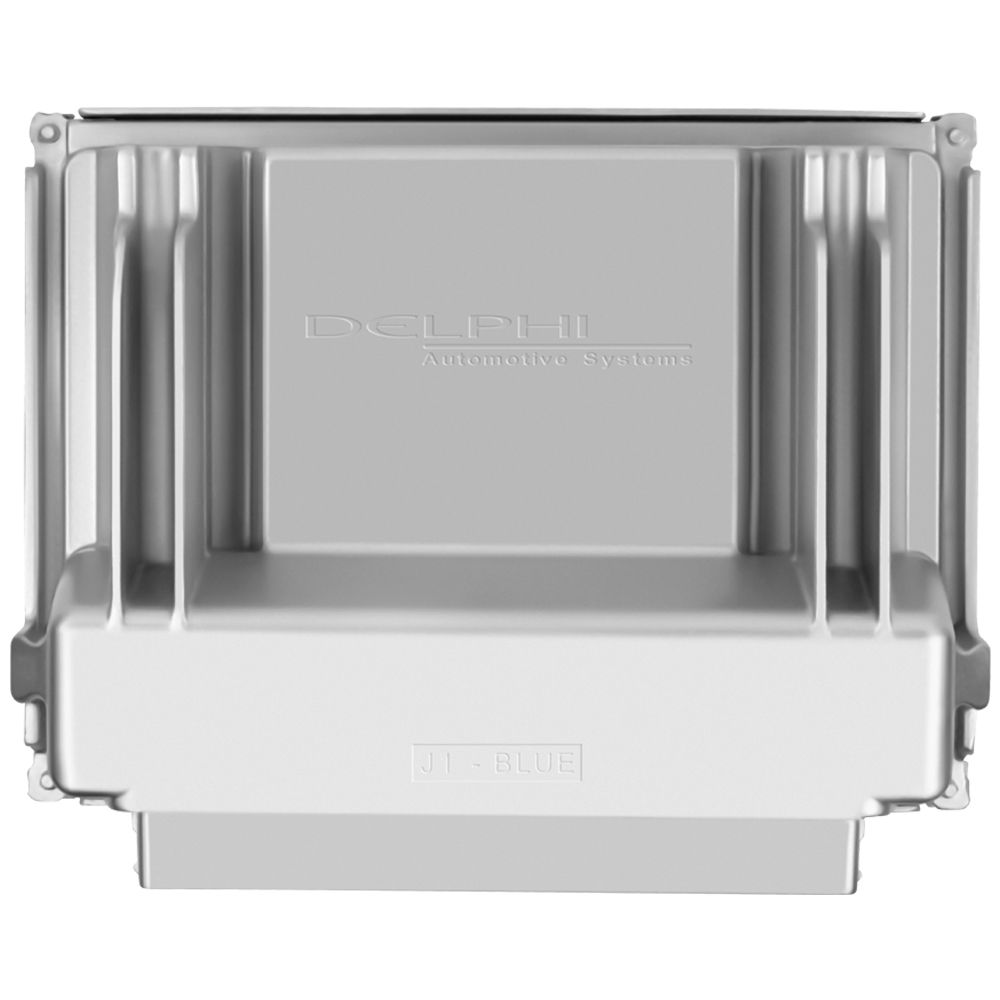
Flagship One stocks a refurbished, VIN-programmed PCM for the 1999 Chevrolet Camaro with a lifetime warranty, free shipping and no core charge. The full Chevrolet Camaro module lineup covers other engine configurations as well.
The Powertrain Control Module in your 1999 Chevrolet Camaro plays a critical role in keeping your vehicle running smoothly. If you’re experiencing stalling, no-start conditions, or other drivability issues, the PCM may be the culprit. Replacing it with a properly programmed unit can restore performance and reliability. Whether you’re diagnosing an existing problem or planning ahead, taking steps to protect your Camaro’s PCM will help avoid future headaches and keep your vehicle on the road for years to come.