
Last updated on August 25th, 2026 at 02:33 pm
In the 2016 Cadillac ATS the Powertrain Control Module and Engine Control Module manage engine timing, fuel delivery, and transmission coordination. A failure in either unit can cause loss of power, erratic shifting, or communication errors with diagnostic tools, often triggering processor‑related trouble codes.
When a 2016 Cadillac ATS begins to exhibit no‑start conditions, unexpected stalls, or transmission glitches, the underlying cause is often a faulty control module. This guide explains what the Powertrain Control Module and Engine Control Module do, how they are accessed, and what steps are required after replacement. By understanding these details you can assess repair options, anticipate labor effort, and know why a pre‑programmed replacement may simplify the job.
The Powertrain Control Module in a 2016 Cadillac ATS interprets sensor data to control engine output and coordinate transmission shifts, while the Engine Control Module focuses on precise fuel injection and ignition timing. Together they ensure smooth performance and emissions compliance. When either unit fails, the vehicle may lose driveability and generate processor codes. Proper function is essential for reliable operation, and a replacement engine computers for ATS often restores full control.
Both modules are mounted within the engine bay of the 2016 Cadillac ATS, accessible after removing the engine cover. Removal typically follows the factory book time of 1.4 hours for each unit. After disconnecting the ECM connectors—ensuring the ignition is off per factory caution—the modules are unbolted and swapped. Reinstallation mirrors the removal steps, and the total labor estimate includes 0.5 hours for each module’s relearn procedure.
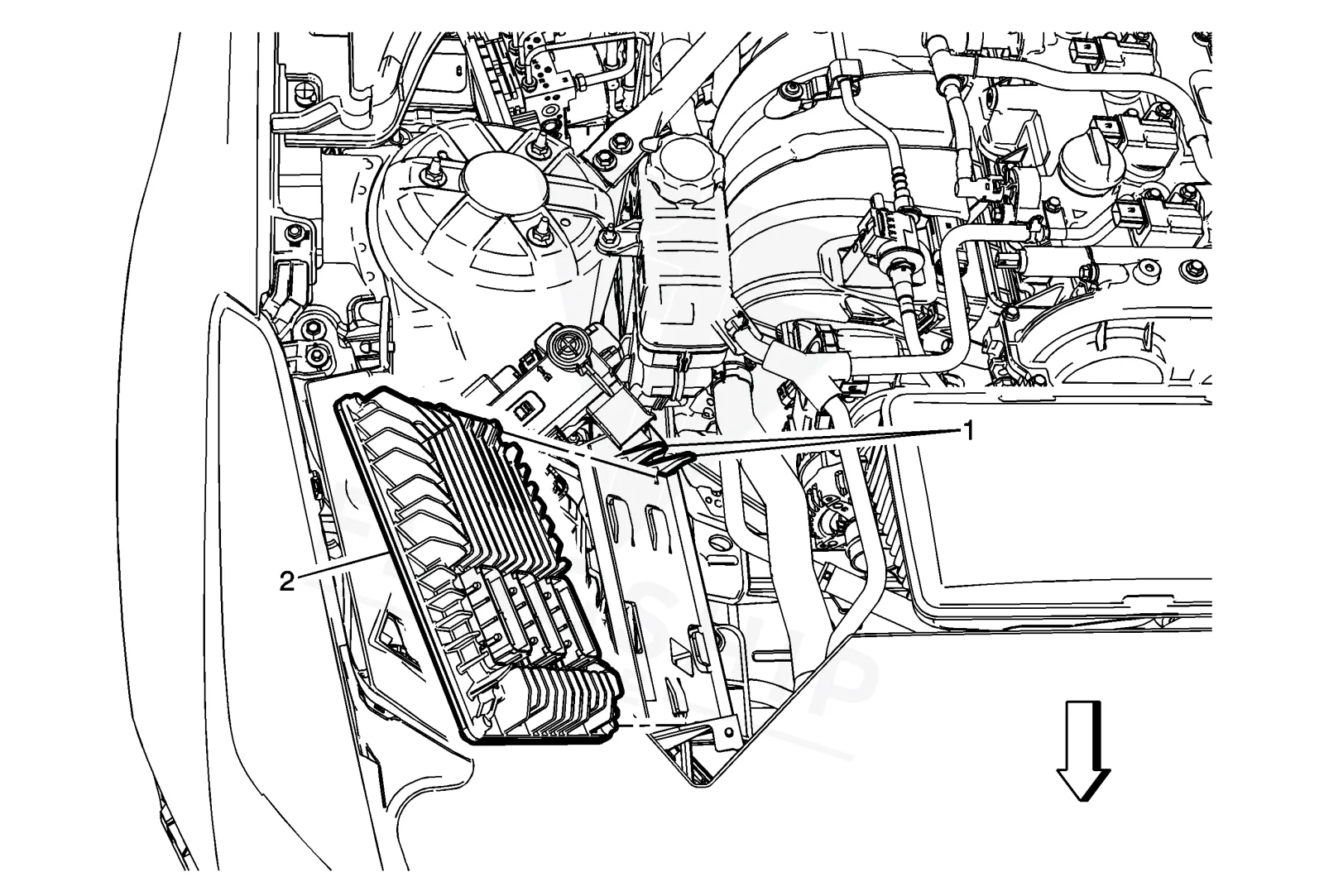
Work with the ignition off, and treat the module as static-sensitive: avoid touching the connector pins at any point.
| Operation | Configuration | Book Time |
|---|---|---|
| Powertrain Control Module R&R | All configurations | 1.4 hr |
| Powertrain Control Module Relearn | All configurations | 0.5 hr |
| Engine Control Module R&R | All configurations | 1.4 hr |
| Engine Control Module Relearn | All configurations | 0.5 hr |
2016 Cadillac ATS Powertrain and
OEM programmed replacements — plug & play, no dealer visit.
Find yours by year, make & model →
Free shipping · Lifetime warranty
After installing a new module, the factory procedure calls for a Powertrain Control Module relearn and an Engine Control Module relearn, each taking about half an hour. Flagship One supplies a a VIN-programmed replacement unit that arrives already matched to the vehicle, so those relearn steps are already completed.
Typical signs of a failing PCM or ECM in the 2016 Cadillac ATS include engine crank without start, sudden stalling, irregular shifting, and loss of communication with a scan tool. Diagnostic trouble codes often appear, such as P0601 processor fault, indicating internal processor issues that prevent normal operation.
The following trouble codes are documented for the Powertrain and Engine Control Modules in this vehicle:
| Code | Meaning | Full Guide |
|---|---|---|
| P0601 | Internal memory checksum error | Full P0601 guide → |
| P0602 | Control module programming error | Full P0602 guide → |
| P0603 | Keep-alive memory (KAM) error | Full P0603 guide → |
| P0604 | Internal RAM error | Full P0604 guide → |
| P0606 | Module processor failure | Full P0606 guide → |
| P062B | Module-internal fault | — |
| P062F | Internal EEPROM error | Full P062F guide → |
| P0630 | Module-internal fault | Full P0630 guide → |
| P064D | Module-internal fault | — |
Service Bulletin PIP5373B (June 11, 2018) addresses programming error codes E4491 and E4423, while PIP5597 (October 8, 2018) notes that technicians may be prompted to enter the engine identification number during ECM programming.
| Bulletin | Subject | What It Addresses |
|---|---|---|
| — | Program ECM Error E4491/E4423 – (Jun 11, 2018) | — |
| — | Engine identification Number Requested When Programming ECM – (Oct 8, 2018) | During the programming of some ECM’s, the technician may be prompted to input the engine identification |
You may notice rough idle, delayed acceleration, or transmission shift errors, often accompanied by processor‑related trouble codes during a scan.
The labor book lists about 1.4 hours for removal and installation, plus an additional 0.5 hour for the required relearn step.
Standard torque wrenches and connector tools are sufficient; just be sure the ignition is off when handling the ECM connectors.
When the Powertrain or Engine Control Module fails, you can choose a new factory‑spec unit or a refurbished replacement. Both options require the same labor, but a Flagship One unit arrives pre‑programmed, which can reduce shop time and simplify the post‑install process for your 2016 Cadillac ATS.
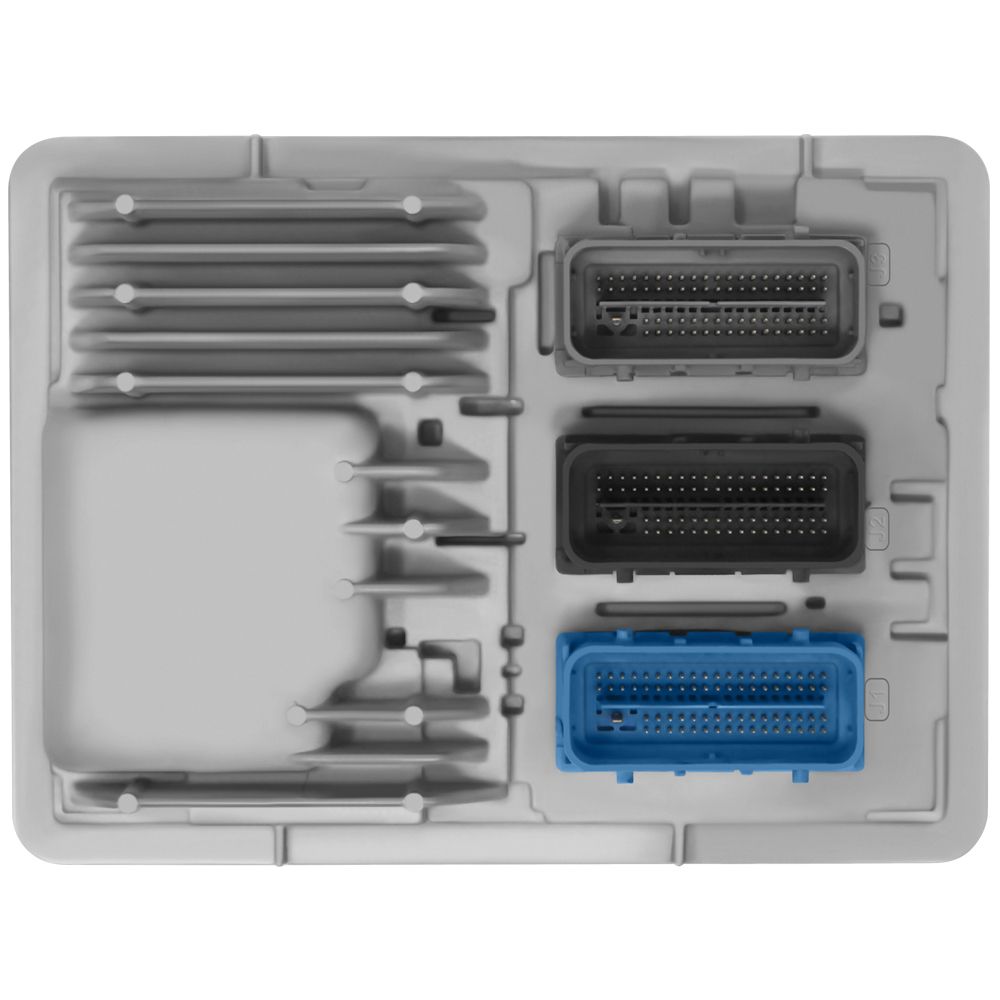
Flagship One stocks a refurbished, VIN-programmed PCM for the 2016 Cadillac ATS with a lifetime warranty, free shipping and no core charge. The full Cadillac ATS module lineup covers other engine configurations as well.
A malfunctioning PCM or ECM can undermine the performance of your 2016 Cadillac ATS. Considering a pre‑programmed replacement may streamline repairs while keeping your vehicle reliable. Contact a qualified technician to evaluate the best path forward.