
Last updated on August 25th, 2026 at 02:40 pm
The powertrain control module in a 2003 Buick Regal manages engine timing, transmission shift logic, and sensor data. A failure often results in loss of communication, erratic performance, or stored fault codes, requiring removal, replacement, and a relearn procedure to restore normal operation.
When the powertrain control module in your 2003 Buick Regal stops communicating or triggers multiple fault codes, the repair path usually involves removal, replacement, and a relearn cycle. This guide outlines where the PCM lives, how long the factory procedures take, the cautions you must observe, and what to expect after a Flagship One replacement unit is installed. Following these steps helps you avoid unnecessary diagnostics and keeps your vehicle running as intended.
In the 2003 Buick Regal, the powertrain control module collects data from the engine and transmission sensors, then commands fuel injection, ignition timing, and shift points. Its proper operation is essential for smooth acceleration and fuel efficiency. 2003 Buick Regal replacement powertrain modules ensure the vehicle meets emission standards and maintains driveability, making the PCM a central electronic brain for the powertrain.
The factory removal procedure reaches the powertrain control module positioned next to the air cleaner assembly. Removing the PCM requires about 0.9 hours of labor, while reinstalling it takes roughly the same time. The process includes disconnecting the battery and all PCM connectors, then securing the module in its mounting location. No torque specifications are provided, so follow standard fastener practices for a secure fit.
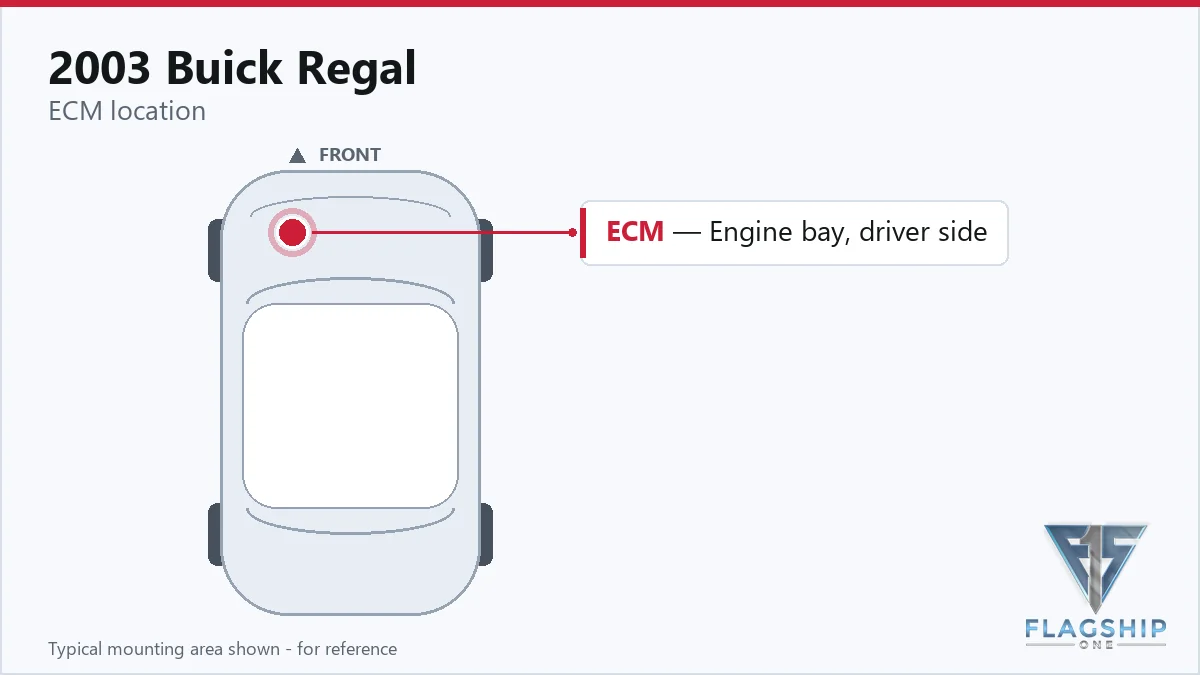
Work with the ignition off, and treat the module as static-sensitive: avoid touching the connector pins at any point.
| Operation | Configuration | Book Time |
|---|---|---|
| Powertrain Control Module Relearn | All configurations | 0.5 hr |
| Powertrain Control Module R&R | One | 0.9 hr |
| Engine Control Module Relearn | All configurations | 0.5 hr |
| Engine Control Module R&R | All configurations | 0.9 hr |
2003 Buick Regal
OEM programmed ECM for your 2003 Buick Regal — plug & play, no dealer visit.
Free shipping · Lifetime warranty
After a new PCM is fitted, the factory process calls for a powertrain control module relearn that lasts about 0.5 hours. The same applies to the engine control module. Flagship One provides a a VIN-programmed replacement unit that already includes the recorded remaining engine oil life, so the relearn step is effectively completed at installation.
Typical signs of a faulty PCM in a 2003 Buick Regal include a no‑start condition, intermittent stalling, unexpected transmission shifts, and loss of communication with scan tools. You may also see fault codes such as Powertrain Control Module Communication Failure stored in the system, indicating that the module is not exchanging data correctly with other control units.
The following internal fault codes are documented for the 2003 Buick Regal PCM and may appear when the module experiences a malfunction.
Factory labor guidelines list 0.9 hours for removal and another 0.9 hours for reinstalling the powertrain control module.
Yes, the factory procedure requires you to capture the remaining engine oil life; otherwise the system defaults the oil life to 100%.
Turn the ignition off, disconnect the battery, and avoid touching the connector pins or soldered components on the board to reduce the risk of ESD damage.
When the PCM in your 2003 Buick Regal needs attention, you can choose a repair that follows the factory removal and relearn steps or opt for a refurbished Flagship One unit that arrives pre‑programmed. Both approaches address the underlying failure, but the replacement unit eliminates the need for post‑install oil‑life entry.
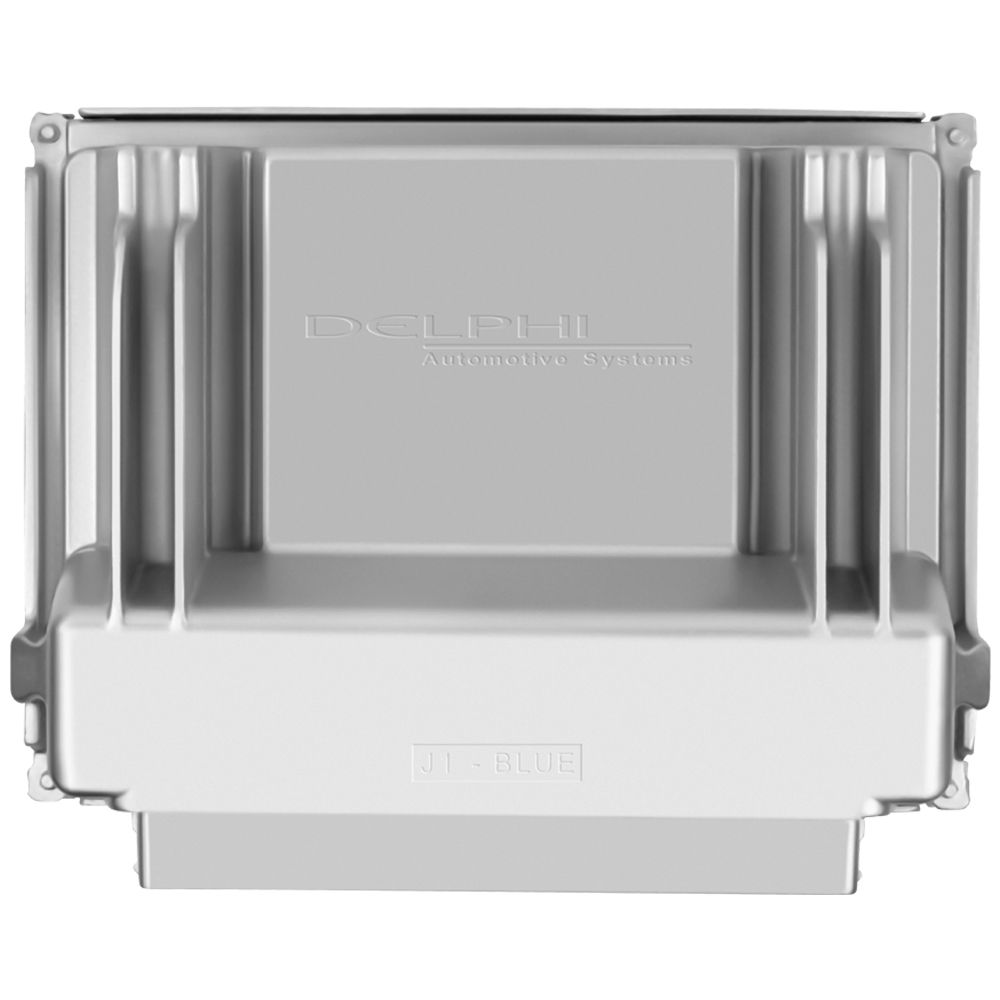
Flagship One stocks a refurbished, VIN-programmed PCM for the 2003 Buick Regal with a lifetime warranty, free shipping and no core charge. The full Buick Regal module lineup covers other engine configurations as well.
Understanding the PCM location, labor requirements, and post‑install cautions for the 2003 Buick Regal helps you make an informed decision about repair or replacement. A properly programmed Flagship One module can restore functionality while simplifying the final steps.