
Last updated on August 25th, 2026 at 02:36 pm
The Powertrain Control Module (PCM) in your 1999 Buick Regal manages engine and transmission functions by processing sensor data. Failures may cause erratic performance, stored trouble codes, or complete no-start conditions, often tied to internal memory faults or voltage irregularities.
If your 1999 Buick Regal has developed unexplained stalling, a no-start condition, or a check-engine light with cryptic codes, the Powertrain Control Module (PCM) may be the culprit. This small but critical computer sits near the air cleaner, orchestrating everything from fuel injection to transmission shifts. When it fails, symptoms can range from subtle drivability issues to complete immobilization. Replacing it isn’t just about swapping hardware—factory procedures demand careful handling to avoid static damage, oil-life resets, and programming missteps. Understanding the process helps you avoid unnecessary labor costs and ensures your Regal runs as intended. Whether you’re tackling the job yourself or working with a shop, knowing what’s involved in PCM replacement—and why a pre-programmed unit simplifies the process—can save time and frustration.
The Powertrain Control Module in your 1999 Buick Regal serves as the brain of the engine and transmission, interpreting signals from sensors to optimize performance. It adjusts fuel mixtures, ignition timing, and shift points in real time, ensuring smooth operation under varying conditions. Without a functioning PCM, your Regal may struggle to start, idle erratically, or fail to shift gears properly. Over time, heat, voltage spikes, or internal memory corruption can degrade its performance, leading to stored trouble codes or complete failure. When replacement becomes necessary, replacement engine computers for the Regal must be carefully selected to match the vehicle’s specifications, as incorrect programming can trigger drivability issues or reset critical maintenance data like oil life.
The PCM in your 1999 Buick Regal is located next to the air cleaner assembly, making it relatively accessible compared to some vehicles. Replacement involves disconnecting the battery, removing the air cleaner housing if necessary, and unplugging the module’s electrical connectors. The factory procedure specifies turning the ignition off before handling connectors to prevent voltage spikes, and avoiding contact with the circuit board to prevent static discharge. Labor time for removal and reinstallation is typically 0.9 hours, while the relearn procedure adds another 0.5 hours. No special tools are required beyond basic hand tools, but following the factory cautions is critical to avoid damaging the new module or losing stored data like oil life.
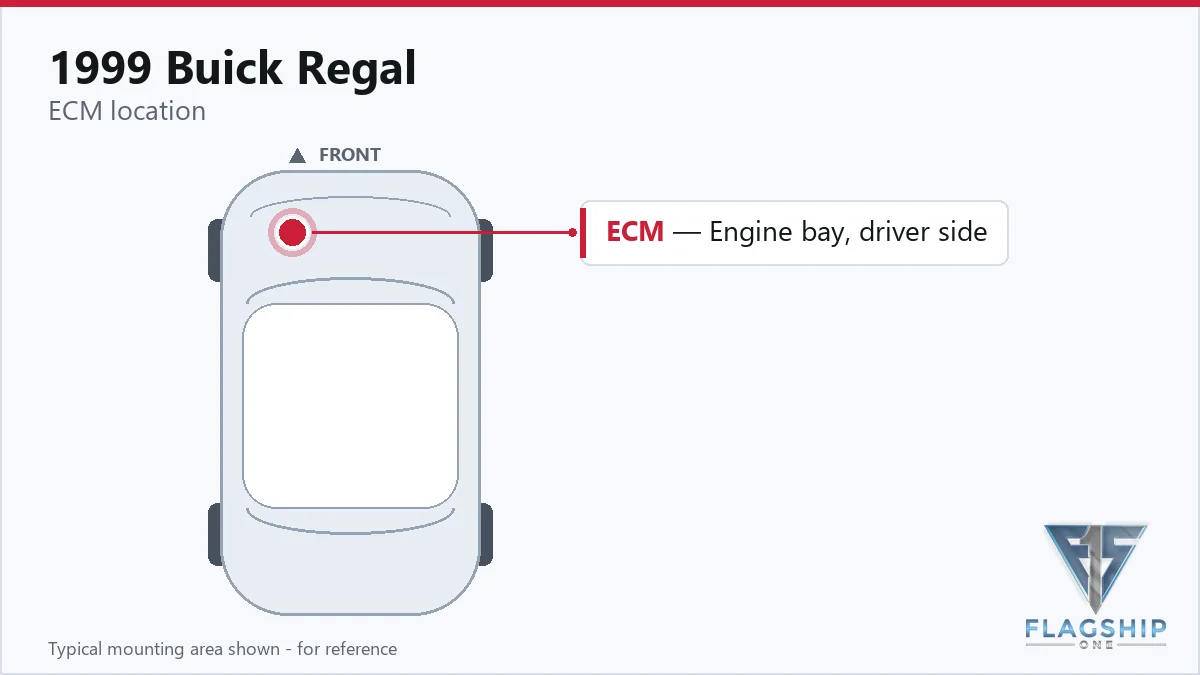
Work with the ignition off, and treat the module as static-sensitive: avoid touching the connector pins at any point.
| Operation | Configuration | Book Time |
|---|---|---|
| Powertrain Control Module Relearn | All configurations | 0.5 hr |
| Powertrain Control Module R&R | One | 0.9 hr |
| Engine Control Module Relearn | All configurations | 0.5 hr |
| Engine Control Module R&R | All configurations | 0.9 hr |
1999 Buick Regal
OEM programmed ECM for your 1999 Buick Regal — plug & play, no dealer visit.
Free shipping · Lifetime warranty
After installing a new PCM in your 1999 Buick Regal, the factory requires a relearn procedure to synchronize the module with the vehicle’s systems. This typically takes 0.5 hours and ensures proper communication with sensors and actuators. Additionally, the remaining engine oil life must be recorded before replacement, as a non-programmed module defaults to 100%, potentially delaying necessary maintenance. Off-board programming is an option for situations where the vehicle isn’t present, but it’s a complex process best left to professionals. However, a VIN-programmed replacement unit from Flagship One arrives ready to install, eliminating the need for these steps and reducing the risk of programming errors or data loss during the swap.
When the PCM in your 1999 Buick Regal begins to fail, symptoms often start subtly before escalating. You may notice the engine stalling at idle, hesitating during acceleration, or refusing to start altogether. The check-engine light is a common indicator, often accompanied by module-specific trouble codes like internal control module memory checksum error. Other signs include erratic shifting, poor fuel economy, or the vehicle entering a “limp-home” mode to protect the transmission. In some cases, the PCM may lose communication with a scan tool, making diagnosis more challenging. These issues typically worsen over time, so addressing them promptly can prevent further drivability problems or potential damage to other components.
The 1999 Buick Regal’s PCM can store several module-internal trouble codes when faults occur. These codes often point to memory corruption, communication errors, or voltage irregularities within the module itself. Identifying them early can help pinpoint whether the PCM is the root cause of drivability issues.
| Code | Meaning | Full Guide |
|---|---|---|
| P0601 | Internal memory checksum error | Full P0601 guide → |
| P0602 | Control module programming error | Full P0602 guide → |
| P0650 | Module-internal fault | Full P0650 guide → |
| P1602 | Module-internal fault | — |
| P1605 | Module-internal fault | — |
| P1610 | Module-internal fault | — |
| P1626 | Module-internal fault | — |
| P1630 | Module-internal fault | — |
| P1631 | Module-internal fault | — |
| P1635 | Module-internal fault | — |
| P1639 | Module-internal fault | — |
| P1689 | Module-internal fault | — |
General Motors has issued several service bulletins related to the PCM in the 1999 Buick Regal. Bulletin #99-06-04-053 covers PCM reprogramming procedures, outlining steps to update the module’s software when directed by a service procedure. Another bulletin, #83-81-32, introduced updated PCM connector service kits to address potential wiring or connection issues. Additionally, #02-06-04-057E provides labor operation assignments for control module reprogramming, ensuring consistent billing practices for these services. While these bulletins don’t always indicate widespread failures, they reflect the manufacturer’s guidance for addressing PCM-related concerns in this vehicle.
| Bulletin | Subject | What It Addresses |
|---|---|---|
| 99-06-04-053 | Info – PCM Reprogramming – (Oct 26, 1999) | — |
| 83-81-32 | INFO – NEW PCM CONNECTOR SERVICE KITS – (Sep 16, 1998) | — |
| 02-06-04-057 | Warranty Admin. – Labor Operation Assignments for All Control Module Reprogramming – (Mar 2, 20 | — |
Stalling after a PCM replacement often indicates a relearn procedure wasn’t completed. The module needs to synchronize with the vehicle’s sensors and actuators, which typically takes 0.5 hours of labor. Without this step, the engine may run erratically or stall due to incorrect fuel or timing adjustments.
While the vehicle may still run, a P0601 code suggests an internal memory fault in the PCM. Driving with this code can lead to poor performance, stalling, or even a no-start condition. It’s best to address it promptly to avoid further issues.
If the oil life isn’t recorded before replacement, the new module will default to 100%, potentially delaying necessary oil changes. This could lead to engine wear if maintenance intervals are missed, so it’s important to note the remaining oil life before swapping modules.
Off-board programming is only required if the vehicle isn’t present or if directed by a service procedure. For most replacements, a VIN-programmed module eliminates the need for this step, saving time and reducing the risk of programming errors.
PCM failures often trigger module-specific codes like P0601, P1602, or P1630, along with symptoms like stalling, no-start conditions, or erratic shifting. A scan tool can help confirm whether the PCM is the root cause by checking for these codes and monitoring live data.
If your 1999 Buick Regal is experiencing PCM-related issues, you have options beyond costly dealer visits. A refurbished replacement module, pre-programmed to your vehicle’s VIN, can restore functionality without the hassle of off-board programming or relearn procedures. This approach is often more cost-effective than a new OEM unit and ensures compatibility with your Regal’s systems. Whether you’re a DIYer or working with a shop, choosing the right replacement can save time and prevent common post-installation headaches.
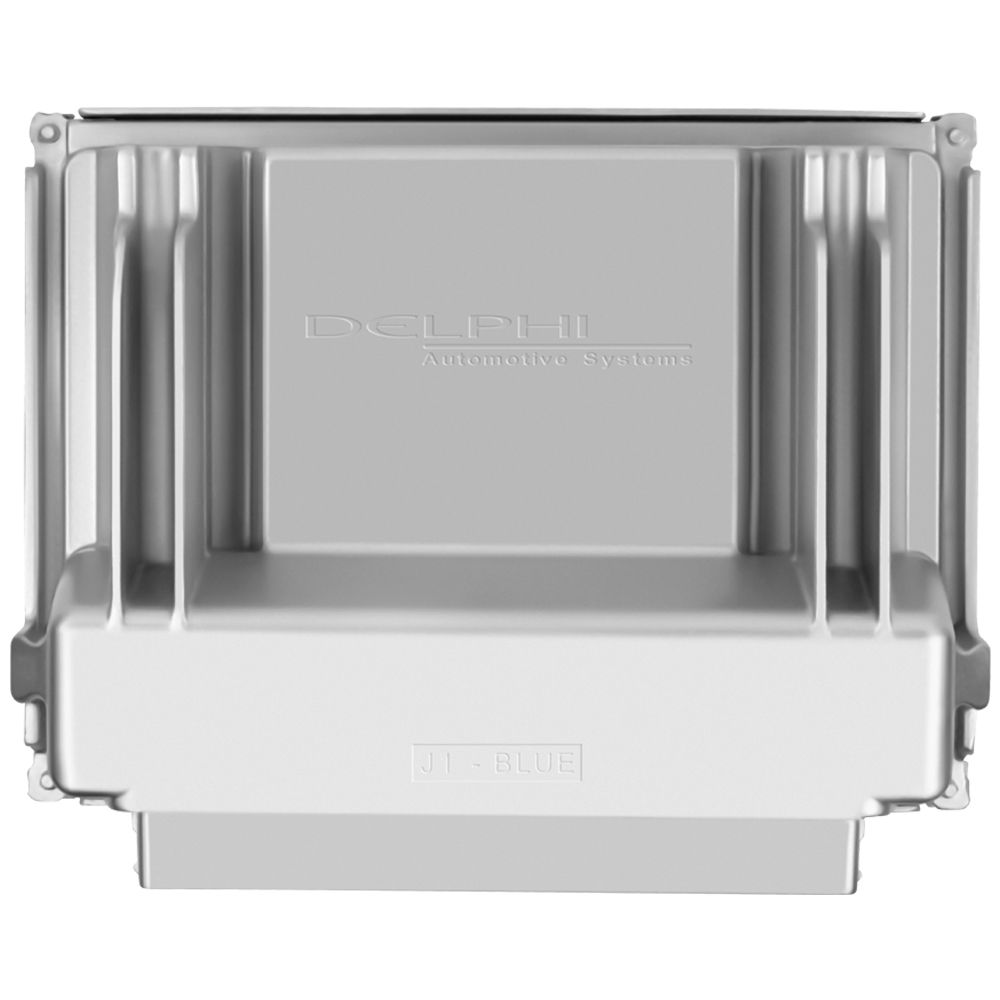
Flagship One stocks a refurbished, VIN-programmed PCM for the 1999 Buick Regal with a lifetime warranty, free shipping and no core charge. The full Buick Regal module lineup covers other engine configurations as well.
Replacing the PCM in your 1999 Buick Regal doesn’t have to be a daunting task. By understanding the symptoms, following factory procedures, and opting for a VIN-programmed unit, you can avoid unnecessary labor costs and ensure your vehicle runs smoothly. Whether you’re dealing with stalling, no-start conditions, or stored trouble codes, addressing the issue promptly can prevent further complications. With the right approach, your Regal can continue to deliver reliable performance for years to come.