
Last updated on August 25th, 2026 at 02:40 pm
The Powertrain Control Module on your 2000 Buick Park Avenue is the central computer for the 3.8L V6 engine. It manages fuel delivery, spark timing, transmission shifting, emissions systems, and the charging circuit. When this module fails internally, it typically sets P0600-series codes and may lose communication with diagnostic tools entirely.
If your 2000 Buick Park Avenue has set multiple trouble codes with no clear cause, or if the engine runs poorly and a scan tool cannot communicate with the Powertrain Control Module, the PCM itself may be failing internally. The PCM on this vehicle manages virtually every engine and transmission function, so internal processor or memory failures create widespread drivability symptoms. This guide explains what the module does, where it is located, what symptoms indicate failure, and what the replacement process involves. You will also learn what factory procedures are required after installation and how a pre-programmed replacement unit simplifies the repair.
The Powertrain Control Module serves as the central nervous system for the 3.8L V6 in your 2000 Buick Park Avenue. This computer receives data from dozens of sensors throughout the engine and uses that information to command fuel injectors, adjust ignition timing, control the transmission torque converter clutch, manage the charging system, and regulate emissions equipment. The module also performs continuous self-diagnostics and can store fault codes when it detects problems with its own internal circuits.
When the PCM develops an internal fault, it may set codes like P0601, P0602, P0603, or P0604, which indicate processor, memory, or checksum errors within the module itself. These codes mean the module is monitoring its own health and has found a malfunction. You might find replacement engine computers for the Buick Park Avenue if the original unit cannot be repaired, as the module may fail to communicate with scan tools or lose critical calibration data.
Flagship One keeps Buick Park Avenue replacement engine computers in stock for exactly this failure pattern.
The factory removal procedure directs technicians to access the Powertrain Control Module next to the air cleaner assembly on the 2000 Buick Park Avenue. This location provides relatively straightforward access compared to modules mounted inside the passenger compartment.
The replacement process begins by disconnecting the negative battery cable, which the factory cautions is necessary before touching any PCM connectors. Technicians then remove air ductwork to reach the module. The R&R book time for this procedure is 0.7 hours. After the new module is installed, the technician reconnects connectors and the battery cable, then performs the relearn procedure.
The powertrain control module relearn takes 0.5 hours according to factory labor guides. This step calibrates the replacement module to your specific vehicle. Note that the factory caution explicitly warns against touching connector pins or soldered components to prevent electrostatic discharge damage during handling.
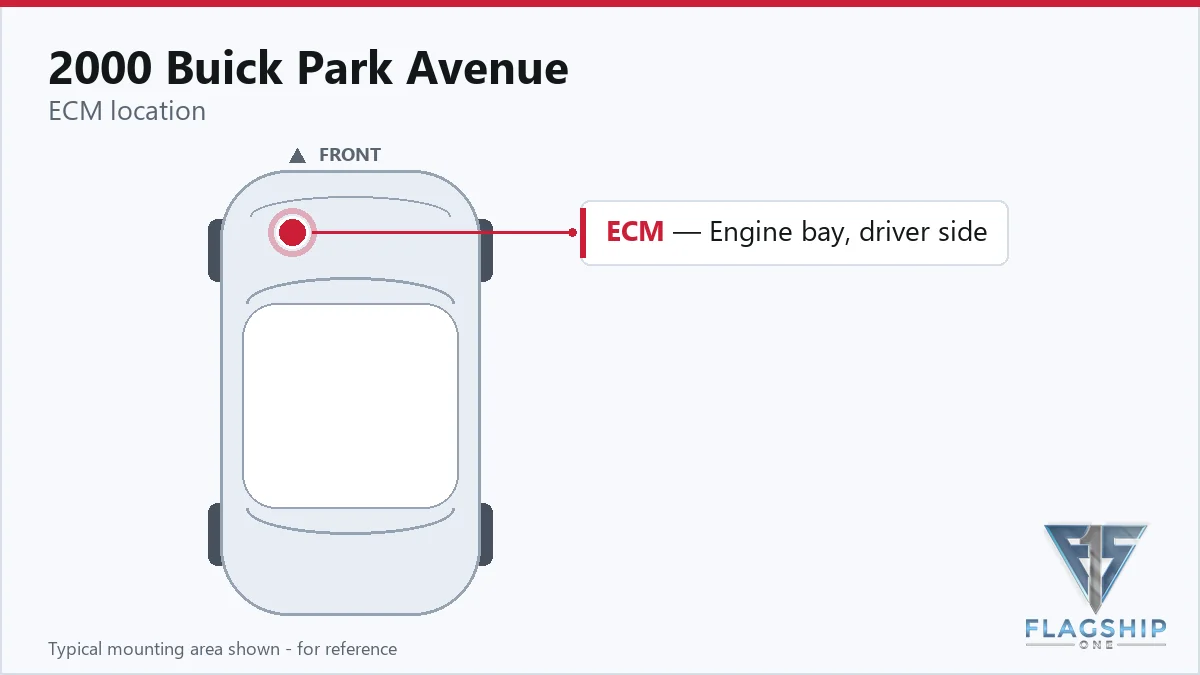
Work with the ignition off, and treat the module as static-sensitive: avoid touching the connector pins at any point.
| Operation | Configuration | Book Time |
|---|---|---|
| Powertrain Control Module Relearn | All configurations | 0.5 hr |
| Powertrain Control Module R&R | All configurations | 0.7 hr |
| Engine Control Module Relearn | All configurations | 0.5 hr |
| Engine Control Module Reset | All configurations | 0.3 hr |
| Engine Control Module R&R | All configurations | 0.7 hr |
2000 Buick Park Avenue
OEM programmed ECM for your 2000 Buick Park Avenue — plug & play, no dealer visit.
Free shipping · Lifetime warranty
When the internal circuits of the Powertrain Control Module fail on your 2000 Buick Park Avenue, you may experience a range of drivability problems. Hard starting, rough idle, stalling, and hesitation under acceleration are common complaints. The engine may lack power, and the transmission may shift harshly or fail to shift at all.
The check engine light typically stays illuminated, and you may notice multiple trouble codes stored, including P0601, P0602, P0603, P0604, P0606, P1621, or P1631. In some cases, the engine may run but set fault codes repeatedly for sensors that are actually functioning correctly. An internally failed module may also cause the charging system to malfunction, resulting in a dead battery or flickering interior lights. Codes like P0650, which monitors the malfunction indicator lamp circuit, often accompany other module-internal failures.
Your 2000 Buick Park Avenue may set multiple module-internal trouble codes when the Powertrain Control Module develops internal faults. These P0600-series codes indicate that the module has detected problems with its own processor, memory, checksum data, or voltage regulation circuits. The presence of several such codes simultaneously strongly suggests that the module itself rather than external sensors requires attention.
| Code | Meaning | Full Guide |
|---|---|---|
| P0601 | Internal memory checksum error | Full P0601 guide → |
| P0602 | Control module programming error | Full P0602 guide → |
| P0603 | Keep-alive memory (KAM) error | Full P0603 guide → |
| P0604 | Internal RAM error | Full P0604 guide → |
| P0606 | Module processor failure | Full P0606 guide → |
| P0620 | Module-internal fault | Full P0620 guide → |
| P062F | Internal EEPROM error | Full P062F guide → |
| P0650 | Module-internal fault | Full P0650 guide → |
| P1621 | Control module long-term memory performance | Full P1621 guide → |
| P1626 | Module-internal fault | — |
| P1630 | Module-internal fault | — |
| P1631 | Module-internal fault | — |
Service bulletin 99-06-04-053, dated October 26, 1999, addresses PCM reprogramming for this model year. This bulletin provides information on updating module software to address specific driveability or emissions concerns. Reprogramming may correct certain faults that are software-related rather than hardware-based, and it represents a diagnostic step worth considering before committing to module replacement.
| Bulletin | Subject | What It Addresses |
|---|---|---|
| 99-06-04-053 | Info – PCM Reprogramming – (Oct 26, 1999) | — |
A competent DIY mechanic can install the module, but the post-install relearn procedure typically requires a scan tool capable of performing bi-directional controls. Dealers and many independent shops offer this service if you prefer professional installation.
The Powertrain Control Module monitors its own internal circuits and many vehicle systems. When the module’s processor or memory malfunctions internally, it may set codes for multiple unrelated faults simultaneously, which is a strong indicator that the module itself requires replacement.
A used module may not match your vehicle’s VIN, sensor calibrations, or security features. This can cause drivability problems, transmission shifting issues, or a non-functioning fuel gauge. A VIN-programmed replacement arrives configured for your specific vehicle.
Replacing the Powertrain Control Module on your 2000 Buick Park Avenue is a repair that returns the vehicle to proper function when internal module failure is confirmed. You have two main options: a new or refurbished unit from a dealership, which requires post-install programming, or a VIN-programmed replacement from Flagship One that arrives ready to install. The factory cautions about electrostatic discharge, battery disconnection, and oil life reset all apply to whichever replacement path you choose. Weigh the cost, warranty coverage, and your vehicle’s overall condition before deciding.
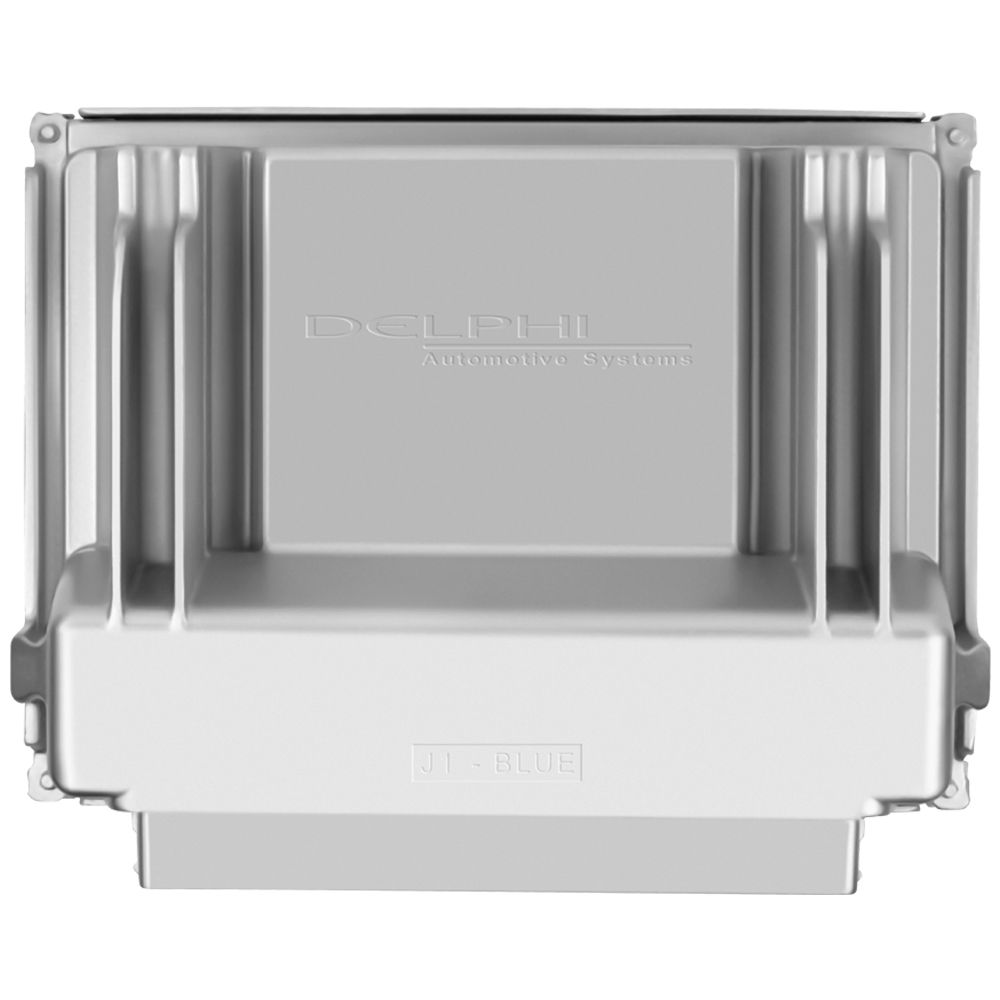
Flagship One stocks a refurbished, VIN-programmed PCM for the 2000 Buick Park Avenue with a lifetime warranty, free shipping and no core charge. The full Buick Park Avenue module lineup covers other engine configurations as well.
The 2000 Buick Park Avenue depends on its Powertrain Control Module for virtually every aspect of drivability, from starting the engine to shifting gears. When that module fails internally, symptoms range from stubborn trouble codes to no-start conditions. Knowing the location, required labor, and post-install procedures helps you make an informed decision about repair versus replacement. If you determine replacement is the right path, a properly programmed unit restores full function and eliminates the need for additional factory relearn steps.