
Last updated on August 25th, 2026 at 02:40 pm
In the 1997 Buick Park Avenue the Powertrain Control Module (PCM) manages fuel delivery, ignition timing, and emission controls. Failure of this unit can cause loss of power, erratic idle, or complete engine shutdown, often accompanied by diagnostic trouble codes.
When a 1997 Buick Park Avenue exhibits no‑start conditions, rough idle, or unexpected stalling, the powertrain control module often lies at the root of the problem. This guide explains how the PCM functions in this model, where it is located, what factory procedures are required after replacement, and how Flagship One refurbished units simplify the process. By the end, you will understand the key steps and precautions needed to restore reliable engine performance.
The Powertrain Control Module in a 1997 Buick Park Avenue serves as the central computer that monitors sensor data, controls fuel injection, and regulates ignition timing. It also oversees emission‑related functions and communicates with the transmission control unit. Proper operation is essential for smooth acceleration and compliance with emissions standards. Replacing a faulty unit often involves swapping out the original controller for a new one, such as a 1997 Buick Park Avenue PCM replacement that matches the vehicle’s specifications.
The PCM is positioned next to the air cleaner assembly, making it accessible after removing the intake cover. Factory labor guidelines assign 0.5 hours for a PCM removal and replacement (R&R) and an additional 0.5 hours for a control module relearn. If a full reset is required, the procedure may take as little as 0.3 hours. Technicians should follow the prescribed steps to reach the module without damaging surrounding components.
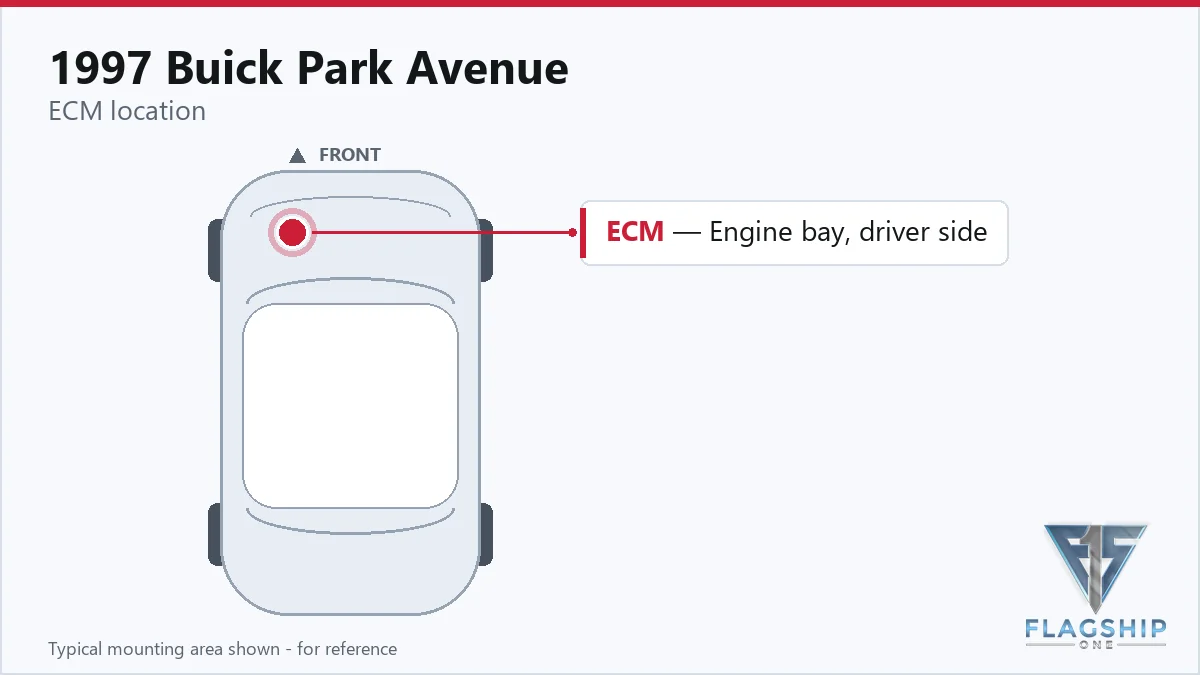
Work with the ignition off, and treat the module as static-sensitive: avoid touching the connector pins at any point.
| Operation | Configuration | Book Time |
|---|---|---|
| Powertrain Control Module Relearn | All configurations | 0.5 hr |
| Powertrain Control Module R&R | All configurations | 0.7 hr |
| Engine Control Module Relearn | All configurations | 0.5 hr |
| Engine Control Module Reset | All configurations | 0.3 hr |
| Engine Control Module R&R | All configurations | 0.7 hr |
1997 Buick Park Avenue
OEM programmed ECM for your 1997 Buick Park Avenue — plug & play, no dealer visit.
Free shipping · Lifetime warranty
After installing a new PCM, the factory procedure calls for a Powertrain Control Module relearn, which typically takes 0.5 hours. Flagship One provides a a VIN‑programmed replacement unit that arrives already coded to the vehicle, so the relearn step is already satisfied and no further programming is needed.
Common signs of a failing PCM in the 1997 Buick Park Avenue include intermittent no‑start, sudden stalling, rough idle, and loss of communication with a scan tool. Diagnostic trouble codes often appear, such as Processor Communication Fault which indicates a problem with the module’s internal processor. These symptoms usually prompt a check of wiring integrity and ground connections before confirming PCM replacement.
The following internal trouble codes have been documented for the 1997 Buick Park Avenue PCM:
| Code | Meaning | Full Guide |
|---|---|---|
| P0601 | Internal memory checksum error | Full P0601 guide → |
| P0602 | Control module programming error | Full P0602 guide → |
| P1602 | Module-internal fault | — |
| P1604 | Module-internal fault | — |
| P1610 | Module-internal fault | — |
| P1626 | Module-internal fault | — |
| P1630 | Module-internal fault | — |
| P1631 | Module-internal fault | — |
| P1635 | Module-internal fault | — |
| P1639 | Module-internal fault | — |
| P1641 | Module-internal fault | — |
| P1643 | Module-internal fault | — |
Service bulletin #99-06-04-053, dated October 26, 1999, provides information on PCM reprogramming procedures. It outlines the required steps for updating the module’s software and highlights precautions to avoid damage during the process.
| Bulletin | Subject | What It Addresses |
|---|---|---|
| 99-06-04-053 | Info – PCM Reprogramming – (Oct 26, 1999) | — |
Factory guidelines list about half an hour for a relearn and roughly three‑quarters of an hour for removal and replacement tasks.
A used unit may lack the correct VIN programming and could require additional coding steps, which Flagship One refurbished modules avoid.
Avoid touching the pins or soldered areas on the board to prevent electrostatic discharge damage.
When the PCM in your 1997 Buick Park Avenue needs service, you can choose a factory‑refurbished replacement or a Flagship One unit that arrives pre‑programmed. Both options restore the vehicle’s engine control functions, but the Flagship One solution eliminates the need for post‑install coding, saving time and reducing error risk.
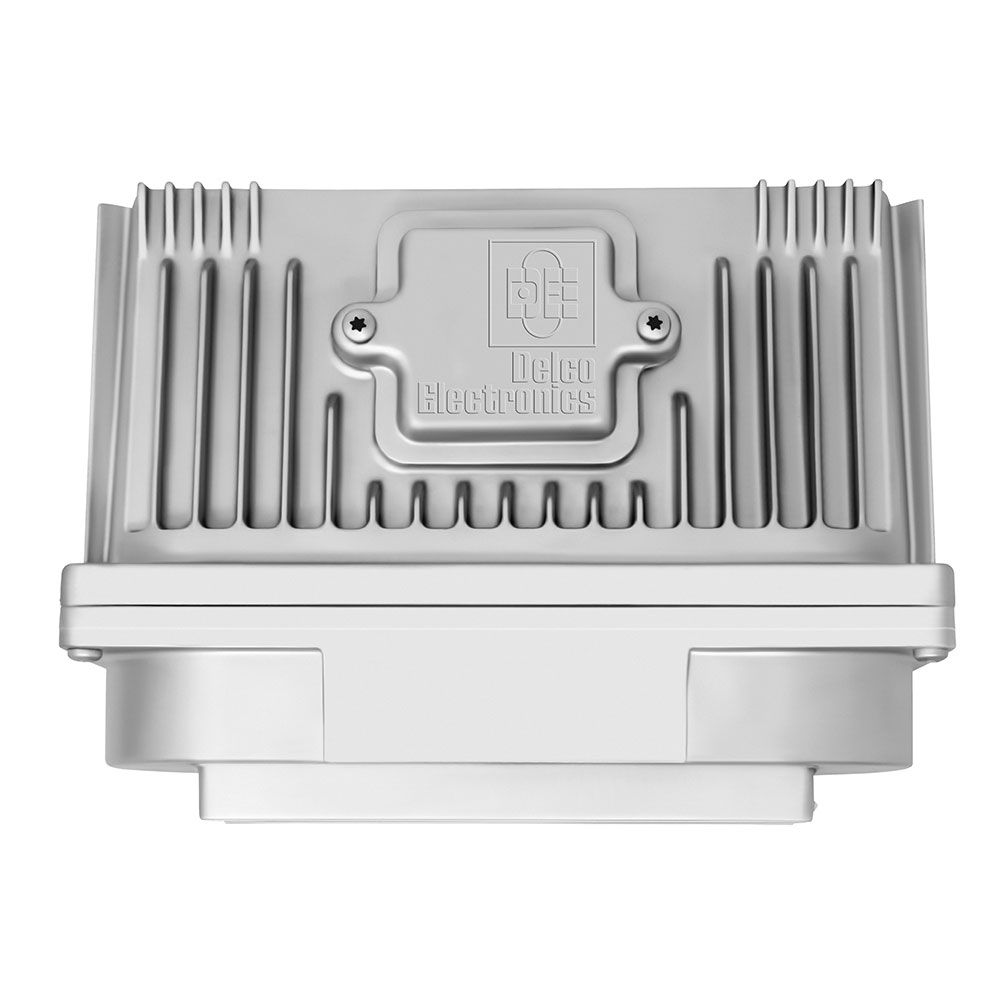
Flagship One stocks a refurbished, VIN-programmed PCM for the 1997 Buick Park Avenue with a lifetime warranty, free shipping and no core charge. The full Buick Park Avenue module lineup covers other engine configurations as well.
Replacing the PCM in a 1997 Buick Park Avenue restores proper engine management and can eliminate no‑start or stalling issues. Consider a Flagship One refurbished unit for a ready‑to‑go solution that meets the vehicle’s specifications.