
Last updated on August 25th, 2026 at 02:46 pm
Within your 2004 Ford Explorer, the powertrain control module acts as the central processing unit for engine and transmission management. When this module malfunctions, it can disrupt critical vehicle functions, leading to a range of operational problems.
If you’re encountering unusual engine behavior in your 2004 Ford Explorer, a failing powertrain control module could be the cause. This module, often referred to as the engine control module, manages numerous engine and transmission functions. Understanding its role and the steps involved in replacement can help you make informed decisions about repairs. This guide provides a clear overview of the module’s function, location, replacement procedures, and essential programming requirements.
<h2>What Does the Powertrain Control Module Do?</h2> The powertrain control module in your 2004 Ford Explorer monitors and regulates engine operations, including fuel injection, ignition timing, and idle speed. It also communicates with the transmission to ensure smooth shifting and optimal performance. The module receives data from various sensors throughout the engine and transmission, processes this information, and adjusts engine parameters accordingly. This process ensures efficient operation and minimizes emissions. When considering a replacement, understanding that various Ford Explorer engine computers are available is crucial for ensuring compatibility and proper function.
Engine computer (ECM/PCM)
OEM programmed replacements — plug & play, no dealer visit.
Find yours by year, make & model →
Free shipping · Lifetime warranty
The factory component-location index specifies that the powertrain control module for your 2004 Ford Explorer is situated on the engine bulkhead, specifically on the right side. Replacement involves disconnecting electrical connectors and removing mounting hardware to access and detach the existing module. Installation of a replacement module follows the reverse procedure. Labor time for the complete removal and installation of the powertrain control module is approximately 0.6 hours. Additional time, around 0.5 hours, is allocated for a relearn procedure following the replacement.
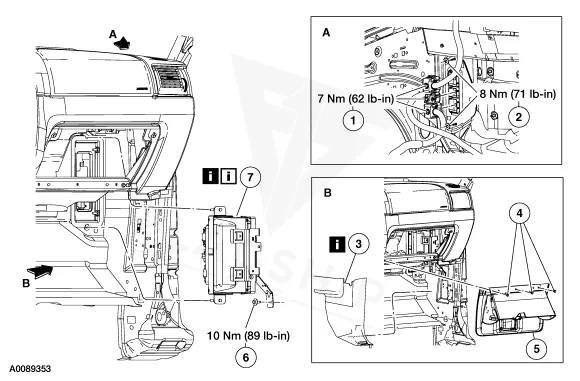
Work with the ignition off, and treat the module as static-sensitive: avoid touching the connector pins at any point.
| Operation | Configuration | Book Time |
|---|---|---|
| Powertrain Control Module R&R | All configurations | 0.6 hr |
| Powertrain Control Module Relearn | All configurations | 0.5 hr |
| Engine Control Module Relearn | All configurations | 0.5 hr |
| Engine Control Module R&R | All configurations | 0.6 hr |
| Engine Control Module Reset | All configurations | 0.3 hr |
Following a powertrain control module replacement, the factory procedure mandates a relearn process to ensure proper vehicle operation. This process allows the module to adapt to your vehicle’s specific characteristics. Fortunately, Flagship One units arrive with a VIN-programmed replacement powertrain control module , which typically eliminates the need for this additional step. This pre-programming simplifies the replacement process and reduces the overall labor time.
A malfunctioning powertrain control module can manifest in several ways within your 2004 Ford Explorer. Common symptoms include difficulty starting the engine, intermittent stalling, noticeable misfires, and a lack of communication with a scan tool. Shifting problems can also arise as the module’s ability to manage transmission functions is impaired. It’s important to note that these symptoms can also be caused by other issues, so a thorough diagnostic evaluation is recommended. A common diagnostic trouble code associated with this type of failure is Internal ECM/PCM Communication which indicates a problem with internal communication within the module itself.
In this vehicle, the terms are used interchangeably to describe the same module that manages both engine and transmission functions. It’s the central computer for these systems.
The removal and installation of the module itself typically takes around 0.6 hours. A relearn procedure, if required, adds an additional 0.5 hours to the total time.
Flagship One modules are shipped pre-programmed with your vehicle’s VIN, which usually eliminates the need for additional reprogramming steps. This simplifies the replacement process.
When faced with a failing powertrain control module in your 2004 Ford Explorer, you have several options. Repairing the existing module is possible, but often less cost-effective than replacing it. A refurbished replacement offers a budget-friendly alternative, while a new module from Flagship One provides peace of mind with guaranteed functionality and pre-programmed compatibility.
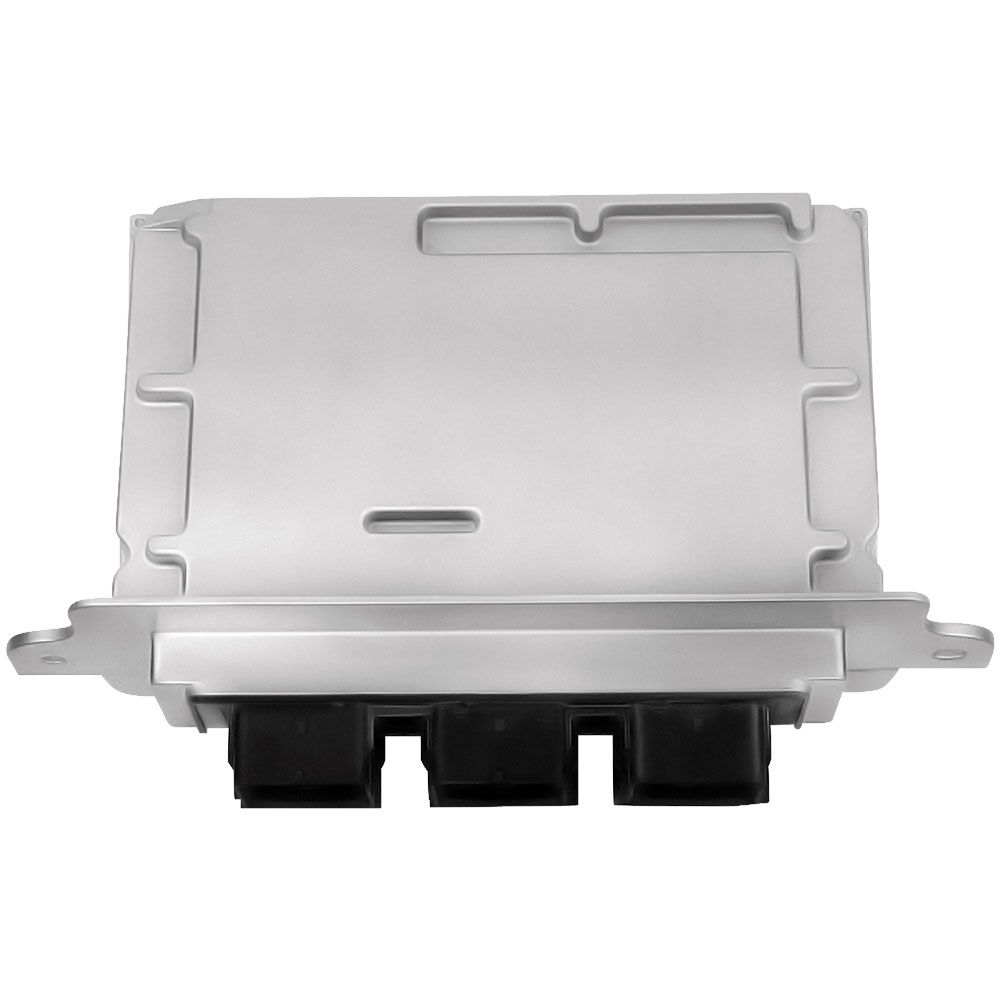
Flagship One stocks a refurbished, VIN-programmed PCM for the 2004 Ford Explorer with a lifetime warranty, free shipping and no core charge. The full Ford Explorer module lineup covers other engine configurations as well.
Addressing powertrain control module issues in your 2004 Ford Explorer is essential for maintaining reliable vehicle operation. Understanding the module’s function and the replacement process can help you make informed decisions. Consider the benefits of a Flagship One replacement module for a seamless and efficient repair.