
Last updated on August 25th, 2026 at 02:10 pm
The powertrain control module serves as the central computer for the 2019 Kia Optima Plug-In Hybrid, overseeing engine timing, transmission operation, and hybrid system coordination. The P0605 code indicates an internal memory fault within the module itself, preventing proper data processing and communication with diagnostic tools. This type of failure disrupts the module’s ability to store and execute critical operating strategies, potentially triggering limp-home mode or a no-start condition. Prompt diagnosis helps determine whether repair or replacement is the appropriate path forward.
When your 2019 Kia Optima Plug-In Hybrid develops starting problems, stalling, or unexpected check engine lights, the powertrain control module often plays a role. This vehicle relies on sophisticated computer control to manage both its gasoline engine and hybrid components, making the PCM essential for normal operation. Understanding what this module does, where it lives, and what happens when it fails helps you make informed decisions about repair. The P0605 code specifically points to an internal memory fault within the module, a condition that can leave the vehicle in limp-home mode or unable to start. This guide covers the module’s function, replacement considerations, and your path forward whether you pursue dealer service or an aftermarket solution.
The powertrain control module acts as the primary computer for the 2019 Kia Optima Plug-In Hybrid, managing fuel injection, ignition timing, transmission shifting, and the interaction between the gasoline engine and electric motor. It receives input from dozens of sensors throughout the engine bay and uses that data to make real-time adjustments that keep the vehicle running efficiently. The module also controls the hybrid system’s energy flows, deciding when to engage electric assist and when to charge the battery pack through regenerative braking. This level of integration means the PCM directly influences your fuel economy, emissions performance, and drivability. Replacement engine computers for the Kia Optima must be compatible with this hybrid architecture and programmed to match the vehicle’s specifications before they can assume control of the powertrain. When this module fails internally, it loses the ability to store calibration data reliably, causing the P0605 fault and disrupting communication between the module and the rest of the vehicle.
Flagship One keeps Kia Optima Plug-In Hybrid replacement engine computers in stock for exactly this failure pattern.
2019 Kia Optima Plug-In Hybrid
OEM programmed replacements — plug & play, no dealer visit.
Find yours by year, make & model →
Free shipping · Lifetime warranty
The factory removal procedure accesses the control module next to the air cleaner assembly in the engine compartment. Technicians follow prescribed steps to disconnect electrical connectors, remove mounting fasteners, and extract the old unit without damaging surrounding components. The engine control module replacement requires approximately 0.4 to 0.6 hours of labor for removal and reinstallation, while the powertrain control module follows similar timing at 0.4 to 0.6 hours depending on which unit requires service. After the new module is installed, the relearn procedure typically takes 0.5 hours to complete, allowing the vehicle’s systems to adapt to the replacement unit. A separate reset procedure may add 0.3 hours if the module requires initialization before accepting programming. Access to the area near the air cleaner housing generally provides adequate working room, though careful connector handling prevents damage during the process.
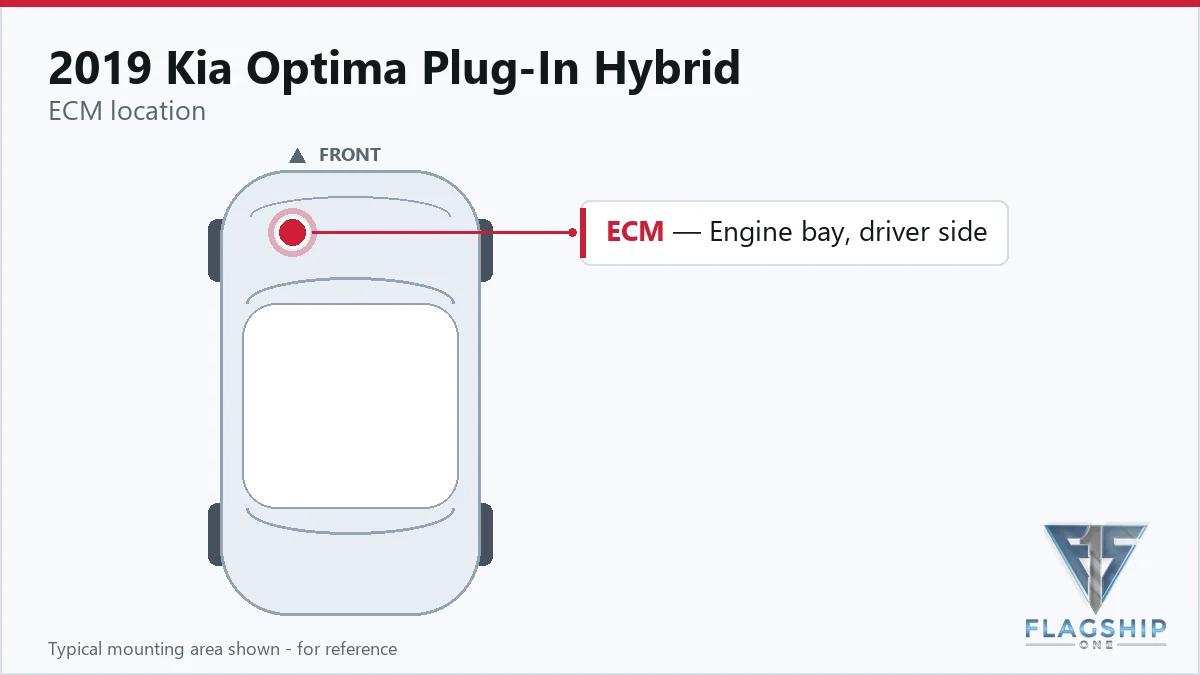
Work with the ignition off, and treat the module as static-sensitive: avoid touching the connector pins at any point.
| Operation | Configuration | Book Time |
|---|---|---|
| Engine Control Module Reset | All configurations | 0.3 hr |
| Engine Control Module R&R | GAS | 0.6 hr |
| Engine Control Module R&R | All configurations | 0.4 hr |
| Engine Control Module Relearn | All configurations | 0.5 hr |
| Powertrain Control Module R&R | GAS | 0.6 hr |
| Powertrain Control Module R&R | All configurations | 0.4 hr |
| Powertrain Control Module Relearn | All configurations | 0.5 hr |
The factory service procedure requires that when an ECM is replaced, the vehicle identification number must be programmed into the new module before it can function within the vehicle’s network. This programming step establishes the link between the control module and the specific vehicle, allowing proper communication with the transmission control module, anti-lock brake system, and other networked controllers. Without this step, the new module remains inactive and the vehicle will not operate normally. The procedure typically requires a factory-level scan tool and access to manufacturer software. Units from Flagship One arrive with the VIN already programmed, which means this critical step is completed before the module reaches your shop or garage. Your technician can proceed directly to installation and relearn procedures rather than spending time on initial programming at the vehicle.
Every VIN-programmed replacement unit from Flagship One arrives with these steps already completed.
Powertrain control module failures typically manifest as starting problems, intermittent stalling, or transmission shifting irregularities that feel disconnected from driver input. The check engine light may illuminate with multiple trouble codes that seem unrelated, including misfire codes, fuel trim codes, and transmission fault codes appearing simultaneously. Some vehicles enter a reduced-power mode designed to allow the driver to reach a service facility safely. In severe cases, the module stops communicating with diagnostic scan tools entirely, preventing code reading and making diagnosis more challenging. The P0605 code specifically indicates an internal memory fault within the module rather than a sensor or wiring problem, pointing directly to module failure as the cause. Common symptoms include rough idle, hesitation during acceleration, and in some cases, complete failure to start after the module loses its calibration data storage capability.
The P0605 trouble code stored in this vehicle’s system indicates an internal read-only memory fault within the powertrain control module. Unlike sensor codes that point to external components, this code means the module’s own processing circuitry has detected an error. The module stores this fault internally and may trigger additional codes as its performance degrades. Code retrieval during diagnosis will show P0605 as the primary or initial fault in many cases of module failure on this model.
| Code | Meaning | Full Guide |
|---|---|---|
| P0605 | Internal ROM error | Full P0605 guide → |
A used module requires VIN programming before it can communicate with your vehicle’s systems, and its condition and history remain unknown. Units from Flagship One arrive pre-programmed and tested for reliability, avoiding the uncertainty of salvage yard parts.
A failing module may trigger limp-home mode, limiting speed and power to protect the drivetrain. In some cases, the vehicle may not start at all. Continued operation with a faulty module risks leaving you stranded and potentially causing additional drivability issues.
The engine control module focuses on gasoline engine functions like fuel delivery and ignition timing, while the powertrain control module coordinates the hybrid system’s interaction between the engine and electric motor. Both are separate units that must be diagnosed independently.
Repairing a failed powertrain control module on your 2019 Kia Optima Plug-In Hybrid requires careful evaluation of your options. A remanufactured or new OEM unit from the dealer ensures factory programming but carries a higher price tag. Aftermarket replacement units offer a cost-effective alternative when sourced from a reputable supplier. The pre-programmed units from Flagship One eliminate the initial programming step that adds time and expense to dealer service. Your choice depends on budget, timeline, and your technician’s recommendation based on the specific failure mode your vehicle experienced.
Flagship One stocks a refurbished, VIN-programmed PCM for the 2019 Kia Optima Plug-In Hybrid with a lifetime warranty, free shipping and no core charge. The full Kia Optima Plug-In Hybrid module lineup covers other engine configurations as well.
The 2019 Kia Optima Plug-In Hybrid depends on its powertrain control module for seamless operation of both gasoline and electric propulsion systems. Understanding the symptoms, location, and programming requirements helps you navigate the repair process with confidence. Whether you choose dealer service or an aftermarket replacement, the information in this guide gives you a solid foundation for the conversation with your technician.