
Last updated on August 25th, 2026 at 12:55 pm
The powertrain control module (PCM) in the 2019 Audi TT manages engine performance, fuel delivery, and transmission behavior. Failures may cause erratic operation, reduced power, or complete shutdowns, often triggered by electrical faults or internal corruption.
If your 2019 Audi TT suddenly hesitates, stalls, or refuses to start, the powertrain control module (PCM) may be the culprit. This compact but critical computer oversees everything from fuel injection to transmission shifts, ensuring smooth operation. When it fails, symptoms can range from subtle performance glitches to complete immobilization. Replacing the PCM involves more than just swapping hardware—it requires precise programming to match your vehicle’s specifications. Understanding the process helps you weigh repair options, whether you’re considering a dealer visit or a pre-programmed replacement. This guide covers what the PCM does, where it’s located, common failure signs, and how to restore your TT’s reliability without unnecessary delays.
The powertrain control module in the 2019 Audi TT serves as the brain of the drivetrain, coordinating engine timing, fuel delivery, and transmission shifts. Unlike older vehicles with separate engine and transmission controllers, the TT’s PCM consolidates these functions into a single unit, improving efficiency and responsiveness. This integration means a failure can disrupt multiple systems simultaneously, often leading to noticeable drivability issues. The module constantly adjusts parameters based on sensor inputs, ensuring optimal performance under varying conditions. When it malfunctions, the vehicle may enter a limp mode to prevent further damage, limiting speed and power. Replacing the PCM with replacement engine computers for the Audi TT ensures compatibility and restores full functionality, but programming must align with the vehicle’s VIN to avoid communication errors with other systems.
2019 Audi TT
OEM programmed ECM for your 2019 Audi TT — plug & play, no dealer visit.
Free shipping · Lifetime warranty
In the 2019 Audi TT, the powertrain control module is mounted near the engine bay, typically secured behind a protective cover. Accessing it involves removing a few fasteners and disconnecting the wiring harness, a straightforward process for most technicians. Labor time for removal and reinstallation is consistently listed at 0.9 hours across all TT variants, including the Quattro, TTS, and TT RS models. While the location is designed for serviceability, care must be taken to avoid damaging connectors or the module itself during handling. Once removed, the new unit can be installed in the same position, with the wiring harness reconnected securely. No additional hardware is required beyond the replacement module, though proper torque specifications should be followed to prevent future electrical issues.
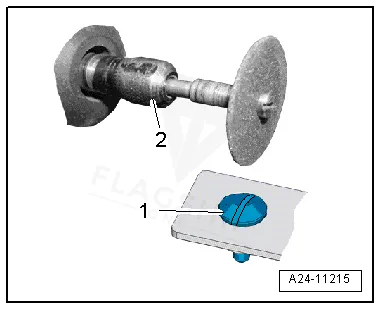
Work with the ignition off, and treat the module as static-sensitive: avoid touching the connector pins at any point.
| Operation | Configuration | Book Time |
|---|---|---|
| Powertrain Control Module R&R | TT Quattro | 0.9 hr |
| Powertrain Control Module R&R | TT RS Quattro | 0.9 hr |
| Powertrain Control Module R&R | TTS Quattro | 0.9 hr |
| Powertrain Control Module Relearn | TT Quattro | 0.5 hr |
| Powertrain Control Module Relearn | TT RS Quattro | 0.5 hr |
| Powertrain Control Module Relearn | TTS Quattro | 0.5 hr |
| Engine Control Module Relearn | TT Quattro | 0.5 hr |
| Engine Control Module Relearn | TT RS Quattro | 0.5 hr |
After replacing the powertrain control module in a 2019 Audi TT, the factory procedure requires a relearn process to synchronize the new unit with the vehicle’s systems. This step, which takes 0.5 hours for both the standard and high-performance variants, ensures proper communication with sensors, the transmission, and other control modules. Without this procedure, the vehicle may exhibit erratic behavior, such as rough idling or transmission shifting issues. Flagship One provides a VIN-programmed replacement unit, eliminating the need for post-installation programming. This pre-configuration matches the module to your TT’s specifications, allowing immediate operation after installation. The process saves time and avoids potential errors that can occur during manual programming, ensuring a seamless transition to the new hardware.
A failing powertrain control module in the 2019 Audi TT often announces itself through a range of symptoms, some subtle and others impossible to ignore. One of the most common signs is a no-start condition, where the engine cranks but fails to fire, often accompanied by a lack of fuel pump activation or spark. Stalling at idle or during acceleration may also occur, particularly when the module loses communication with critical sensors. Drivers might notice the transmission shifting erratically or failing to engage gears smoothly, a direct result of the PCM’s role in managing shift points. Warning lights on the dashboard, such as the check engine or transmission lights, are frequent indicators, often triggered by internal faults like processor performance issues. In some cases, the vehicle may enter a reduced-power mode to prevent further damage, limiting acceleration and top speed. Scan tool communication failures are another red flag, as the module may refuse to respond to diagnostic requests, leaving technicians unable to retrieve trouble codes. These symptoms can mimic other issues, such as fuel pump failures or sensor malfunctions, making professional diagnosis essential to avoid unnecessary repairs.
The 2019 Audi TT’s powertrain control module may log specific trouble codes when internal faults occur. These codes help pinpoint the source of drivability issues, ranging from processor errors to communication failures with other systems.
| Code | Meaning | Full Guide |
|---|---|---|
| P0605 | Internal ROM error | Full P0605 guide → |
| P0606 | Module processor failure | Full P0606 guide → |
| P0607 | Module performance fault | Full P0607 guide → |
| P060A | Module-internal fault | — |
| P064F | Module-internal fault | — |
| U0100 | Module-internal fault | Full U0100 guide → |
| U0103 | Module-internal fault | Full U0103 guide → |
Driving with a P0605 code, which indicates an internal control module memory error, may lead to unpredictable behavior. The vehicle might stall or enter limp mode, limiting performance. While it may run temporarily, the issue can worsen, potentially causing a no-start condition. Addressing the code promptly is recommended to avoid further complications.
The relearn procedure ensures the new PCM synchronizes with the vehicle’s sensors, transmission, and other systems. Without it, the module may not communicate properly, leading to rough idling, shifting issues, or warning lights. The process calibrates the module to the specific parameters of your TT, restoring full functionality.
Symptoms like stalling, no-start conditions, or transmission shifting problems can overlap with other failures, such as fuel pump or sensor issues. A professional scan tool can retrieve trouble codes, which often point directly to the PCM. If multiple codes related to internal module faults appear, the PCM is likely the culprit.
A dead or weak battery can cause voltage fluctuations during cranking, which may stress the PCM. While modern modules are designed to handle some variation, repeated low-voltage events can lead to corruption or failure over time. Using a quality battery charger and avoiding deep discharges helps protect the module.
Replacing the PCM is physically straightforward, but programming is required to ensure proper operation. Without the correct tools and software, the vehicle may not start or could exhibit drivability issues. If you’re not experienced with automotive electronics, professional installation is recommended to avoid complications.
When your 2019 Audi TT’s powertrain control module fails, you have options beyond a costly dealer replacement. A refurbished or new module, pre-programmed to your vehicle’s VIN, can restore functionality without the wait or expense of dealer programming. This approach eliminates the need for additional setup steps, allowing you to get back on the road quickly. Whether you choose to tackle the installation yourself or leave it to a professional, a VIN-matched unit ensures compatibility and reliability.
Flagship One stocks a refurbished, VIN-programmed PCM for the 2019 Audi TT with a lifetime warranty, free shipping and no core charge. The full Audi TT module lineup covers other engine configurations as well.
The powertrain control module in the 2019 Audi TT plays a critical role in maintaining smooth operation, from engine performance to transmission shifts. When it fails, symptoms like stalling, no-start conditions, or warning lights can disrupt your driving experience. Replacing the module with a VIN-programmed unit simplifies the process, avoiding the need for post-installation programming. By addressing issues promptly and following preventive measures, you can keep your TT running reliably for years to come.