
Last updated on August 25th, 2026 at 11:56 am
The engine control module (ECM) in the 2018 Toyota 86 manages fuel delivery, ignition timing, and emissions for the 2.0L engine. Internal memory corruption or circuit board damage can trigger fault codes, leading to drivability issues or a no-start condition.
When your 2018 Toyota 86 begins to show erratic behavior—stalling, misfires, or a refusal to start—the engine control module (ECM) may be the root cause. This computer manages critical engine functions for the 2.0L powerplant, and internal faults can produce a range of trouble codes that are often misdiagnosed. Replacing the module yourself is a practical option, but the factory requires specialized programming afterward. This guide walks you through the ECM’s role, failure symptoms, and the replacement steps, including how a pre-programmed unit can eliminate the need for dealer-level software tools.
The engine control module (ECM) in the 2018 Toyota 86 is the primary computer responsible for managing the 2.0L engine’s performance. It continuously processes data from sensors—such as the mass airflow, oxygen, and crankshaft position sensors—to adjust fuel delivery, ignition timing, and variable valve timing. When the ECM operates correctly, the engine runs smoothly and efficiently. However, internal circuit failures, corrupted memory, or software glitches can disrupt these calculations, leading to poor drivability or a no-start condition. For owners seeking a reliable fix, replacement ECMs for the Toyota 86 are available that come pre-programmed with the vehicle’s VIN and immobilizer data, allowing a straightforward swap without dealer-level tools. The ECM also communicates with other modules over the CAN bus, so a faulty unit can trigger communication errors and warning lights. Because the module is vehicle-specific, using a correctly programmed replacement is essential to restore proper function.
2018 Toyota 86
OEM programmed ECM for your 2018 Toyota 86 — plug & play, no dealer visit.
Free shipping · Lifetime warranty
The engine control module on the 2018 Toyota 86 is located behind the glove box area. To access it, you first disconnect the negative battery cable. Then remove the right-side instrument panel trim, followed by the glove compartment door assembly. The control unit relay assembly must also be taken out to reach the module. Factory service information lists a removal and replacement time of 0.7 hours. After installing a new module, the manufacturer specifies a relearn procedure that takes 0.5 hours, plus an additional 0.3 hours for a reset procedure. These steps ensure the module adapts to the vehicle’s sensors and security system. The physical swap is straightforward for a skilled DIYer, but the post-installation programming typically requires a professional scan tool. Using a pre-programmed replacement module can eliminate the need for these dealer-level relearn steps.
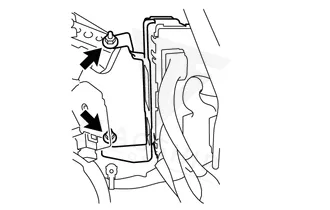
Work with the ignition off, and treat the module as static-sensitive: avoid touching the connector pins at any point.
| Operation | Configuration | Book Time |
|---|---|---|
| Powertrain Control Module R&R | All configurations | 0.7 hr |
| Powertrain Control Module Relearn | All configurations | 0.5 hr |
| Engine Control Module Relearn | All configurations | 0.5 hr |
| Engine Control Module R&R | All configurations | 0.7 hr |
| Engine Control Module Reset | All configurations | 0.3 hr |
After physically installing a new engine control module, the factory procedure calls for a series of electronic initialization steps. These include a powertrain control module relearn (0.5 hours), an engine control module relearn (0.5 hours), and an engine control module reset (0.3 hours). Without these steps, the vehicle may not start or run correctly. However, when you order a pre-programmed ECM for your 86, these procedures are already completed before the unit ships. The module arrives with your VIN and immobilizer data loaded, so you can skip the dealer visit and simply install the part.
When the engine control module begins to fail on a 2018 Toyota 86, you may notice a range of drivability issues. The engine could crank but not start, or it might stall unexpectedly while driving. Rough idle, hesitation on acceleration, and a noticeable loss of power are common. The check engine light will often illuminate, and a scan tool may reveal communication errors with the module. In some cases, the transmission may shift erratically because the ECM shares data with the transmission control unit. A specific trouble code like internal control module memory fault often points directly to a problem within the ECM itself, rather than an external sensor or actuator. Other symptoms include failed emissions tests and intermittent electrical glitches that seem to have no clear cause. If you experience multiple, seemingly unrelated codes, the ECM may be the common denominator.
The 2018 Toyota 86 ECM can log several diagnostic trouble codes that specifically indicate an internal module fault. These codes are not triggered by external sensors or wiring but by the module’s own self-diagnostics. When one of these codes appears, the ECM itself is the likely cause, and replacement is often the recommended repair. The following codes are documented for this vehicle:
| Code | Meaning | Full Guide |
|---|---|---|
| P0601 | Internal memory checksum error | Full P0601 guide → |
| P0604 | Internal RAM error | Full P0604 guide → |
| P0605 | Internal ROM error | Full P0605 guide → |
| P0606 | Module processor failure | Full P0606 guide → |
| P060A | Module-internal fault | — |
| P060B | Module-internal fault | — |
| P062F | Internal EEPROM error | Full P062F guide → |
Common signs include a no-start condition, intermittent stalling, rough idling, and a check engine light with codes like P0601 or P0606. You may also experience poor fuel economy or a lack of power during acceleration. Because the ECM controls many engine functions, symptoms can be varied and may initially seem unrelated.
The physical replacement is straightforward and can be done by a competent DIYer with basic hand tools. However, the factory service procedure requires a professional scan tool to perform module relearn and security programming. Using a pre-programmed replacement module eliminates the need for dealer-level programming, making it a true plug-and-play job.
The ECM stores the vehicle’s VIN, immobilizer data, and calibration files tailored to the engine and transmission. Without this programming, the module cannot communicate with the security system or run the engine correctly. A pre-programmed unit arrives with all this data already loaded, so you can simply install it and start the vehicle.
When your 2018 Toyota 86’s engine control module fails, you have two paths: purchase a new unit from the dealer and pay for programming, or choose a refurbished, pre-programmed module that arrives ready to install. Refurbished modules are tested and updated to the latest software, often at a fraction of the cost. The key is ensuring the replacement is specifically programmed for your vehicle’s VIN and options. With the right part, you can restore your 86’s performance and avoid a lengthy shop visit.
Flagship One stocks a refurbished, VIN-programmed PCM for the 2018 Toyota 86 with a lifetime warranty, free shipping and no core charge. The full Toyota 86 module lineup covers other engine configurations as well.
A failing ECM doesn’t have to sideline your 2018 Toyota 86. By understanding the symptoms and replacement process, you can make an informed decision and get back on the road quickly. Whether you tackle the job yourself or have a shop handle the physical swap, a pre-programmed module simplifies the most technical part of the repair. With the correct part in hand, your 86 can return to its responsive, reliable self.