
Last updated on August 25th, 2026 at 01:44 pm
In the 2017 Nissan Rogue, the Powertrain Control Module (PCM) manages engine timing, fuel delivery, and transmission shift logic. Failure can lead to erratic engine behavior, loss of power, or complete loss of communication with the vehicle’s diagnostics.
You’ve probably noticed a warning light or an unexpected hesitation in your 2017 Nissan Rogue. That could be a sign of a failing Powertrain Control Module. The PCM sits at the heart of your vehicle’s electronic brain, coordinating engine, transmission, and emission systems. Understanding how to replace and reprogram this module can save you time and money. This guide walks you through the steps, labor expectations, and the typical symptoms that signal a PCM issue. By the end, you’ll know what to look for, how to address it, and where to find reliable replacement units.
The Powertrain Control Module in the 2017 Nissan Rogue is responsible for monitoring sensors and controlling actuators that govern engine timing, fuel injection, and shift patterns. It interprets input from throttle position, crankshaft position, and other sensors to deliver smooth acceleration and efficient fuel use. When the PCM malfunctions, the vehicle may exhibit uneven idling, stalling, or erratic shifting. 2017 Nissan Rogue PCM replacement is essential because the module integrates all powertrain functions, and a fault can cascade into multiple systems.
2017 Nissan Rogue
OEM programmed ECM for your 2017 Nissan Rogue — plug & play, no dealer visit.
Free shipping · Lifetime warranty
The PCM is located in the engine bay, mounted near the battery on the passenger side of the firewall. Replacing it involves removing the engine cover, disconnecting the battery negative cable, and unscrewing the PCM from its bracket. Once the unit is removed, a new module is installed and secured. The labor schedule for this work lists 0.9 hours for removal and 0.9 hours for installation, with an additional 0.5 hours allocated for relearning the engine and transmission parameters.
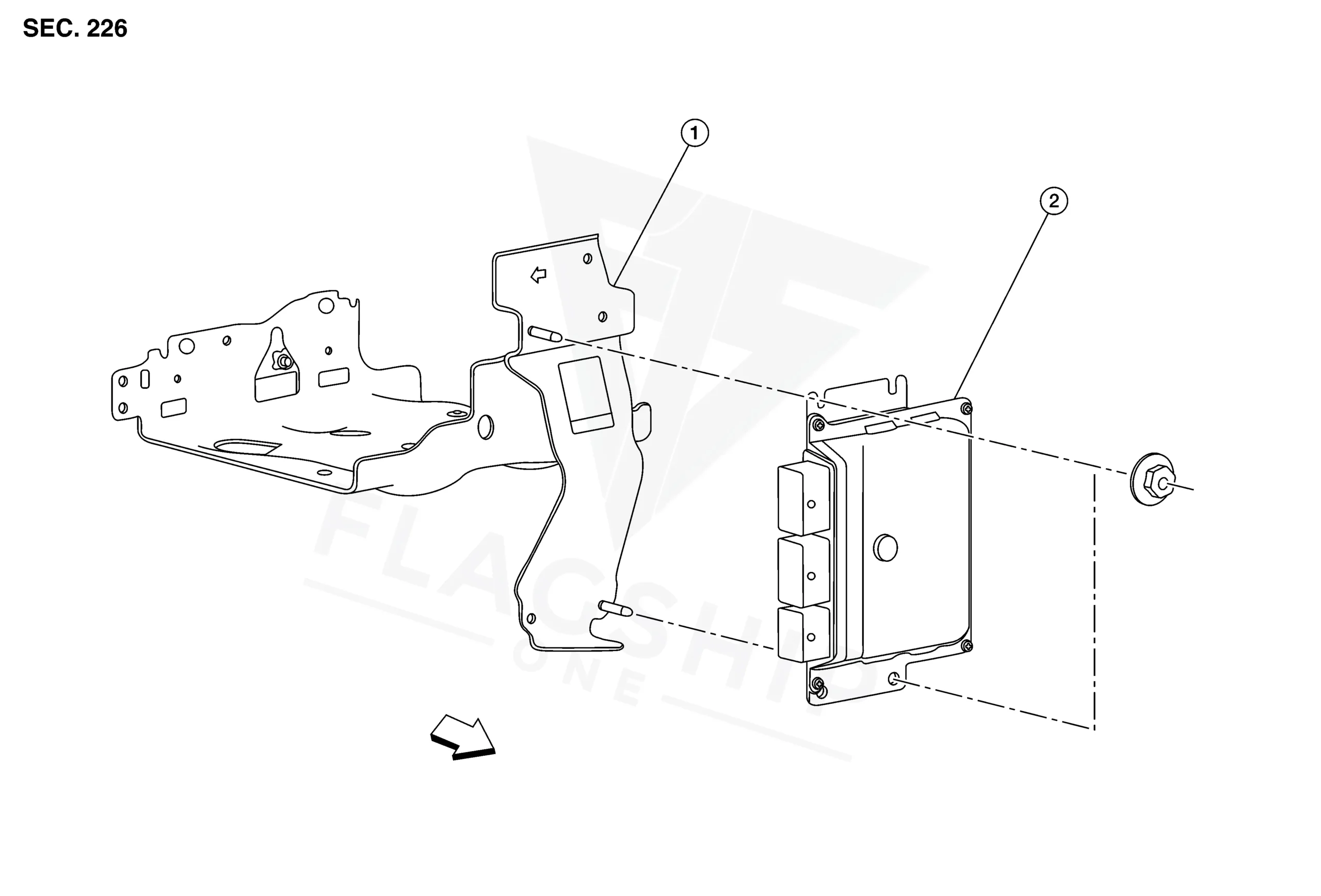
Work with the ignition off, and treat the module as static-sensitive: avoid touching the connector pins at any point.
| Operation | Configuration | Book Time |
|---|---|---|
| Powertrain Control Module R&R | All configurations | 0.9 hr |
| Powertrain Control Module Relearn | All configurations | 0.5 hr |
| Engine Control Module R&R | All configurations | 0.9 hr |
| Engine Control Module Reset | All configurations | 0.3 hr |
| Engine Control Module Relearn | All configurations | 0.5 hr |
After the new PCM is installed, the factory programming procedure requires a relearn cycle to sync the module with the vehicle’s current operating parameters. Flagship One units arrive already VIN‑programmed, so the relearn step is unnecessary. During the replacement, a technician will simply power the vehicle on and let the module perform its self‑check routine. VIN‑programmed replacement unit eliminates the need for manual reprogramming.
When the PCM in a 2017 Nissan Rogue fails, you might notice a sudden loss of power, engine stalling, or a check engine light that stays on after a jump‑start. Misfire codes can appear, and the vehicle may shift poorly or skip gears. The diagnostic tool may report dead communication with the engine control unit. If you see a fault code like PCM fault code during a scan, it confirms a problem with the module’s internal logic.
The 2017 Nissan Rogue’s PCM can generate internal fault codes that pinpoint specific issues. A diagnostic scan will reveal these codes, helping you determine whether a replacement is needed.
| Code | Meaning | Full Guide |
|---|---|---|
| P0605 | Internal ROM error | Full P0605 guide → |
While the physical replacement can be performed by an experienced DIYer, the relearn procedure and proper diagnostic checks typically require a technician with specialized tools. Doing it yourself may risk incomplete programming.
A new PCM will return the vehicle to its designed operating state, but any underlying mechanical issues that caused the fault should also be inspected to avoid recurrence.
The relearn cycle normally lasts about 10 minutes, during which the module gathers data from the engine sensors to calibrate itself.
Most OEM replacements come with a limited warranty, but the specific terms vary by supplier. It’s best to confirm with the vendor before purchase.
An OBD‑II scan tool that can read manufacturer‑specific codes will detect PCM faults. A tool capable of reading and clearing PCM‑specific codes is recommended.
If your 2017 Nissan Rogue is showing signs of a PCM failure, you can choose a quick repair or a refurbished replacement. Both options keep the vehicle’s engine control logic intact while ensuring you stay within your budget. Contact a trusted shop or check with Flagship One for a reliable, VIN‑programmed unit that fits your Rogue.
Flagship One stocks a refurbished, VIN-programmed PCM for the 2017 Nissan Rogue with a lifetime warranty, free shipping and no core charge. The full Nissan Rogue module lineup covers other engine configurations as well.
For a 2017 Nissan Rogue, a failing PCM can cause serious performance issues. Replacing or refurbishing the module is a straightforward solution that restores reliable operation. Reach out today to explore the best option for your vehicle.