
Last updated on August 25th, 2026 at 12:45 pm
The PCM in the 2016 Dodge Viper controls engine and transmission functions; failure can cause erratic power delivery, stalling, or complete loss of communication with the vehicle’s diagnostics.
If your 2016 Dodge Viper has been acting oddly—perhaps refusing to start, stalling under load, or throwing misfire codes—your first suspect should be the PCM, the brain that coordinates engine and transmission operation. Replacing this module can restore proper power delivery and eliminate erratic behavior. In this guide you will learn where the PCM sits, how long the job takes, what the factory procedure entails, and how to protect the new unit from future failure. With a clear understanding of the process, you can decide whether to have a qualified technician handle the replacement or to consider a refurbished replacement that offers a cost‑effective alternative.
The PCM in the 2016 Dodge Viper orchestrates the engine’s fuel injection timing, ignition, and the transmission’s shift logic. replacement engine computers for the 2016 Dodge Viper It monitors sensors such as crankshaft position, throttle position, and coolant temperature to send precise commands to actuators. Any malfunction within this module can lead to misfires, a loss of power, or a failure to start. The PCM’s reliability is vital for the high‑performance characteristics that define the Viper. Because the module also governs the powertrain control, a fault can simultaneously affect both engine and transmission behavior, creating a complex diagnostic picture. Properly understanding the PCM’s role ensures that replacements are performed correctly and that any subsequent software updates are applied as intended.
2016 Dodge Viper
OEM programmed ECM for your 2016 Dodge Viper — plug & play, no dealer visit.
Free shipping · Lifetime warranty
The PCM is located in the engine bay, directly behind the air intake system, where it is accessible through the front firewall panel. Removing the old unit requires disconnecting the battery, removing a small cover, and unscrewing the module’s mounting bolts. Once the old PCM is removed, a new unit is installed by aligning the connectors, securing the bolts, and reconnecting the battery. The book time for the relearn or reset of each module is 0.5 hours, meaning that the total labor for replacing both the Engine Control Module and the Powertrain Control Module is approximately 2 hours of work. The procedure is straightforward once the module is in place, but care must be taken to avoid damage to the connectors during installation.
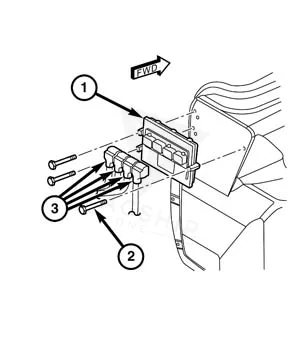
Work with the ignition off, and treat the module as static-sensitive: avoid touching the connector pins at any point.
| Operation | Configuration | Book Time |
|---|---|---|
| Engine Control Module Relearn | All configurations | 0.5 hr |
| Engine Control Module R&R | All configurations | 0.5 hr |
| Powertrain Control Module Relearn | All configurations | 0.5 hr |
| Powertrain Control Module R&R | All configurations | 0.5 hr |
After the PCM replacement, the factory requires a relearn and reset of both the Engine Control Module and the Powertrain Control Module. Since Flagship One units are VIN‑programmed, those steps are already completed, so the technician can skip the relearn and reset process. Instead, the technician simply verifies that the unit is functioning and that all sensors are communicating. a VIN-programmed replacement unit This saves time and eliminates the risk of a misconfigured module.
When the PCM fails in the 2016 Dodge Viper, drivers may notice a variety of symptoms: the engine may not start, may stall during acceleration, or may run with a rough idle. Misfire codes or a loss of communication with the scan tool can also appear. The P0606 trouble code is often associated with internal PCM faults. In such cases, the vehicle may exhibit intermittent power delivery or complete loss of engine control.
The 2016 Dodge Viper’s PCM may generate specific trouble codes when it encounters internal issues. These codes help technicians pinpoint the exact nature of the fault and determine the appropriate remedy.
| Code | Meaning | Full Guide |
|---|---|---|
| P0606 | Module processor failure | Full P0606 guide → |
If the engine will not start, stalls under load, or shows misfire codes, and the OBD‑II scan tool fails to communicate, these are common signs that the PCM is failing. A persistent P0606 code can also be a strong indicator.
A new PCM restores proper engine and transmission coordination, which can improve throttle response and eliminate erratic shifting. It should not negatively impact performance if installed correctly.
The book time for each module relearn or reset is 0.5 hours, so installing both modules typically requires about two hours of labor. This includes removal, installation, and verification steps.
Yes, the factory procedure includes reprogramming the radio and clock. However, with a VIN‑programmed replacement unit from Flagship One, this step is already complete, saving you time.
Yes, a refurbished PCM can be a cost‑effective alternative. It should be sourced from a reputable supplier and tested to ensure it meets the same specifications as a new unit.
Whether you choose a professional service or a refurbished replacement, the key is to ensure the new PCM is correctly installed and verified. A reliable module will keep your 2016 Dodge Viper running smoothly and reduce the risk of future failures. Contact a trusted technician today to discuss your options and keep your high‑performance vehicle in top shape.
Flagship One stocks a refurbished, VIN-programmed PCM for the 2016 Dodge Viper with a lifetime warranty, free shipping and no core charge. The full Dodge Viper module lineup covers other engine configurations as well.
A properly installed and programmed PCM is essential for the 2016 Dodge Viper’s performance and reliability. If you encounter any of the symptoms described, consider a replacement to restore full engine and transmission functionality. Take action now to protect your investment and enjoy the Viper’s power without interruption.