
Last updated on August 25th, 2026 at 12:42 pm
The Powertrain Control Module (PCM) in your 2012 Lincoln MKZ manages engine and transmission functions. Failures may stem from voltage spikes, corrosion, or internal memory faults, often triggering drivability issues or no-start conditions.
If your 2012 Lincoln MKZ hesitates to start, stalls unexpectedly, or logs persistent internal trouble codes, the Powertrain Control Module (PCM) may be failing. This critical computer oversees fuel delivery, ignition timing, and transmission shifts, so its reliability directly impacts drivability. Replacing it involves more than swapping hardware—factory procedures demand reprogramming to sync with your vehicle’s security and transmission systems. Understanding the symptoms, labor requirements, and post-install steps helps you anticipate what the repair entails and why choosing a pre-programmed unit can simplify the process.
The PCM in your 2012 Lincoln MKZ serves as the brain for both engine and transmission functions. It processes sensor data to optimize fuel injection, spark timing, and shift points, ensuring smooth operation and emissions compliance. When it malfunctions, you may notice poor performance, reduced fuel economy, or even a complete no-start condition. Replacement typically involves installing a new or remanufactured engine control module for the Lincoln MKZ, which must be calibrated to your vehicle’s specific configuration. Without proper programming, the module won’t communicate with other systems, leaving your MKZ stranded or running poorly.
The PCM in the 2012 Lincoln MKZ is located near the engine bay, typically mounted on the firewall or inner fender. Accessing it requires removing the air intake assembly and possibly other components like the battery tray or wiring harnesses. Replacement labor is estimated at 1.0 hours for gasoline engine applications, though some procedures may take up to 1.7 hours if additional disassembly is needed. After installation, the module must be secured properly to avoid vibration damage, and all electrical connectors should be inspected for corrosion or wear before reconnection.
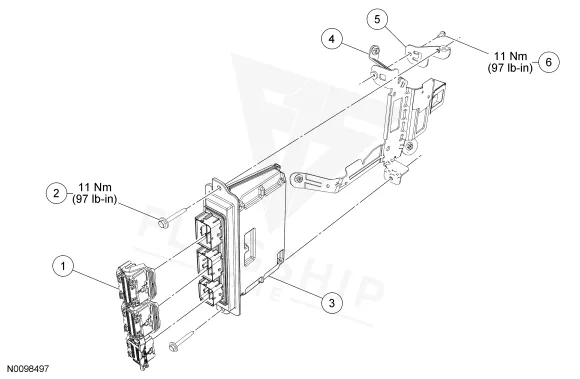
Work with the ignition off, and treat the module as static-sensitive: avoid touching the connector pins at any point.
| Operation | Configuration | Book Time |
|---|---|---|
| Powertrain Control Module Relearn | All configurations | 0.5 hr |
| Powertrain Control Module R&R | GAS | 1.0 hr |
| Powertrain Control Module R&R | All configurations | 1.7 hr |
| Engine Control Module Reset | All configurations | 0.3 hr |
| Engine Control Module R&R | GAS | 1.0 hr |
| Engine Control Module R&R | All configurations | 1.7 hr |
| Engine Control Module Relearn | All configurations | 0.5 hr |
2012 Lincoln MKZ 3.5L
OEM programmed ECM for your 2012 Lincoln MKZ 3.5L — plug & play, no dealer visit.
Free shipping · Lifetime warranty
After replacing the PCM in your 2012 Lincoln MKZ, the factory procedure requires reprogramming the Passive Anti-Theft System (PATS) to restore security functionality. This step ensures the module recognizes your vehicle’s unique key codes, preventing no-start conditions. A VIN-programmed replacement unit arrives pre-configured to your vehicle’s specifications, eliminating the need for dealer reprogramming. However, a relearn procedure may still be necessary to synchronize the module with the transmission and other onboard systems, typically adding 0.5 hours of labor.
A failing PCM in your 2012 Lincoln MKZ may cause a range of symptoms, from subtle drivability issues to complete engine shutdown. Common signs include intermittent stalling, rough idle, or hesitation during acceleration. You might also notice the transmission shifting erratically or failing to engage gears properly. Onboard diagnostics often reveal internal module faults, such as an internal control module memory checksum error, which indicates corrupted data or hardware failure. In severe cases, the vehicle may refuse to start or lose communication with scan tools entirely.
The 2012 Lincoln MKZ’s PCM may log several internal trouble codes when it malfunctions. These faults typically point to memory corruption, communication failures, or hardware defects within the module itself. Addressing them promptly can prevent further drivability issues or no-start conditions.
| Code | Meaning | Full Guide |
|---|---|---|
| P0601 | Internal memory checksum error | Full P0601 guide → |
| P0603 | Keep-alive memory (KAM) error | Full P0603 guide → |
| P0604 | Internal RAM error | Full P0604 guide → |
| P0606 | Module processor failure | Full P0606 guide → |
| P1657 | Module-internal fault | — |
| U0100 | Module-internal fault | Full U0100 guide → |
Ford issued a service bulletin (TSB 12-02-18) for 2012 Lincoln MKZ models equipped with the AWF21 Aisin 6-speed transmission built between August 22, 2011, and December 5, 2011. The bulletin notes that certain transmission control modules (TCMs) may require unique part numbers or software updates. While not directly related to PCM failure, this highlights the importance of verifying module compatibility and programming when servicing drivetrain components in your MKZ.
| Bulletin | Subject | What It Addresses |
|---|---|---|
| 12-02-18 | AWF21 AISIN 6 SPEED TRANSMISSION BUILT ON OR BETWEEN 8/22/2011 AND 12/05/2011 – SERVICE INFORMA | — |
A P0603 code indicates an internal control module keep-alive memory error. Disconnecting the battery can sometimes trigger this fault if the PCM loses power unexpectedly. A reset or relearn procedure may clear it, but persistent codes suggest a deeper module issue.
While physically replacing the PCM is straightforward, programming it requires specialized tools and software. Without proper calibration, the module won’t communicate with your vehicle’s security or transmission systems, leading to no-start conditions or shifting problems.
If your vehicle starts but runs poorly, stalls, or logs communication errors after a PCM replacement, a relearn procedure may be needed. Symptoms like erratic shifting or a check engine light for internal module faults also indicate this step is necessary.
When your 2012 Lincoln MKZ’s PCM fails, you have two primary options: repair the existing module or install a replacement. Given the complexity of factory programming and the risk of recurring issues, many owners opt for a pre-programmed unit. This approach reduces downtime and ensures compatibility with your vehicle’s security and transmission systems, avoiding the need for dealer reprogramming.
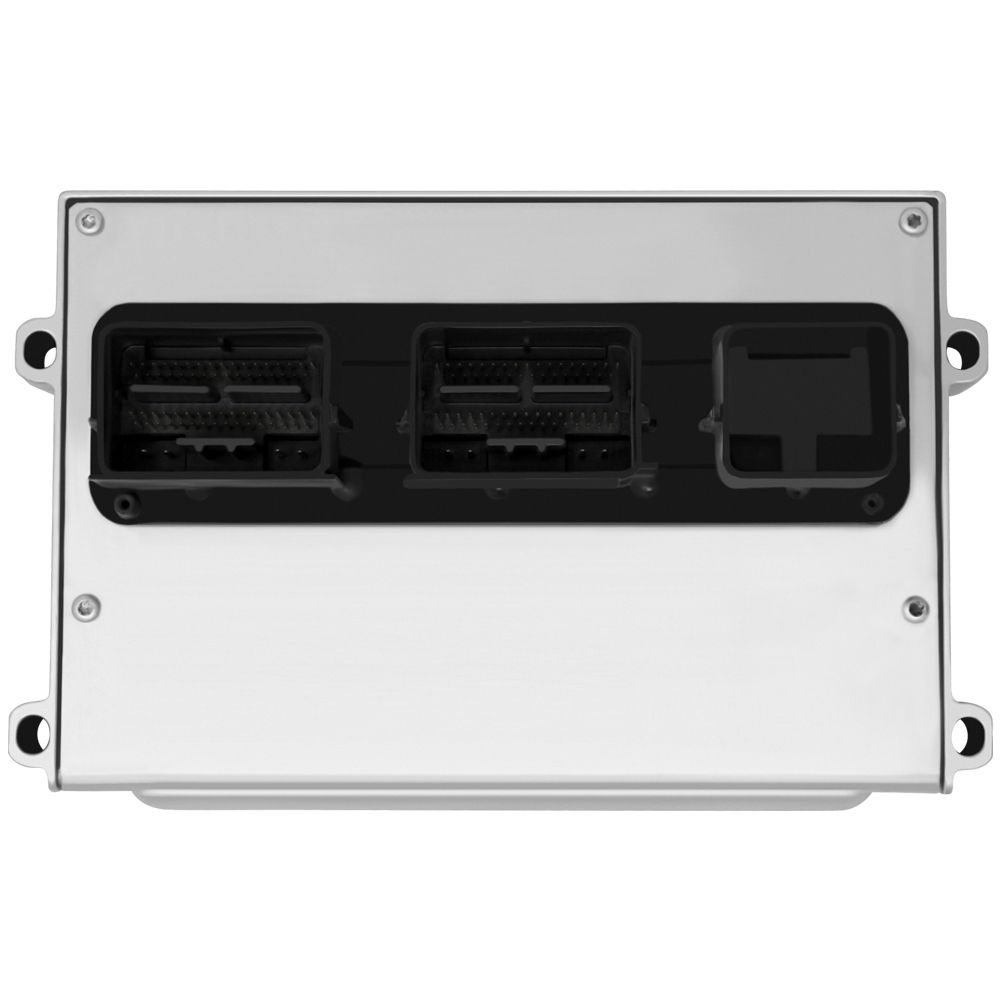
Flagship One stocks a refurbished, VIN-programmed PCM for the 2012 Lincoln MKZ with a lifetime warranty, free shipping and no core charge. The full Lincoln MKZ module lineup covers other engine configurations as well.
A failing PCM in your 2012 Lincoln MKZ can disrupt daily driving and leave you stranded. Recognizing the symptoms early and understanding the replacement process helps you make informed decisions. Whether you choose a repair or a pre-programmed replacement, addressing the issue promptly restores reliability and performance to your vehicle.