
Last updated on August 25th, 2026 at 12:12 pm
The powertrain control module (PCM) in the 2014 Lincoln MKZ 2.0L is the primary computer that manages fuel delivery, ignition timing, and emissions. Internal failure disrupts these critical functions, often triggering diagnostic trouble code P0606 and leading to driveability problems or a no-start condition.
When your 2014 Lincoln MKZ with the 2.0L EcoBoost engine begins to exhibit unexplained stalling, refusal to start, or sudden transmission shift anomalies, the root cause may lie inside the powertrain control module. This computer is the brain of your vehicle’s engine and transmission management, and even minor internal faults can cascade into major driveability concerns. Many owners first notice a check engine light accompanied by a P0606 code, which points directly to an internal processor error. Understanding what the PCM does, how it fails, and what a proper repair involves can save you from misdiagnosis and unnecessary parts swapping. This article walks you through the module’s role, common failure symptoms, the replacement process, and the programming requirements that ensure your MKZ runs correctly after the repair. You will learn why a VIN-programmed replacement unit can dramatically simplify the job and get you back on the road faster.
The powertrain control module in the 2014 Lincoln MKZ 2.0L is a sealed electronic unit that continuously processes data from dozens of sensors—including the mass airflow sensor, throttle position sensor, crankshaft and camshaft position sensors, and oxygen sensors—to calculate the precise air-fuel mixture, ignition timing, and turbocharger boost control. It also coordinates with the transmission control system to manage shift points and torque converter lockup. When the PCM receives a signal outside expected parameters, it can adjust engine operation or store a diagnostic trouble code. However, internal hardware failures—such as a corrupted processor, damaged memory chip, or broken solder joint—can cause the module to misinterpret sensor data or stop communicating altogether. This often results in a no-start condition, sudden stalling, or a vehicle that enters a fail-safe limp mode. Because the PCM is vehicle-specific and tied to the VIN, a replacement must be correctly configured for the 2014 MKZ 2.0L. Many owners and technicians turn to remanufactured PCMs for the Lincoln MKZ that arrive pre-programmed with the factory calibration, eliminating the need for dealer-level module initialization.
2014 Lincoln MKZ 2.0L
OEM programmed ECM for your 2014 Lincoln MKZ 2.0L — plug & play, no dealer visit.
Free shipping · Lifetime warranty
On the 2014 Lincoln MKZ 2.0L, the PCM is mounted in the engine compartment, typically near the air cleaner assembly or the strut tower. Access requires removing the engine cover and possibly the air intake ducting. The module is secured by a bracket with fasteners, and the electrical connectors must be carefully unlatched to avoid pin damage. According to standard labor guides, removing and replacing the PCM on the 2.0L engine is a 0.8-hour procedure. If only a reset is needed—such as clearing adaptive memory after a repair—the book time is 0.3 hours. A full powertrain control module relearn, which re-establishes idle, fuel trim, and transmission adaptives, is listed at 0.5 hours. When swapping the module, always disconnect the battery first and handle the new unit by its edges to prevent electrostatic discharge. The replacement PCM should slide into the same mounting location, and the connectors must click firmly into place.
Work with the ignition off, and treat the module as static-sensitive: avoid touching the connector pins at any point.
| Operation | Configuration | Book Time |
|---|---|---|
| Engine Control Module Reset | All configurations | 0.3 hr |
| Engine Control Module R&R | 2.0L | 0.8 hr |
| Engine Control Module R&R | 3.7L | 0.7 hr |
| Engine Control Module Relearn | All configurations | 0.5 hr |
| Powertrain Control Module Relearn | All configurations | 0.5 hr |
| Powertrain Control Module R&R | 2.0L | 0.8 hr |
| Powertrain Control Module R&R | 3.7L | 0.7 hr |
After a new PCM is physically installed in a 2014 Lincoln MKZ 2.0L, the factory service procedure requires a series of software-based steps. The module must be programmed with the correct vehicle identification number and the latest calibration files from the manufacturer’s database. Additionally, a powertrain control module relearn is specified, which takes 0.5 hours of labor and allows the module to adapt to the specific engine and transmission characteristics. This process typically requires a professional scan tool with pass-through programming capability and access to the OEM software. However, when you source a VIN-programmed replacement PCM, these steps are already completed before the unit ships. The module arrives with your MKZ’s VIN and the correct 2.0L calibration loaded, so the relearn procedure is often unnecessary—you simply install the unit and start the vehicle.
A failing PCM in the 2014 Lincoln MKZ 2.0L often produces symptoms that can be mistaken for sensor or wiring issues. The engine may crank but refuse to start, or it may start and then stall without warning. Intermittent stalling at idle or while driving is a common complaint, as is a sudden loss of power under acceleration. The transmission may shift erratically, hold gears too long, or fail to engage. You might notice that the instrument cluster warning lights illuminate sporadically, or that a scan tool cannot establish communication with the module. In many cases, the only clue is a stored diagnostic trouble code such as internal control module processor fault. This code indicates that the PCM’s own self-checks have detected a malfunction, and it is often a non-recoverable error that requires module replacement. Other related codes may include communication loss or sensor reference voltage faults, but P0606 is the most direct indicator of an internal computer problem.
The following diagnostic trouble code is commonly associated with internal PCM failure on the 2014 Lincoln MKZ 2.0L. When this code is present and other causes have been ruled out, the module itself is the likely culprit.
| Code | Meaning | Full Guide |
|---|---|---|
| P0606 | Module processor failure | Full P0606 guide → |
A professional diagnosis should begin with checking for trouble code P0606 and any communication errors. The technician will then verify power and ground circuits to the module, inspect the wiring harness for shorts, and rule out other sensor or actuator failures. If the code returns after clearing and no external faults are found, the PCM is likely defective.
A blank or used PCM must be programmed with the vehicle’s VIN and the latest calibration using a Ford-compatible scan tool. However, a pre-programmed replacement unit that is already configured for your VIN and engine can be installed without dealer programming, though a security access procedure or key relearn may still be required.
An ECM reset, which takes about 0.3 hours, typically clears adaptive memory and learned values. A PCM relearn, at 0.5 hours, is a more comprehensive procedure that re-establishes idle speed, fuel trim, and transmission adaptives after a module replacement. The relearn is specified when a new PCM is installed.
When a PCM fails on the 2014 Lincoln MKZ 2.0L, you have two paths: purchase a blank unit and pay for dealer programming and installation, or choose a pre-programmed, VIN-matched replacement that arrives ready to install. The latter approach avoids the 0.5-hour relearn labor and the risk of programming errors. For a vehicle that is nearly a decade old, a remanufactured module with updated components can also address known weak points in the original design, providing a reliable, long-term fix.
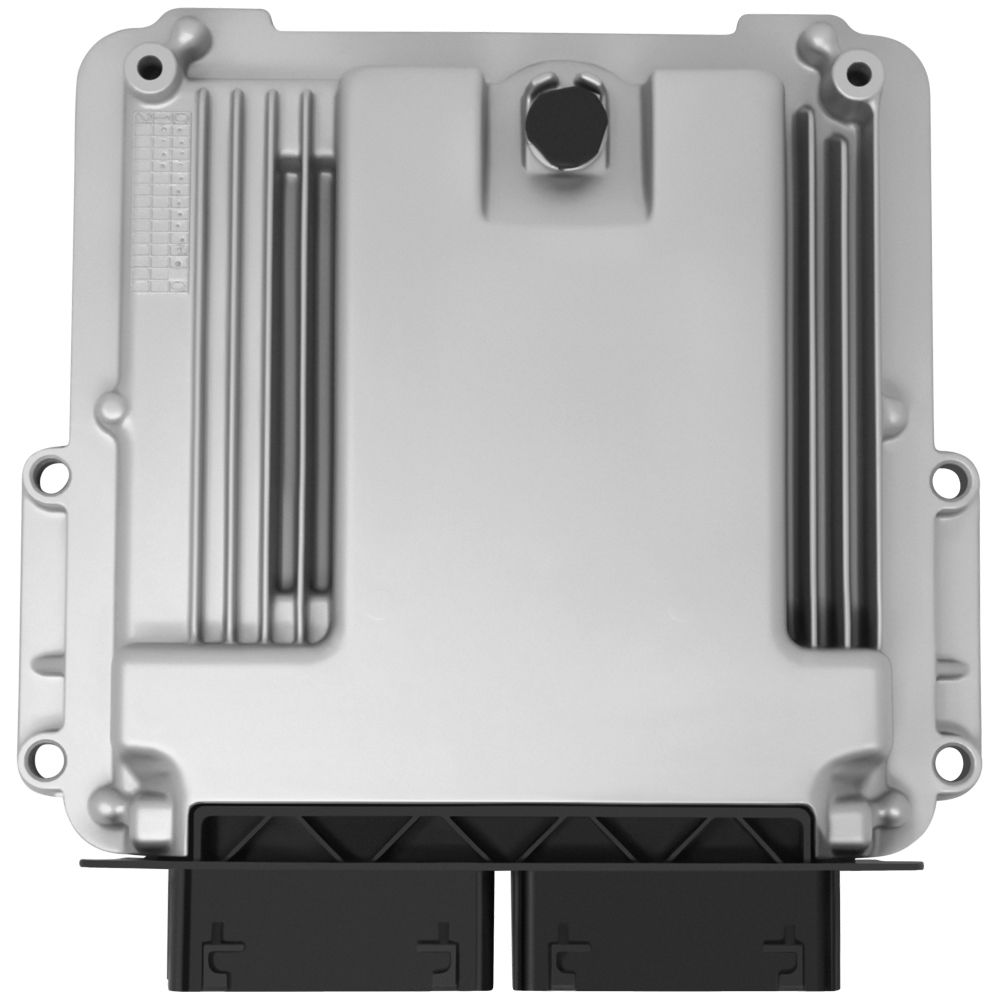
Flagship One stocks a refurbished, VIN-programmed PCM for the 2014 Lincoln MKZ with a lifetime warranty, free shipping and no core charge. The full Lincoln MKZ module lineup covers other engine configurations as well.
A faulty PCM in your 2014 Lincoln MKZ 2.0L doesn’t have to mean an expensive, drawn-out repair. By recognizing the symptoms early and opting for a VIN-programmed replacement, you can restore your vehicle’s performance with minimal downtime. Whether you tackle the 0.8-hour installation yourself or have a shop handle it, the right module gets you back on the road confidently.