
Last updated on August 25th, 2026 at 11:59 am
The engine control module manages fuel delivery and ignition timing for your 2011 Toyota Tundra. Internal failures often cause communication loss with diagnostic scanners. Replacing this unit restores proper management of the 5.7L V8 powertrain systems.
Owning a full-size pickup truck involves managing complex electronic systems over time. When the central computer managing your 2011 Toyota Tundra begins to malfunction, drivability issues often emerge without warning. You might notice irregular shifting patterns or sudden engine shutdowns during operation. Understanding the replacement process helps you prepare for necessary repairs effectively. Factory documentation specifies distinct time allocations for removing the hardware and performing software initialization. You will learn how these procedures fit into a complete repair strategy. Proper handling of the electronic components ensures long-term reliability for your truck. We discuss the specific steps technicians follow to restore full function. Knowing what to expect reduces uncertainty during the diagnostic and repair phases. Many owners hesitate when facing electronic faults because the symptoms mimic mechanical problems. Distinguishing between a failing sensor and a corrupted control module requires systematic testing. Your 2011 Toyota Tundra relies on this computer to balance emissions and performance goals. If the unit loses internal integrity, the engine may enter a protective limp mode. Technicians use specialized tools to verify communication before recommending replacement. This article provides clarity on the labor operations defined by factory service information. You can see exactly how much time is allocated for removal and relearn tasks. Understanding these standards helps you evaluate repair estimates from various service centers.
2011 Toyota Tundra
OEM programmed replacements — plug & play, no dealer visit.
Find yours by year, make & model →
Free shipping · Lifetime warranty
The powertrain control module serves as the central processing hub for your truck. It monitors input from various sensors to adjust fuel injection and spark timing continuously. Without accurate data processing, the 5.7L engine cannot maintain optimal efficiency or power output. Internal circuitry may degrade due to heat exposure or voltage spikes over many years. When this happens, the computer fails to coordinate critical subsystems properly. You might experience rough idling or hesitation during acceleration attempts. Repairing this issue often requires sourcing a compatible unit that matches your vehicle configuration. Many owners search for replacement engine computers for the Tundra to ensure correct fitment and function. The module also manages transmission shift points based on driving conditions and load. Failure here can lead to harsh shifting or failure to engage gears. Restoring this component brings back factory-level management of the powertrain systems. Proper installation ensures all electronic handshakes occur correctly between modules. Modern trucks depend heavily on software logic to meet emissions standards while delivering torque. The 2011 Toyota Tundra uses this technology to regulate exhaust gas recirculation and evaporative systems. If the processor corrupts, diagnostic trouble codes may store permanently within memory. Technicians cannot clear these faults without addressing the root hardware failure. Voltage regulation inside the unit protects sensitive microprocessors from alternator fluctuations. Over time, solder joints can crack under thermal stress from the engine bay environment. This physical degradation interrupts signal pathways needed for smooth operation. You need a unit capable of handling the specific calibration data for your engine. Installing the correct hardware prevents further complications with ancillary systems. The computer also interfaces with the immobilizer system for security purposes. Ensuring compatibility avoids issues with starting or fuel pump activation.
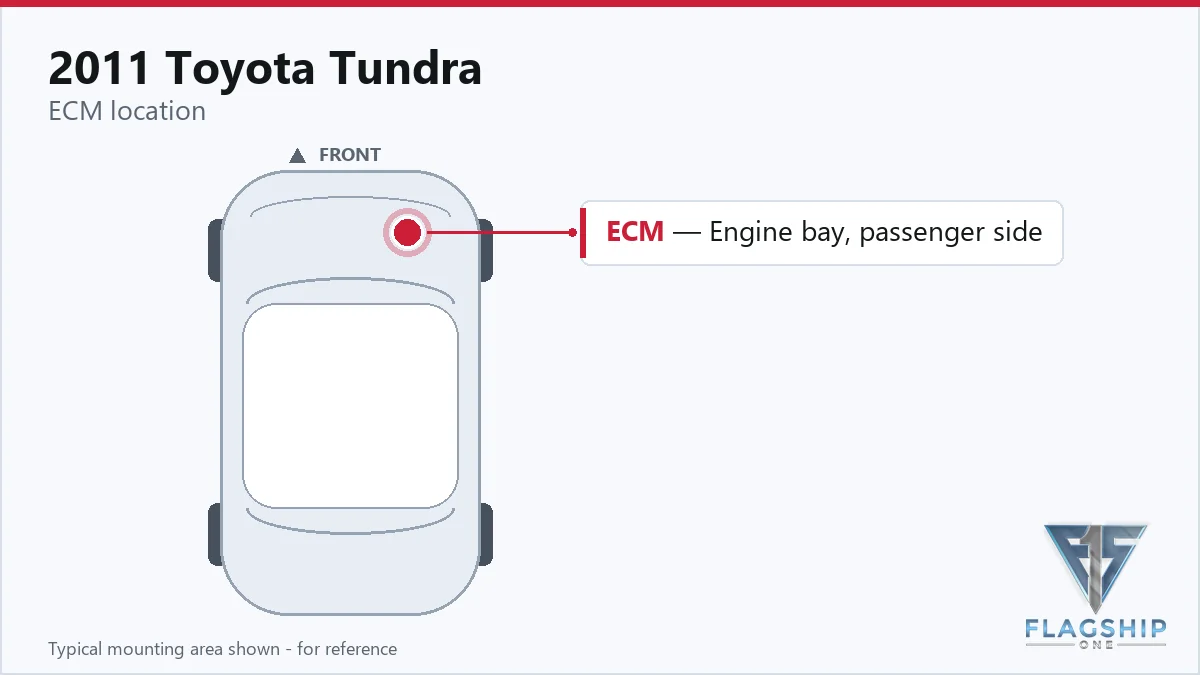
Factory service information identifies the engine compartment as the mounting location for this component. Technicians access the unit by navigating around surrounding hardware and wiring harnesses. The labor guide allocates 0.5 hours for the physical removal and installation process. This time covers disconnecting electrical connectors and unbolting the housing from its bracket. After hardware swap, software initialization is required to synchronize the new unit. Factory books assign 0.5 hours for the engine control module relearn procedure. Separate entries exist for powertrain control module tasks with similar time values. The powertrain control module removal also takes 0.5 hours according to standard guides. Relearn operations for the powertrain control module require another 0.5 hours of technician time. These figures represent standard book times rather than actual clock time on every lift. Access difficulty may vary depending on additional equipment installed on your truck. Proper torque specifications should be followed when securing the module housing. Keeping connectors clean during the swap prevents future corrosion issues.
| Operation | Configuration | Book Time |
|---|---|---|
| Engine Control Module Relearn | All configurations | 0.5 hr |
| Engine Control Module R&R | All configurations | 0.5 hr |
| Powertrain Control Module R&R | All configurations | 0.5 hr |
| Powertrain Control Module Relearn | All configurations | 0.5 hr |
Factory procedures mandate specific initialization steps after installing a new control module. The vehicle must recognize the new hardware to enable full system functionality. Without this synchronization, the engine may not start or run properly. Technicians typically use diagnostic scanners to perform these calibration routines manually. However, Flagship One units arrive VIN-programmed so those steps are already done. You receive a VIN-programmed replacement unit ready for direct installation. This eliminates the need for separate programming appointments at a dealership. The pre-configured software matches your specific vehicle identification number exactly. Saving time on setup reduces overall downtime for your pickup truck. Proper programming ensures immobilizer systems function without interruption. You avoid potential errors associated with manual flashing processes. This approach streamlines the repair workflow significantly. Additional calibration steps are unnecessary when the software is pre-loaded correctly. Technicians can focus on mechanical verification rather than software configuration tasks. This benefit simplifies the overall service experience for truck owners significantly.
Common signs of module failure include sudden engine stalling while driving. You might encounter a no-start condition where the cranker turns but fire never occurs. Diagnostic scanners may fail to establish communication with the engine system entirely. Misfire codes can appear across multiple cylinders without mechanical cause. Transmission shifting issues often accompany these electronic faults in the 2011 Toyota Tundra. The truck may hesitate significantly when you press the accelerator pedal. Fuel economy might drop sharply as the system defaults to rich running modes. Check engine lights may illuminate constantly or flash during operation. Intermittent power loss can occur during highway merging situations. Some owners report gauge clusters behaving erratically when the computer falters. These symptoms suggest the central processor is struggling to manage inputs. Ignoring these warnings can lead to being stranded unexpectedly. Professional diagnosis helps confirm whether the module is the true culprit. Mechanical issues can sometimes mimic these electronic failure patterns closely. Voltage irregularities from the charging system often contribute to these operational failures. If the battery weakens, the computer may reset unexpectedly during operation. You might notice the radio or climate control resetting alongside engine faults. Thermal expansion within the unit can cause temporary loss of contact internally. This leads to intermittent problems that vanish when the engine cools down. Moisture intrusion into the engine compartment connector can corrode pins over time. Corrosion increases resistance and disrupts data signals between sensors and the computer. The 5.7L V8 requires precise timing that a failing module cannot deliver. Rough idling becomes more pronounced when the truck is at a stoplight. Acceleration feels sluggish because the throttle response mapping is corrupted. These behaviors indicate a need for thorough electrical system testing.
Factory documentation places the module within the engine compartment. Technicians access it by removing surrounding covers near the firewall area.
Labor guides assign 0.5 hours for removal and another 0.5 hours for relearn procedures. Total time varies by shop workflow and access conditions.
Flagship One units come pre-programmed to your VIN. This eliminates the need for additional initialization steps at a repair shop.
Common signs include no-start conditions, stalling, and loss of scanner communication. Shifting issues and misfires may also point to module failure.
Driving is not recommended as stalling may occur without warning. Safety risks increase if the engine loses power during traffic maneuvers.
You face a choice between repairing your existing unit or installing a refurbished replacement. Repairing internal circuitry often lacks long-term reliability compared to swapping the hardware. A refurbished exchange provides a tested solution for your 2011 Toyota Tundra. This path avoids the uncertainty of soldering aged components back together. Consider the labor costs involved when deciding between these service options.
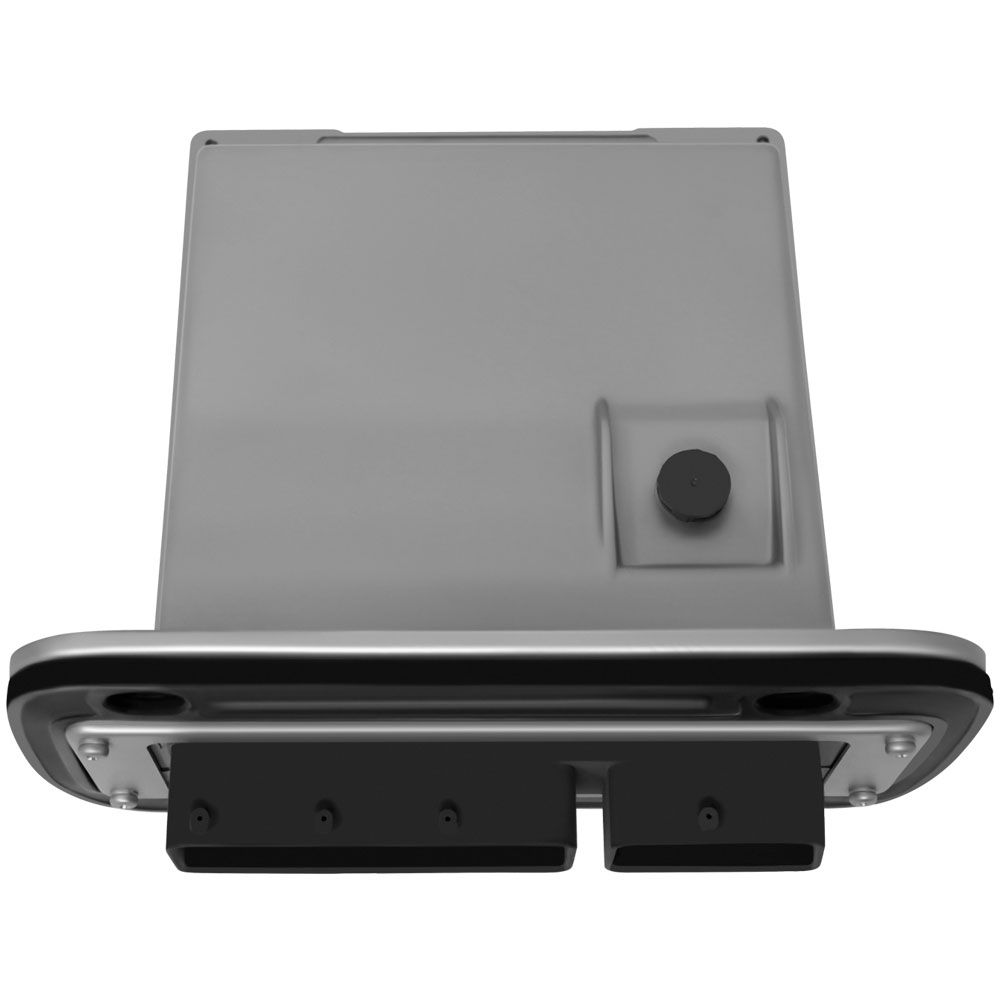
Flagship One stocks a refurbished, VIN-programmed PCM for the 2011 Toyota Tundra with a lifetime warranty, free shipping and no core charge. The full Toyota Tundra module lineup covers other engine configurations as well.
Restoring full function to your 2011 Toyota Tundra requires addressing the root cause of electronic faults. Understanding the location and labor requirements helps you plan the repair effectively. Proper programming ensures the new module integrates seamlessly with existing systems. You can return to reliable operation by selecting the correct replacement part. Contact our team for further assistance with your engine computer needs.