
Last updated on August 25th, 2026 at 01:34 pm
The Engine Control Module (ECM), also called the Powertrain Control Module (PCM), serves as the central computer for your 2008 Ford Explorer’s 4.6L V8 engine. It manages fuel injection, ignition timing, emissions controls, and transmission shifting. When this module fails or develops internal faults, your vehicle may experience drivability problems, no-start conditions, or illuminated warning lights.
If your 2008 Ford Explorer is running poorly, stalling unexpectedly, or refusing to start altogether, the Engine Control Module could be the culprit. The PCM serves as the brain of your vehicle’s powertrain, and when internal circuitry degrades or communication paths become corrupted, the results range from frustrating drivability symptoms to complete vehicle disablement. This guide explains what the engine computer does in your specific Explorer, common failure modes to watch for, the replacement process including factory programming requirements, and the practical differences between repair and replacement options. Whether you’re diagnosing a check engine light or planning a proactive module exchange, you’ll find the technical details needed to make an informed decision about your 2008 Ford Explorer.
The Engine Control Module in your 2008 Ford Explorer with the 4.6L V8 engine is the primary computer responsible for managing virtually every aspect of powertrain operation. This replacement engine computers for the 2008 Ford Explorer processes input from dozens of sensors throughout the engine bay, including the mass airflow sensor, coolant temperature sensor, oxygen sensors, and throttle position sensor. It then calculates optimal fuel delivery quantities, ignition advance angles, and transmission shift points in real time, adjusting these parameters hundreds of times per second during normal operation.
Beyond basic engine management, the PCM controls the automatic transmission’s shift firmness and timing, monitors the evaporative emissions system, manages the cooling fan clutch, and interfaces with the Passive Anti-Theft System to prevent unauthorized vehicle operation. The module contains both a microprocessor and permanent memory storage where calibration data resides. Over time, thermal cycling, voltage spikes from charging system irregularities, and general component aging can cause internal memory corruption or processor faults. When this occurs, the module may store trouble codes internally, lose the ability to communicate with diagnostic tools, or default to failsafe operating modes that severely limit engine performance.
2008 Ford Explorer
OEM programmed replacements — plug & play, no dealer visit.
Find yours by year, make & model →
Free shipping · Lifetime warranty
The Engine Control Module on the 2008 Ford Explorer is located in the passenger side engine compartment, mounted to the upper intake manifold assembly near the firewall. Access requires removing the engine cover and potentially the air intake tubing. The module is secured with four bolts and utilizes a 40-pin electrical connector that must be carefully unlatched before removal.
According to factory labor guidelines, the remove and replace procedure for the ECM/PCM carries a book time of 0.6 hours. After the new module is installed, a relearn procedure must be performed using a diagnostic scan tool—this additional step accounts for 0.5 hours of labor. The total combined time for a complete module exchange falls within the range established by manufacturer’s labor standards. Technicians should ensure the battery is disconnected before unplugging the old module to prevent voltage spikes that could damage sensitive electronics. Once the new module is secured and connections are verified, the relearn procedure synchronizes the PCM with the vehicle’s unique VIN and calibrates adaptive fuel tables specific to your engine’s characteristics.
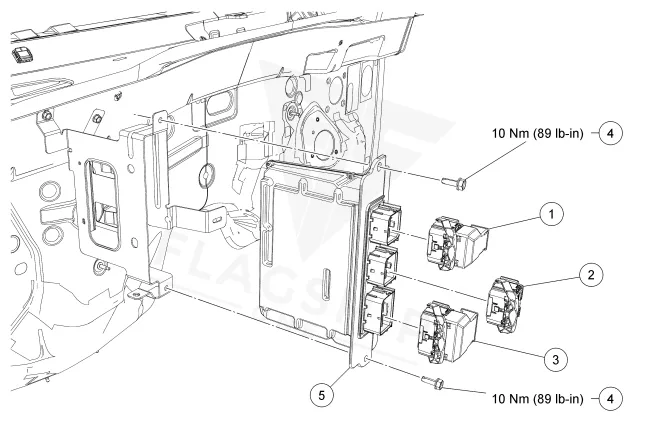
Work with the ignition off, and treat the module as static-sensitive: avoid touching the connector pins at any point.
| Operation | Configuration | Book Time |
|---|---|---|
| Engine Control Module Relearn | All configurations | 0.5 hr |
| Engine Control Module R&R | All configurations | 0.6 hr |
| Powertrain Control Module R&R | All configurations | 0.6 hr |
After installing a replacement Engine Control Module in your 2008 Ford Explorer, the factory procedure requires reprogramming the Passive Anti-Theft System (PATS). This security feature links the PCM to the vehicle’s immobilizer system, preventing the engine from starting without a properly authenticated key. The PATS reprogramming process requires dealer-level diagnostic equipment or an equivalent professional scan tool capable of performing the security token exchange between the new module and the vehicle’s anti-theft system.
This is where purchasing a VIN-programmed replacement unit from Flagship One provides a significant advantage. When you order from Flagship One, you provide your vehicle’s VIN during the order process, and the replacement module arrives pre-programmed with your specific vehicle’s identification data. This means the PATS programming is already completed before the module ever reaches your shop. The result is a plug-and-play installation in most cases, eliminating the need for dealer programming appointments and the associated costs. Your technician still performs the relearn procedure to calibrate fuel and transmission adaptive values, but the time-consuming PATS token exchange is already handled.
When the Engine Control Module in your 2008 Ford Explorer begins to fail, the symptoms often develop gradually before reaching a critical state. One of the most common indicators is a no-start condition where the engine cranks normally but fails to fire—the PCM may not be receiving sensor inputs correctly, or it may have lost communication with the fuel injectors. Stalling after startup is another frequent complaint, particularly when the engine is warm and operating under load. The vehicle may run roughly during idle, feel sluggish during acceleration, or exhibithesitation that makes highway merging hazardous.
Diagnostic trouble codes provide important clues about module health. The P0196 code relates to the engine oil temperature sensor circuit range, which the PCM monitors for proper cold weather operation. The P0456 code indicates a very small evaporative emissions leak detected in the system—a fault the PCM logs when its internal circuitry remains within specification but detects persistent vacuum losses. In some cases, the scan tool may display a P0601 fault, which signals internal memory check sum error within the module itself, essentially telling you that the computer has detected its own corrupted data storage. Other symptoms include illuminated malfunction indicator lamp with multiple unrelated codes, transmission shifting problems where the PCM cannot properly control gear engagement, and in severe cases, complete loss of communication with the diagnostic port preventing any code reading at all.
| Bulletin | Subject | What It Addresses |
|---|---|---|
| 08-01-03 | 4.0L – PCM BRACKET BUZZ/HUM NOISE FROM CENTER/RIGHT SIDE DASH AREA | — |
| 09-22-06 | 4.6L ENGINE – CALIBRATION UPDATE – CHECK ENGINE LIGHT ON – COLD WEATHER DRIVING CONDITIONS – DT | — |
| 09-01-02 | BUILT ON OR BEFORE 4/14/2008 – MALFUNCTION INDICATOR LAMP (MIL) ON WITH DIAGNOSTIC TROUBLE CODE | — |
When your 2008 Ford Explorer’s Engine Control Module requires replacement, you have two primary paths forward. Repair involves returning your original module for circuit board restoration, typically costing less upfront but with uncertain long-term reliability. Replacement with a new or refurbished unit provides peace of mind through warranty coverage but carries higher initial cost. For your specific Explorer, the pre-programmed units from Flagship One eliminate the traditionally required dealer PATS reprogramming step, saving both time and money while ensuring the module arrives ready for installation.
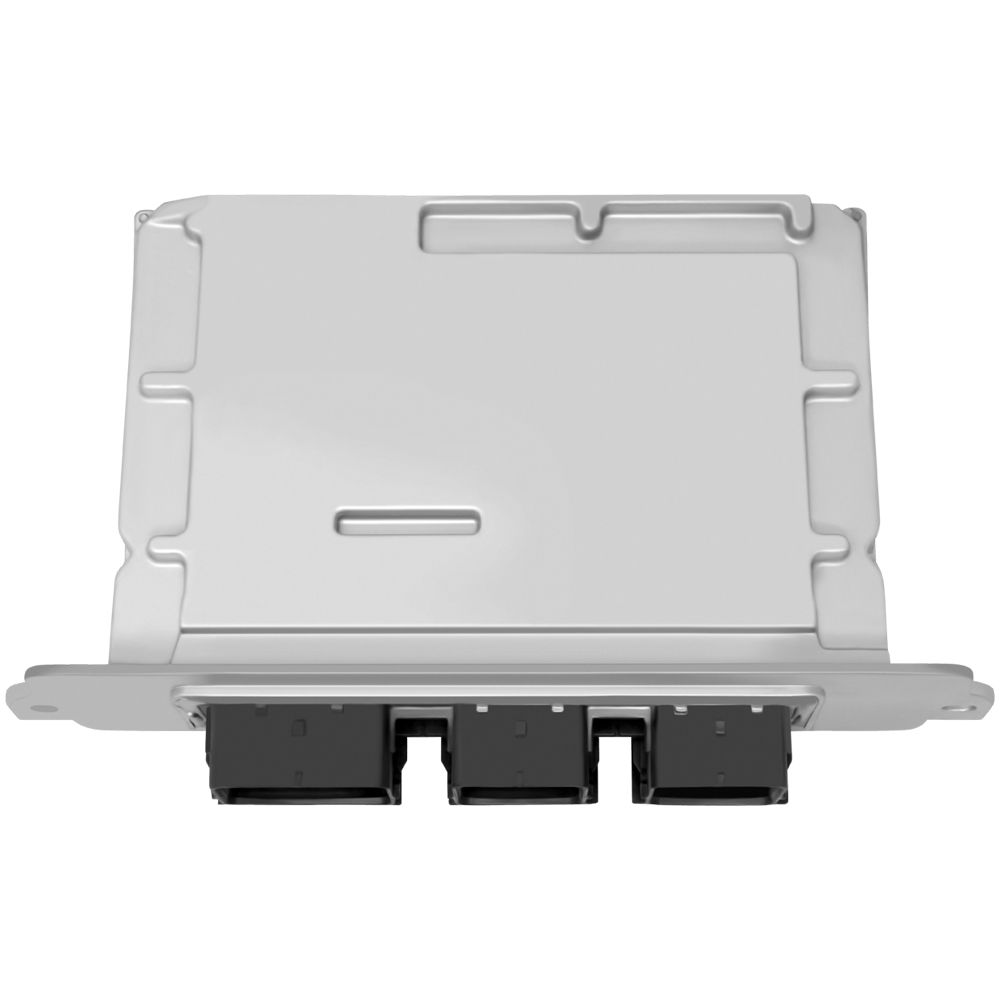
Flagship One stocks a refurbished, VIN-programmed PCM for the 2008 Ford Explorer with a lifetime warranty, free shipping and no core charge. The full Ford Explorer module lineup covers other engine configurations as well.
The Engine Control Module in your 2008 Ford Explorer is the central nervous system of the powertrain, and its failure need not leave you stranded. Understanding the symptoms, replacement procedure, and programming requirements equips you to make sound repair decisions. Whether you choose repair or replacement, sourcing a properly programmed unit eliminates the complexity that often frustrates owners during this otherwise straightforward fix.