
Last updated on August 25th, 2026 at 12:01 pm
The engine control module (ECM) in the 2007 Toyota Tundra 4.0L manages fuel delivery, ignition timing, and emissions systems. When it fails, the engine may crank without starting, run roughly, or stall unexpectedly. A malfunctioning ECM can also prevent communication with diagnostic tools, making troubleshooting difficult.
If your 2007 Toyota Tundra 4.0L is experiencing intermittent stalling, a no-start condition, or unexplained drivability issues, the engine control module (ECM) may be at fault. The ECM is the brain of the engine management system, and when it fails, it can cause a range of frustrating symptoms. This guide explains the ECM’s role in your Tundra, where it is located, and what’s involved in replacing it. You’ll also learn about the factory reprogramming steps and how a pre-programmed replacement can simplify the process. The 2007 Tundra 4.0L relies on the ECM to control fuel delivery, ignition timing, and emissions systems. When the module malfunctions, it can trigger issues from poor fuel economy to a complete no-start. Replacing the ECM requires careful attention to programming, but a VIN-matched unit can save time and eliminate the need for specialized tools. This article covers the location, labor, and programming requirements so you can approach the repair with confidence.
2007 Toyota Tundra 4.0L
OEM programmed replacements — plug & play, no dealer visit.
Find yours by year, make & model →
Free shipping · Lifetime warranty
The engine control module (ECM) in the 2007 Toyota Tundra 4.0L is the primary computer that governs engine performance. It receives data from sensors monitoring air intake, coolant temperature, throttle position, and exhaust oxygen content, then adjusts fuel injector pulse width and ignition timing accordingly. The ECM also manages the variable valve timing system and communicates with the transmission control module to coordinate shifts. When the ECM fails, the engine may not start, or it may run poorly with misfires and hesitation. Because the module is integral to so many functions, a faulty unit can mimic other component failures, making accurate diagnosis essential. For owners seeking a reliable fix, replacement ECMs for the Tundra are available pre-programmed to the vehicle’s VIN, eliminating the need for dealer-level flashing. This approach saves time and ensures the module is ready to install right out of the box.
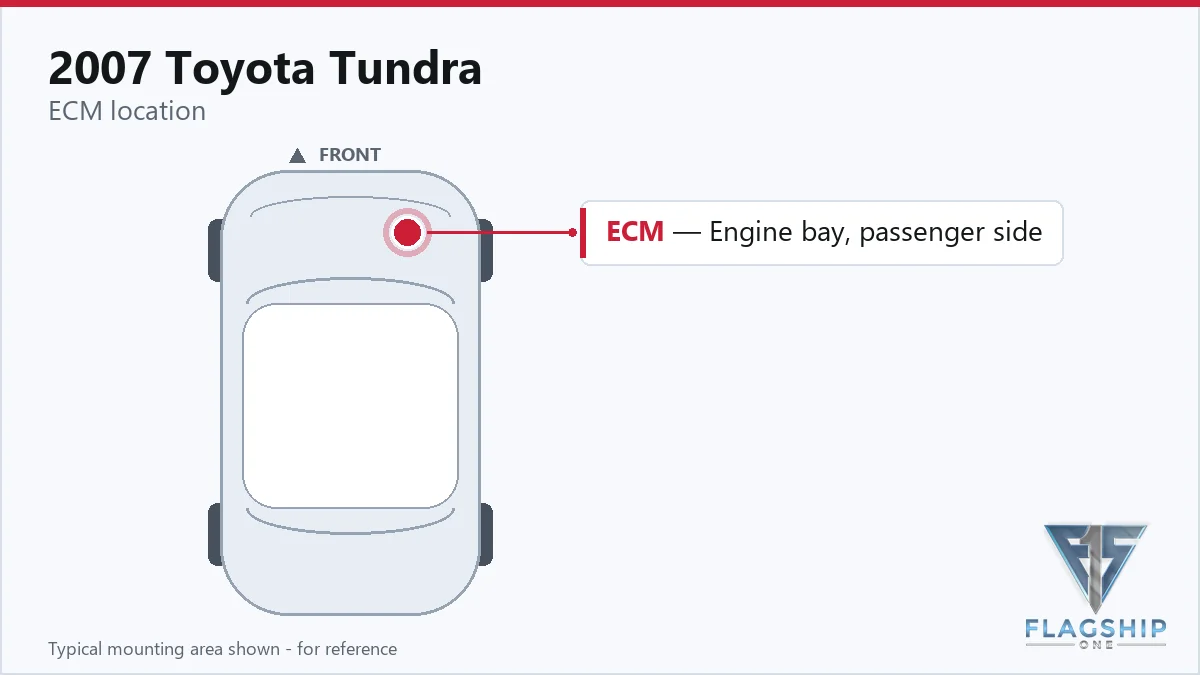
The factory electrical component locator places the engine control module in the engine compartment. Accessing the module typically involves removing any covers or brackets that may obstruct it. The book time for engine control module removal and replacement is 0.5 hours. After installation, a separate relearn procedure is required, which also carries a book time of 0.5 hours. Some service information may refer to the powertrain control module, which shares the same location and has identical labor allowances: 0.5 hours for R&R and 0.5 hours for the relearn. The module is secured with mounting bolts and electrical connectors that must be carefully disconnected. Before beginning, disconnect the negative battery cable to prevent electrical damage. Once the new module is in place, the relearn procedure allows the ECM to adapt to the vehicle’s sensors and actuators. This step is essential for proper idle and drivability.
| Operation | Configuration | Book Time |
|---|---|---|
| Engine Control Module Relearn | All configurations | 0.5 hr |
| Engine Control Module R&R | All configurations | 0.5 hr |
| Powertrain Control Module R&R | All configurations | 0.5 hr |
| Powertrain Control Module Relearn | All configurations | 0.5 hr |
The factory service procedure for the 2007 Tundra requires that a replacement ECM be flashed with the latest calibration using Toyota’s Techstream diagnostic software. This process, outlined in bulletins T-TCI-2758 and T-SB-0064-10, involves connecting the vehicle to a computer and downloading the appropriate firmware. Without this step, the engine may not start or could run poorly. However, when you order a pre-programmed ECM from Flagship One, the unit arrives with your VIN and the latest software already loaded. This eliminates the need for a dealership visit or access to Techstream, saving you the 0.5-hour relearn labor and the cost of programming. The module is plug-and-play, so you can complete the installation and get back on the road immediately.
A failing ECM in the 2007 Toyota Tundra 4.0L often produces symptoms that can be mistaken for other problems. The engine may crank but refuse to start, or it may start and then stall without warning. Intermittent misfires, rough idle, and hesitation under acceleration are also common. You might notice a lack of communication with a scan tool, preventing you from reading diagnostic trouble codes. In some cases, the transmission may shift erratically because the ECM shares data with the transmission control module. Other signs include illuminated warning lights on the dashboard, such as the check engine light, and poor fuel economy. Because these symptoms overlap with sensor or wiring faults, professional diagnosis is recommended before replacing the module.
Toyota has issued service bulletins that detail the proper procedure for reprogramming the ECM. Bulletin T-TCI-2758 applies to 2001–2008 Toyota models, including the Tundra, and covers the Techstream ECU flash reprogramming process for Canadian vehicles. Bulletin T-SB-0064-10 extends the coverage to 2001–2011 models and provides the same reprogramming instructions. These bulletins emphasize the importance of using the correct software version and following the step-by-step process to avoid corrupting the module. If the ECM is replaced without performing this flash, the vehicle may exhibit drivability concerns or fail to start.
| Bulletin | Subject | What It Addresses |
|---|---|---|
| T-TCI-2758 | ’01-’08 All Applicable Toyota Models: Techstream ECU Flash Reprogramming Procedure (Canada) | — |
| T-SB-0064-10 | 01-11 Applicable Toyota Models: Techstream ECU Flash Reprogramming Procedure | — |
A no-start with a cranking engine can stem from many sources. If you have confirmed spark, fuel pressure, and injector pulse but the engine still won’t fire, the ECM may not be triggering the injectors or ignition correctly. A scan tool that fails to communicate with the module is another strong indicator of ECM failure.
Factory procedures require reprogramming with Toyota’s Techstream software. However, a VIN-programmed replacement from Flagship One arrives with the correct calibration already installed, so no dealer visit or additional programming is necessary.
On this vehicle, the terms are often used interchangeably. The engine control module (ECM) and powertrain control module (PCM) refer to the same unit that manages engine and transmission functions. The labor times for both are identical.
When facing ECM failure on your 2007 Tundra, you have two main paths: repair the existing module or install a refurbished replacement. Repair can be cost-effective if the damage is limited to known failure points, but it may not address all internal issues. A refurbished unit that has been thoroughly tested and pre-programmed to your VIN offers a reliable, plug-and-play solution. For the 4.0L Tundra, choosing a quality replacement ensures the module integrates seamlessly with the engine and transmission systems, restoring factory performance without the need for additional programming.
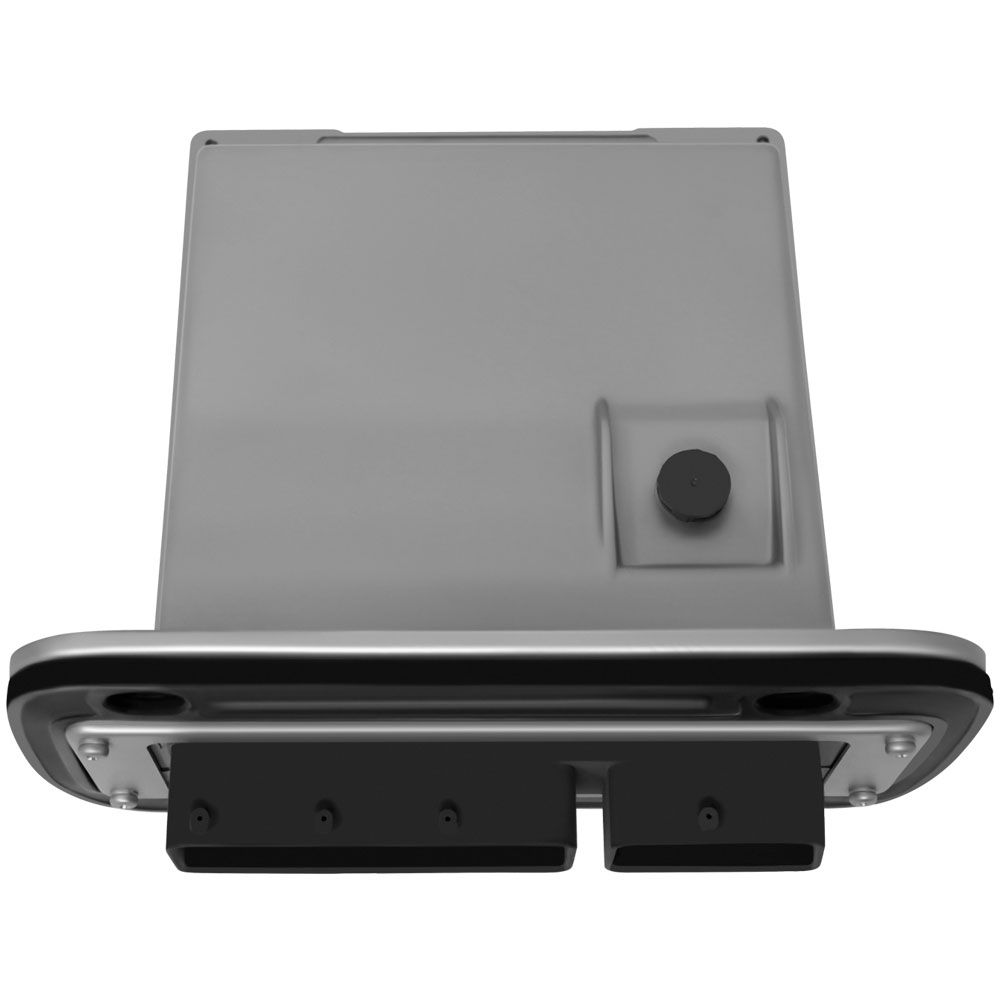
Flagship One stocks a refurbished, VIN-programmed PCM for the 2007 Toyota Tundra with a lifetime warranty, free shipping and no core charge. The full Toyota Tundra module lineup covers other engine configurations as well.
Replacing the engine control module in a 2007 Toyota Tundra 4.0L doesn’t have to be complicated. With the module located in the engine compartment and straightforward labor times, the physical swap is quick. The key is ensuring the replacement is correctly programmed. A VIN-matched unit eliminates the factory relearn step, letting you finish the job and get back to driving. If you suspect ECM failure, consider a pre-programmed replacement to restore your Tundra’s reliability.