
Last updated on August 25th, 2026 at 12:01 pm
The Engine Control Module (ECM) in your 2007 Toyota Solara acts as the vehicle’s brain, managing fuel delivery, ignition timing, and transmission behavior. Failures may stem from voltage spikes, corrosion, or internal processor faults, often triggering drivability issues or warning lights.
If your 2007 Toyota Solara has been acting unpredictably—hesitating during acceleration, shifting harshly, or refusing to start—it may be signaling an ECM issue. The Engine Control Module is responsible for coordinating fuel injection, ignition timing, and transmission shifts, making it a critical component for smooth operation. When it fails, symptoms can range from subtle performance quirks to complete drivability loss. Understanding how this module functions, where it’s located, and what replacement entails can help you make informed decisions. Whether you’re diagnosing a persistent trouble code or preparing for a repair, knowing the labor involved and the benefits of a pre-programmed unit can save time and avoid unnecessary complications. This guide covers the essentials, from common failure signs to the steps required for a successful replacement.
The Engine Control Module (ECM) in your 2007 Toyota Solara serves as the central processor for engine and transmission management. It continuously monitors sensor inputs—like throttle position, engine speed, and air intake—to adjust fuel delivery, ignition timing, and shift points in real time. This ensures optimal performance, fuel efficiency, and emissions compliance. When the ECM malfunctions, it may disrupt these calculations, leading to poor drivability, reduced power, or even a no-start condition. The module also interfaces with the transmission control system, which is why failures can sometimes manifest as rough or delayed shifting. Over time, exposure to heat, moisture, or electrical surges can degrade internal components, making replacement necessary. If you’re considering a new unit, replacement engine computers for the Solara are designed to restore factory-level functionality without the need for extensive reprogramming.
2007 Toyota Solara
OEM programmed ECM for your 2007 Toyota Solara — plug & play, no dealer visit.
Free shipping · Lifetime warranty
In the 2007 Toyota Solara, the ECM is typically mounted in the engine bay, often near the firewall or strut tower. Accessing it requires removing a protective cover or air intake components, depending on the specific layout. Once exposed, the module is secured with a few bolts or screws, and the wiring harness connector must be carefully disconnected. Reinstallation follows the reverse process, ensuring the connector is fully seated and the module is securely fastened. Labor times for removal and replacement (R&R) are relatively short, with book estimates at 0.4 hours for the ECM. However, additional time may be needed if other components obstruct access. Always disconnect the battery before handling the module to prevent electrical shorts or damage.
| Operation | Configuration | Book Time |
|---|---|---|
| Engine Control Module Relearn | All configurations | 0.5 hr |
| Engine Control Module R&R | All configurations | 0.4 hr |
| Powertrain Control Module R&R | All configurations | 0.4 hr |
| Powertrain Control Module Relearn | All configurations | 0.5 hr |
After replacing the ECM in your 2007 Toyota Solara, the factory procedure requires a relearn process to synchronize the module with the vehicle’s systems. This typically involves using a scan tool to perform an initialization or calibration, which can add 0.5 hours of labor. The process ensures the ECM recognizes the transmission, engine sensors, and other critical components, allowing for proper operation. However, if you opt for a VIN-programmed replacement unit, these steps are already completed. The module arrives pre-configured to match your Solara’s specific calibration, eliminating the need for post-install programming. This not only saves time but also reduces the risk of errors during the relearn process, ensuring a smoother transition to full functionality.
When the ECM in your 2007 Toyota Solara begins to fail, symptoms can vary but often include noticeable drivability issues. One of the most common signs is rough or erratic shifting, as the module controls transmission behavior alongside engine functions. You may also experience stalling, hesitation during acceleration, or a no-start condition if the ECM fails to send the correct signals to the fuel or ignition systems. Another red flag is the illumination of the check engine light, often accompanied by trouble codes stored in the system. For example, a processor internal performance fault may indicate an internal ECM failure, disrupting communication with other modules. In some cases, the vehicle may enter a limp-home mode, limiting power to prevent further damage. If your scan tool fails to communicate with the ECM, it could point to a complete module failure or a wiring issue. Addressing these symptoms promptly can prevent further complications, such as transmission damage or prolonged drivability problems.
The 2007 Toyota Solara’s ECM may log specific internal trouble codes when it experiences faults. These codes help pinpoint issues within the module itself, rather than external sensors or components. Below are the documented codes associated with ECM failures in this vehicle.
| Code | Meaning | Full Guide |
|---|---|---|
| P0606 | Module processor failure | Full P0606 guide → |
| P0607 | Module performance fault | Full P0607 guide → |
Toyota has issued several service bulletins addressing ECM-related concerns in the 2007 Solara. Bulletin #T-TCI-2758 outlines the Techstream ECU flash reprogramming procedure for applicable Toyota models, including the Solara, in Canada. Another bulletin, #T-TCI-2650, focuses on ECM calibration enhancements to improve shifting performance and smoothness for the 2007-2008 Solara and 2007-2009 Camry. This bulletin was later revised and reissued as #T-SB-0068-08 Rev1, which also targets shifting performance improvements. These bulletins suggest that software updates or recalibrations may resolve certain drivability issues without requiring a full ECM replacement. If your Solara is experiencing rough shifting or related symptoms, checking for applicable bulletins could provide a cost-effective solution.
| Bulletin | Subject | What It Addresses |
|---|---|---|
| T-TCI-2758 | ’01-’08 All Applicable Toyota Models: Techstream ECU Flash Reprogramming Procedure (Canada) | — |
| T-TCI-2650 | ’07-’09 Camry, ’07-’08 Solara: ECM Calibration: Enhancement To Shifting Performance & Smoothnes | — |
| T-SB-0068-08 Rev1 | T-SB-0068-08 Rev1: 07-09 Camry, 07-08 Solara: ECM Calibration: Enhancement to Shifting Performa | — |
Rough shifting in your Solara may stem from an ECM calibration issue, especially if the module isn’t retaining learned values. Cold starts can exacerbate this, as the ECM may default to baseline settings until it warms up. A software update or replacement unit may resolve the issue.
Yes, a failing ECM can disrupt fuel delivery or ignition timing, leading to stalling at idle. If the module isn’t processing sensor data correctly, it may cut fuel or spark at the wrong time, causing the engine to die. A scan tool can help confirm if the ECM is the root cause.
If your Solara is logging internal ECM codes like P0606 or P0607, or if it fails to communicate with a scan tool, replacement is often necessary. Reprogramming may help if the issue is related to shifting performance or drivability without stored codes.
A used ECM may work, but it will require reprogramming to match your Solara’s VIN and calibration. Without this step, the module may not communicate properly with the transmission or engine systems, leading to drivability issues.
In the 2007 Solara, the ECM (Engine Control Module) primarily manages engine functions, while the PCM (Powertrain Control Module) may refer to a combined unit handling both engine and transmission control. For this vehicle, the terms are often used interchangeably, but the ECM is the specific module responsible for engine management.
If your 2007 Toyota Solara is experiencing ECM-related issues, you have options beyond costly dealer visits. A refurbished or new replacement unit can restore functionality, especially if it arrives pre-programmed to your vehicle’s VIN. This eliminates the need for post-install calibration, reducing labor time and potential headaches. Whether you’re dealing with shifting problems, stalling, or a no-start condition, addressing the ECM promptly can prevent further damage to other systems. Consider your repair options carefully to ensure a smooth and lasting fix.
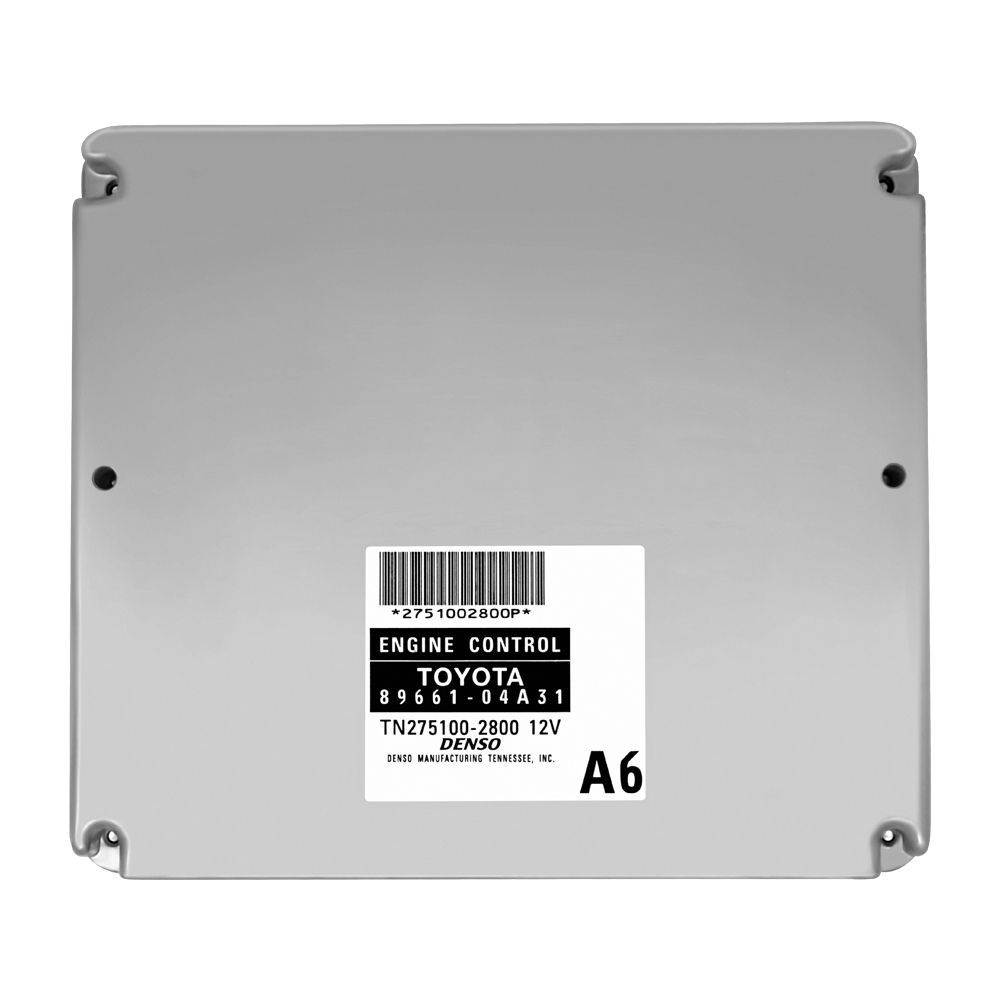
Flagship One stocks a refurbished, VIN-programmed PCM for the 2007 Toyota Solara with a lifetime warranty, free shipping and no core charge. The full Toyota Solara module lineup covers other engine configurations as well.
The ECM in your 2007 Toyota Solara plays a vital role in maintaining smooth engine and transmission performance. If you’re noticing symptoms like rough shifting, stalling, or trouble codes, it may be time to explore replacement options. A pre-programmed unit can simplify the process, ensuring your Solara runs as intended without the hassle of additional programming. Addressing ECM issues early can save you from more extensive repairs down the road.