
Last updated on August 25th, 2026 at 02:25 pm
The Powertrain Control Module in your 2007 Chevrolet Silverado serves as the central computer managing engine and transmission operation. When internal diagnostics detect memory corruption or hardware failure, the module may trigger fault codes and cause drivability problems ranging from stalling to a no-start condition.
When your 2007 Chevrolet Silverado sets a module-internal trouble code such as P0601, P0602, or P0603, the powertrain control module has detected an internal fault that often cannot be corrected through conventional troubleshooting. This guide explains what the PCM does in your specific vehicle, why these codes appear, and what your repair options entail. You will learn the factory-recommended procedures, what programming is required after replacement, and how pre-programmed replacement units from Flagship One simplify the repair process. The information draws from factory service documentation and applies specifically to the 2007 Silverado equipped with the 4.3L V6 engine.
The Powertrain Control Module in your 2007 Chevrolet Silverado functions as the primary computer governing engine and transmission operation. This unit processes input from numerous sensors throughout the powertrain and adjusts fuel delivery, ignition timing, and transmission shift points in real time. The module also performs continuous self-diagnostics, constantly checking its own memory integrity and processing pathways. When the PCM detects internal corruption in read-only memory, calibration memory, or its internalEEPROM, it may set module-internal fault codes without any external wiring issue present. This means your Silverado could experience stalling, poor idle, transmission shifting concerns, or a no-start condition even when all sensors and wiring test perfectly. Replacement engine computers for the Silverado must be programmed to your specific vehicle to restore proper function, and Flagship One provides units already configured with your VIN.
Flagship One keeps Chevrolet Silverado replacement engine computers in stock for exactly this failure pattern.
2007 Chevrolet Silverado
OEM programmed ECM for your 2007 Chevrolet Silverado — plug & play, no dealer visit.
Free shipping · Lifetime warranty
The PCM on your 2007 Chevrolet Silverado with the 4.3L engine is typically mounted in the engine compartment, often on or near the firewall on the driver side. Accessing the module requires removing associated hardware and disconnecting electrical connectors before unbolting the unit from its mounting location. The replacement process involves transferring the mounting hardware and reconnecting wiring harnesses to the new module. Book time for Powertrain Control Module removal and reinstallation on this model is 1.4 hours according to factory labor guides. After installing a new or remanufactured module, an additional 0.5 hours is typically required for system relearn procedures to allow the PCM to calibrate to your specific vehicle.
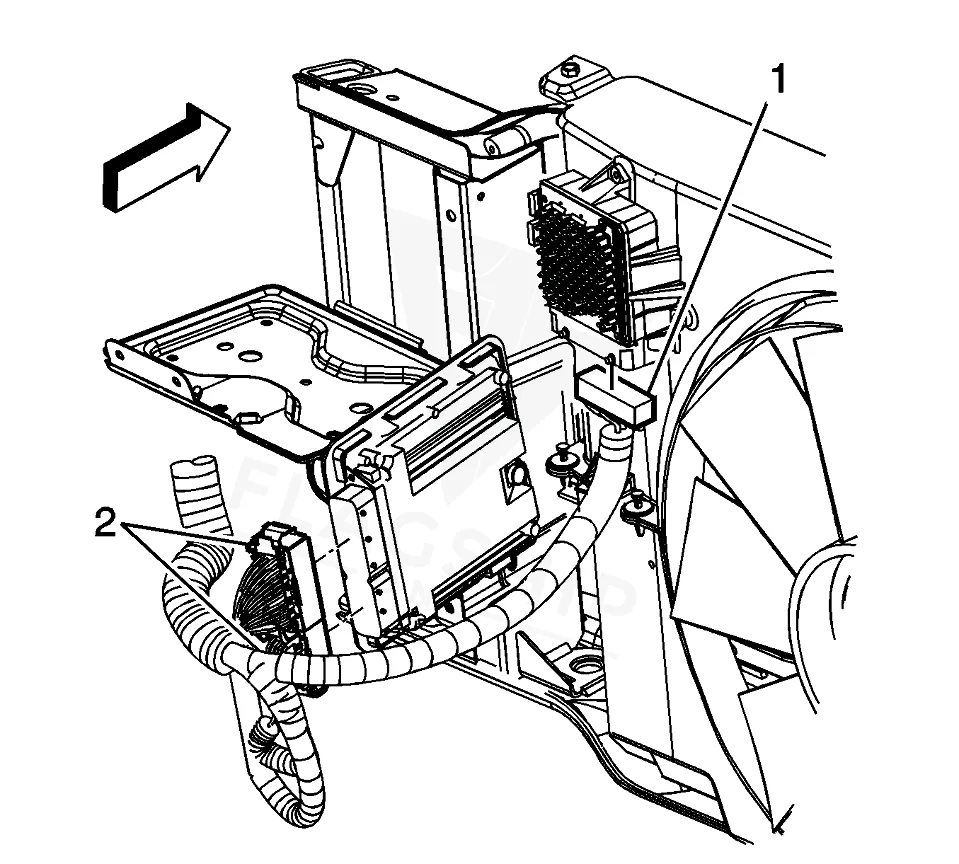
Work with the ignition off, and treat the module as static-sensitive: avoid touching the connector pins at any point.
| Operation | Configuration | Book Time |
|---|---|---|
| Powertrain Control Module R&R | Silverado 1500 | 1.4 hr |
| Powertrain Control Module R&R | Silverado 2500 HD | 1.4 hr |
| Powertrain Control Module R&R | Silverado 3500 HD | 1.4 hr |
| Powertrain Control Module Relearn | Silverado 1500 | 0.5 hr |
| Powertrain Control Module Relearn | Silverado 2500 HD | 0.5 hr |
| Powertrain Control Module Relearn | Silverado 3500 HD | 0.5 hr |
| Engine Control Module R&R | Silverado 1500 | 1.4 hr |
| Engine Control Module R&R | Silverado 2500 HD | 1.4 hr |
Before removing the original engine control module from your 2007 Chevrolet Silverado, factory procedure specifies using a scan tool to capture all stored data within the existing ECM. This captured information must then be restored to the replacement module during the installation process. The captured data includes vehicle-specific settings and adaptive values learned during the module’s service life. If this step is skipped or performed incorrectly, the new module may not communicate properly with your vehicle’s systems. Replacement units from Flagship One arrive pre-programmed with your Silverado’s VIN, which means those initial programming requirements are handled before the unit reaches you. Your installer will still need to perform any relearn procedures specified by the factory labor operations.
Every VIN-programmed replacement unit from Flagship One arrives with these steps already completed.
When the Powertrain Control Module in your 2007 Chevrolet Silverado begins to fail internally, you may notice several interrelated symptoms. A no-start condition where the engine cranks but fails to fire often accompanies module-internal codes. The engine may stall unexpectedly at idle or during deceleration, and the check engine light typically illuminates. You might experience rough running, misfiring, or hesitation during acceleration even when fuel system and ignition components test normally. Diagnostic scan tools may become unable to communicate with the module, or communication may be intermittent. Some drivers report automatic transmission shifting problems when the PCM loses proper control over shift solenoids. If your Silverado has set codes such as internal memory checksum fault, these point directly to module internal failures rather than external circuit problems.
Module-internal codes stored in your 2007 Chevrolet Silverado indicate that the powertrain control module has detected a fault within its own hardware or memory systems. These are not circuit codes related to sensors or actuators but rather self-diagnostic failures within the computer module itself. The following codes are documented for this vehicle and often indicate that replacement of the PCM is the appropriate repair.
| Bulletin | Subject | What It Addresses |
|---|---|---|
| — | Cancellation of E-37 Engine Control Module (ECM) Part Restriction – (Apr 4, 2008) | — |
| — | Customer Satisfaction – ECM EEPROM – Reprogram ECM – (Oct 23, 2008) | All 2007 and certain 2008 Chevrolet Silverado, Express; GMC Sierra and Savana vehicles, equipped with a 6.6L Duramax Diesel V8 (RPO LMM – VIN 6) engine, were… |
| — | Service Update for Inventory Vehicles Only-Improved ECM Calibration-Reprogram ECM-Expires March | — |
Yes, a new or remanufactured PCM from the dealership typically requires programming to match your specific vehicle identification number before it will function. This process involves connecting the module to GM diagnostic equipment and configuring vehicle-specific settings.
A severely failed PCM may prevent your Silverado from starting or running properly. Module-internal codes like P0601 or P062F indicate the computer has detected its own hardware failure and may enter a protective limp mode or disable critical functions.
Module-internal codes often result from gradual degradation of internal memory or processor circuits within the PCM itself rather than external sensor or wiring problems. Heat cycling, voltage stress, and age can contribute to internal component failure in electronic control modules.
Choosing between repair and replacement for your 2007 Chevrolet Silverado’s powertrain control module depends on the extent of damage and your budget. Dealership replacement typically involves higher costs due to new unit pricing plus programming fees. VIN-programmed replacement units from Flagship One arrive ready to install, often eliminating the need for dealer programming services. Both approaches represent valid repairs for your vehicle’s module failure.
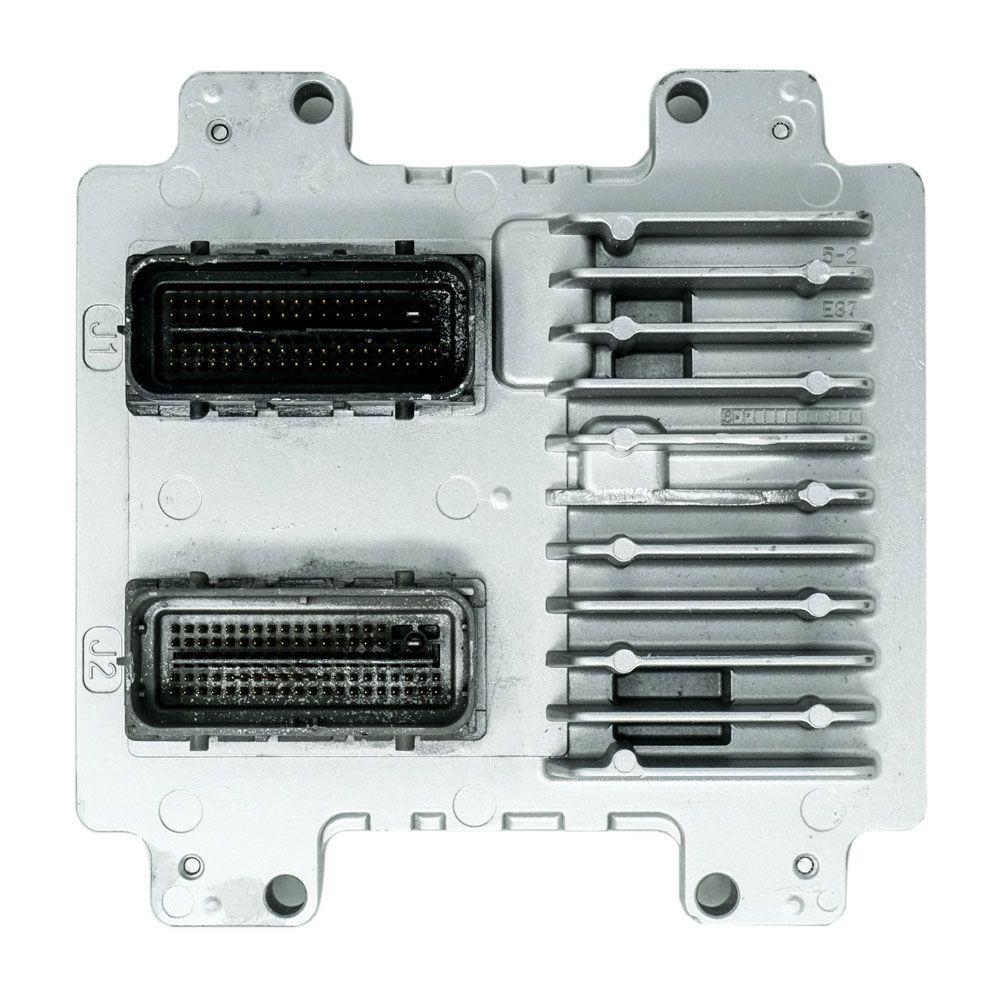
Flagship One stocks a refurbished, VIN-programmed PCM for the 2007 Chevrolet Silverado with a lifetime warranty, free shipping and no core charge. The full Chevrolet Silverado module lineup covers other engine configurations as well.
The 2007 Chevrolet Silverado may experience powertrain control module failures that set internal fault codes and cause drivability symptoms. Factory procedure requires capturing ECM data before removal and restoring it to the replacement unit. Flagship One replacement modules arrive pre-programmed with your vehicle’s VIN, simplifying installation. If you suspect PCM failure in your Silverado, consult with a qualified technician to confirm the diagnosis and discuss your replacement options.