
Last updated on August 25th, 2026 at 01:58 pm
In the 2006 Mazda MPV, the Powertrain Control Module (PCM) and Engine Control Module (ECM) act as the vehicle’s central computers, managing engine timing, fuel delivery, emissions monitoring, and transmission control. A failure in either unit typically triggers the malfunction indicator lamp and stores diagnostic trouble codes related to emission system leaks or sensor communication errors.
When the check engine light appears on a 2006 Mazda MPV, owners often wonder whether the issue lies in a sensor, a wiring fault, or a deeper electronic problem. In many cases, the PCM or ECM—two distinct but closely related control modules—may be at the root of the trouble. This guide explains how these computers function in the MPV, what symptoms typically accompany their failure, and what you can expect in terms of labor and programming when a replacement is needed. By the end, you will understand the diagnostic clues, the steps required to swap a faulty unit, and how a Flagship One VIN‑programmed replacement can simplify the process.
The Powertrain Control Module and Engine Control Module in the 2006 Mazda MPV serve as the vehicle’s command centers for powertrain and engine operations. The PCM interprets inputs from the transmission, throttle position, and various sensors to coordinate shift timing and fuel delivery, while the ECM focuses on combustion control, emissions monitoring, and idle stability. Both modules store diagnostic trouble codes and communicate with the onboard diagnostics system, making them essential for meeting emissions standards and ensuring smooth performance. A malfunction can disrupt engine timing, cause incorrect fuel mixtures, or prevent the transmission from shifting correctly, leading to drivability issues and potential emissions failures. Understanding these roles helps pinpoint why a MIL illumination may point to a computer problem rather than a simple sensor fault. For owners seeking a direct replacement, replacement powertrain and engine control modules for the 2006 Mazda MPV provide a ready‑made solution that matches the original specifications.
2006 Mazda MPV
OEM programmed ECM for your 2006 Mazda MPV — plug & play, no dealer visit.
Free shipping · Lifetime warranty
In the 2006 Mazda MPV, the PCM is typically mounted near the firewall on the driver’s side, while the ECM resides close to the engine bay, attached to the intake manifold area. Accessing either unit generally involves disconnecting the battery, removing a few fasteners, and unplugging the connector harnesses. Labor times listed in the service manual indicate that removing and reinstalling the PCM without an immobilizer system takes about 0.4 hours, and with the immobilizer it may require 0.5 hours. The same time frames apply to the ECM. After the physical swap, a relearn procedure is required, adding roughly another 0.5 hours to ensure the vehicle’s control strategies are calibrated to the new unit.
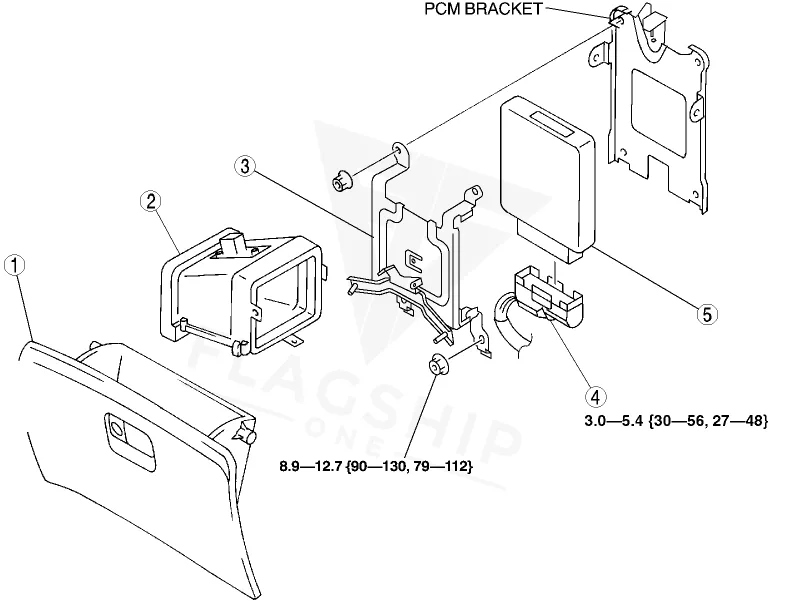
Work with the ignition off, and treat the module as static-sensitive: avoid touching the connector pins at any point.
| Operation | Configuration | Book Time |
|---|---|---|
| Powertrain Control Module R&R | Without Immobilize System | 0.4 hr |
| Powertrain Control Module R&R | With Immobilize System | 0.5 hr |
| Powertrain Control Module Relearn | All configurations | 0.5 hr |
| Engine Control Module R&R | Without Immobilize System | 0.4 hr |
| Engine Control Module R&R | With Immobilize System | 0.5 hr |
| Engine Control Module Relearn | All configurations | 0.5 hr |
Factory service procedures for the 2006 Mazda MPV specify that after installing a new PCM or ECM, a relearn routine must be performed to synchronize the module with the vehicle’s existing sensors and transmission control logic. This step typically takes about 0.5 hours and involves using a scan tool to execute the appropriate calibration sequence. Flagship One units arrive pre‑programmed to the vehicle’s VIN, meaning that the required relearn steps are already completed at the factory, and the technician can focus on the physical installation and final verification. By using a VIN-programmed replacement unit you avoid the extra programming time and reduce the chance of post‑install communication errors.
When a PCM or ECM begins to fail in a 2006 Mazda MPV, drivers may notice the check engine light turning on, often accompanied by trouble codes such as P0455, P0442, or P0456 that indicate a possible evaporative emissions leak. Additional signs can include rough idle, stalling during acceleration, delayed transmission shifts, or a complete no‑start condition if the module loses communication with critical sensors. In some cases, the scan tool may fail to establish a link with the vehicle’s computer network, suggesting a deeper fault within the control module itself. One of the common diagnostic flags is internal control module processor fault, which points directly to a malfunctioning PCM or ECM.
Service bulletin 01 045/08 for the 2006 MPV addresses MIL illumination with codes P0455, P0442, and P0456, providing guidance on diagnosis and repair procedures related to the evaporative emissions system.
| Bulletin | Subject | What It Addresses |
|---|---|---|
| — | 01 045/08 2006 Mpv MIL Illumination DTC P0455 / P0442 / P0456 | — |
Yes, the PCM controls shift timing based on sensor inputs, so a malfunction can lead to harsh or delayed gear changes. Replacing the PCM often resolves these symptoms.
No, the ECM and PCM serve distinct functions and have different firmware. Each must be replaced with the correct module for the vehicle.
A standard OBD‑II scan tool that supports Mazda-specific procedures is required to complete the relearn sequence after a new module is installed.
Code P0456 signals a very small leak in the evaporative emissions system, which can be triggered by a faulty PCM or a leak in the fuel vapor lines.
Yes, the unit arrives pre‑programmed to match your vehicle’s VIN, so the factory‑required relearn steps are already completed.
When faced with a PCM or ECM failure in your 2006 Mazda MPV, you can choose a brand‑new factory‑spec unit or a refurbished replacement that meets original performance standards. Both options restore the vehicle’s electronic control capabilities, but a Flagship One VIN‑programmed replacement may reduce labor time by eliminating the need for post‑install coding. Consider your budget, warranty preferences, and the importance of minimizing vehicle downtime when deciding which route to take.
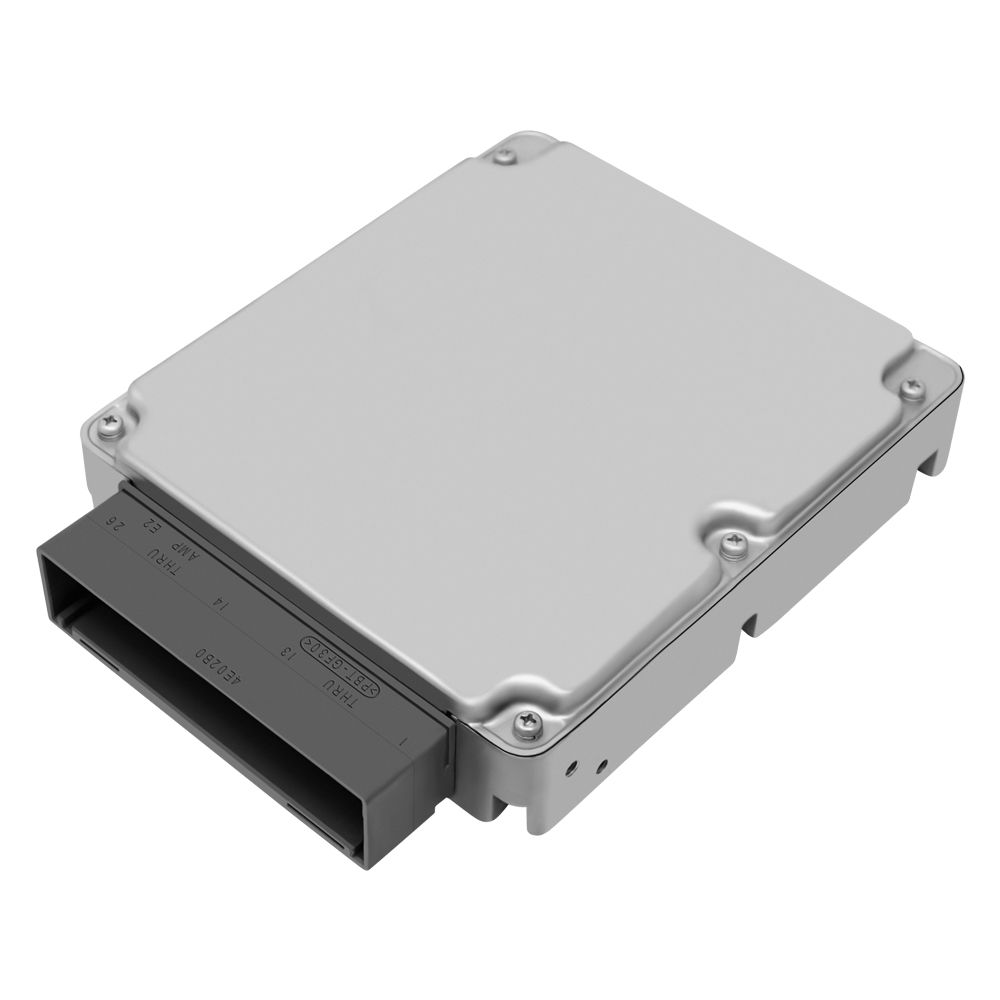
Flagship One stocks a refurbished, VIN-programmed PCM for the 2006 Mazda MPV with a lifetime warranty, free shipping and no core charge. The full Mazda MPV module lineup covers other engine configurations as well.
A failing PCM or ECM can compromise engine performance and emissions compliance in the 2006 Mazda MPV. By understanding the symptoms, labor requirements, and the advantage of a VIN‑programmed replacement, you can make an informed decision that keeps your MPV running reliably. If you need a replacement, explore the options that best fit your service plan.