
Last updated on August 25th, 2026 at 01:35 pm
The powertrain control module (PCM) in your 2005 Ford Freestar manages engine and transmission functions. Failures may cause erratic performance, stalling, or failure to start, often linked to electrical issues or internal faults.
If your 2005 Ford Freestar is experiencing unexplained stalling, rough idling, or a no-start condition, the powertrain control module (PCM) may be the culprit. This critical component oversees engine and transmission operations, ensuring smooth performance. When it fails, symptoms can range from subtle drivability issues to complete immobilization. Understanding the PCM’s role, location, and replacement process helps you make informed decisions about repairs. With labor times and programming requirements clearly defined, you can approach the task with confidence, knowing what to expect and how to restore your vehicle’s reliability.
In your 2005 Ford Freestar, the powertrain control module (PCM) acts as the brain for both the engine and transmission. It processes data from sensors to optimize fuel delivery, ignition timing, and shifting patterns, ensuring efficient operation. A malfunctioning PCM may disrupt these functions, leading to poor performance or even a vehicle that won’t start. Replacing it requires precision, as the module must communicate with other systems, including the replacement engine computers for the Freestar. Without proper calibration, your Freestar may exhibit erratic behavior or fail to run altogether.
2005 Ford Freestar
OEM programmed ECM for your 2005 Ford Freestar — plug & play, no dealer visit.
Free shipping · Lifetime warranty
The PCM in your 2005 Ford Freestar is mounted in the engine compartment, making it relatively accessible for replacement. According to factory labor estimates, removing and reinstalling the module typically takes 0.5 hours. After installation, an additional 0.5 hours is allocated for the relearn procedure to ensure the module synchronizes with the vehicle’s systems. No specialized tools are required beyond standard hand tools, but care should be taken to avoid damaging connectors or the module itself during the process.
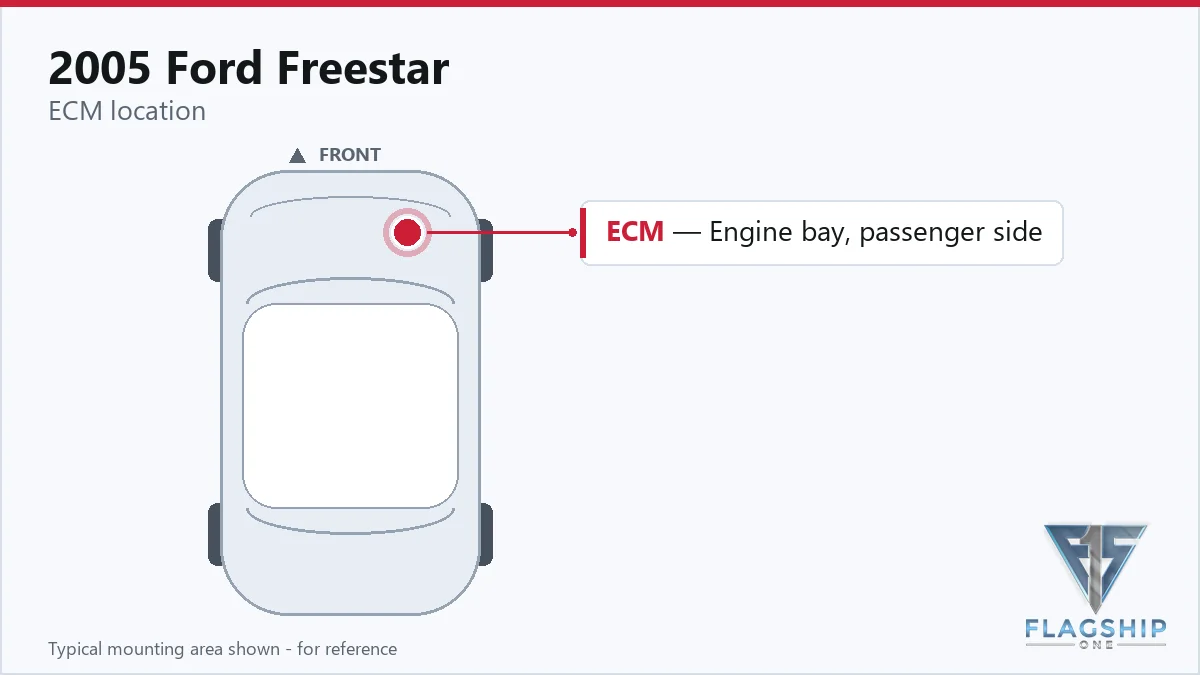
Work with the ignition off, and treat the module as static-sensitive: avoid touching the connector pins at any point.
| Operation | Configuration | Book Time |
|---|---|---|
| Powertrain Control Module R&R | All configurations | 0.5 hr |
| Powertrain Control Module Relearn | All configurations | 0.5 hr |
| Engine Control Module Relearn | All configurations | 0.5 hr |
| Engine Control Module R&R | All configurations | 0.5 hr |
After replacing the PCM in your 2005 Ford Freestar, the factory procedure requires reprogramming the passive anti-theft system (PATS) to ensure the vehicle starts and runs properly. This step is critical, as an unprogrammed module may leave your Freestar inoperable. Flagship One units arrive as a VIN-programmed replacement unit, eliminating the need for this additional step. This pre-programming ensures compatibility with your vehicle’s existing systems, allowing for a smoother installation and quicker return to the road.
A failing PCM in your 2005 Ford Freestar may cause a range of symptoms, including intermittent stalling, rough idling, or a complete no-start condition. You might also notice poor fuel economy, erratic shifting, or the check engine light illuminating with misfire-related codes. In some cases, the vehicle may enter a fail-safe mode, limiting performance to prevent further damage. If your scan tool shows a P030X:fault indicating a misfire in one or more cylinders, it could point to a PCM issue, though other components like spark plugs or coils should also be checked.
Ford has issued service bulletins addressing specific issues in the 2005 Freestar that may relate to PCM or related systems. Bulletin #04-12-05 covers diagnostic trouble code C1991, which indicates a module calibration failure in the anti-lock brake, traction control, or interactive vehicle dynamics systems. Another bulletin, #10-03-03, discusses damaged spark plug electrodes that may trigger misfire codes like P030X. While these bulletins don’t directly target the PCM, they highlight common drivability issues that could overlap with module-related symptoms.
| Bulletin | Subject | What It Addresses |
|---|---|---|
| 04-12-05 | ANTI-LOCK BRAKE, ADVANCED TRAC, INTERACTIVE VEHICLE DYNAMICS (IVD), TRACTION CONTROL SYSTEM – D | — |
| 10-03-03 | DAMAGED SPARK PLUG ELECTRODE/MIL DTC P030X | — |
Replacing the PCM is technically possible if you have basic mechanical skills and the right tools. However, the module must be programmed to your vehicle’s VIN and anti-theft system, which typically requires dealer-level equipment. A pre-programmed replacement simplifies the process, but professional installation is often recommended to avoid complications.
Stalling after a PCM replacement often indicates an incomplete relearn procedure or a mismatch between the module and the vehicle’s systems. The passive anti-theft system (PATS) must be reprogrammed to recognize the new module. Without this step, the engine may start briefly before shutting off as a security measure.
Common signs include a no-start condition, stalling, rough idling, or the check engine light with misfire or communication-related codes. A scan tool can confirm PCM-related faults, but other issues like faulty sensors or wiring should be ruled out first. Persistent symptoms after basic checks may point to a failing module.
If your 2005 Ford Freestar is showing signs of PCM failure, you have options. A dealer or repair shop can install a new module and handle the required programming, though costs may add up quickly. Alternatively, a refurbished replacement unit pre-programmed to your VIN can save time and reduce hassle, ensuring your Freestar runs reliably without additional steps.
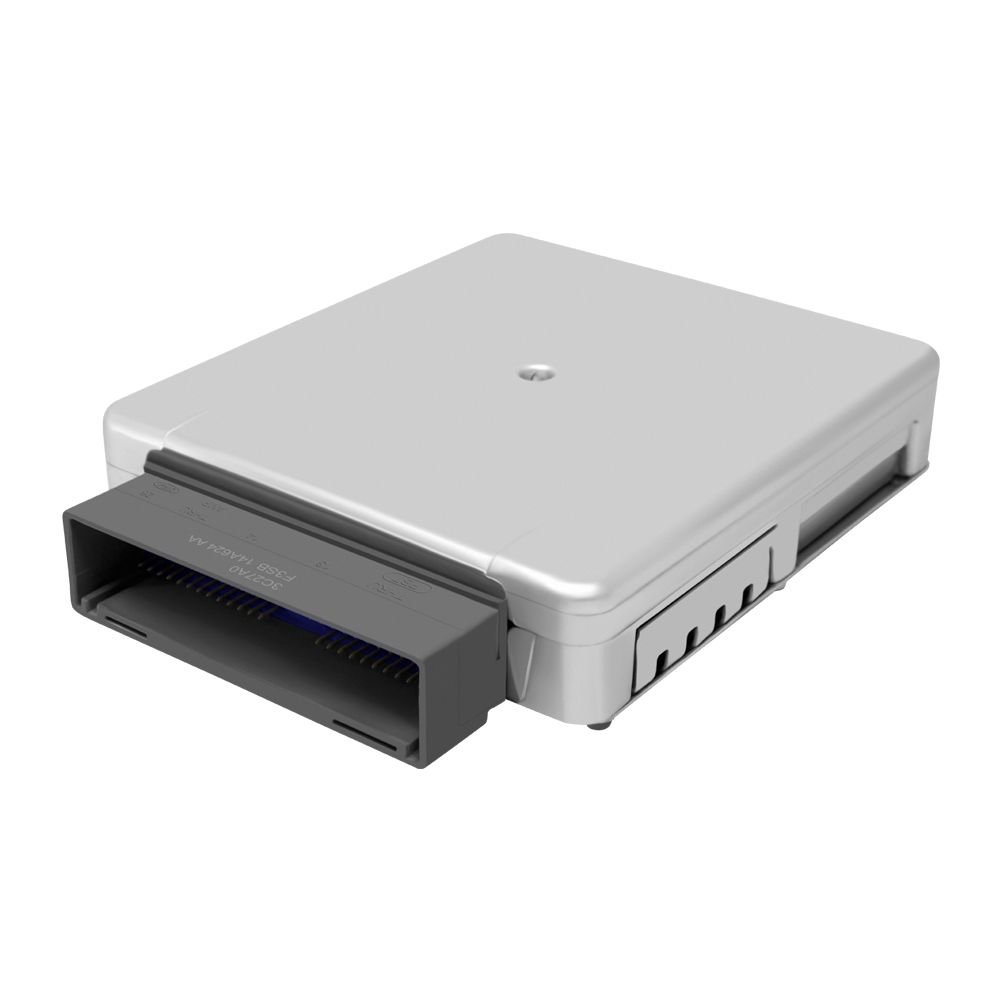
Flagship One stocks a refurbished, VIN-programmed PCM for the 2005 Ford Freestar with a lifetime warranty, free shipping and no core charge. The full Ford Freestar module lineup covers other engine configurations as well.
The 2005 Ford Freestar relies on its powertrain control module for smooth operation, and addressing PCM issues promptly can prevent further complications. Whether you opt for a new or refurbished replacement, understanding the process and requirements helps you make the best choice for your vehicle. With the right approach, your Freestar can regain its reliability and performance.