
Last updated on August 25th, 2026 at 12:03 pm
The Engine Control Module on your 2004 Toyota Celica GT serves as the central computer managing engine operations. When internal circuitry fails, the module can no longer process sensor data correctly, leading to drivability problems and illuminated warning lights.
Modern vehicles like your 2004 Toyota Celica GT depend heavily on electronic control modules to manage engine and transmission functions. The Engine Control Module processes data from numerous sensors and adjusts fuel delivery, ignition timing, and other critical parameters to maintain performance and efficiency. When this module fails or loses programming, your vehicle may display warning lights, run poorly, or fail to start entirely.
Understanding how the ECM functions, recognizing failure symptoms, and knowing what replacement involves can help you make informed decisions about repair options. This guide covers the role of the control module in your Celica, common failure indicators, service bulletin information, and what to expect during replacement and programming. Whether you are experiencing drivability issues or preparing for a repair, the information here helps you ask the right questions and understand the process.
The Engine Control Module in your 2004 Toyota Celica GT functions as the primary computer responsible for managing the engine and powertrain. This module continuously monitors inputs from sensors measuring air intake temperature, throttle position, crankshaft speed, and exhaust gas composition. Based on this data, the module adjusts fuel injector pulse width, spark advance, and idle air control to maintain optimal combustion under varying conditions.
This processing occurs many times per second during vehicle operation, allowing the engine to respond smoothly to driver inputs and maintain fuel efficiency. The module also manages emissions control systems, including the evaporative emissions system and oxygen sensor feedback loops, helping your Celica meet federal emissions standards. When the module functions correctly, you experience consistent throttle response, smooth idle quality, and reasonable fuel economy.
When internal electronics within the module fail, the unit can no longer make these calculations or send output commands to fuel injectors and ignition components. The module may lose its ability to communicate with diagnostic tools entirely, or it may operate in a limited capacity that produces drivability symptoms. Replacement engine computers for the Celica must be properly programmed and initialized to restore full functionality.
Flagship One keeps Toyota Celica GT replacement engine computers in stock for exactly this failure pattern.
2004 Toyota Celica GT
OEM programmed ECM for your 2004 Toyota Celica GT — plug & play, no dealer visit.
Free shipping · Lifetime warranty
The ECM on your 2004 Toyota Celica GT is typically located inside the passenger compartment, often beneath the dashboard on the driver’s side or near the center console area. This interior placement helps protect the module from under-hood heat and moisture exposure.
Replacing the module involves disconnecting the battery, removing the module from its mounting location, transferring any necessary hardware or brackets, and reconnecting the electrical harness. Book time for removal and reinstallation is 0.6 hours for this procedure. After installation, the factory relearn procedure must be performed, which requires 0.5 additional hours of labor. A qualified technician will use a factory-grade scan tool to initialize the new module and verify communication with vehicle systems.
| Operation | Configuration | Book Time |
|---|---|---|
| Engine Control Module Relearn | All configurations | 0.5 hr |
| Engine Control Module R&R | All configurations | 0.6 hr |
| Powertrain Control Module R&R | All configurations | 0.6 hr |
| Powertrain Control Module Relearn | All configurations | 0.5 hr |
Factory service procedures for the 2004 Toyota Celica GT require a relearn process after any ECM or Powertrain Control Module replacement. This procedure synchronizes the new module with your vehicle’s specific sensor calibrations and adaptation values stored in memory. A factory-grade diagnostic tool such as Techstream is necessary to complete this initialization.
The reprogramming process involves connecting the scan tool to the vehicle data link connector, establishing communication with the new module, and following the factory-specified routine to transfer vehicle-specific data. This step is critical for proper idle speed adjustment, fuel trim calibration, and emissions system monitoring. Units from Flagship One arrive as VIN-programmed replacements, meaning the initial factory coding is already complete and the module will communicate with your vehicle upon installation. Only the post-install relearn procedure from the factory service manual remains to be completed by your technician.
Every VIN-programmed replacement unit from Flagship One arrives with these steps already completed.
When the ECM on your 2004 Toyota Celica GT malfunctions, symptoms often develop suddenly and progressively worsen. A no-start condition where the engine cranks but fails to fire commonly indicates electrical failure within the module or loss of critical sensor communication. The engine may start but immediately stall, or run roughly with hesitation during acceleration.
Illumination of the check engine light often accompanies module failure, with stored diagnostic trouble codes indicating communication failures or internal faults. Codes related to controller internal errors frequently appear when the module can no longer perform self-diagnostics. Poor throttle response develops because the module can no longer properly interpret driver inputs and adjust engine output accordingly. Some vehicles experience complete loss of communication with scan tools, preventing diagnostic access entirely.
In automatic transmission models, harsh shifting or failure to shift out of gear may occur because the module can no longer properly manage transmission control solenoids. Intermittent problems where symptoms come and go often indicate marginal electrical connections or partial internal failures that are likely to worsen over time.
Toyota has published factory service bulletins relevant to module replacement and initialization for your Celica. Bulletin SS002-01 covers the ECU flash reprogramming process for 2001 and later applicable models, providing the factory procedure for updating or initializing control modules. Bulletin SS002-07 details the Techstream ECU flash reprogramming procedure for Toyota models from 2001 through 2008, including the specific steps required to properly initialize a replacement module using factory diagnostic equipment.
| Bulletin | Subject | What It Addresses |
|---|---|---|
| SS002-01 | :SS002-01: 2001 & Later Applicable Models: ECU Flash Reprogramming Process (Revised) | — |
| SS002-07 | :SS002-07: 01-08 Applicable Toyota: Techstream ECU Flash Reprogramming Procedure | — |
Diagnostic testing by a qualified technician can determine whether the ECM is the root cause of your vehicle’s symptoms. If the module fails internal self-tests, displays communication errors, or cannot be accessed by diagnostic equipment, replacement is typically required rather than repair.
A used module may require reprogramming to match your vehicle’s VIN and configuration, which is typically only possible at a dealership with factory equipment. Additionally, used modules may have unknown histories and could fail soon after installation.
The new module will not communicate properly with your vehicle’s systems without proper initialization. Your Celica may not start, run poorly, or display multiple warning lights until the factory relearn procedure is completed using a compatible diagnostic tool.
A properly programmed replacement module from Flagship One that undergoes the factory relearn procedure will restore your vehicle to normal operation. Adaptation values learned during driving will be relearned as you operate the vehicle after repair.
Battery replacement can cause voltage transients if connections are made or broken while the ignition is on, or if tools accidentally contact battery terminals. Always disconnect the negative battery cable first and wait before reconnecting to allow vehicle electrical systems to reset.
When your 2004 Toyota Celica GT requires ECM replacement, you have repair and replacement options to consider. Professional repair services may address some module failures, while purchasing a refurbished replacement unit provides a comprehensive solution. Flagship One provides VIN-programmed replacement modules that arrive ready for installation, eliminating the need for initial factory programming before your technician performs the post-install relearn procedure. Evaluating the extent of damage and consulting with a qualified technician helps determine the most appropriate path for your specific situation.
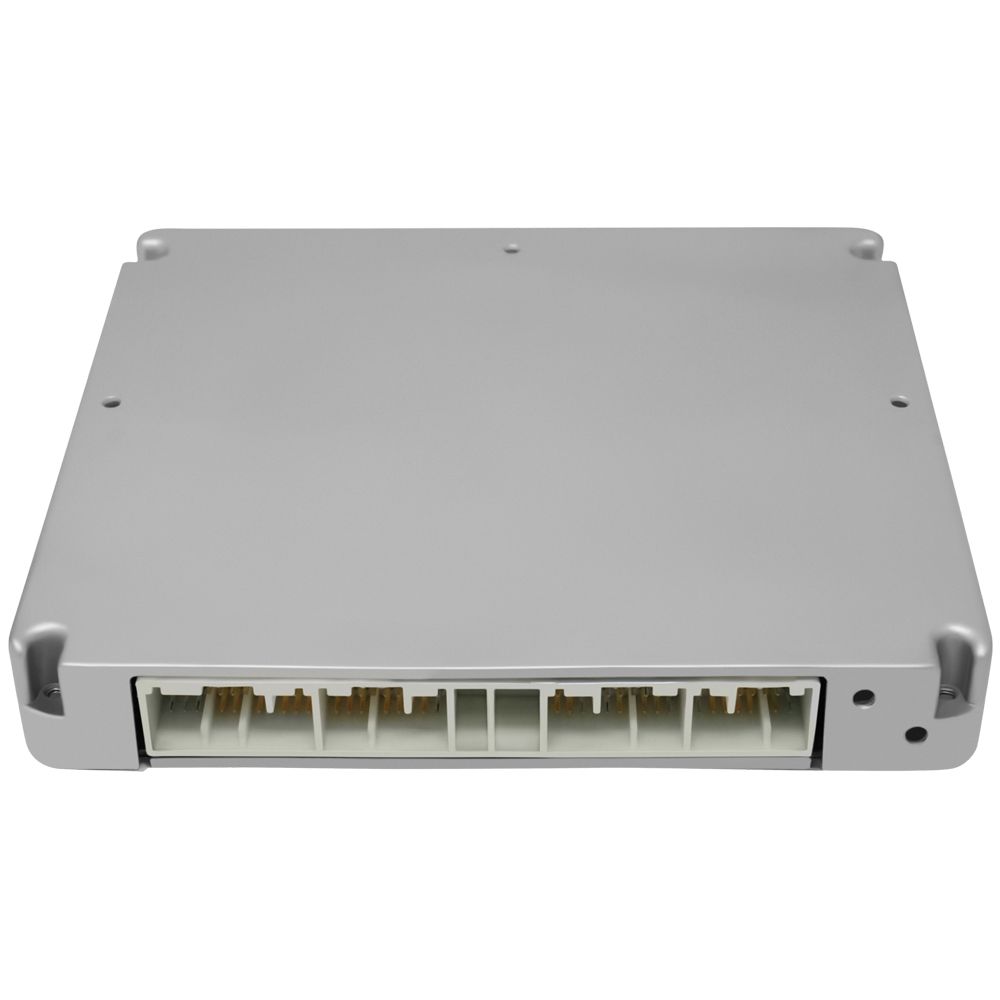
Flagship One stocks a refurbished, VIN-programmed PCM for the 2004 Toyota Celica GT with a lifetime warranty, free shipping and no core charge. The full Toyota Celica GT module lineup covers other engine configurations as well.
The Engine Control Module in your 2004 Toyota Celica GT plays an essential role in engine performance, fuel efficiency, and emissions compliance. Recognizing failure symptoms early and obtaining proper diagnosis helps ensure your Celica returns to reliable operation. Whether you choose repair or replacement, understanding the programming requirements and service procedures prepares you for a successful resolution to your vehicle’s drivability concerns.