
Last updated on August 25th, 2026 at 12:03 pm
The engine control module manages fuel delivery and ignition timing in your 2004 Toyota Avalon. When this unit fails, the powertrain may lose communication or enter limp mode. Replacement restores critical management functions required for safe operation and emissions compliance.
Owners of the 2004 Toyota Avalon often encounter electronic management issues as mileage accumulates. Understanding the role of the central computer helps diagnose persistent drivability concerns effectively. This guide explains where the unit resides and what replacement entails for your specific sedan. You will learn about labor expectations and factory procedures relevant to this model year. Proper handling ensures the powertrain operates within designed parameters after service. Many technicians recommend verifying wiring integrity before swapping components. This approach saves time and prevents unnecessary parts replacement. Your vehicle relies on this hardware for smooth shifting and throttle response. Ignoring warning signs may lead to reduced performance or no-start conditions. We outline the steps needed to return your car to reliable service. Knowledge of these procedures empowers you to discuss repairs confidently with your shop. Electronic failures often mimic mechanical problems, causing confusion during diagnosis. The 2004 Toyota Avalon uses sophisticated electronics to monitor engine load. Recognizing the difference between a sensor fault and a computer failure is essential for accurate repairs.
This component serves as the brain for the powertrain system in your 2004 Toyota Avalon. It processes data from various sensors to adjust fuel mixture and spark timing continuously. Without proper function, the engine may run rich or lean, causing damage over time. The unit also manages transmission shift points based on driving conditions. Failure here often results in poor fuel economy and rough idling sensations. You need a reliable unit to maintain emissions standards and performance levels. When searching for replacement engine computers for the Avalon ensure compatibility with your specific engine size. The hardware must match the original calibration to avoid communication errors. Modern vehicles depend on this integration for safety systems as well. Your mechanic will verify connections before finalizing the installation process. This step confirms that all signals transmit correctly between modules. Neglecting this check may cause intermittent issues later. The system monitors exhaust components to ensure compliance with regulations. Proper operation prevents check engine lights from illuminating unnecessarily. Technicians use diagnostic tools to read live data streams from the unit. This helps identify whether the problem lies within the computer or peripheral sensors. It coordinates the ignition sequence to maximize power output while minimizing waste. Sensors feed real-time data regarding air intake and coolant temperature. The computer adjusts parameters instantly to accommodate changing driving demands.
2004 Toyota Avalon
OEM programmed ECM for your 2004 Toyota Avalon — plug & play, no dealer visit.
Free shipping · Lifetime warranty
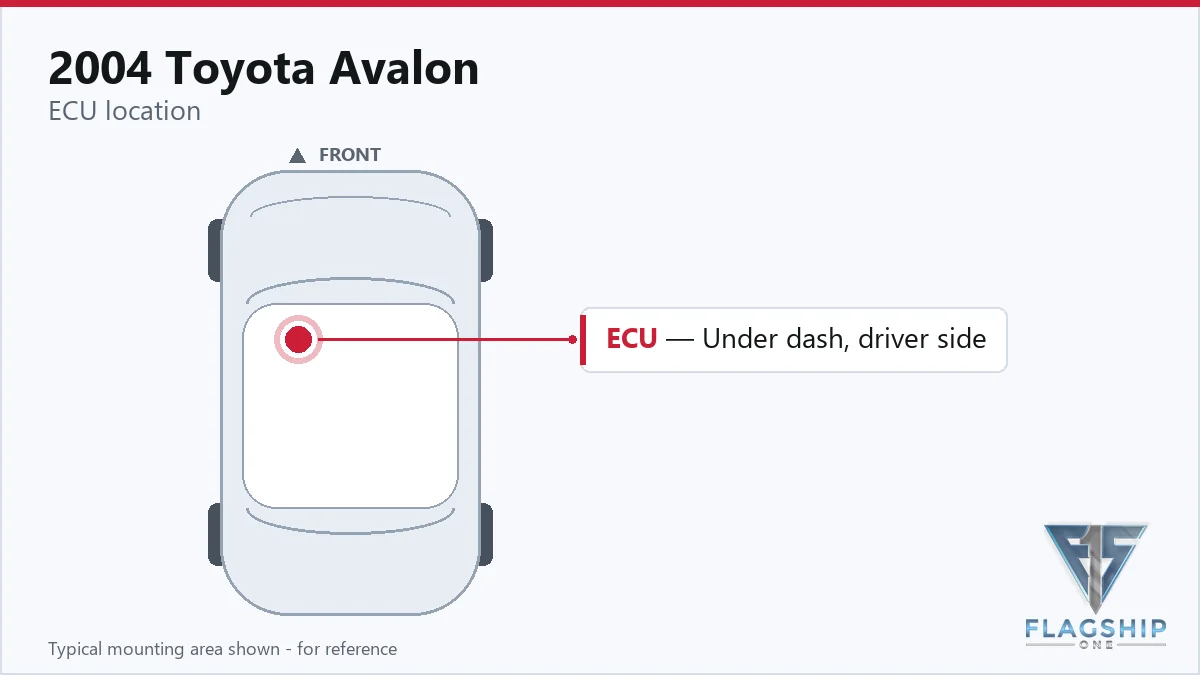
According to factory wiring documentation, the engine ECU resides within the instrument panel area. Accessing this location requires removing interior trim pieces carefully. Book time guidelines suggest 0.8 hours for removal and replacement of the engine control module. A similar duration of 0.8 hours applies to the powertrain control module swap. Once installed, the system requires initialization to function correctly. The relearn procedure for the engine control module typically takes 0.5 hours. You should also expect 0.5 hours for the powertrain control module relearn process. These times represent standard labor units for qualified technicians. Your shop may vary based on experience and tool availability. Proper torque specifications should be followed when securing connectors. Avoid forcing plugs into sockets to prevent pin damage. The instrument panel location protects the unit from engine heat. However, it makes access slightly more involved than engine bay mounting. Technicians must disconnect the battery before starting work. This prevents short circuits during the removal phase. Safety protocols dictate wearing protective gear during interior disassembly. Ensure all clips are preserved for reassembly later.
| Operation | Configuration | Book Time |
|---|---|---|
| Engine Control Module Relearn | All configurations | 0.5 hr |
| Engine Control Module R&R | All configurations | 0.8 hr |
| Powertrain Control Module R&R | All configurations | 0.8 hr |
| Powertrain Control Module Relearn | All configurations | 0.5 hr |
Factory procedures often require flash reprogramming after installing a new module. Technical service bulletins outline specific steps for updating the software. Your technician would normally use a Techstream tool to complete this task. However, Flagship One units arrive with a VIN-programmed replacement unit ready for installation. This eliminates the need for additional flashing at the shop. The vehicle recognizes the new hardware immediately upon connection. You save time and labor costs associated with programming procedures. Standard protocols dictate that the computer must match the vehicle identification number. Our process ensures this alignment before shipping the component. This reduces the risk of errors during the initial startup. You can drive your 2004 Toyota Avalon sooner without waiting for calibration. The elimination of flash steps simplifies the repair workflow significantly. Technicians appreciate not having to configure software settings manually. This reliability ensures the engine management system operates correctly from the start. Some service bulletins describe revised processes for ECU flash reprogramming. Following those guidelines is unnecessary when using pre-configured hardware. The integration is seamless because the data is already written.
Common signs of module failure include unexpected stalling while driving. You may experience a no-start condition where the engine cranks but does not fire. Misfire codes often appear due to incorrect spark timing signals. The scan tool might lose communication with the engine system entirely. Shifting issues can occur because the transmission relies on computer data. Your 2004 Toyota Avalon may enter limp mode to protect itself. Fuel economy often drops significantly when the unit malfunctions. The check engine light may stay illuminated constantly. Rough idling is another frequent complaint among owners. Acceleration might feel sluggish or unresponsive to pedal input. These symptoms suggest the brain of the car is struggling. Electrical glitches can cause random warning lights on the dash. Sometimes the vehicle shuts off completely at stop lights. Diagnosis should rule out battery and alternator problems first. Weak voltage can mimic computer failure symptoms easily. If power supply is stable, the module itself is suspect. Professional testing confirms whether the internal circuitry has failed. Intermittent power loss may happen during highway merging situations.
Factory records include bulletin SS002-01 regarding applicable models from 2001 and later. This document revises the ECU flash reprogramming process for technicians. Another entry, SS002-07, covers Toyota vehicles from 01-08 model years. It details the Techstream ECU flash reprogramming protocol specifically. These guides ensure software updates are performed correctly. Your shop should reference these numbers during service. They outline the official method for updating module firmware. Compliance with these bulletins maintains warranty standards. The procedures address communication protocols between tools and cars. Following them prevents corruption during the writing phase. Updates ensure the computer interacts properly with all sensors. Ignoring these revisions may lead to incomplete repairs. Technicians use these documents to verify correct software versions.
| Bulletin | Subject | What It Addresses |
|---|---|---|
| SS002-01 | :SS002-01: 2001 & Later Applicable Models: ECU Flash Reprogramming Process (Revised) | — |
| SS002-07 | :SS002-07: 01-08 Applicable Toyota: Techstream ECU Flash Reprogramming Procedure | — |
Driving is not recommended as the engine may stall unexpectedly. Safety systems rely on the computer for proper operation.
Book time suggests 0.8 hours for removal and 0.5 hours for relearn. Total time varies by shop workflow.
No, Flagship One units arrive ready to install. This removes the need for flash reprogramming tools.
Factory guides place the engine ECU in the instrument panel area. Access requires removing interior trim components.
If the module controls shift points, replacement often resolves the problem. Diagnosis should confirm the computer is the cause.
Choosing between repair and refurbished replacement depends on your budget and timeline. Refurbished units offer a balance of cost and reliability for the 2004 Toyota Avalon. Repairing the original hardware may take longer and carry uncertainty. Replacement ensures you receive a tested component ready for service. Consider the labor savings when selecting your path forward. Our options provide a practical solution for restoring vehicle function. You avoid the risks associated with used parts from junkyards.
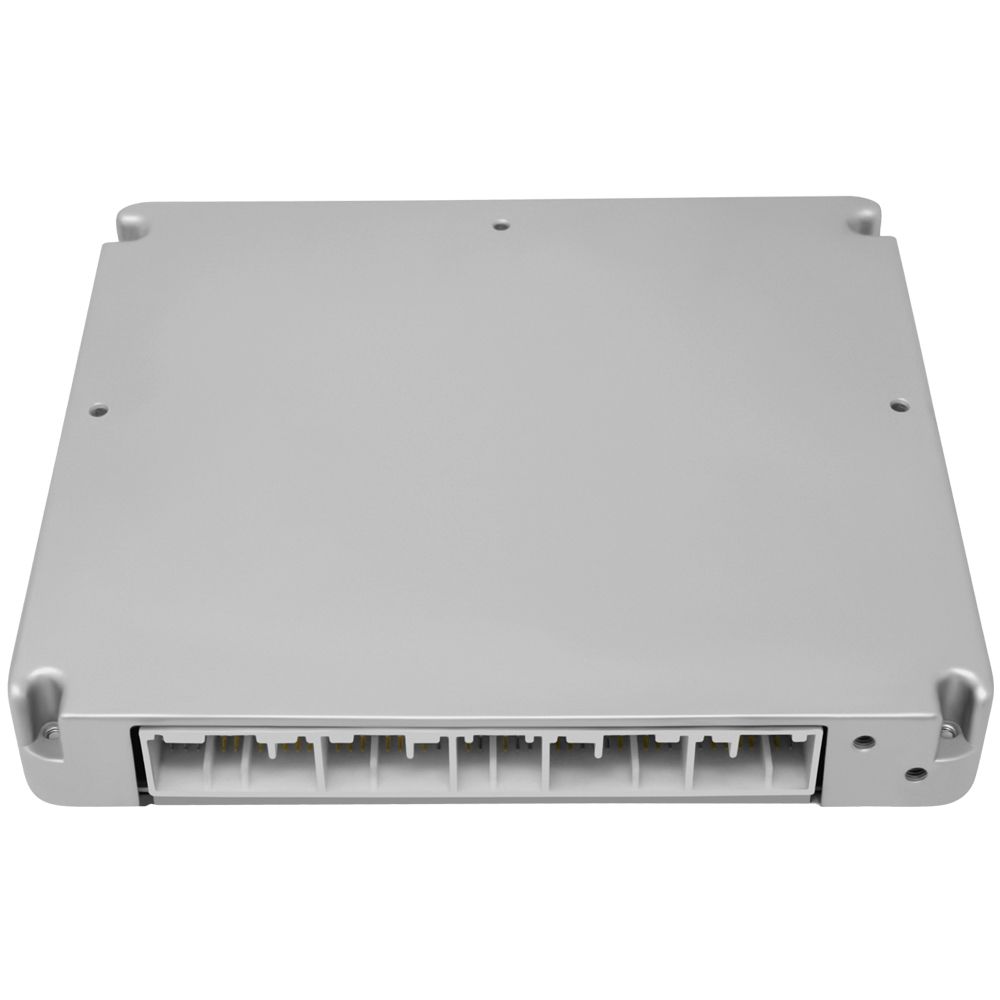
Flagship One stocks a refurbished, VIN-programmed PCM for the 2004 Toyota Avalon with a lifetime warranty, free shipping and no core charge. The full Toyota Avalon module lineup covers other engine configurations as well.
Restoring your 2004 Toyota Avalon requires attention to detail during computer replacement. Understanding labor times and location helps you plan the service effectively. Proper installation ensures long-term reliability for your sedan. Contact our team for compatible units that simplify the process. We support your repair efforts with quality hardware and information. Your vehicle deserves a thorough approach to electronic diagnostics and service.