
Last updated on August 25th, 2026 at 02:35 pm
The Powertrain Control Module (PCM) in the 2001 Cadillac Seville manages engine and transmission functions. Failures may cause drivability issues, communication errors, or fluid life monitoring resets, often requiring replacement and reprogramming.
If your 2001 Cadillac Seville is experiencing unexplained stalling, rough idling, or transmission shifting problems, the Powertrain Control Module (PCM) may be at fault. This critical component oversees engine performance and transmission behavior, and its failure can lead to a range of drivability issues. Replacing the PCM involves more than just swapping hardware—it requires careful attention to programming and relearn procedures to avoid unintended consequences like resetting fluid life monitors. Understanding the process and symptoms can help you make informed decisions about repairs and avoid unnecessary complications.
The Powertrain Control Module (PCM) in the 2001 Cadillac Seville acts as the brain for both the engine and transmission. It processes sensor data to optimize fuel delivery, ignition timing, and shift points, ensuring smooth operation. A malfunctioning PCM may disrupt these functions, leading to poor performance or even a no-start condition. When replacement becomes necessary, replacement engine computers for the Seville are designed to restore proper communication and control, but programming must align with the vehicle’s specific requirements to avoid default settings.
In the 2001 Cadillac Seville, the PCM is positioned next to the air cleaner assembly, making it accessible for removal and replacement. The factory procedure involves disconnecting the negative battery cable before accessing the module to prevent electrical issues. Labor time for PCM removal and reinstallation is typically 2.1 hours, with an additional 0.5 hours required for the relearn process. This ensures the new module synchronizes with the vehicle’s systems, though no torque specifications are provided for the installation steps.
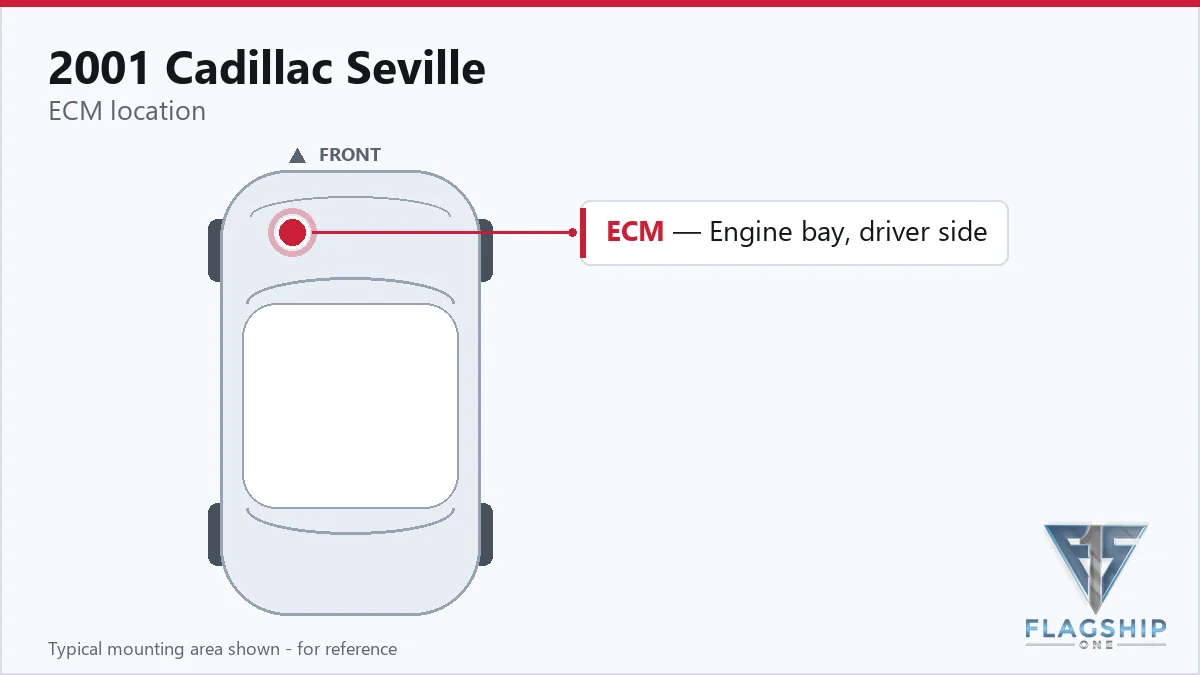
Work with the ignition off, and treat the module as static-sensitive: avoid touching the connector pins at any point.
| Operation | Configuration | Book Time |
|---|---|---|
| Powertrain Control Module R&R | All configurations | 2.1 hr |
| Powertrain Control Module Relearn | All configurations | 0.5 hr |
| Engine Control Module R&R | All configurations | 2.1 hr |
| Engine Control Module Relearn | All configurations | 0.5 hr |
2001 Cadillac Seville
OEM programmed ECM for your 2001 Cadillac Seville — plug & play, no dealer visit.
Free shipping · Lifetime warranty
After installing a new PCM in the 2001 Cadillac Seville, the factory procedure requires reprogramming to retain critical data like remaining engine oil life and automatic transmission fluid life. Without this step, these values default to 100%, potentially leading to premature or delayed service reminders. Off-Board Programming is used when the vehicle is not present, and the process involves selecting the Tech 2 tool with the appropriate adapter. However, a VIN-programmed replacement unit from Flagship One arrives ready for installation, eliminating the need for these additional steps and reducing the risk of programming errors.
A failing PCM in the 2001 Cadillac Seville may cause symptoms like intermittent stalling, rough idle, or transmission shifting irregularities. You might also notice the check engine light illuminating, often accompanied by module-specific trouble codes. For example, a control module memory error suggests an internal fault that could disrupt normal operation. Other signs include poor fuel economy, hesitation under acceleration, or a complete no-start condition. If your scan tool fails to communicate with the PCM, the module itself may be the root cause rather than a wiring or sensor issue.
The 2001 Cadillac Seville may log specific trouble codes when the PCM experiences internal faults. These codes help diagnose whether the module requires replacement or reprogramming.
Service bulletin #04-06-04-022 addresses an issue where the PCM in the 2001 Cadillac Seville fails to communicate oxygen sensor test results to non-TECH 2 diagnostic equipment. Customers may notice that generic scan tools cannot retrieve this data, complicating emissions-related repairs. The bulletin recommends reprogramming the PCM to resolve the communication problem, ensuring compatibility with a broader range of diagnostic tools.
| Bulletin | Subject | What It Addresses |
|---|---|---|
| 04-06-04-022 | Powertrain Control Module (PCM) Will Not Properly Communicate On-Board Diagnostic Oxygen Sensor | Some customers may comment that their vehicle’s engine is unable to be properly serviced or tested using non-TECH2® (Generic) service or test equipment. When… |
A weak or improperly reconnected battery can cause voltage fluctuations that disrupt PCM operation. The module may lose its adaptive memory, leading to stalling or rough idle until it relearns the engine’s parameters. Ensuring a stable power supply during and after battery replacement can prevent this issue.
While the vehicle may still run, a P0603 code indicates an internal PCM memory fault that could lead to unpredictable behavior. Driving with this code may result in poor performance or even a no-start condition. It’s advisable to address the issue promptly to avoid further complications.
If the remaining oil life isn’t programmed into the new PCM, the system will default to 100%, potentially delaying necessary oil changes. This could lead to premature engine wear if the oil is already degraded. The same applies to automatic transmission fluid life, which may also reset to 100%.
When the PCM in your 2001 Cadillac Seville fails, you have options for replacement. A new or refurbished unit can restore proper function, but programming must align with the vehicle’s specifications to avoid resetting critical monitors. Flagship One provides pre-programmed modules designed for the Seville, simplifying the installation process and reducing the risk of post-replacement issues.
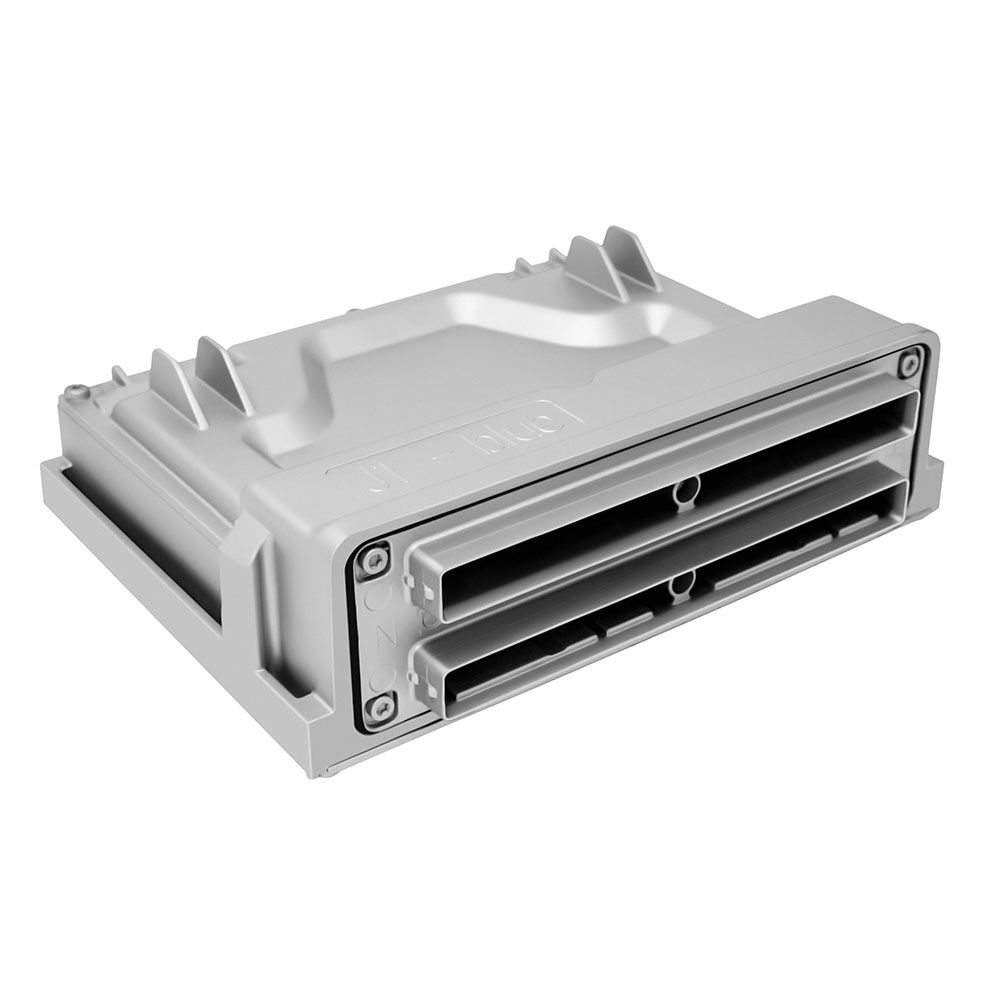
Flagship One stocks a refurbished, VIN-programmed PCM for the 2001 Cadillac Seville with a lifetime warranty, free shipping and no core charge. The full Cadillac Seville module lineup covers other engine configurations as well.
The 2001 Cadillac Seville relies on its PCM to manage engine and transmission performance seamlessly. If you’re experiencing drivability issues or module-related trouble codes, a properly programmed replacement can resolve these problems efficiently. Understanding the symptoms, labor requirements, and programming steps ensures a smoother repair process and helps maintain your vehicle’s reliability.