
Last updated on August 25th, 2026 at 02:28 pm
The powertrain control module (PCM) in the 2000 Chevrolet Venture manages engine and transmission functions. Internal failures may cause drivability issues, no-start conditions, or diagnostic trouble codes related to module performance.
If your 2000 Chevrolet Venture hesitates, stalls, or refuses to start—and the scan tool points to the powertrain control module—you’re likely facing a PCM issue. This small but critical computer oversees engine and transmission operations, and when it fails, symptoms can range from subtle drivability quirks to complete immobilization. Understanding what the PCM does, where it’s located, and what replacement involves helps you make informed decisions. You’ll also learn why a pre-programmed unit can save time and avoid headaches during installation.
The powertrain control module (PCM) in the 2000 Chevrolet Venture acts as the brain for both engine and automatic transmission functions. It processes sensor data to control fuel delivery, ignition timing, and shift points, ensuring smooth operation and emissions compliance. A faulty PCM may disrupt these systems, leading to poor performance or failure to start. When replacement becomes necessary, replacement engine computers for the Venture are available to restore proper function without extensive reprogramming.
In the 2000 Chevrolet Venture, the PCM sits next to the air cleaner assembly, requiring removal of nearby components for access. Factory procedures specify 1.1 hours of labor for replacement, followed by a 0.5-hour relearn process to synchronize the module with the vehicle’s systems. Always disconnect the battery before handling connectors to prevent damage. The location is designed for accessibility, but care is needed to avoid damaging wiring or nearby components during removal.
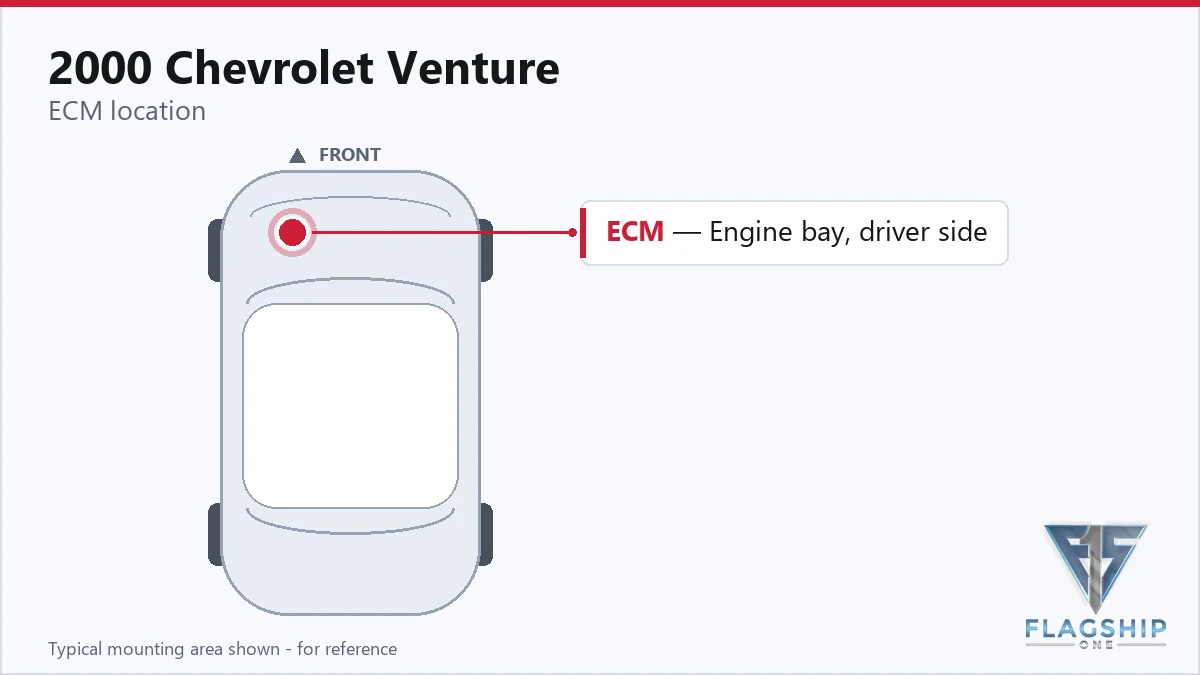
Work with the ignition off, and treat the module as static-sensitive: avoid touching the connector pins at any point.
| Operation | Configuration | Book Time |
|---|---|---|
| Engine Control Module R&R | All configurations | 1.1 hr |
| Engine Control Module Relearn | All configurations | 0.5 hr |
| Powertrain Control Module R&R | All configurations | 1.1 hr |
| Powertrain Control Module Relearn | All configurations | 0.5 hr |
2000 Chevrolet Venture
OEM programmed ECM for your 2000 Chevrolet Venture — plug & play, no dealer visit.
Free shipping · Lifetime warranty
After replacing the PCM in a 2000 Chevrolet Venture, the factory requires a relearn procedure to ensure proper communication with the vehicle’s systems. This typically takes 0.5 hours and involves resetting adaptive values. However, a VIN-programmed replacement unit arrives ready for installation, eliminating the need for post-install programming and reducing downtime. Always follow static discharge precautions to avoid damaging the new module.
A failing PCM in the 2000 Chevrolet Venture may cause a range of symptoms, including intermittent stalling, rough idle, or a no-start condition. You might also notice transmission shifting issues or the check engine light illuminating with codes like internal control module memory checksum error. In some cases, the scan tool may fail to communicate with the module at all. These symptoms often worsen over time, so addressing them promptly can prevent further drivability problems.
The 2000 Chevrolet Venture’s PCM may log specific internal trouble codes when it malfunctions. These codes typically indicate issues with the module’s memory, processing, or communication functions. Reviewing them helps pinpoint whether replacement or reprogramming is needed.
| Code | Meaning | Full Guide |
|---|---|---|
| P0601 | Internal memory checksum error | Full P0601 guide → |
| P0602 | Control module programming error | Full P0602 guide → |
| P0603 | Keep-alive memory (KAM) error | Full P0603 guide → |
| P0604 | Internal RAM error | Full P0604 guide → |
| P0606 | Module processor failure | Full P0606 guide → |
| P0620 | Module-internal fault | Full P0620 guide → |
| P062F | Internal EEPROM error | Full P062F guide → |
| P0650 | Module-internal fault | Full P0650 guide → |
| P1621 | Control module long-term memory performance | Full P1621 guide → |
| P1626 | Module-internal fault | — |
| P1630 | Module-internal fault | — |
| P1631 | Module-internal fault | — |
General Motors issued bulletin #99-06-04-053 to provide guidance on PCM reprogramming for various models, including the 2000 Chevrolet Venture. The bulletin outlines procedures for updating the module’s software to address known issues. While reprogramming may resolve some concerns, replacement is often necessary for hardware-related failures.
| Bulletin | Subject | What It Addresses |
|---|---|---|
| 99-06-04-053 | Info – PCM Reprogramming – (Oct 26, 1999) | — |
Common signs include stalling, no-start conditions, or transmission shifting problems. A scan tool may reveal module-related trouble codes like P0601 or P0603. If the vehicle exhibits these symptoms, further diagnosis is recommended to confirm the PCM as the root cause.
Replacement is possible if you’re comfortable working with electrical components and have basic tools. However, the factory recommends a relearn procedure afterward, which may require a scan tool. A VIN-programmed unit simplifies the process by eliminating the need for post-install programming.
Ignoring the code may lead to worsening drivability issues, such as stalling or poor acceleration. In some cases, the vehicle may eventually fail to start. Addressing the problem early can prevent more extensive repairs down the line.
If your 2000 Chevrolet Venture’s PCM is confirmed as the issue, you have options. A new or refurbished replacement unit can restore proper function, while a VIN-programmed module eliminates the need for post-install programming. Consider the labor involved and whether a pre-programmed unit aligns with your repair goals.
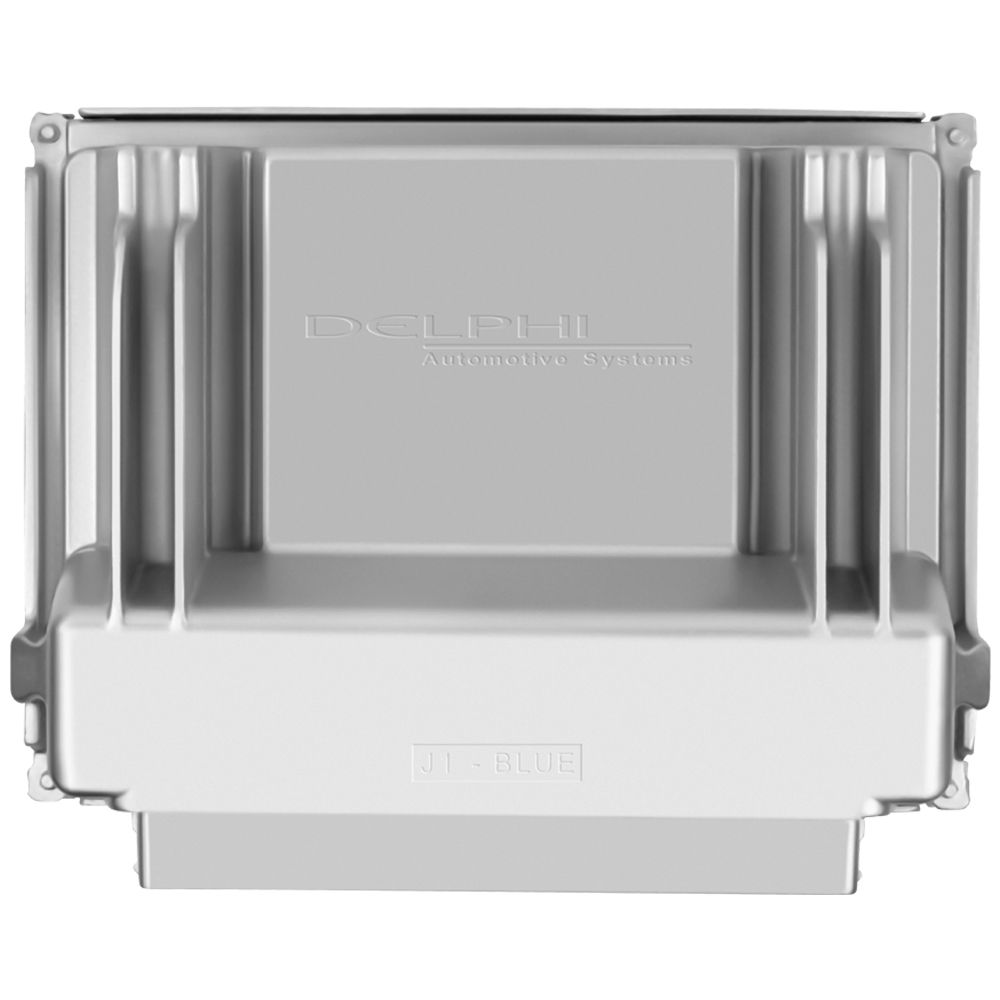
Flagship One stocks a refurbished, VIN-programmed PCM for the 2000 Chevrolet Venture with a lifetime warranty, free shipping and no core charge. The full Chevrolet Venture module lineup covers other engine configurations as well.
The 2000 Chevrolet Venture relies on its PCM for smooth engine and transmission operation. If you’re experiencing drivability issues or module-related codes, replacement may be the solution. A VIN-programmed unit can simplify the process, ensuring your vehicle gets back on the road with minimal downtime.