
Last updated on August 25th, 2026 at 02:30 pm
The Powertrain Control Module serves as the primary computer for the 3.4L engine in your 1997 Chevrolet Venture. It manages fuel delivery, ignition timing, and transmission shifting based on sensor inputs. Internal failures in this module often generate multiple trouble codes and may leave the vehicle inoperable or cause drivability problems. Replacement typically resolves these issues when the module itself is faulty.
When your 1997 Chevrolet Venture develops hard-starting, stalling, or erratic shifting behavior, the Powertrain Control Module often bears responsibility. This guide explains what the module does, where it sits, and what replacement involves. You will learn the factory-recommended procedures, why programming matters, and how module-internal trouble codes point toward replacement rather than repair. Understanding these details helps you evaluate repair options and communicate effectively with your service provider.
The Powertrain Control Module acts as the central nervous system for your 1997 Chevrolet Venture’s 3.4L engine. It continuously adjusts fuel mixture, spark timing, and transmission shift points based on readings from dozens of sensors. Without this module coordinating these systems, the engine cannot run efficiently or reliably. Your vehicle may also use the terms Engine Control Module or Powertrain Control Module interchangeably depending on the service documentation. Because the module directly governs how your engine operates, its reliability directly affects your vehicle’s drivability and fuel economy. When internal electronics fail, the module typically cannot be repaired on a component level—service usually means obtaining a replacement engine computer. replacement engine computers for the Chevrolet Venture provide a path to restore proper engine management when the original unit fails.
1997 Chevrolet Venture
OEM programmed ECM for your 1997 Chevrolet Venture — plug & play, no dealer visit.
Free shipping · Lifetime warranty
The Powertrain Control Module in your 1997 Chevrolet Venture sits behind the right side of the instrument panel, near the convenience center. Accessing it requires removing interior trim components to reach this location. The documented labor time for removal and reinstallation is 1.1 hours. Because the module connects to the engine wiring harness through multiple electrical connectors, careful disconnection is necessary. The factory cautions that you should turn the ignition off before connecting or disconnecting power sources to the module, including the battery cable, module connectors, or related fuses. This prevents voltage spikes that could damage the replacement unit during handling. After installation, the module connectors must be securely seated to maintain reliable communication with engine sensors.
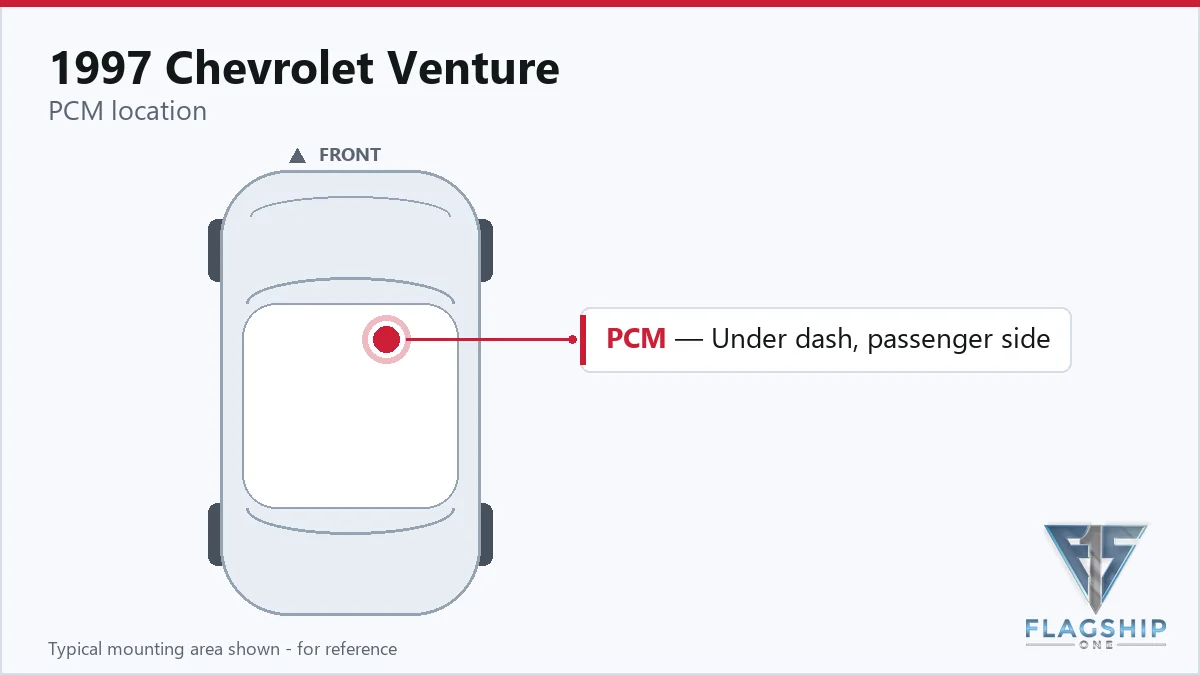
Work with the ignition off, and treat the module as static-sensitive: avoid touching the connector pins at any point.
| Operation | Configuration | Book Time |
|---|---|---|
| Engine Control Module R&R | All configurations | 1.1 hr |
| Engine Control Module Relearn | All configurations | 0.5 hr |
| Powertrain Control Module R&R | All configurations | 1.1 hr |
| Powertrain Control Module Relearn | All configurations | 0.5 hr |
After installing a replacement Powertrain Control Module, the factory procedure requires a relearn process lasting 0.5 hours to calibrate the new unit to your specific vehicle. This step allows the module to establish proper communication with sensors and adapt to your engine’s unique characteristics. However, units from Flagship One arrive already programmed with your vehicle identification number, which means the post-install relearn steps that would normally follow programming are typically unnecessary. Your service provider may still perform a basic verification to confirm the module communicates properly with diagnostic tools before considering the work complete.
Every VIN-programmed replacement unit from Flagship One arrives with these steps already completed.
When the Powertrain Control Module in your 1997 Chevrolet Venture fails, you may notice the engine refusing to start or stalling shortly after startup. The transmission may shift harshly, late, or not at all. Multiple check engine light codes often appear simultaneously, frequently including module-internal failures. A dead or unresponsive diagnostic scan tool that cannot communicate with the vehicle suggests the module has stopped functioning. In some cases, the engine runs but runs poorly, with rough idle, hesitation, or decreased power. The code Internal memory checksum error commonly appears when the module’s internal circuitry has degraded. These symptoms often develop suddenly rather than gradually worsening over time.
This vehicle has documented module-internal trouble codes that indicate failures within the Powertrain Control Module itself rather than sensor or wiring problems. These include P0601, P0602, P1626, P1629, P1635, P1639, P1641, P1651, P1652, P1654, P1655, P1662, P1663, P1672, and P1673. When these codes appear alongside drivability symptoms, the module itself typically requires replacement rather than sensor-based repairs.
| Code | Meaning | Full Guide |
|---|---|---|
| P0601 | Internal memory checksum error | Full P0601 guide → |
| P0602 | Control module programming error | Full P0602 guide → |
| P1626 | Module-internal fault | — |
| P1629 | Module-internal fault | — |
| P1635 | Module-internal fault | — |
| P1639 | Module-internal fault | — |
| P1641 | Module-internal fault | — |
| P1651 | Module-internal fault | — |
| P1652 | Module-internal fault | — |
| P1654 | Module-internal fault | — |
| P1655 | Module-internal fault | — |
| P1662 | Module-internal fault | — |
Factory service bulletin 99-06-04-053 covers Powertrain Control Module reprogramming procedures for this vehicle, dated October 26, 1999. This bulletin addresses programming procedures that technicians follow when replacing or updating the module software. Reprogramming may correct certain drivability concerns or emissions-related issues that the module controls. Your service provider can access this bulletin through official General Motors service channels to verify the applicable reprogramming procedure for your specific concern.
| Bulletin | Subject | What It Addresses |
|---|---|---|
| 99-06-04-053 | Info – PCM Reprogramming – (Oct 26, 1999) | — |
While technically possible for an experienced DIY mechanic, the factory cautions against electrostatic discharge damage during handling. Professional service ensures proper ESD precautions and access to required programming equipment if needed.
Multiple simultaneous codes often indicate a central failure affecting the module itself rather than individual sensors. When the Powertrain Control Module fails internally, it loses the ability to process sensor data correctly, triggering numerous codes.
A used module would require VIN programming to match your specific vehicle, and its condition would be unknown. Pre-programmed replacement units from reputable suppliers arrive ready to install without additional programming steps.
Choosing between repairing an existing Powertrain Control Module and installing a replacement requires evaluating cost, reliability, and long-term outcome. In-house module repairs carry uncertainty because internal electronics have already degraded. Rebuilt or new replacement modules provide a known starting point for your 1997 Chevrolet Venture’s engine management. A pre-programmed replacement unit arrives ready for installation, potentially reducing labor time compared to sourcing an unprogrammed module that requires dealer or specialty programming afterward.
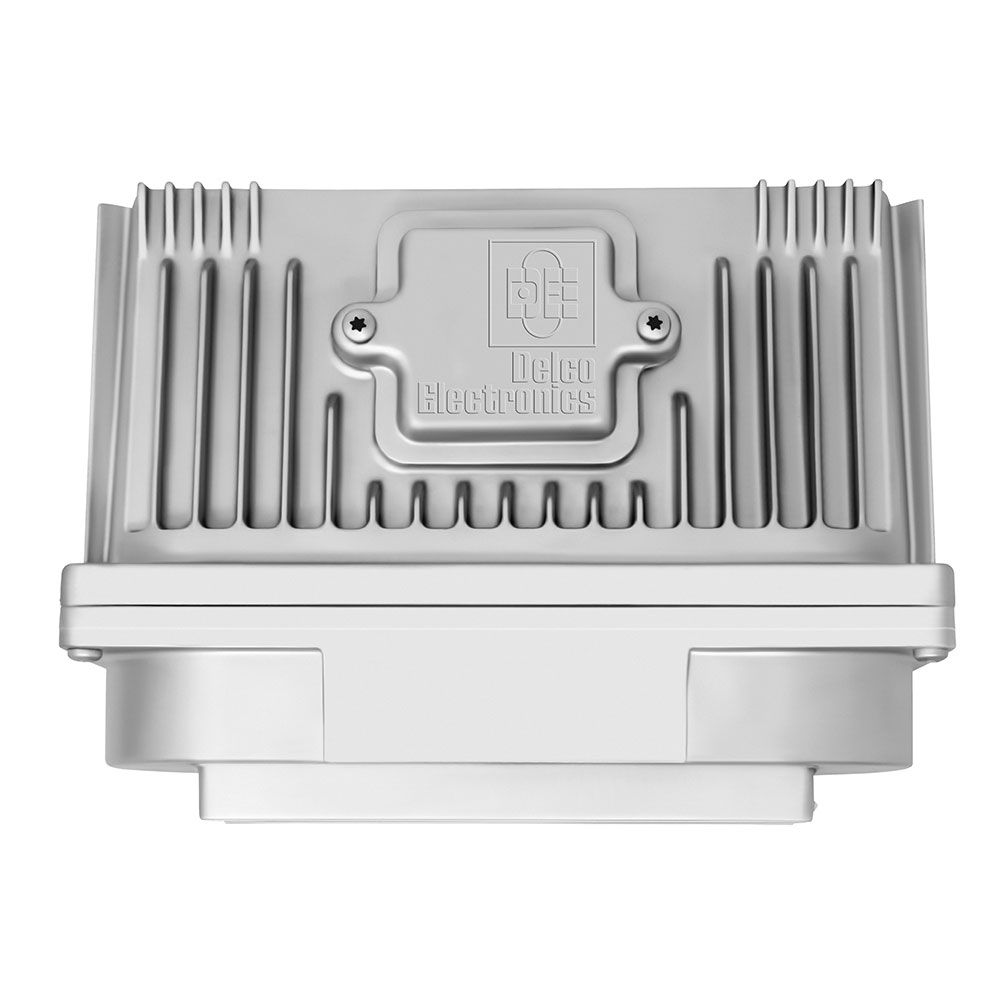
Flagship One stocks a refurbished, VIN-programmed PCM for the 1997 Chevrolet Venture with a lifetime warranty, free shipping and no core charge. The full Chevrolet Venture module lineup covers other engine configurations as well.
The Powertrain Control Module is essential for your 1997 Chevrolet Venture to run properly. Multiple module-internal codes combined with drivability symptoms point toward replacement rather than sensor-level repairs. Understanding the location, labor requirements, and programming needs helps you make informed decisions about service options for your vehicle.