
Last updated on August 25th, 2026 at 01:38 pm
The powertrain control module (PCM) in your 1999 Ford F-Series manages engine and transmission functions. Failure may cause no-start conditions, erratic shifting, or stored trouble codes related to fuel, ignition, or emissions systems.
If your 1999 Ford F-Series with the 4.2L engine is experiencing rough idling, stalling, or transmission shifting problems, the powertrain control module (PCM) may be at fault. This critical component oversees engine performance and transmission behavior, and its failure can lead to a range of drivability issues. Understanding the role of the PCM, where it’s located, and what replacement involves helps you make informed decisions about repairs. You’ll also learn about common symptoms, necessary post-installation steps, and how to avoid future problems with proper maintenance.
The powertrain control module in your 1999 Ford F-Series acts as the brain for both the engine and transmission. It processes data from sensors to optimize fuel delivery, ignition timing, and shift points, ensuring smooth operation. When the PCM malfunctions, you may notice poor acceleration, erratic shifting, or even a complete no-start condition. Because it integrates multiple systems, a faulty module can trigger a variety of trouble codes. Replacing it requires careful handling, as replacement engine computers for the F-Series must be properly calibrated to avoid further issues. Without a functioning PCM, your vehicle’s performance and emissions compliance may suffer.
1999 Ford F-Series
OEM programmed replacements — plug & play, no dealer visit.
Find yours by year, make & model →
Free shipping · Lifetime warranty
In the 1999 Ford F-Series, the PCM is located behind the cowl side trim panel, which requires removal for access. Replacing the module involves disconnecting the battery, removing the trim, and unplugging the electrical connectors. Labor times vary by drivetrain: 0.4 hours for rear-wheel-drive models and 0.6 hours for four-wheel-drive versions. After installation, the module must be secured, and the trim panel reinstalled. No special tools are specified for the removal process, but care should be taken to avoid damaging connectors or the module itself during handling.
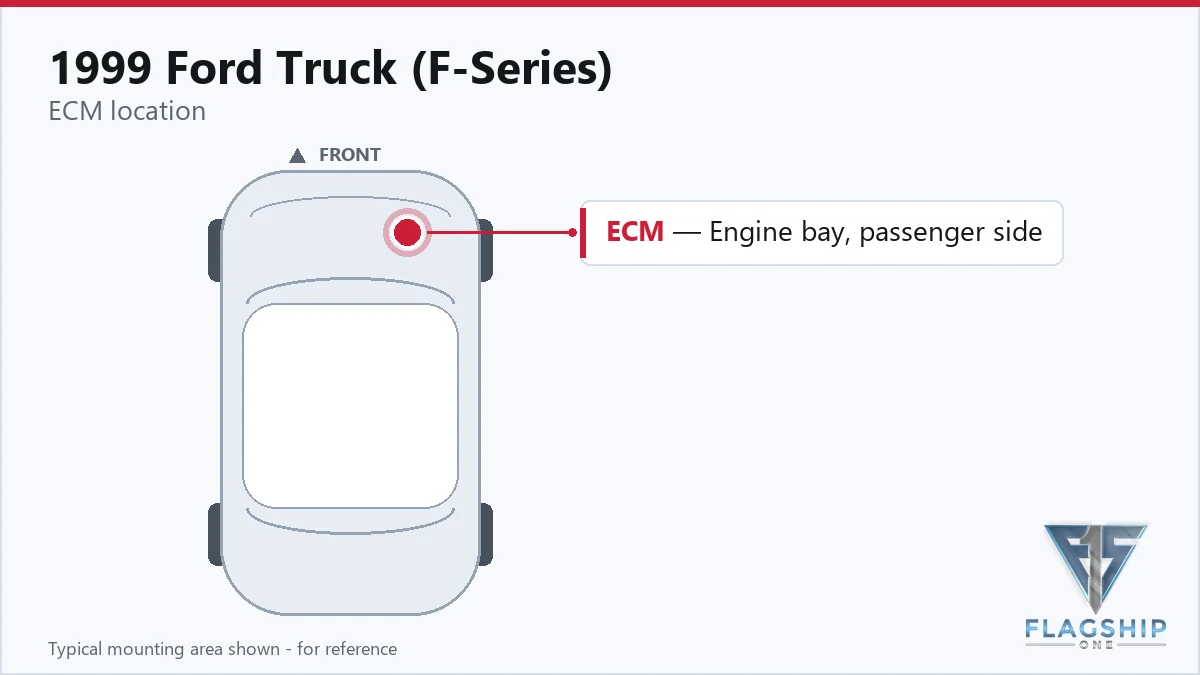
Work with the ignition off, and treat the module as static-sensitive: avoid touching the connector pins at any point.
| Operation | Configuration | Book Time |
|---|---|---|
| Powertrain Control Module R&R | RWD | 0.4 hr |
| Powertrain Control Module R&R | 4WD | 0.6 hr |
| Powertrain Control Module Relearn | All configurations | 0.5 hr |
| Engine Control Module Relearn | All configurations | 0.5 hr |
| Engine Control Module R&R | RWD | 0.4 hr |
| Engine Control Module R&R | 4WD | 0.6 hr |
After replacing the PCM in your 1999 Ford F-Series, a relearn procedure is required to synchronize the module with the vehicle’s systems. This typically takes 0.5 hours and ensures proper communication with sensors and the transmission. However, if you install a VIN-programmed replacement unit, these steps are already completed, saving time and reducing the risk of calibration errors. The factory procedure may involve using a scan tool to reset adaptive values, so having the correct equipment is essential for a smooth transition.
A failing PCM in your 1999 Ford F-Series may cause a range of symptoms, including intermittent stalling, rough idling, or hesitation during acceleration. You might also notice the transmission shifting erratically or the check engine light illuminating. In some cases, the vehicle may fail to start at all. Common trouble codes associated with PCM issues include P0601, which indicates an internal control module memory check sum error. If you see an internal memory fault, it often points to a need for module replacement or reprogramming. Other codes may relate to fuel trim, ignition timing, or sensor communication problems.
Ford issued service bulletins addressing PCM-related issues in the 1999 F-Series. TSB 02-23-04 notes that the 4×4 indicator lamp may illuminate incorrectly after PCM or instrument cluster replacement, often accompanied by codes P1635 or P1639. This bulletin also mentions potential speedometer inaccuracies following module replacement. Another bulletin, TSB 99-04-03, covers reprogramming procedures for EEC V vehicles, including the 1999 F-Series, to resolve performance or calibration issues after PCM service.
| Bulletin | Subject | What It Addresses |
|---|---|---|
| 02-23-04 | 4X4 LAMP ILLUMINATED AFTER POWERTRAIN CONTROL MODULE (PCM) OR INSTRUMENT CLUSTER REPLACEMENT – | — |
| 99-04-03 | EEC V VEHICLES ONLY – OUT-OF-VEHICLE – REPROGRAMMING POWERTRAIN CONTROL MODULES (PCMS) | — |
Stalling after PCM replacement often occurs if the module isn’t properly calibrated or if the relearn procedure isn’t completed. This can disrupt communication with sensors or the transmission, leading to poor engine performance. A VIN-programmed replacement unit typically avoids this issue.
Common signs include rough idling, stalling, or transmission shifting problems. You may also see warning lights or trouble codes related to fuel, ignition, or sensor issues. A scan tool can help confirm whether the PCM is the likely cause.
Driving with a faulty PCM may lead to poor performance, increased emissions, or even a no-start condition. It’s best to address the issue promptly to avoid further complications, such as transmission damage or failed emissions tests.
If your 1999 Ford F-Series is showing signs of PCM failure, you have options for repair. While a dealership may offer reprogramming services, a replacement module can restore functionality more quickly. Refurbished units are often a cost-effective solution, especially when pre-programmed to match your vehicle’s VIN, eliminating the need for additional calibration steps.
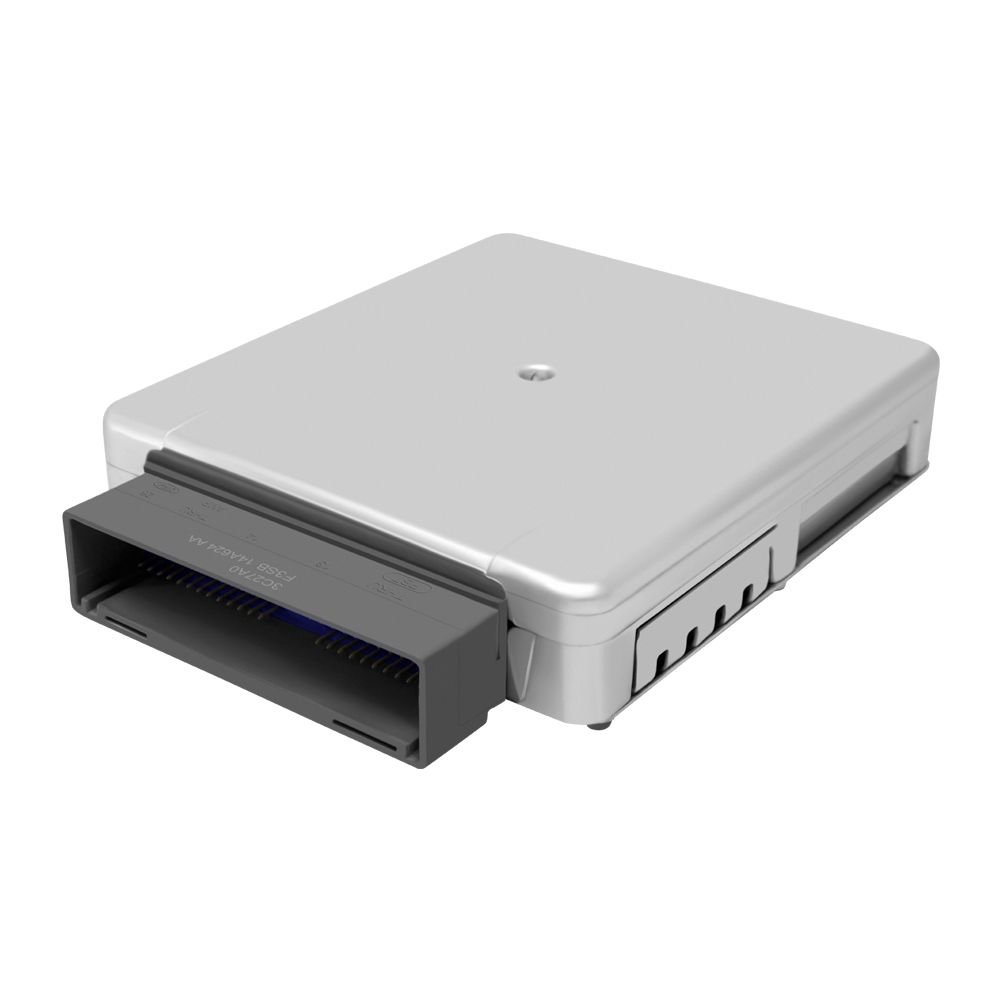
Flagship One stocks a refurbished, VIN-programmed PCM for the 1999 Ford Truck (F-Series) with a lifetime warranty, free shipping and no core charge. The full Ford Truck (F-Series) module lineup covers other engine configurations as well.
The 1999 Ford F-Series relies on its PCM to manage critical engine and transmission functions. If you’re experiencing drivability issues, addressing the module promptly can prevent further complications. Whether you choose a refurbished replacement or a factory repair, ensuring proper calibration is key to restoring your vehicle’s performance.